Start With the New Work Pattern, Not Just the Machine
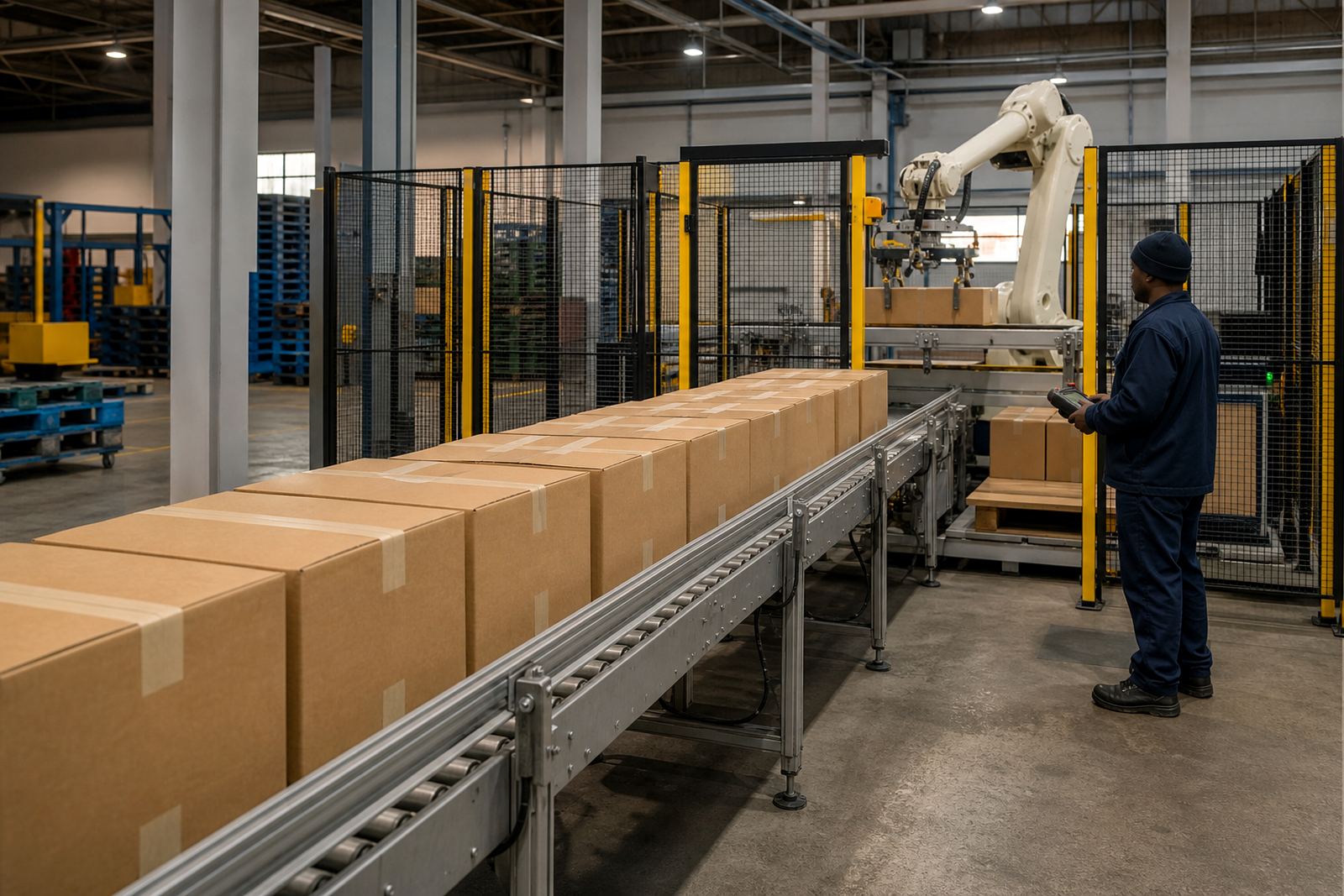
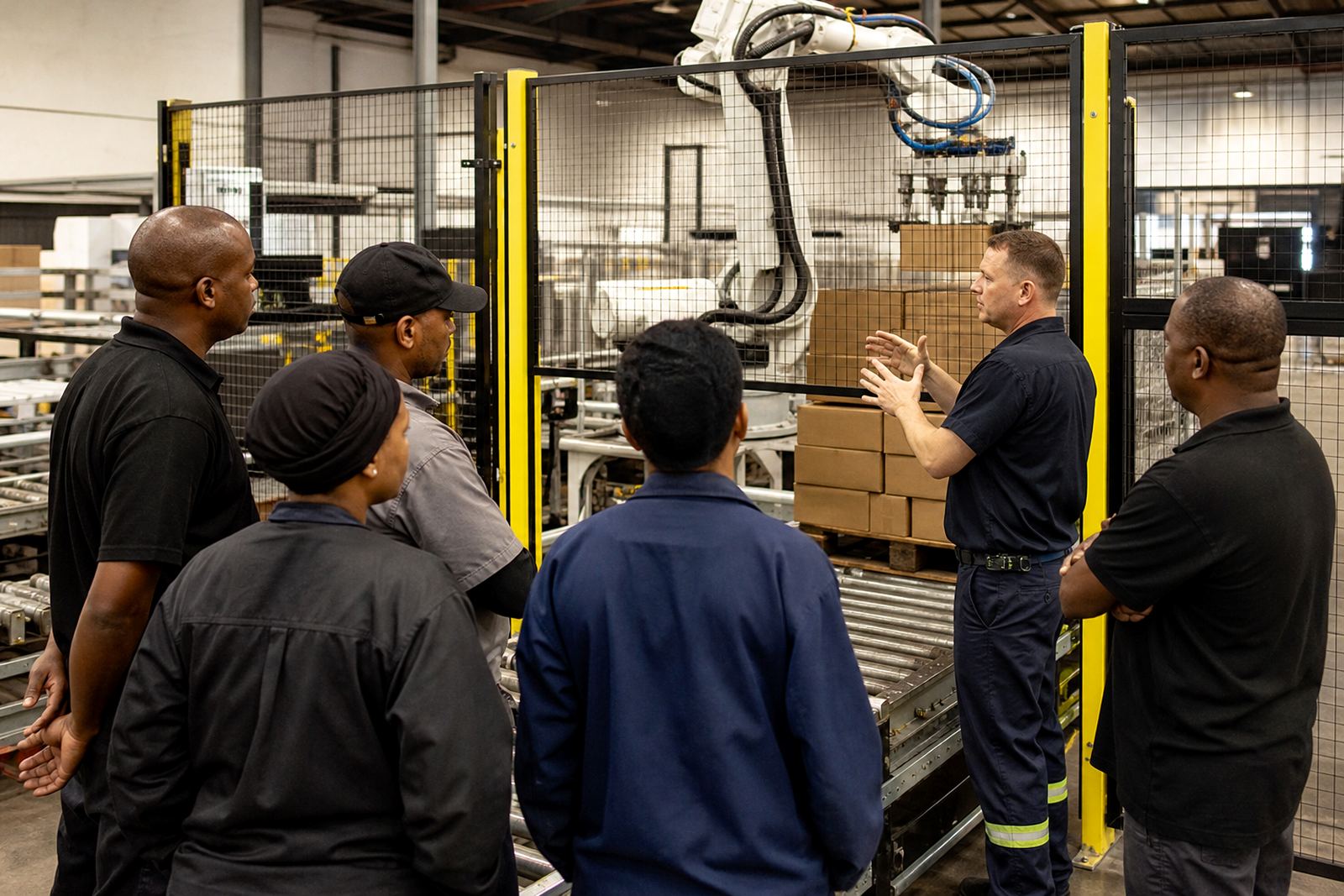
Good training starts by showing operators how the line now works from end to end. That includes how product arrives from the conveyor, where the robot or cobot takes over, what the stack pattern looks like, and how pallets move out without creating a bottleneck. On a retrofit, the team is often dealing with equipment they already know plus new controls, new guarding and a new rhythm on the floor, so the first step is to map the full process in plain language.
At a Kempton Park site, for example, a team may have handled cartons manually for years before a robot was added to the palletising point. Once the retrofit is in place, the line stop-start pattern changes, pallet changeovers change, and the position of the operator changes too. Training should cover where to stand, what to watch, and when to call for assistance, not just how to press start. That is what keeps the line steady during a busy shift.
- Explain the normal sequence from infeed to pallet discharge
- Show each operator what their role is during start-up and shut-down
- Confirm who takes charge if there is a fault or a product build-up
Teach Alarms Before You Teach Speed
Operators should know what each alarm means before production pressure starts building. A fault light, an e-stop, a guard door alarm or a sensor blockage all need a simple response that does not rely on guesswork. If the team only learns to restart the system, they may miss the real cause of a stop and the same problem can repeat all day. That wastes time and can put people at risk.
Training should cover the most common alarm categories on the line and what to do first. Some alarms need the operator to clear a carton, others need maintenance or controls support, and some require the line to remain isolated until the fault is checked. This is especially important where existing conveyors feed into a retrofitted palletising cell, because a fault upstream can look like a robot fault when it is actually a flow issue.
- Show the difference between a stop request, a safety stop and a process fault
- Teach operators not to override alarms without approval
- Use real examples from the site, not only theory
In a Durban warehouse, for instance, a simple misfeed from a wrapping station can trip the palletising cycle and hold up dispatch. If the team knows how to read the alarm and what to check first, the problem is sorted faster and the shift keeps moving.
Safe Interventions Need Clear Boundaries
Safe intervention training is where many lines either stay controlled or start developing bad habits. The team must know exactly what they may do while the line is running, what they may do only after a safe stop, and what must be left to a trained technician. Every site needs its own risk assessment because access points, pallet sizes, conveyor height and pedestrian routes differ from one plant to the next.
In practical terms, this means teaching people how to clear a minor product jam, how to reset a guard after an authorised stop, and when to call for help instead of reaching into the cell. A good retrofit usually includes safety guarding, interlocks and clear access points, but no safety system can replace discipline on the floor. The training has to be direct and site specific.
- Use lockout and isolation procedures as part of the lesson, not as an afterthought
- Show what safe access looks like around the guarding
- Identify tasks that must never be done by an untrained operator
Where line teams work with cobots, the message must be even clearer. A cobot can be useful for a controlled packing or palletising task, but it still needs proper guarding, correct speeds and a defined operating zone. The team should understand that proximity is not the same as permission to intervene freely. That point matters on fast-moving shifts when everyone is trying to keep cartons flowing.
Daily Checks Keep the Retrofit on Track
Daily checks are the simplest way to avoid small problems turning into breakdowns. Operators should know what to inspect at the start of the shift, during changeovers and at the end of the day. These checks are not complicated. They are practical habits that help the line stay consistent, especially on sites in Gauteng and coastal cities where dust, humidity and temperature changes can affect equipment.
The team should be able to spot loose items, damaged cartons, blocked sensors, low air pressure indicators and signs that the conveyor is not feeding evenly. They should also know what noises or movements are not normal. A small shift in a carton guide or a buildup at a transfer point can create repeated stops if it is ignored for too long. In production, a five minute check is often better than a half hour stoppage later.
- Check that sensors, guards and stops are in the correct position
- Inspect cartons, trays or bags for size changes that affect the flow
- Confirm the line is clean and clear before restart
On the East Rand, a packing team may work through seasonal dust and long shifts during peak orders. In Cape Town or Gqeberha, moisture and salty air can add another layer of maintenance attention. Training should make these realities part of the routine, not special cases.
Train Supervisors to Lead the Shift, Not Chase Faults
Supervisors need different training from operators because they are the ones who keep the line stable when things start moving fast. They need to know how to read recurring faults, how to assign roles during a stop, and when to escalate to automation support or maintenance. If the supervisor only reacts after a line has already backed up, the team loses time and confidence.
They should also understand the limits of the retrofit. A new robotic palletising section may improve output, but it still depends on good product presentation, stable conveyor flow and disciplined operator handling. The supervisor’s job is to keep those parts working together. That includes shift handovers, changeover timing and making sure everyone knows the plan for the next batch or pallet pattern.
- Review the line status at the start of each shift
- Track repeat stoppages and raise the issue early
- Make sure new staff are paired with experienced operators
This is where training becomes part of day to day management, not a once-off event. A strong supervisor helps the line stay steady even when labour levels are tight or orders change late in the day.
Keep Training Alive After Commissioning
Training should not end when the retrofitted line starts production. The first few weeks always reveal practical issues that were not obvious during setup. A carton size may change, a pallet pattern may need adjustment, or a product transfer may behave differently under full shift pressure. Follow-up training gives the team a chance to correct those points before they become habits.
It also helps to keep short refresher sessions in the routine. These can cover alarms, safe intervention steps, housekeeping and daily checks. Short sessions work better than long classroom talks because the team can see the actual line and ask about real problems. That is especially useful in busy plants around Johannesburg, Pretoria, Midvaal and Durban where shift pressure can make people rush the basics.
At ReAutomated, training support is usually shaped around the actual line layout, the controls in use on site and the people who will operate the system each day. The goal is fewer avoidable stoppages, safer intervention and a team that understands what good running looks like from the first carton to the last pallet. A well trained line team does more than follow instructions, it keeps the retrofit valuable long after handover.