Why bag handling fails before the robot does
In a packing line, bags are rarely as neat as a carton. They bulge after filling, trap air, shed dust and can twist as they move from the weighing, sealing and discharge points. If the product is powdery, granular or hygroscopic, the bag surface can change through the shift, which affects grip and how the bag sits on a pallet.
That is why bag palletising needs more than a robot arm placed at the end of the line. The full transfer route must be checked, from the conveyor speed and bag spacing to the way the bag lands, turns and presents to the gripper. A small mismatch between the packing machine and the palletising cell can lead to damaged seals, scuffed film or bags that lean in the stack. On some lines the issue is not the robot at all, it is the feed consistency upstream.
Even a good line can struggle if the product changes over the day, or if the sealing machine leaves a weak edge that opens under pressure.
Bag shape and seal integrity need to be checked first
Seal integrity is more than a quality check after packing. It affects how the bag is handled, how it grips, and whether the stack will hold its shape through transport. A bag with a soft seal, an overfilled corner or trapped product on the lip can slip in the gripper or burst when it is compressed into a tight stack.
For retrofit work, it helps to inspect the bags while they are still on the packing line, not only at the pallet. That means looking at corner fill, seal width, bag length variation and the amount of air inside each bag. If the bag shape changes from one batch to the next, the handling solution should allow for that variation instead of forcing every bag into the same movement.
- Check whether the seal can handle the weight above it in a pallet stack
- Confirm that the bag keeps its shape after discharge and transfer
- Measure how much the bag settles after filling and before palletising
- Test whether the product shifts inside the bag during acceleration or braking
These checks matter in plants around Kempton Park, Durban or Cape Town where a mix of product types can run on the same line through the week. A dry product may behave one way, then a finer or more dusty mix can change the handling pattern completely.
Slip risk starts on the conveyor, not only on the pallet
Bag slip is one of the most common reasons for poor stack formation. The problem often starts before the palletising cell, at the point where the bag lands on the conveyor. A smooth belt, a dusty surface or a bag with condensation can reduce friction enough for the bag to drift out of square. Coastal humidity in places like Gqeberha or Durban can make this worse, especially on early shifts.
Conveyor integration needs to account for how the bag behaves at each transfer point. If the bag slides, twists or bounces, the robot has to compensate for a moving target. That may mean adding guiding, timing controls or a short settling section before pick-up. In some cases the answer is a change to the discharge height or transfer angle rather than a more complicated gripper.
Slip risk also affects how the stack settles on the pallet. Bags with a smooth outer layer can move after placement, which makes the lower layers creep outward and puts the load at risk when it is stretch wrapped or moved by forklift. Where this happens often, the line should be reviewed as a whole, not just the final pick point. A pallet stack is only as stable as the bag condition coming into it.
Choosing the right gripper for packed bags
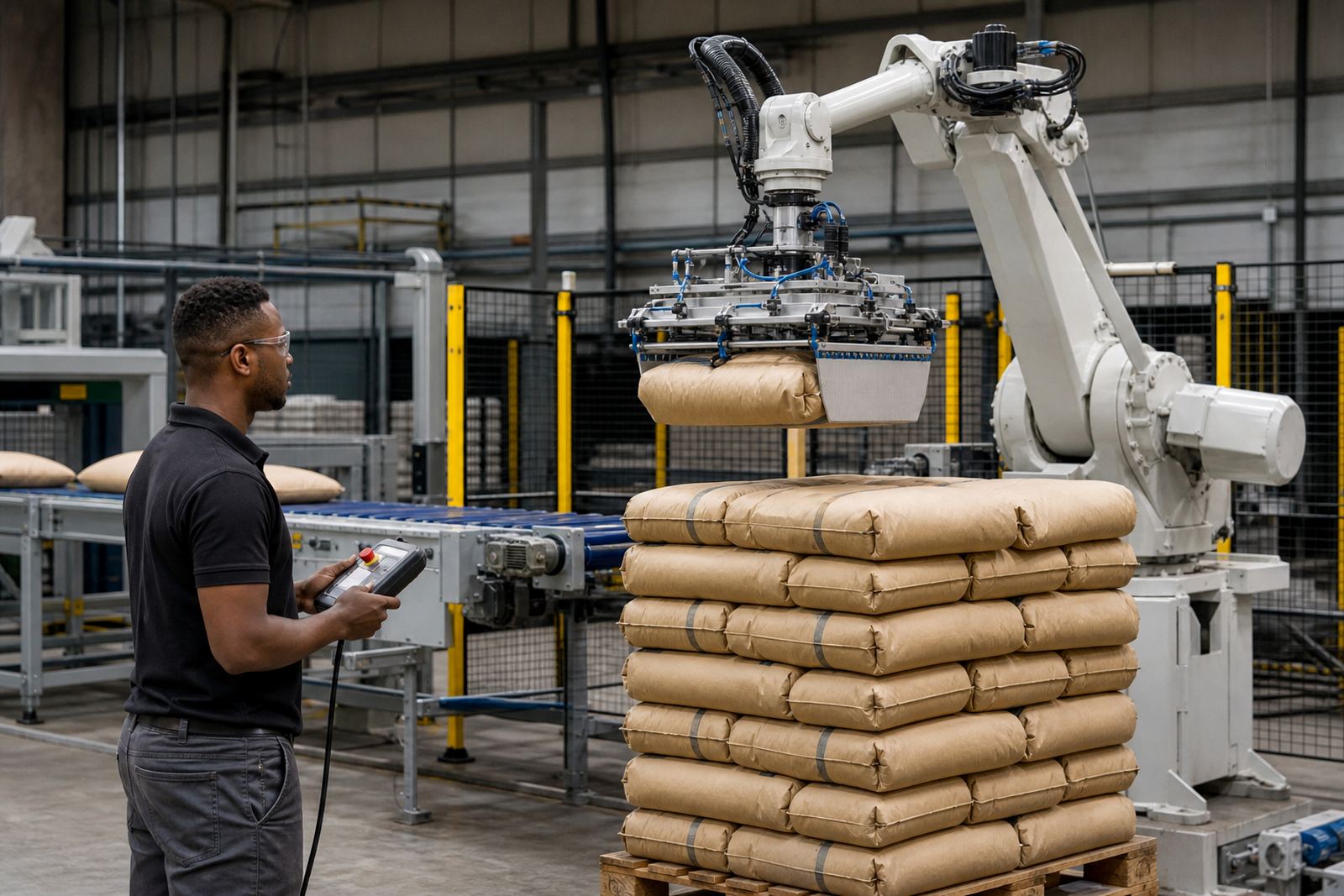
Bag handling usually calls for a gripper that can cope with changing bag shape without crushing the contents. The choice depends on the fill material, bag size and how much the bag deforms when lifted. Some applications suit vacuum assistance, some need mechanical clamping, and some need a combination that supports the bag from below while controlling the top edge.
A good retrofit design balances hold force with product protection. Too much pressure can mark the bag or force material into the seal area. Too little grip can allow the bag to drop, twist or fan out. For heavier bags, the handling pattern must also account for the inertia of the load when the robot changes direction. That is why site testing is so important before finalising the design.
- Match the gripper to bag size, surface finish and fill weight
- Allow for minor shape variation from batch to batch
- Test the gripper with full bags, not only empty samples
- Review the lift path so the bag keeps its shape in motion
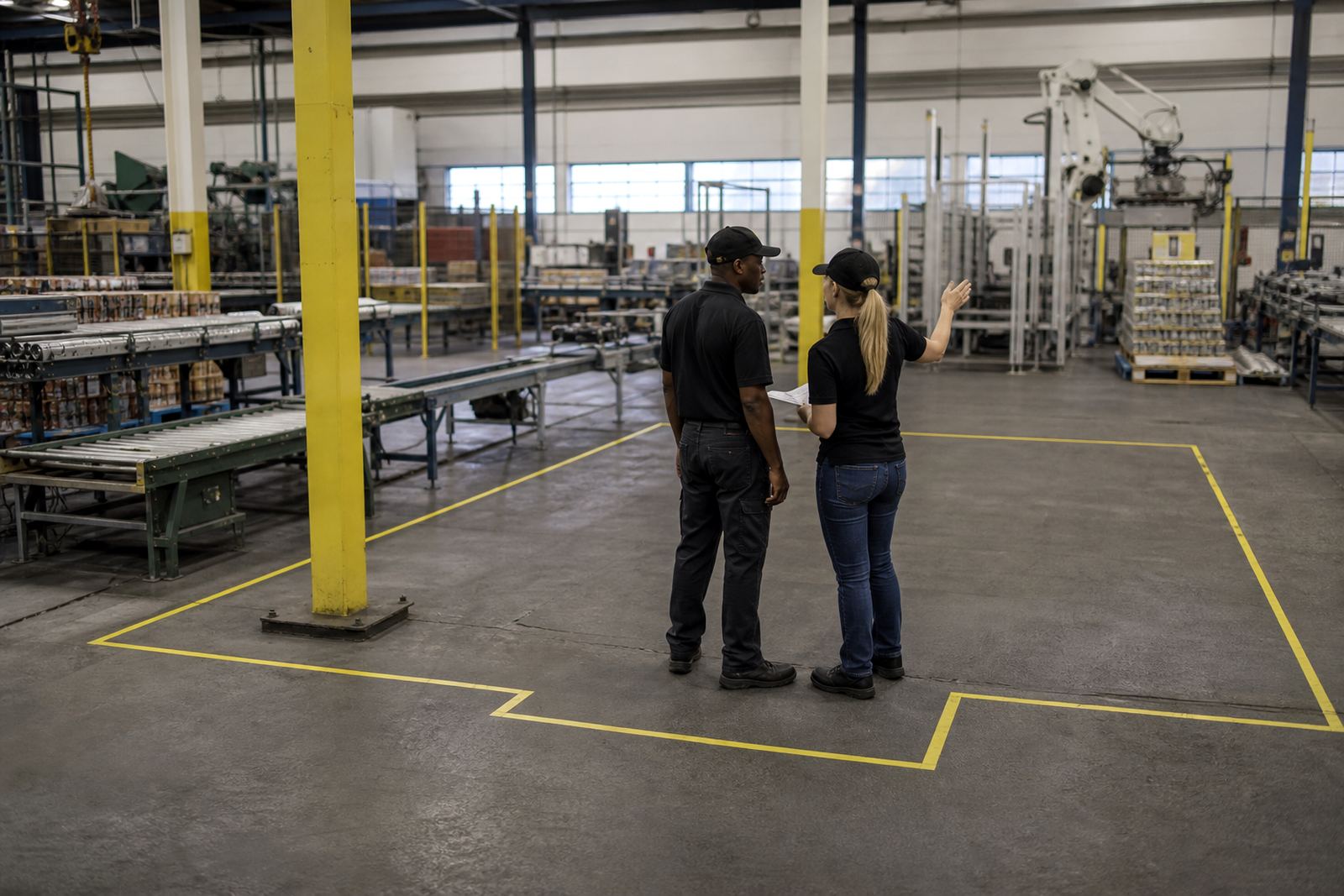
At many plants in Gauteng, older lines were built for manual packing and later upgraded in sections. That can leave uneven transfer heights or tight spaces around the line. A retrofit has to fit the actual floor arrangement, not an ideal drawing. There is no point choosing a good gripper if the approach angle is wrong.
Stack stability depends on pattern, compression and pallet condition
Once the bag is on the pallet, stack stability becomes the main concern. Bags do not lock together like cartons, so the pattern has to be planned to resist shifting. This includes the layer layout, any interlocking pattern used, the number of layers and the amount of compression applied during stacking and wrapping.
The pallet itself must also be in good condition. Broken boards, uneven stringers or damp timber can affect how the bottom layer sits. On sites that handle multiple loads a day, poor pallet quality can undo the work of a good bag handling system. The same applies to floor level, especially where forklifts travel between the packing hall and dispatch yard.
For stable stacking, the line should be designed around the product behaviour, not only the maximum pallet height. A stack that looks fine at the cell can relax after a few minutes, especially if the bags are warm from the filling process or if the product continues to settle. That is why commissioning needs to include a real load test, with the bag type that will actually run in production.
Safety guarding and risk assessments are part of the retrofit
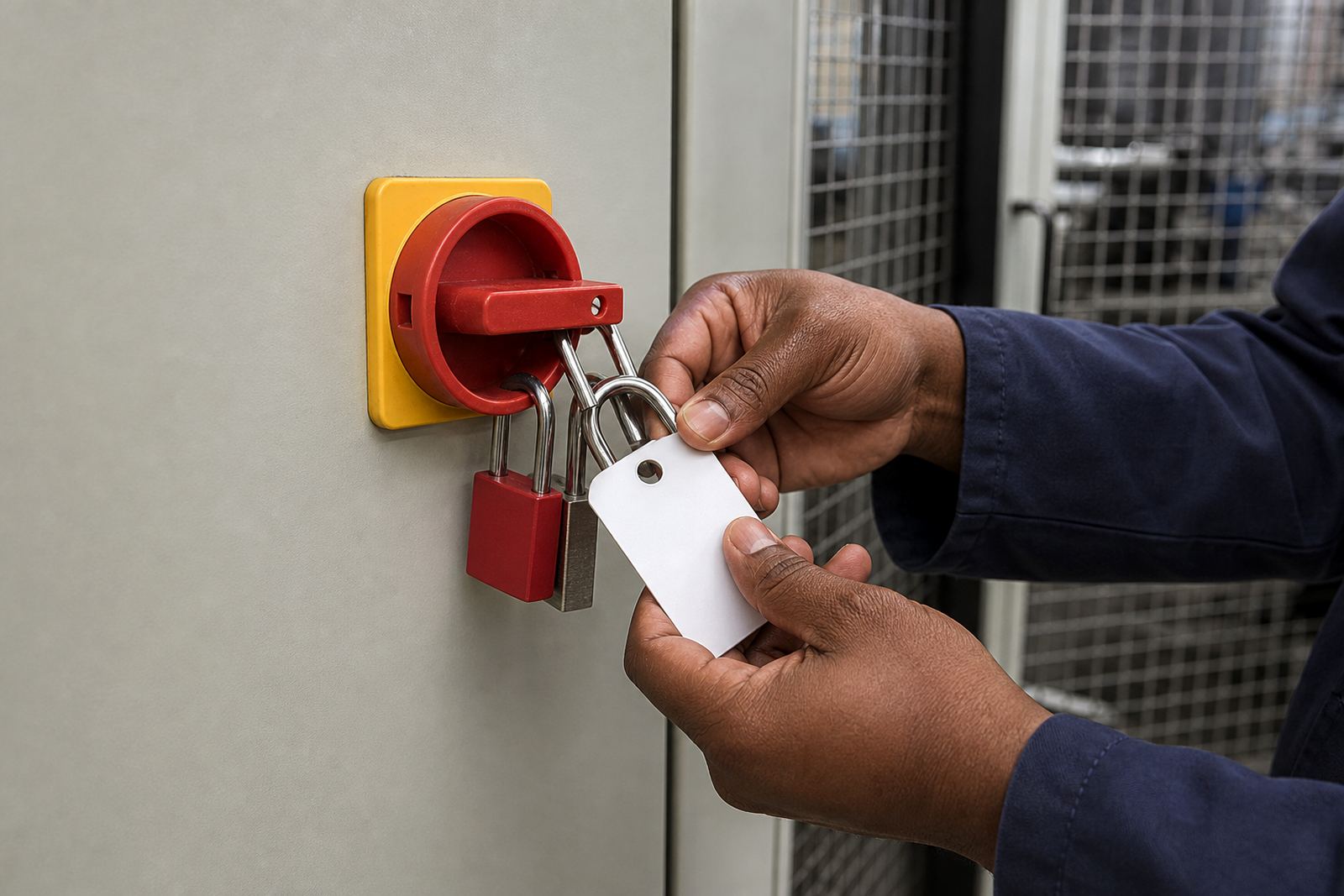
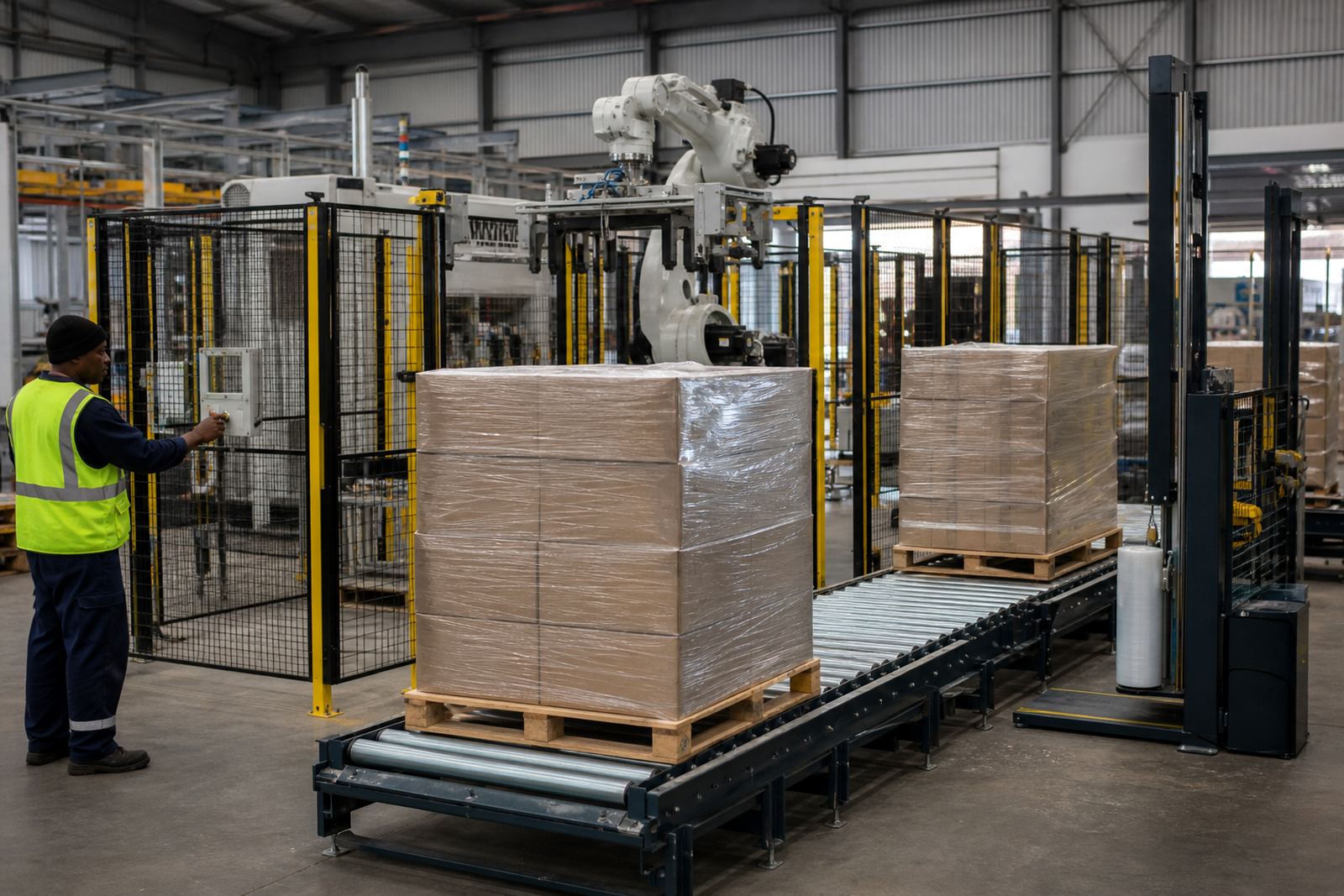
Any robotic palletising retrofit needs proper guarding and a site-specific risk assessment. General safety rules are not enough because each plant has a different layout, access route, pallet flow and maintenance routine. The cell must be designed so operators can work safely around conveyors, robot movement and pallet changeover points.
Good safety design usually includes access control, clear viewing points, emergency stops, safe maintenance access and a layout that keeps people out of the operating zone. The exact approach depends on the site, the speed of the line and whether the robot shares space with other equipment. Where cobots are used, the same principle applies: the system still needs a proper assessment to confirm that the task, speed and interaction are suitable for the plant.
Risk assessment support should cover more than the robot itself. It should include bag jams, fallen product, pallet handling, manual intervention and cleaning routines.A safe system is one that still makes sense when production is stopped, restarted or cleared after a fault.
A local example: dusty product, humid air and changing bag size
A line in the East Rand handling a dusty bagged product may run well on a dry winter morning and then behave differently by afternoon when humidity rises. The bags soften slightly, the seals pick up fine dust and the surface becomes less predictable. If the conveyor timing is too tight, the robot starts picking bags that are not fully settled. That is when corners fold, stacks drift and the pallet wrap has to do too much work.
In that kind of case, the retrofit plan usually starts with a line survey, then a review of bag presentation, conveyor integration and stack pattern. The team may need to adjust the transfer height, add guarding around the new cell, improve controls integration with the existing line and set a clearer maintenance routine for cleaning and wear checks. Sometimes the fix is simple, but it must be based on what the bag is doing in real conditions.
For manufacturers in Johannesburg, Pretoria, Durban, Cape Town and Gqeberha, the lesson is the same. Bag palletising works best when the line is designed around the product as it really arrives, not how it looks on paper. A practical retrofit can reduce manual labour, keep stacks straighter and make the whole line easier to run day after day.