What a retrofit means on a working production line
A retrofit is the process of fitting new automation into machinery and layout that is already in service. In practical terms, that could mean adding a robot to pick cartons, build stable pallet patterns, or manage repetitive packing tasks while the current conveyor system stays in place. The aim is not to scrap what already works, but to improve the parts of the line that are holding production back.
For many manufacturers in Kempton Park, Johannesburg, Pretoria and the East Rand, this approach makes sense because the plant already has conveyors, wrappers, pallet spaces and production routines that are familiar to staff. A retrofit works with that base and adds controlled robotic movement, safer handling and more repeatable output. It is a measured way to modernise a line without turning the whole factory upside down.
At its simplest, a retrofit answers one question: what can be improved without rebuilding everything?
Why plants retrofit before replacing
Full line replacement can be expensive, disruptive and difficult to schedule around orders. A retrofit gives manufacturers another route. It allows a site to introduce automation in stages, starting with the highest pain point such as end-of-line palletising or repetitive packing. That helps production keep moving while improvements are installed and commissioned.
In South Africa, the pressure points are often practical.Coastal humidity in Durban or Gqeberha can affect electrical panels and moving parts if equipment is not selected and maintained carefully. In Gauteng, many plants must work within existing building footprints and municipal rules, which means a retrofit has to suit the space already available.
- Reduce manual lifting on repetitive packing or palletising tasks
- Keep existing conveyors and upstream equipment in service where possible
- Improve consistency in stack quality, cycle times and line flow
- Phase the work to suit production shutdown windows
- Make better use of floor space already allocated to the line
That is why retrofitting is often the more practical choice for food, beverage, FMCG and general manufacturing sites that need results without a full plant rebuild.
What usually gets added during a robotic retrofit
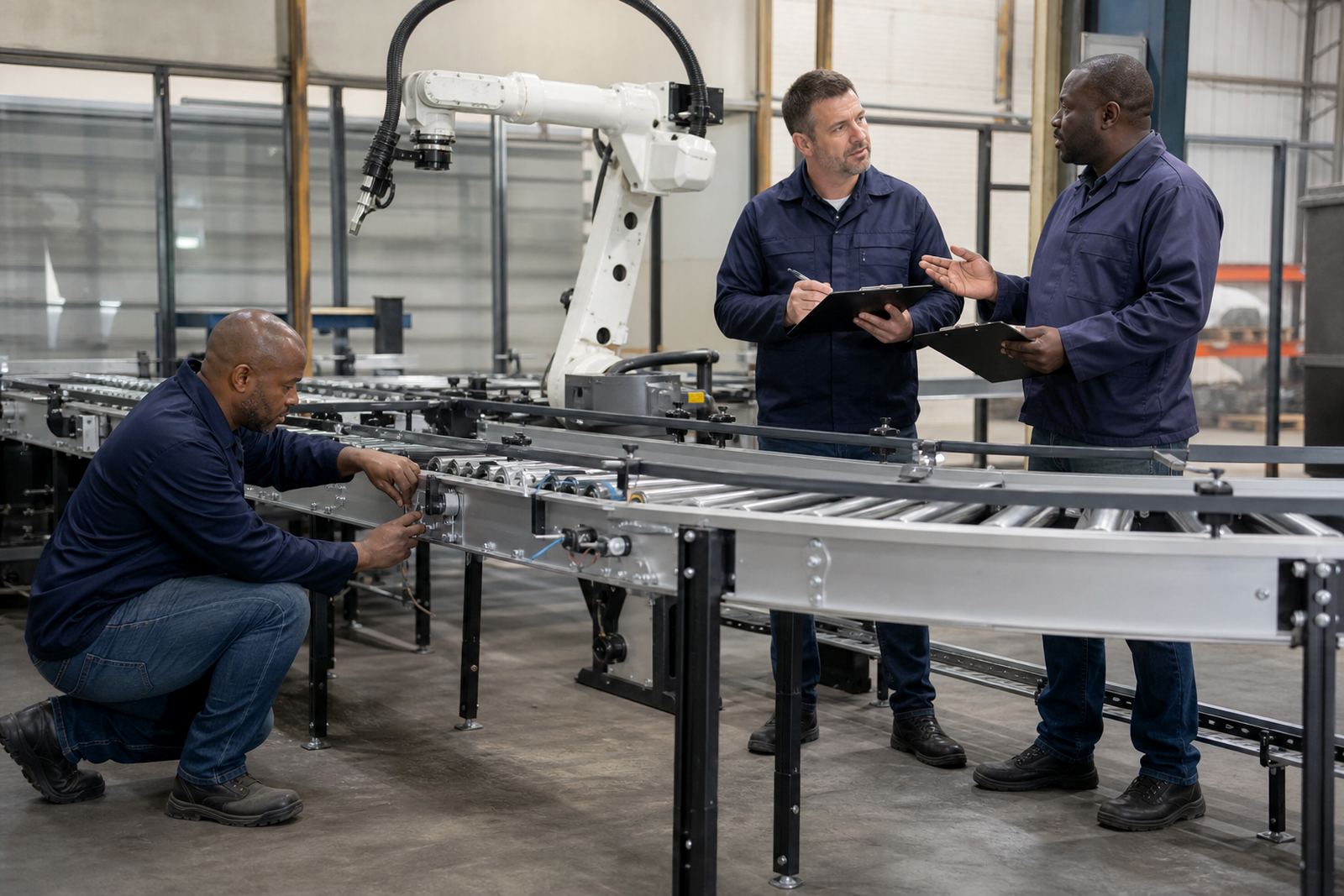
Every site is different, but a packing or palletising retrofit usually involves a combination of mechanical, electrical and controls work. The robot or cobot is only one part of the project. It must receive product at the right height and orientation, work safely around people, and communicate with the conveyor and line controls.
A retrofit may include new guarding, interlocked access points, scanners, sensors, grippers, conveyor transfers, control panels and software changes. If the line uses carton conveyors, the retrofit needs to match existing speeds, product spacing and accumulation. If the line handles bags, crates or cases, the handling tool must suit the product type and the pallet pattern required.
- Robot placement or cobot placement for pick and place tasks
- Conveyor integration for product feed, accumulation and discharge
- Controls integration so the line stops, starts and faults correctly
- Safety guarding design around moving arms and access points
- Operator controls, alarms and fault reset routines
- Support for commissioning, training and maintenance planning
The key point is fit. A good retrofit does not force the plant to change everything around the new robot. It is planned so the robot fits into the existing process with as little disruption as possible.
Safety and risk work cannot be treated as an afterthought
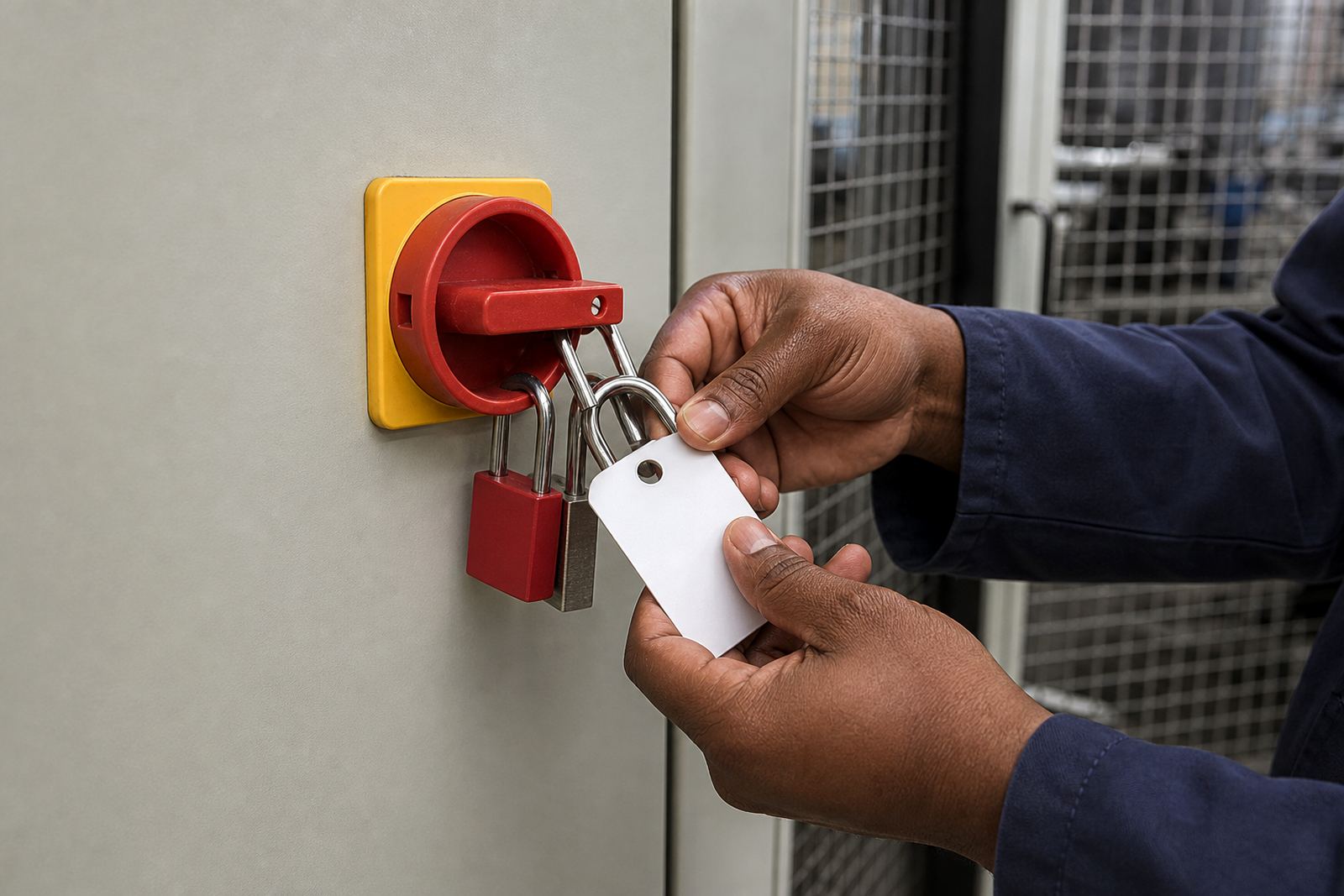
Any robot added to a line changes the risk profile, so safety needs proper attention from the beginning. That means looking at access routes, stopping distances, pinching points, pallet movement, maintenance access and how operators load or clear the line. General safety rules apply, but each site needs its own risk assessment because no two layouts are exactly the same.
On some sites the right answer is full guarding around the robot cell. On others, a cobot may be suitable for a narrower task where lower speeds and carefully designed work zones are acceptable. Even then, the surrounding conveyor, pallet area and operator interface still need careful consideration. The safest layout is the one that matches the actual process, not a generic drawing copied from another factory.
For manufacturers in places like Midvaal or Durban, where space can be tight and production teams work shifts, safe access matters as much as output. A retrofit should allow cleaning, clearing, maintenance and supervision without creating new hazards. If the safety design is rushed, the line may look automated but be awkward to operate and harder to keep compliant.
A local example: fitting robotics into an existing palletising area
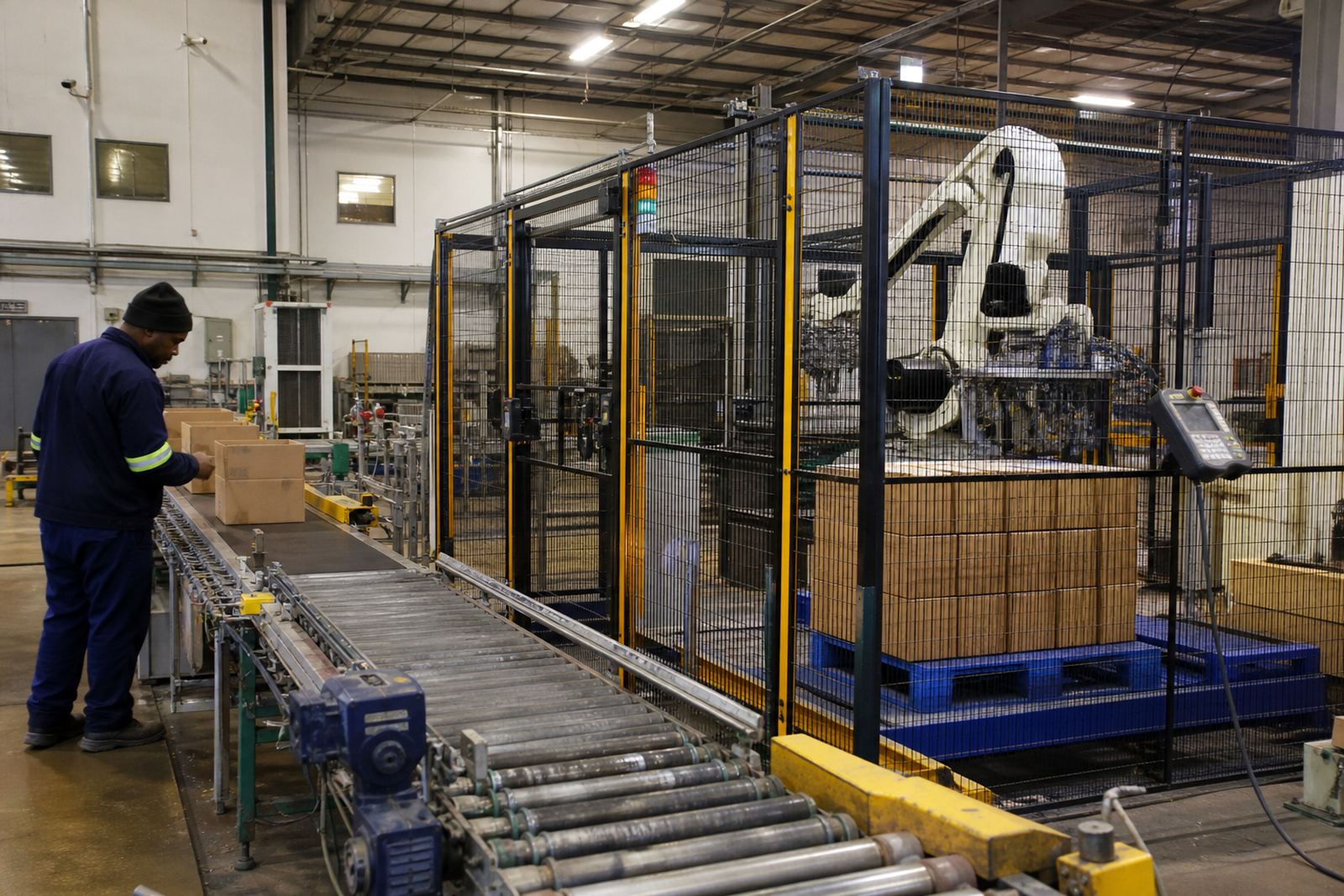
Consider a Gauteng manufacturer running cartons from packing to pallet wrap at the end of the line. The original setup may depend on manual stacking, which slows the line and creates uneven pallets, especially during busy shifts or when absenteeism is high. A retrofit can place a robot beside the existing conveyor, add a pallet magazine and redesign the discharge flow so cartons are collected and stacked consistently.
In a case like this, the line does not need to be stripped out. The conveyor can often stay in place, with changes made to product spacing, carton orientation and pallet presentation. Controls are added so the robot only cycles when product is ready, and the line pauses if a fault occurs. The result is a more controlled end-of-line process that is easier for supervisors to manage.
That same approach can work in Johannesburg, Pretoria or Cape Town, where factories want automation but cannot afford long shutdowns. A retrofit gives them a way to improve the line in stages, usually starting with the section that creates the most manual effort or the greatest delay.
How to judge whether your line is ready for a retrofit
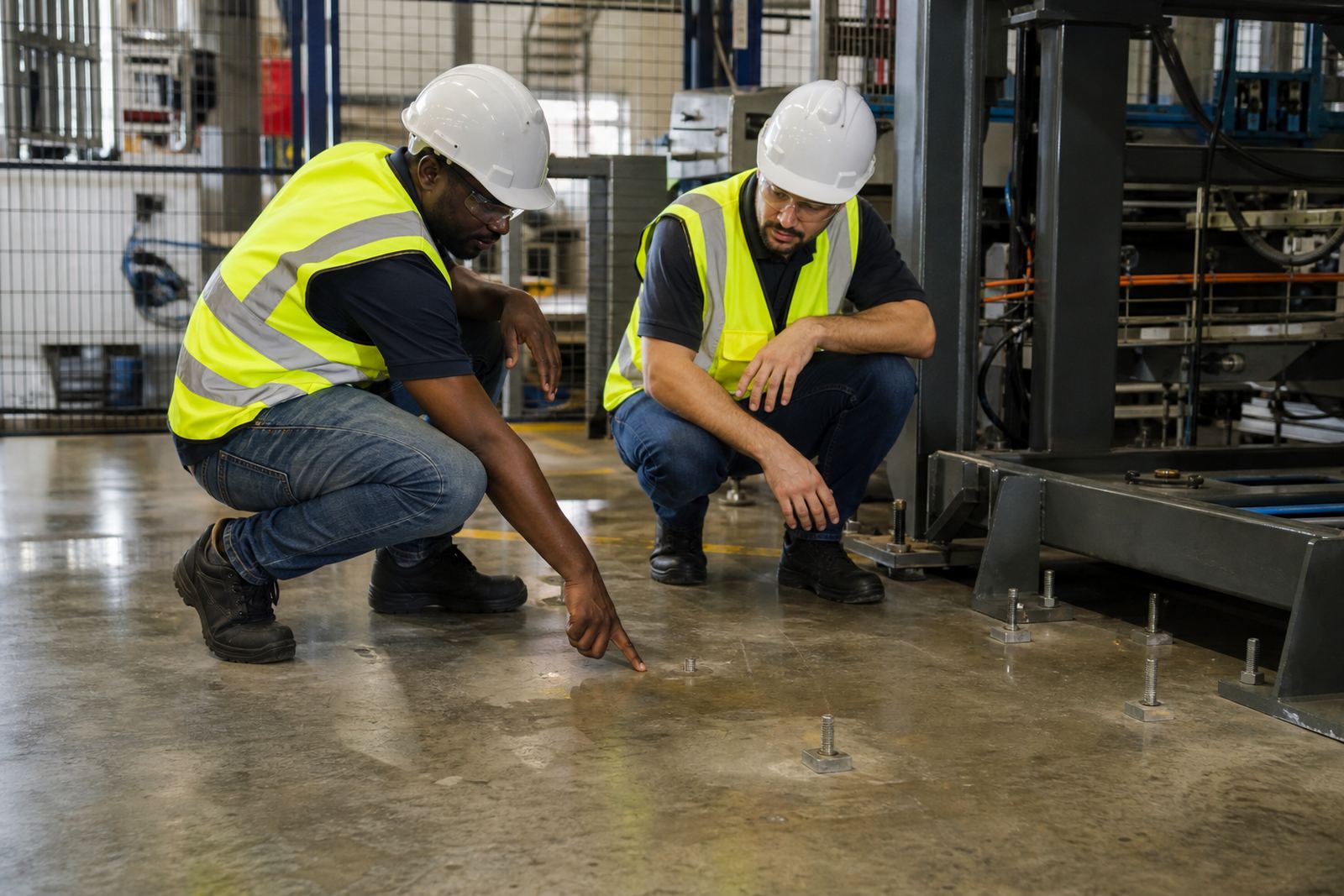
If you are considering robotic packing or palletising, the first step is a site line survey. That review should look at product flow, floor space, conveyor condition, utilities, shift patterns and the current bottlenecks. It should also identify what can stay and what must change. A good survey saves time later because it shows whether the line can support a retrofit or needs more extensive rework.
Plant teams should also ask practical questions before committing. Where will pallets enter and leave the cell? Is there enough clearance for maintenance? Can the existing conveyor handle the pace? Will the new equipment fit under the current roof height and around columns, pipes or fire exits? These details matter more than a glossy concept drawing.
- Does the line have a clear product flow from packing to palletising?
- Is there enough space for guarding and safe operator access?
- Can the conveyor and control system support automated handover points?
- Is there a maintenance plan for the extra equipment?
- Can the change be installed in stages to suit production?
If the answer to most of those questions is yes, a retrofit is often a practical next step. If not, the line may still be suitable, but it will need more engineering work upfront.