Why manual lifting becomes the bottleneck
In many packing rooms, the line itself is not the problem. The trouble starts when cartons, bags, crates or wrapped packs still need to be lifted by hand at the end of the process. That is where fatigue builds up, pace drops and errors creep in.
Manual lifting also creates pressure on supervisors. If one operator is off sick, the rest must carry more of the load. In busy plants around Kempton Park, Johannesburg and Pretoria, that can mean overtime, rushed changeovers and more missed pallets. A retrofit is often a practical first step because it targets the most physical part of the line without forcing a full plant rebuild.
For many sites, the best answer is not to remove people from the process entirely but to reduce the heaviest lifting tasks and keep staff on control, monitoring and quality checks.
Where a retrofit cuts lifting first
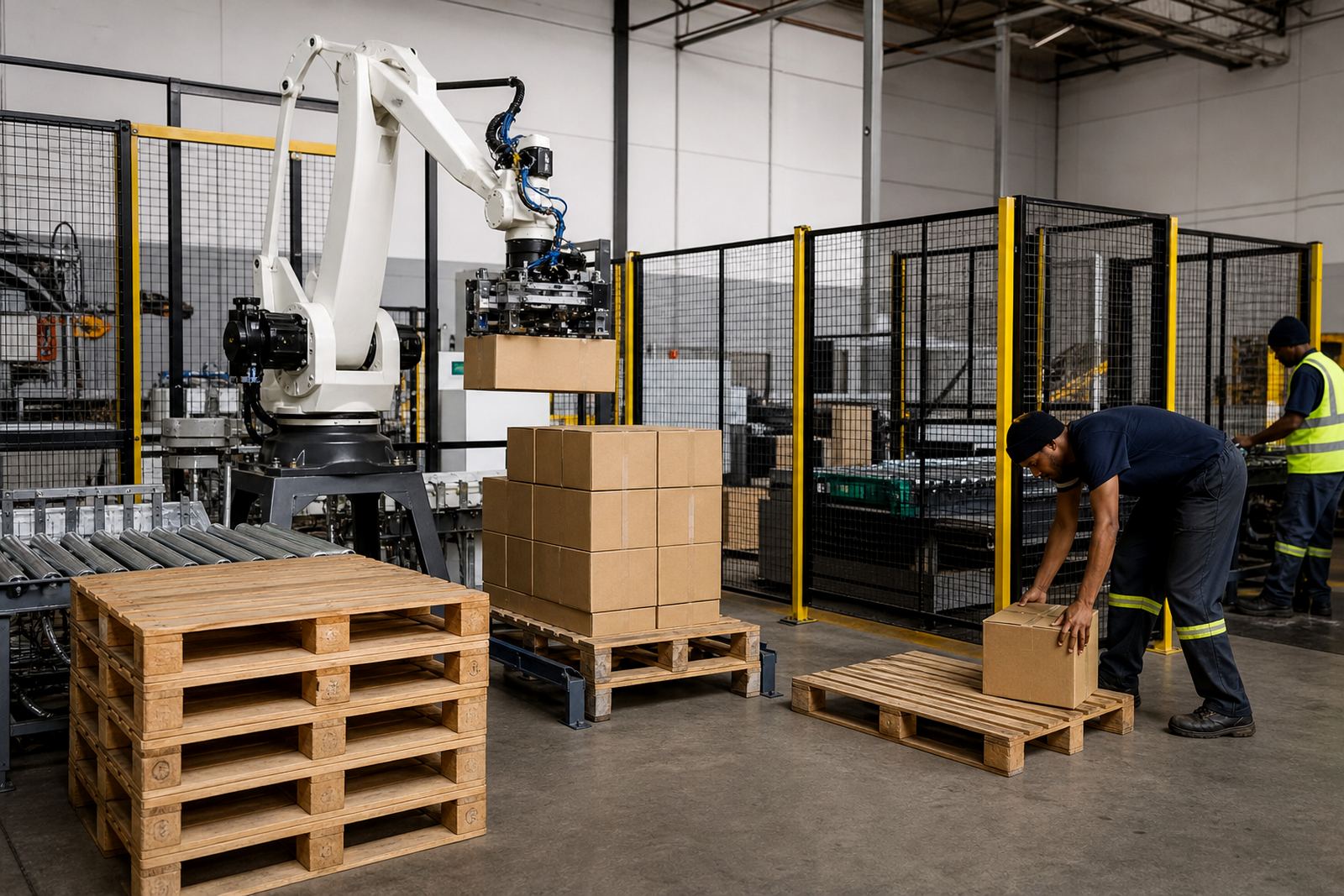
End-of-line automation can be introduced in stages. The starting point is usually the part of the line where products leave the conveyor and need to be packed, grouped or stacked for dispatch. That may involve a cobot handling repetitive placement, a conventional robot palletiser, or a transfer point that feeds packs into a more controlled flow.
On an existing line, the aim is to work with the conveyors already in place and reduce unnecessary manual handling. That means looking at carton size, pack orientation, weight, pallet pattern and available floor space before any equipment is selected. A good retrofit should fit the real rhythm of the plant, not only the brochure layout.
- Carton collection from the conveyor
- Layer building for sacks, cases or shrink-wrapped packs
- Pallet loading from one or more discharge points
- Manual case packing support where full automation is not practical
In some factories, a simple change in transfer height or feed direction can cut a surprising amount of lifting. It is often the small adjustments that make the biggest difference.
Safety guarding and risk work come before the robot
Any lifting reduction project needs proper safety planning. A robot or cobot cannot be installed in isolation and the guarding must suit the actual work area, access routes and maintenance needs. Each site needs its own risk assessment because the hazards differ from one plant to the next. A line in Durban with humid conditions and frequent washdown needs a different approach from a dry warehouse in Midvaal or a high-throughput site in Gqeberha.
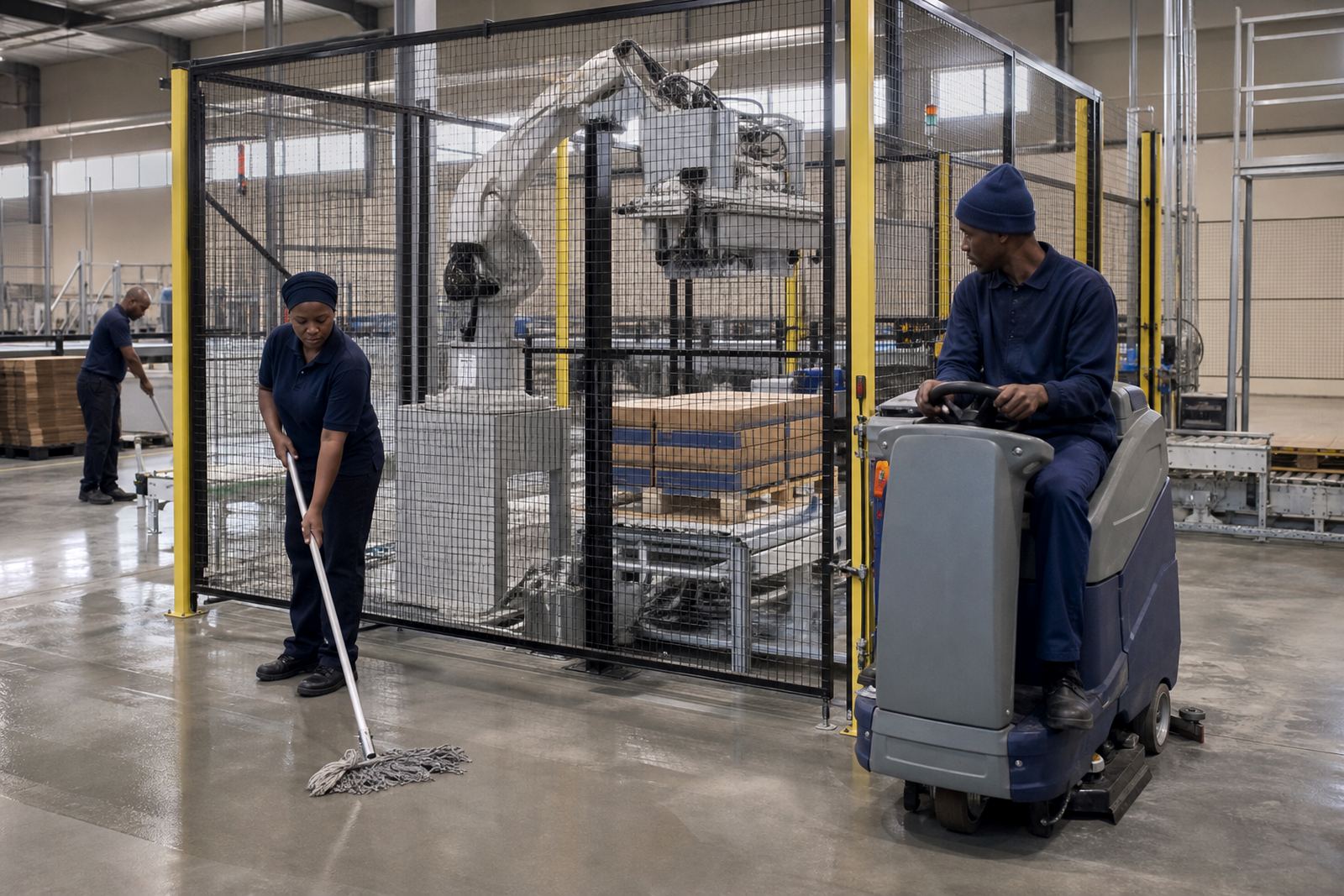
Safety guarding design should take account of pallet movement, operator entry points, emergency stops, maintenance access and forklift traffic. In older factories, there is often a tight fit between existing conveyors, columns and exit routes, so the retrofit must be planned carefully to keep movement sensible and safe.
Good risk work also covers the human side. Operators need clear procedures for clearing jams, changing formats and restarting after power loss.
- Identify manual lift points and pinch zones
- Check access for cleaning and maintenance
- Confirm safe entry and exit for operators
- Plan stop-start behaviour after outages
How cobots help when space is limited
Cobots are often considered where floor space is tight and the required load is moderate. They can support case handling, pick and place tasks or assisted palletising where a smaller footprint is needed. For some lines, that is enough to remove the heaviest hand-offs and reduce repetitive strain without building a large fenced cell.
That said, cobots are not a cure-all. Their suitability depends on cycle time, product weight, reach and the amount of variation in the pack format. If the production target is high and the pallet build is demanding, a conventional robotic palletising setup may be more suitable. The point is to match the machine to the task, not force a single solution onto every line.
Where manual lifting is coming from awkward pack positions rather than sheer weight, a cobot can be a sensible middle ground. It keeps the line moving and gives the team a safer, steadier way to manage repetitive work.
Integration with conveyors keeps the line moving
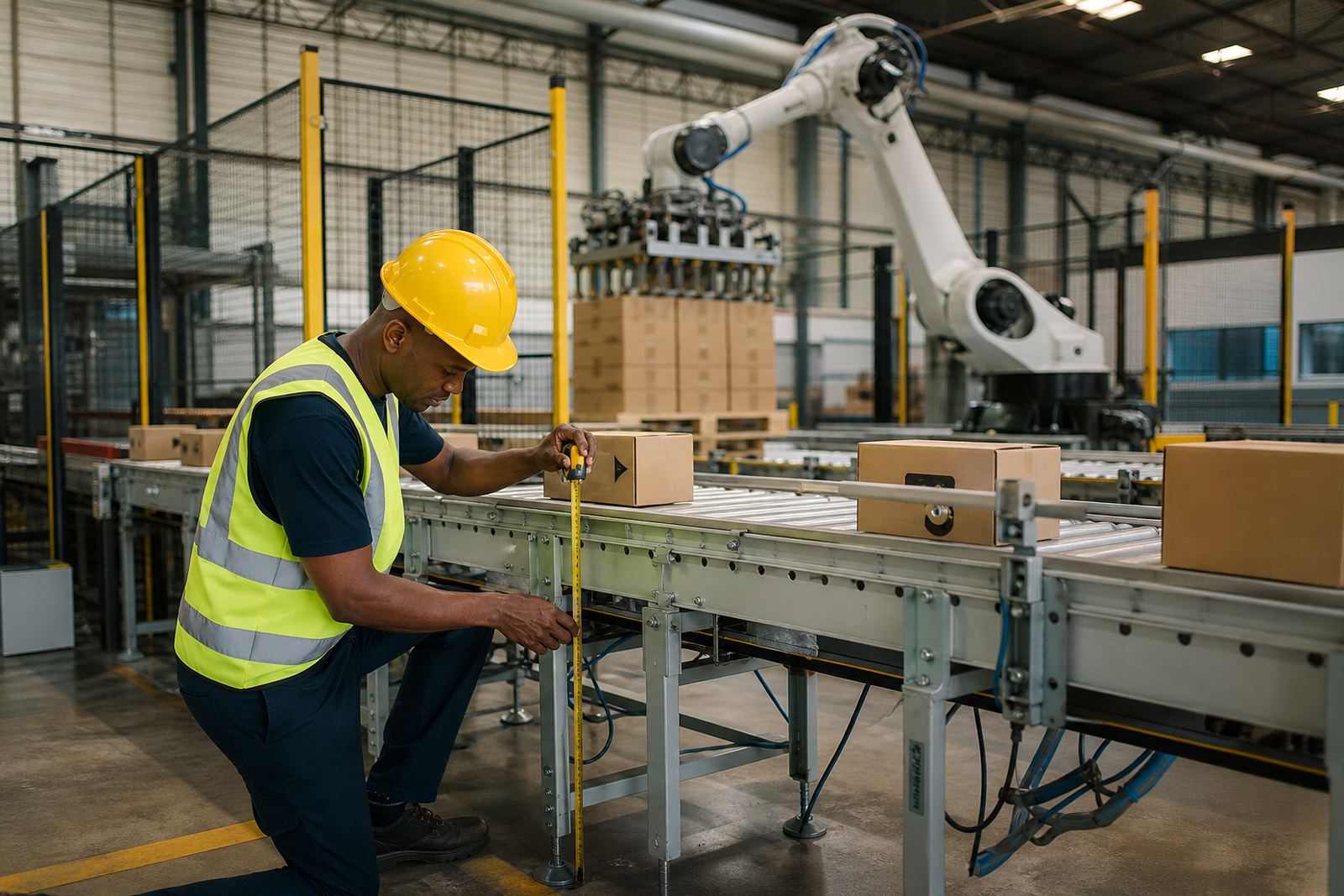
Most lifting problems do not start at the pallet. They start earlier, when product flow becomes uneven. That is why conveyor integration matters so much in retrofit work. If cartons arrive too close together, too far apart or at the wrong height, operators end up compensating by hand. A well-planned retrofit smooths that flow and reduces the need for lifting and carrying between stations.
Controls integration also matters. Sensors, stops, merges, diverters and machine signals must work together so the line can feed the packing or palletising station consistently. Where the existing conveyors are still in good condition, it makes sense to retain them and tie the new automation into the current layout. That keeps capital spend focused on the part of the line that actually causes strain.
For factories across South Africa, especially where power interruptions and older equipment are part of daily life, the best retrofit is one that is easy to understand and maintain. The fewer surprises on shift, the less likely staff are to revert to manual lifting as a quick fix.
A practical example from an East Rand site
Consider a manufacturer in the East Rand with a packing line feeding mixed cartons to palletising at the end of shift. Operators were lifting cases from a conveyor to a pallet by hand, with the heaviest packs reserved for the last part of the run when everyone was already tired. The site was not ready for a full line replacement, but it did need relief from repetitive lifting.
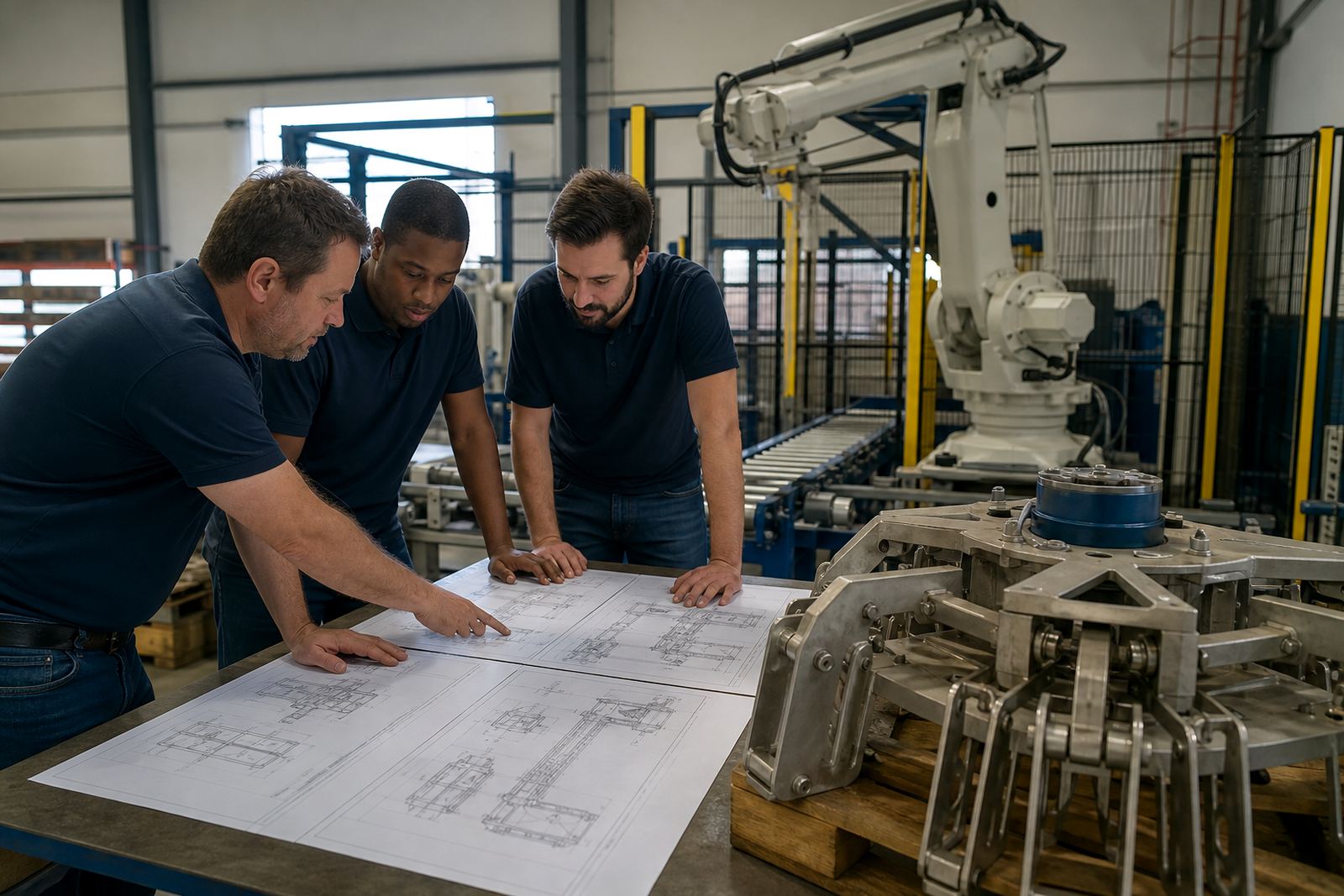
A retrofit approach would begin with a site line survey, a review of the pack sizes and the existing conveyor route, then a risk assessment support process to identify where guarding and access control are needed. From there, the layout could be adapted so the heaviest lifting is taken over by the automation, while operators oversee supply, checks and pallet changes. The result is a cleaner, steadier process with less physical strain on the team.
That same approach suits other plants in Johannesburg, Durban, Cape Town, Pretoria and Gqeberha where end-of-line labour pressure is rising. The detail changes from site to site, but the principle stays the same: remove the hardest lifts first.
What to check before you decide on automation
Before choosing a retrofit, it helps to map the work as it happens now. Many plants know where the strain is felt, but not exactly where it starts. A short review of the line can show whether the solution should be a cobot, a full robot palletiser, a conveyor change or a combination of all three.
The most useful questions are practical ones. How heavy are the packs. How often are they lifted. Where does the flow stop. Can the team still work safely during cleaning, maintenance and format change. Is there space for guarding and access. Can the system recover after a power interruption without creating another manual task.
- Map all hand-lift points from packing to pallet dispatch
- Check whether conveyors can be reused or re-routed
- Test how the line behaves during stoppages
- Plan operator training and maintenance support early
When manual lifting is reduced properly, the line becomes easier to staff and easier to keep consistent. That matters in South African manufacturing, where labour pressure, downtime and power interruptions can all hit the same shift. A well-planned retrofit does not just reduce strain. It gives the line a better working rhythm.