Why cleaning around a cell needs its own method
In a packing or palletising area, cleaning work often happens alongside conveyors, scanners, control panels and safety circuits. That makes it different from cleaning an open production floor. Water, compressed air, detergent overspray and loose debris can all affect how a cell performs, especially where sensors and cable runs are mounted close to the line.
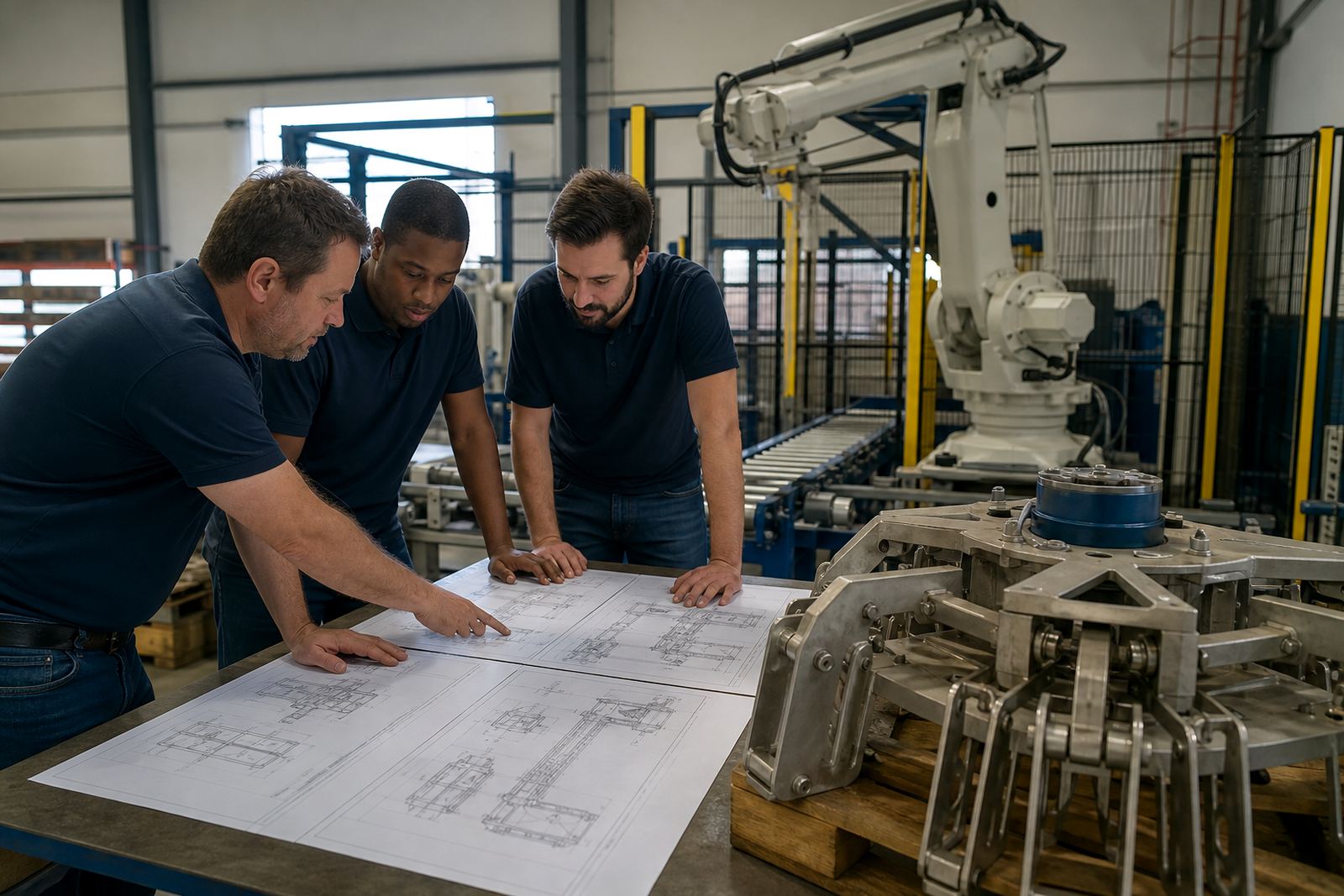
A proper cleaning routine starts with the layout of the cell itself. If access panels open into a walkway, if guarding has been added later, or if a robot sits beside an existing conveyor run, the cleaning team needs to know exactly where they may and may not work. That is why the procedure should be written for the actual installation on site, not copied from a general factory cleaning sheet. In a wet coastal plant in Durban, for example, humidity and salt in the air can mean more care around enclosures and connectors than a dry inland site in Midrand.
- Identify the cell boundary and all access points before cleaning starts.
- Confirm which surfaces may be washed, wiped or vacuumed.
- Keep liquid away from panels, drives, scanners and signal boxes.
Start with isolation, access control and a clean handover
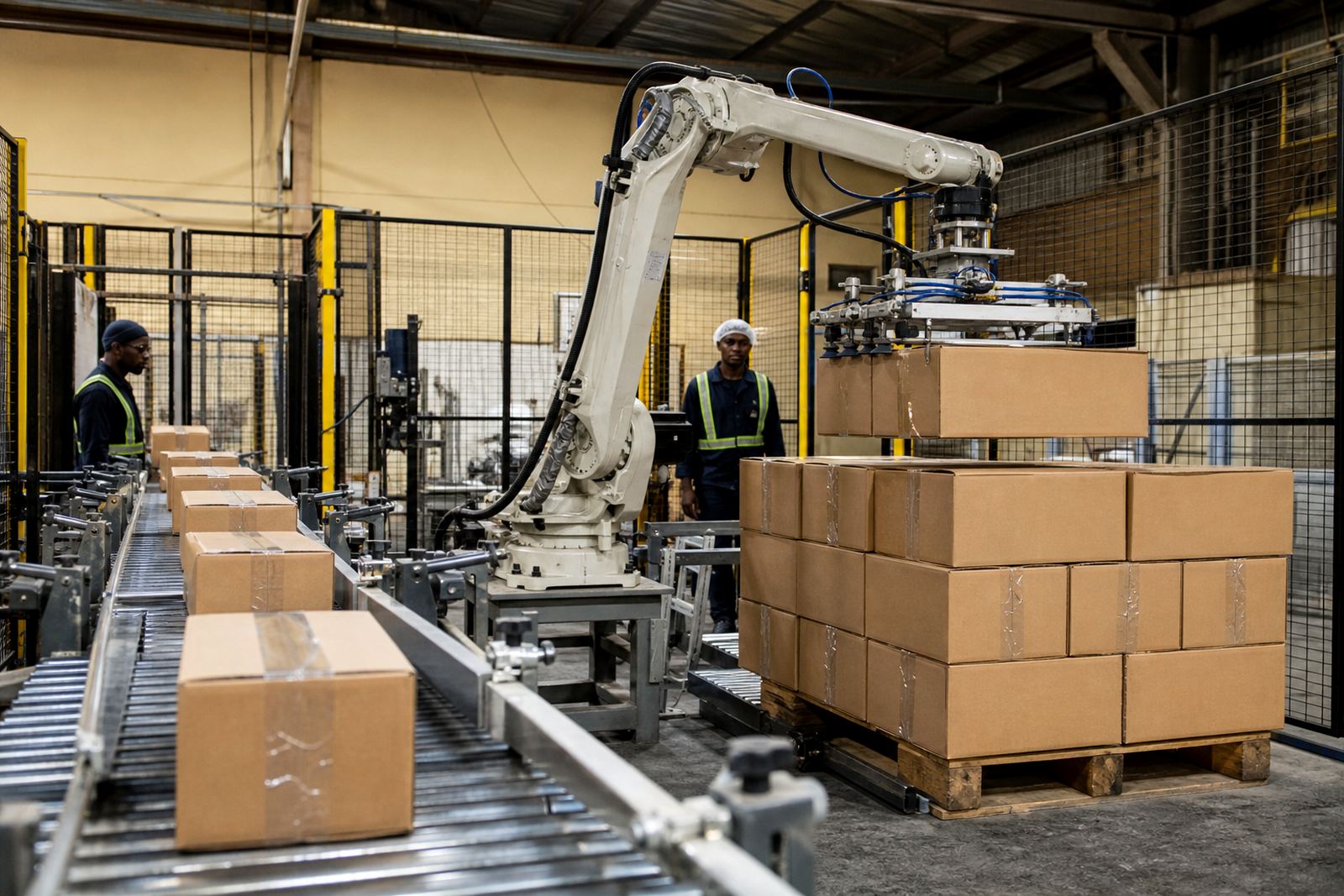
No cleaning team should work inside a cell while the equipment is live, unless the task has been specifically assessed and controlled. The first step is always to isolate the relevant machine group, apply the site lockout process and confirm that the cell cannot restart unexpectedly. Where a system has multiple conveyors, infeed tables and pallet stacks, the stop sequence must cover the full area, not only the robot itself.
Cleaning staff also need a clear handover. If production has handed over a line after a shift change, the team should know which doors are locked, which sections remain hot, and whether any equipment has been left in manual mode for setting work. Gates should never be wedged open and access should never bypass interlocks. That may save a few minutes, but it creates risk for the next person who steps in.
- Use the site lockout procedure before entering the guarded area.
- Check that motion has fully stopped on the robot and conveyors.
- Verify that restart controls are under the right person's control.
Protect sensors, cables and control gear from common cleaning mistakes
Many cleaning problems around cells come from well meant shortcuts. A pressure hose can drive moisture into connectors, a broom can catch a proximity sensor cable, and a spray bottle can leave residue on a vision lens. Even simple dusting needs care because sensors are often mounted where product and pack material move through tight spaces.
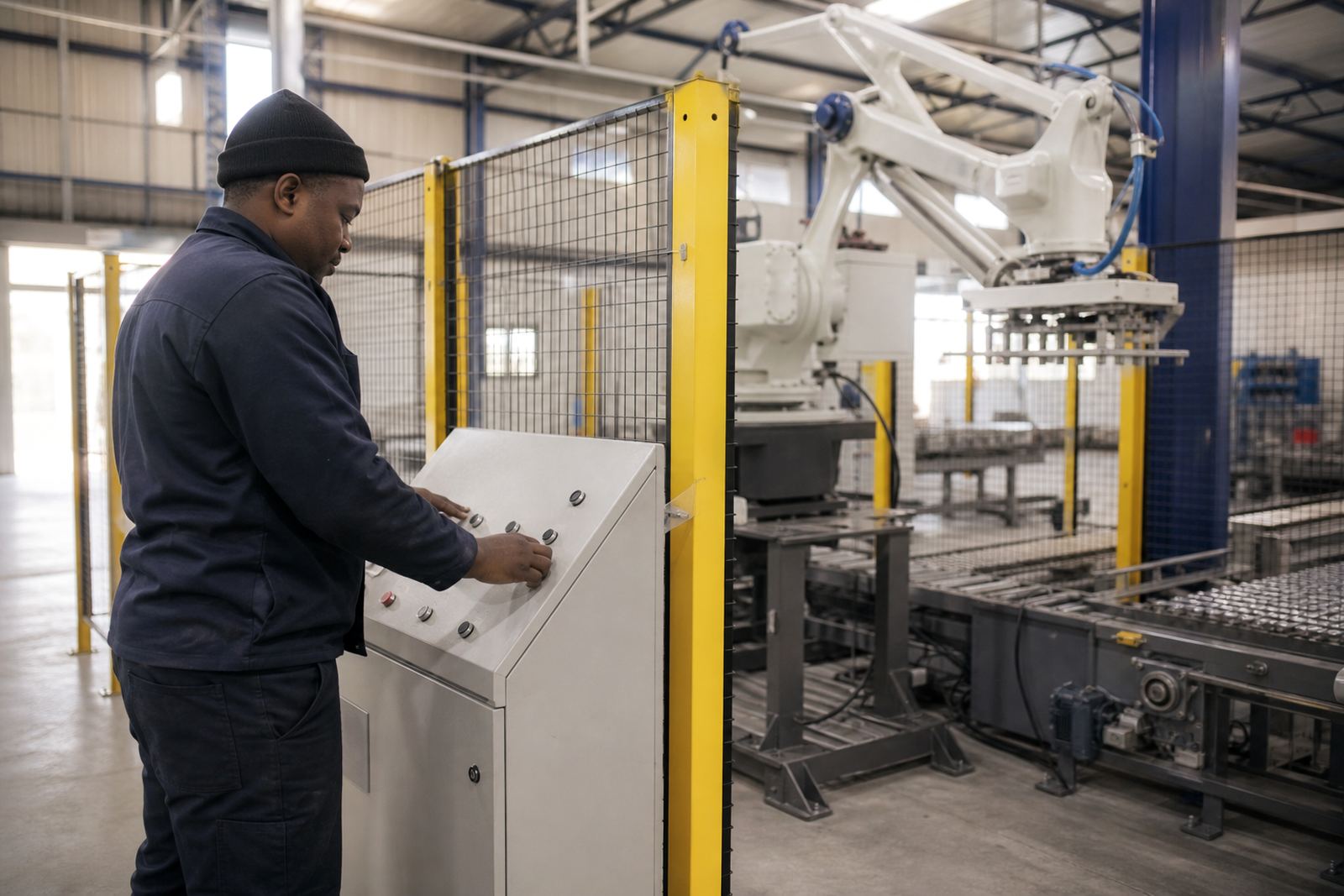
Electrical enclosures, teach pendants, junction boxes and signal towers should be cleaned only in the manner allowed by the site procedure. If a panel has to be wiped, the cloth should be only slightly damp and the method should avoid forcing moisture into seams. Where there is frequent flour dust, cardboard dust or shrink wrap offcut build-up, vacuuming is often safer than blasting the area with air. In some plants, compressed air simply moves the dirt to another part of the cell and can push debris into bearings or limit switches. Keep the nozzle out of the danger zone and away from exposed sensing components.
- Never direct water or air at sensors, motors or electrical panels.
- Use dry vacuuming where fine dust collects around conveyors and frames.
- Inspect for loose cable clips, damaged glands and cracked lenses after cleaning.
Cleaning the floor is important, but so is keeping access clear
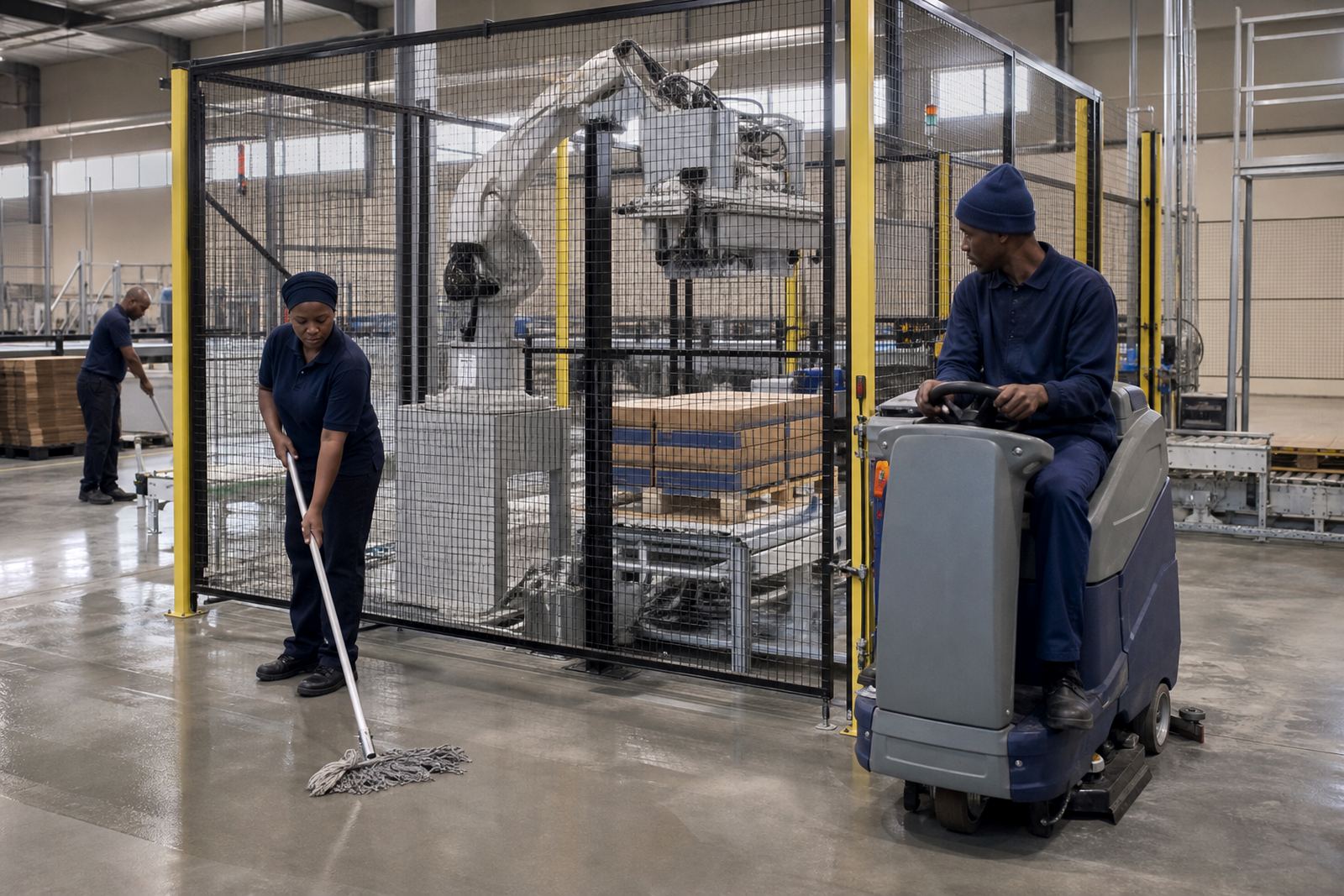
In many facilities the floor around the cell becomes the storage point for spare pallets, stretch wrap, tools and offcuts. That makes cleaning harder and it also interferes with safe access. The area around a palletising cell should remain clear so that operators, maintenance staff and cleaners can move without climbing over stacks or ducking under rails.
Spills need particular attention. If product leakage or broken pack material creates a slippery patch near a conveyor transition, it should be dealt with promptly because the risk is not only a slip. Loose material can be pulled into the line, foul the chain or sit under the guarding where it becomes difficult to remove later. At one plastics plant in the East Rand, the cleaning team found that most repeat blockages were coming from offcut strips that had been pushed under the cell edge during sweeping. Once the team changed to a defined edge-to-centre sweep pattern and used proper waste bins beside the line, stoppages dropped noticeably.
- Keep the cell perimeter free from pallets, boxes and loose tools.
- Remove spilled product before it migrates under guarding.
- Use bins and waste points close to the work area.
Plan cleaning around shift patterns and production pressure
Cleaning around a cell is easier when it is part of the daily operating rhythm, not something squeezed in after production has already fallen behind. A short, predictable clean-down at the end of shift usually works better than a rushed deep clean once a week. It also helps maintenance teams spot wear early, such as frayed belts, missing fasteners or dust build-up around limit switches.
That is useful only if the access restrictions are respected. If a line is stopped for a power outage, the team still needs to verify that stored energy has been released before anyone reaches into the cell. The cleaning supervisor should know who to call if a guard door will not reset, a light curtain is blocked, or a sensor keeps failing after wash-down. Quick reporting prevents small issues from becoming full breakdowns.
- Build cleaning into the shift schedule rather than treating it as an extra task.
- Record repeated contamination points for follow-up by maintenance.
- Escalate damaged guarding or faulty sensors straight away.
A practical standard for South African sites
The best cleaning standard for a robotic cell is one that fits the site, the product and the local conditions. A food packer in Cape Town will have different moisture concerns from a warehouse line in Pretoria or a bottle plant in Gqeberha. A Gauteng site near Kempton Park may deal more with dust, cardboard fines and forklift traffic than humidity, while a coastal facility may need extra attention on exposed metalwork and control boxes.
That is why each site needs its own risk assessment and its own cleaning method statement. It should cover who may clean, what equipment may be used, which parts may be opened and how the area is handed back to production. If the line includes cobots, conventional robots or mixed manual packing stations, the same principle applies: do not assume that one routine suits every cell. Cleaning should support safe operation, not interrupt it.
When the procedure is practical, the cell stays cleaner, the sensors stay more reliable and the team spends less time dealing with nuisance stoppages. That is the real win for any packing or palletising line.