Why a Risk Assessment Comes First
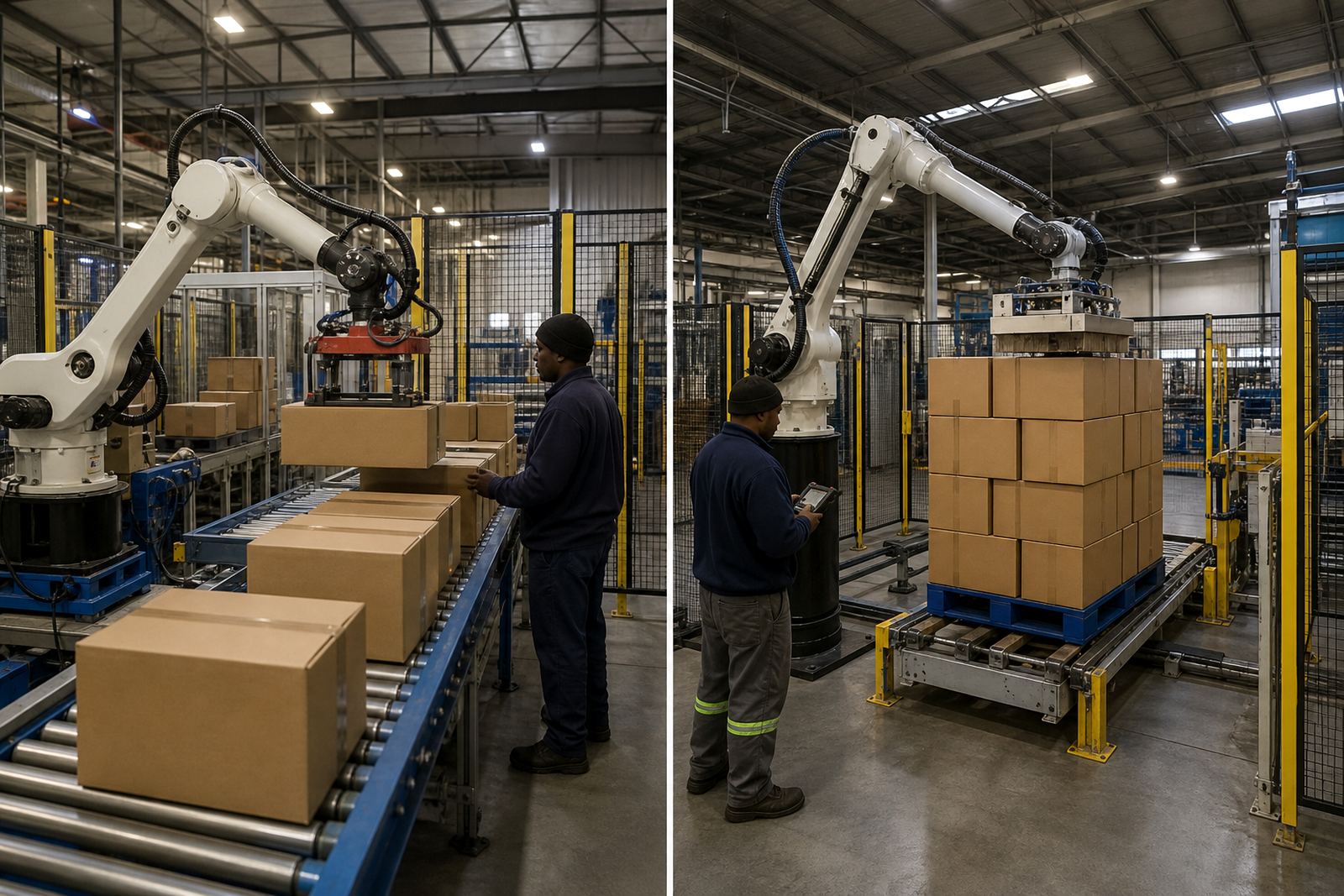
When a packing line is being retrofitted with a robot, cobot or automated palletising cell, the machine is only part of the picture. The real issue is how people, product, conveyors, guards, sensors and control systems will work together after the change. A risk assessment sets that picture out clearly before installation starts, so there are fewer surprises once the line is running.
In practical terms, the assessment helps a factory identify hazards such as pinch points, reach zones, dropped loads, unstable pallets, conveyor transfers, unexpected start-up and restricted access for cleaning or maintenance. It also shows what protective measures are needed and who is responsible for each action. On a busy site in Kempton Park or the East Rand, that can make the difference between a tidy retrofit and a line that keeps stopping for avoidable faults.
What the Assessment Needs to Cover
A useful assessment is site-specific. A generic checklist is never enough, because every production line has its own layout, traffic flow, product size and shift pattern. A bagging line in Midvaal may need different guarding and operator access from a carton line in Durban or a shrink-wrapped pack area in Cape Town where floor space is tight and corrosion from coastal humidity can affect cabinets and fittings.
- Where people enter the line and where they should never enter during automatic running
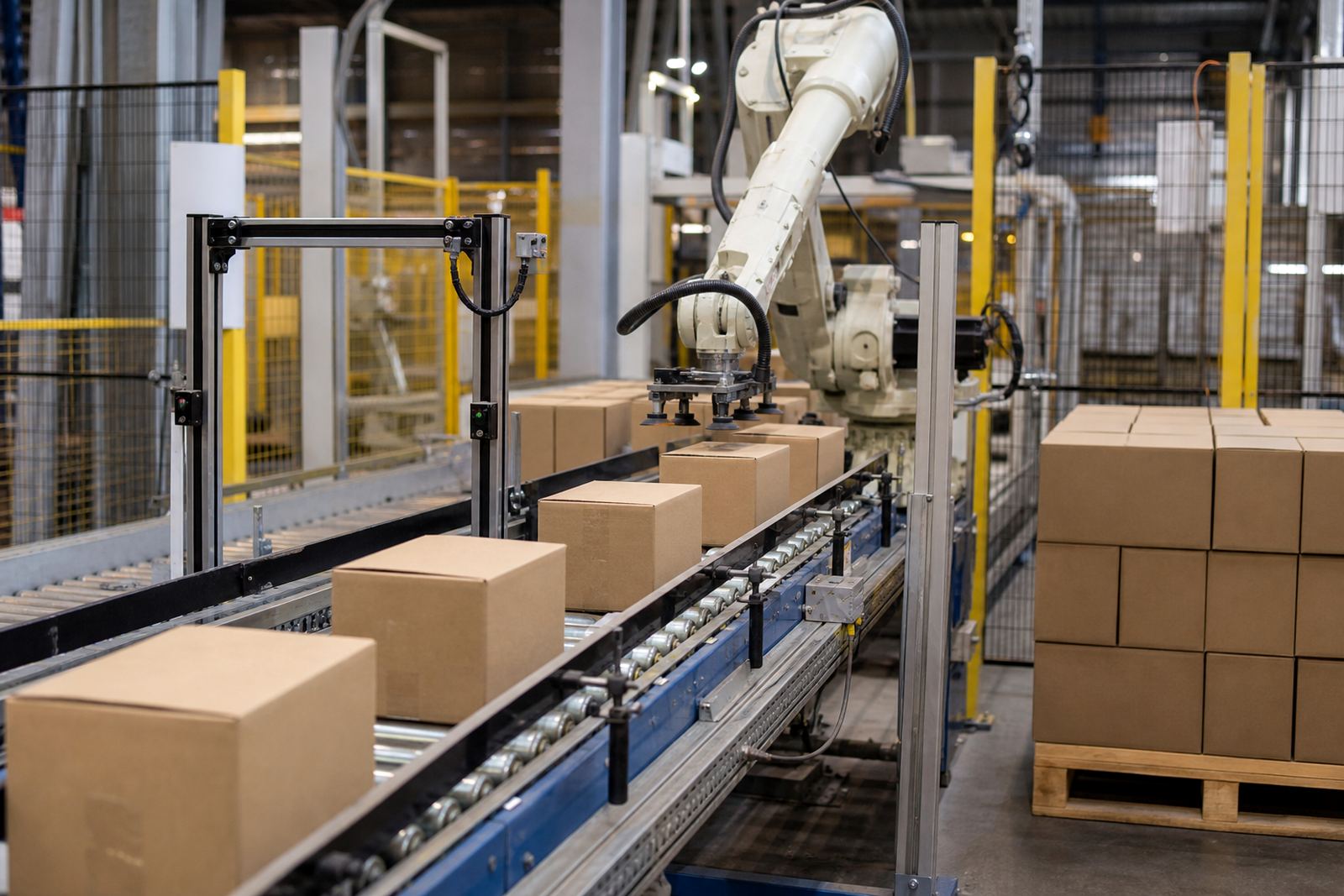
- How product moves from existing conveyors into the robot work area
- What happens if a carton, sack or tray is misaligned
- Whether manual intervention is still needed at any stage
- How power loss, or air supply failure affects safe stopping
- How maintenance staff will isolate the system before working on it
For many plants, the assessment also needs to consider forklift routes, pallet wrap areas, racking clearances and access for cleaning teams. If a palletising cell blocks a fire exit or creates an awkward material flow, that needs to be resolved before commissioning, not after.
Protective Measures That Match the Risk
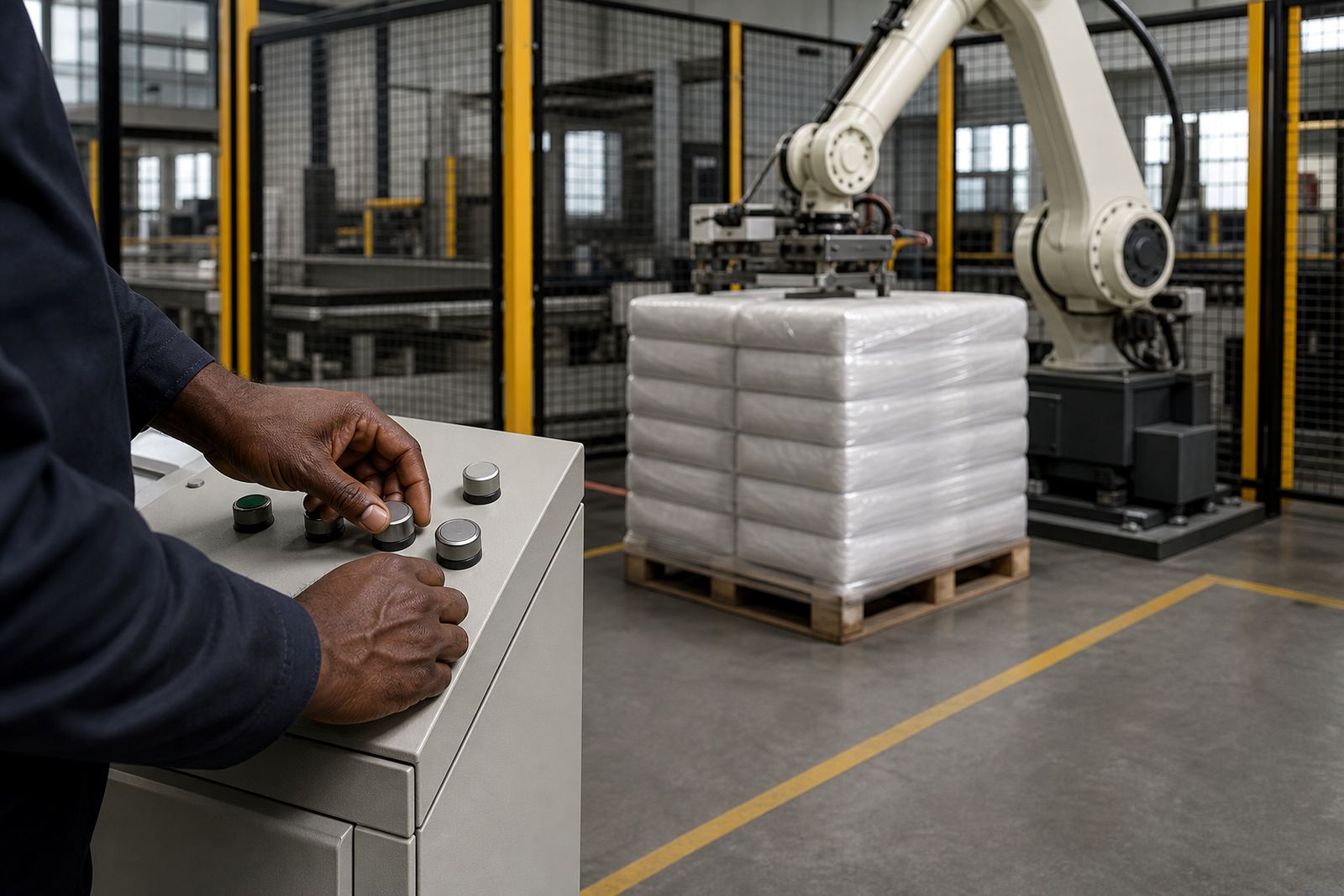
Once the hazards are understood, the next step is choosing controls that actually suit the line. Safety guarding is often part of the answer, but it is not the only one. Depending on the application, the retrofit may need fixed mesh guarding, interlocked doors, light curtains, safety mats, warning beacons, emergency stops, lockout points and clearly marked pedestrian routes. Some lines also need speed reduction or collaborative operation where the task allows it and the risk assessment supports that approach.
The point is not to add as much equipment as possible. The point is to apply the right protection in the right place. If operators need to clear jams at the infeed, the access point must be designed with that in mind. If a palletiser works next to a conveyor transfer, the guarding needs to protect hands, feet and body movement around the transfer zone. The controls must also stop the robot and associated conveyors in a safe sequence, not all at once in a way that causes product damage or another hazard.
- Guarding should not block safe maintenance access
- Emergency stops must be easy to reach and clearly marked
- Doors and access points should fail safe when opened
- Indicators and alarms should be visible from normal operator positions
- All protective devices should be tested before handover
Responsibilities Before Commissioning Starts
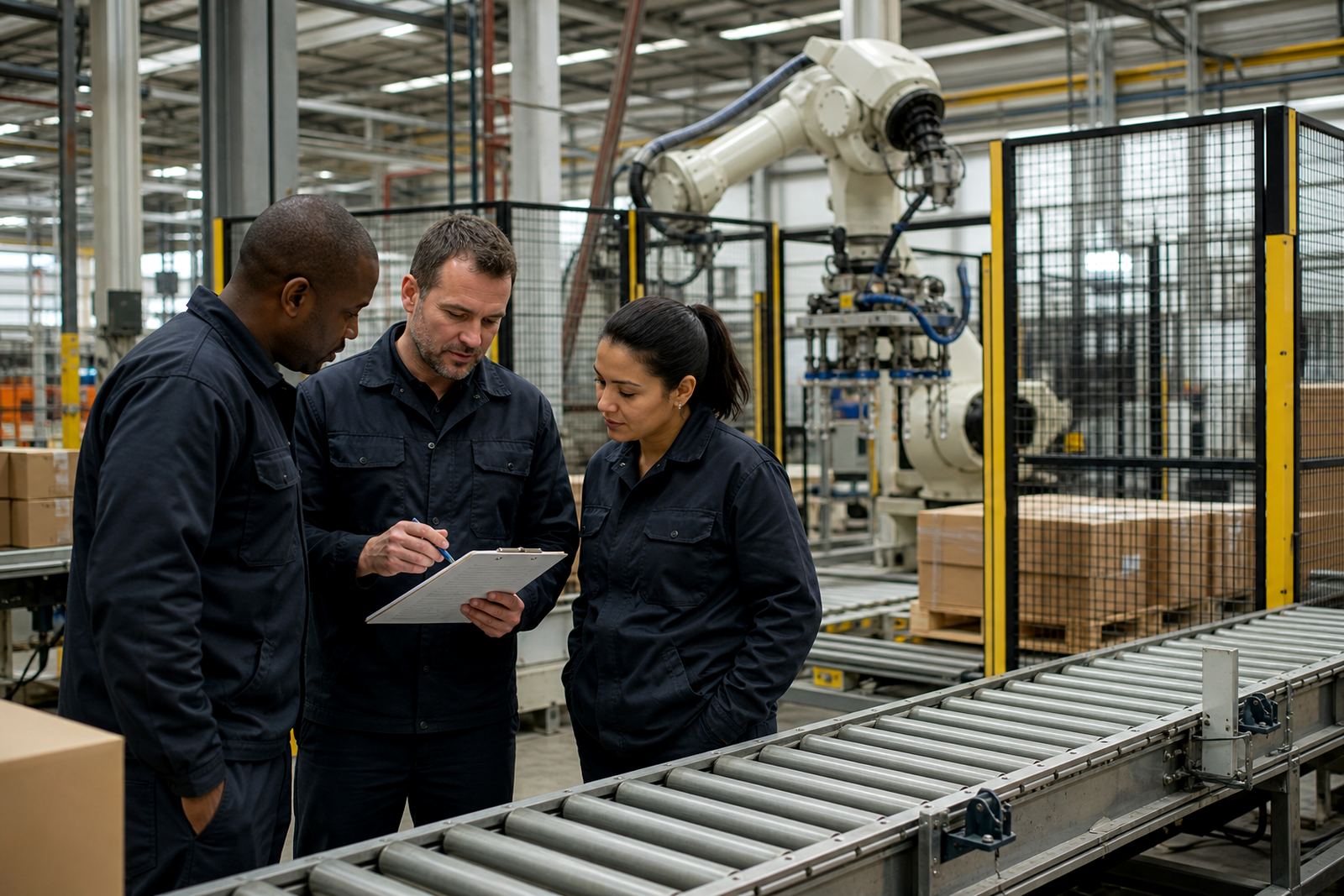
A good risk assessment does more than identify hazards. It also makes responsibilities clear. On a retrofit project, the manufacturer, integrator and site team all have different duties. The site team knows the production demands, shift patterns and housekeeping realities. The retrofit team knows how the robot, conveyors, controls and guarding will interact. Both sides need to agree on who handles each action, from steelwork changes to operator sign-off.
Before commissioning, someone must confirm that the line layout matches the final drawings, that electrical and control changes are complete, and that the safety devices have been tested. Operators should also know what to do during a stop, a fault reset and a manual intervention. If the line runs across multiple shifts, that training must cover all relevant staff, not only the day team. In our experience, a rushed handover without clear responsibilities often leads to confusion during the first week of production.
A Local Example From a Gauteng Retrofit
Take a packing and palletising line in Spartan, Kempton Park, feeding product onto existing conveyors and into a new robotic palletising cell. The line is working in a warm production area with fork truck movement nearby and limited floor space. A proper assessment would look at the infeed height, pallet build pattern, guard positioning, pedestrian access, emergency stop locations and what happens when the site experiences a power interruption.
If the plant also runs early mornings and night shifts, the assessment should include lighting, visibility of markings, and how operators will approach the cell during cleaning or changeovers. In a Durban site, humidity may affect some fittings and enclosure protection. In Pretoria, the focus might be on heat, dust and a high pace of throughput. The principle is the same everywhere: assess the actual site conditions, not just the machine drawing.
That is why manufacturers across Johannesburg, Pretoria, Durban, Cape Town and Gqeberha should treat the assessment as part of production planning, not as paperwork after the fact. It protects people, supports uptime and gives the maintenance team a system they can live with.
What Good Commissioning Depends On
Commissioning goes smoother when the risk assessment has already been done properly. The controls team can test each sequence with the safety system in place, the installation team can check guarding clearances, and the operations team can confirm that the line suits the real product flow. If the assessment has been thorough, there is less need for last-minute changes that delay start-up.
A sound commissioning plan usually checks the following:
- All safety devices installed and tested
- Conveyor handovers running without product snagging
- Robot movement limits matching the site layout
- Operator access points clearly labelled
- Maintenance isolation points identified
- Training completed for operators, supervisors and technicians
For ReAutomated, this is where the retrofit becomes practical. The line is not only fitted with automation, it is set up to operate safely with the people who work there every day.
Why South African Sites Benefit From Site-Specific Planning
South African factories do not all face the same conditions.Others deal with coastal corrosion, uneven floors, mixed manual and automated handling, or municipal compliance issues around access routes and fire exits. A site in Johannesburg may have different traffic movement from one in Gqeberha or Cape Town, while a line in Midvaal might have more space but a heavier reliance on forklift transfers.
That is why a risk assessment is not a box to tick. It is the planning tool that helps a retrofit fit the factory instead of forcing the factory to fit the retrofit. When the hazards are identified early, the measures are clear, and everyone understands their responsibilities, the result is safer operation and less disruption to production.