What Vacuum Gripper Tooling Does on a Retrofit Line
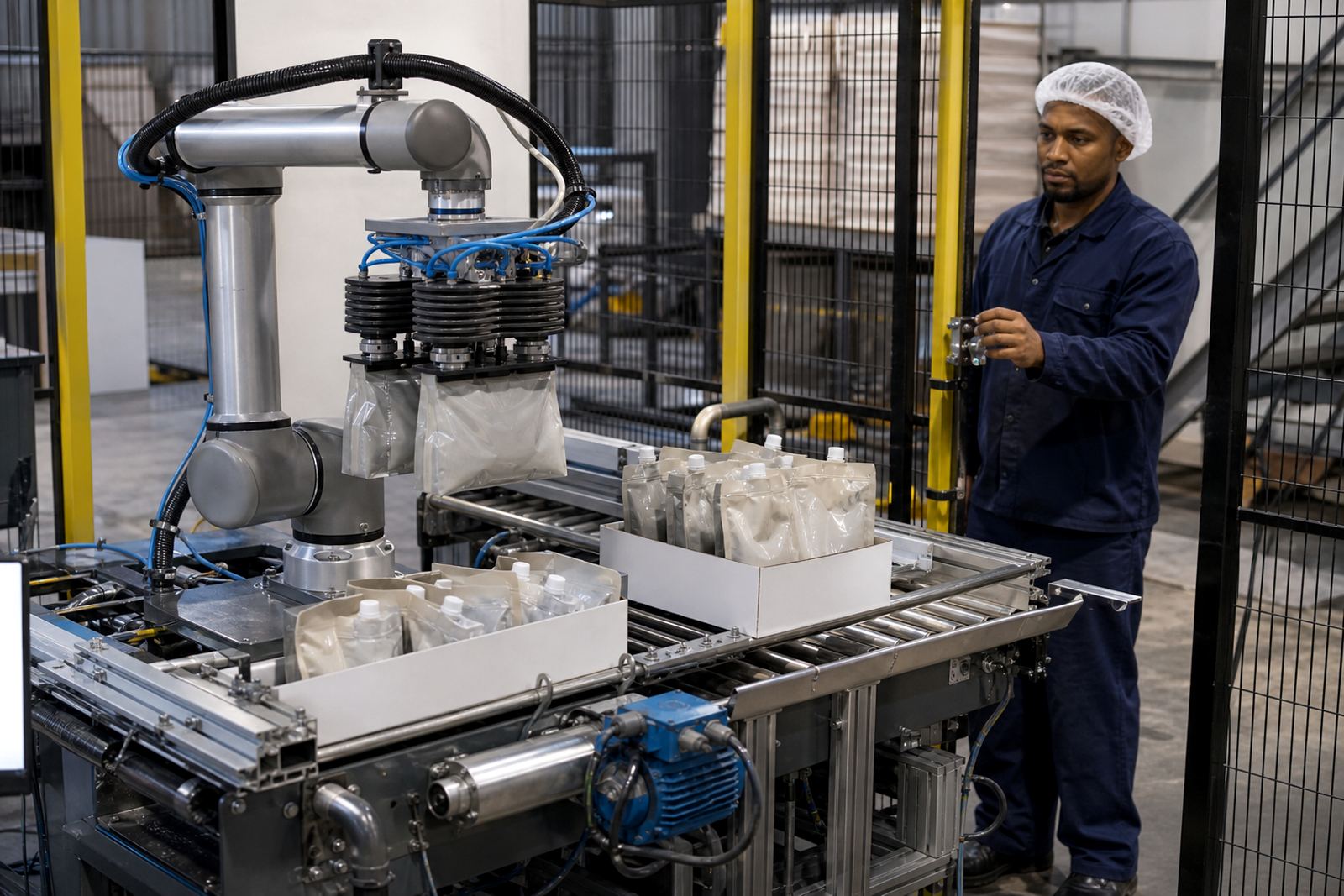
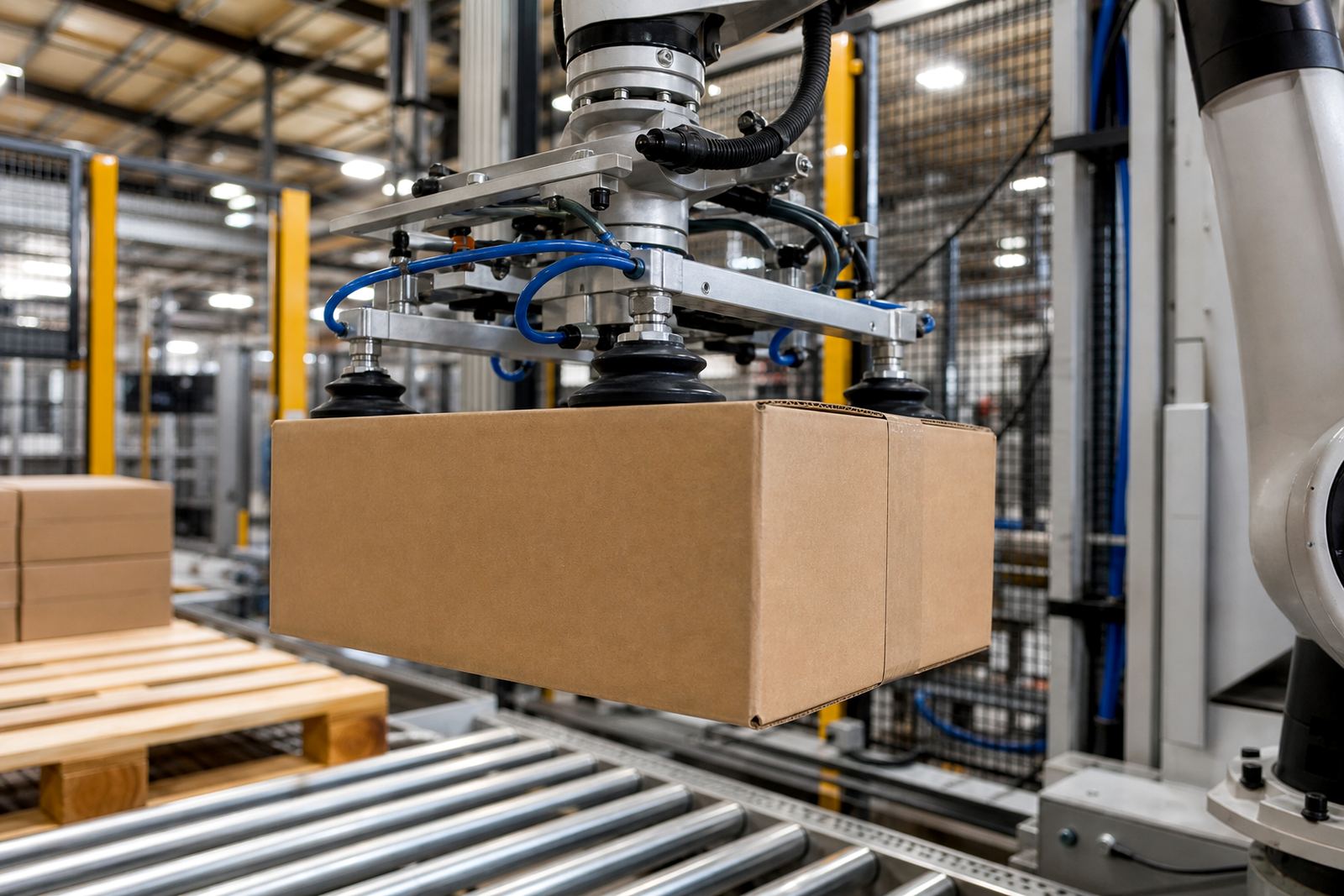
Vacuum gripper tooling uses suction cups, foam pads or formed vacuum heads to pick products with a smooth top surface and place them in a repeatable position. It suits cartons, corrugated trays, carton lids, shrink wrapped packs and flat blanks where a firm but gentle hold is needed. On retrofit projects, the tooling is matched to the existing robot arm or gantry, the conveyor presentation and the pack pattern so the line can run with less hand loading and better consistency.
In many South African plants, vacuum tooling is chosen where product changeovers happen often or where the load must be kept neat for retail, warehousing or export handling. It can be used on single pick, multi-pick or layer handling applications, depending on the weight, surface finish and cycle time. A proper trial or site line survey helps confirm whether the product surface is suitable for vacuum grip and whether a mixed pack needs additional support bars or locating guides.
Common Sizes, Heads and Options
Vacuum tooling is not one standard shape. The right setup depends on the product footprint, the number of picks per cycle and how much variation exists in the pack size. A smaller head may suit compact cartons, while a wider frame is often used for tray loads or multi-box pallet layers. In humid coastal conditions, and in dusty inland plants alike, sealing surfaces and hose routing need to be selected with care.
- Single cup heads for small cartons and light packs
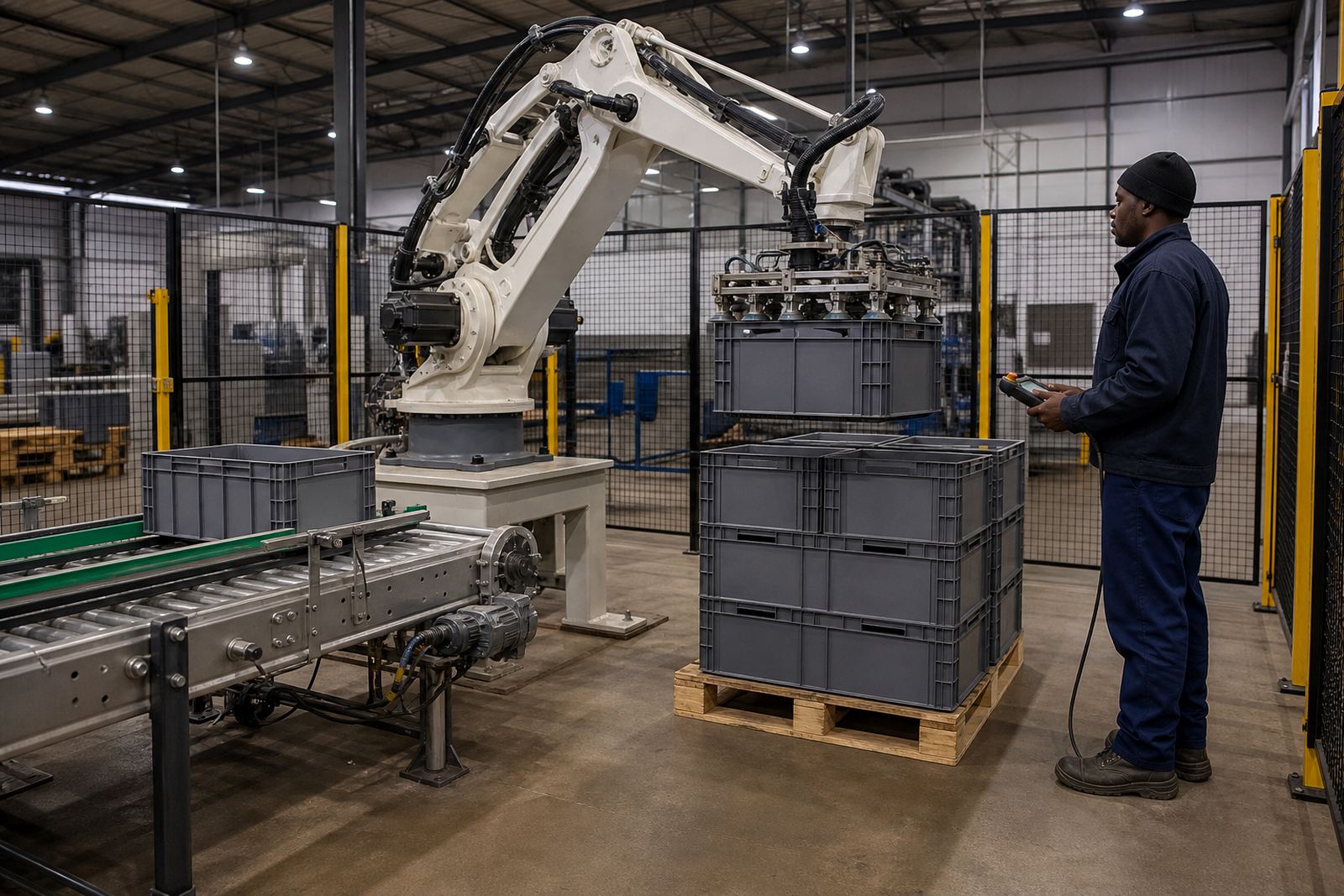
- Multi-cup frames for larger carton tops or grouped picks
- Foam vacuum plates for uneven but mostly flat surfaces
- Adjustable cup spacing for variable product footprints
- Lightweight aluminium or steel mounting plates
- Vacuum sensors and release valves for reliable control
Typical retrofit tooling can be supplied for light to medium duty handling, with the final size set by payload, reach and the robot or gantry interface. In some cases, a quick-change plate is useful where a line handles two or three pack formats on the same shift.
Where Vacuum Tooling Works Best
This tooling suits operations where the top surface is reasonably clean and the pack can tolerate suction contact. It is commonly used on secondary packaging lines, end-of-line palletising cells and case packing stations. Product examples include cartons, folded trays, sleeve packs, carton lids, inner packs and some flat packs that need accurate placement without crushing edges. For manufacturers in Johannesburg, Pretoria and the East Rand, it is often a practical way to cut manual lifting on busy shifts. In Durban and Cape Town, the same approach is useful where humidity or salt air makes basic hardware and hose condition important.
Vacuum grip may not be suitable for porous, highly textured, wet or very open products unless the tooling is specially designed for the surface. If the load has vents, perforations or irregular cut-outs, the risk of air leakage rises and the grip must be tested properly. Each site needs its own risk assessment before the final design is approved.
- Best suited to smooth or semi-smooth upper surfaces
- Works well where placement must be accurate and repeatable
- Useful for line balancing when manual packing is causing bottlenecks
- Can be combined with conveyors, stops and product orientation devices
Installation, Power and Air Requirements
On a retrofit line, vacuum tooling is normally mounted to an existing robot flange, gantry head or custom end-of-arm bracket. The installation must allow for safe reach, correct product clearance and enough rigidity so the cups stay aligned through acceleration and deceleration. Good integration also means the tooling works with the conveyor timing, the infeed orientation and the pallet pattern without forcing the operator to fight the machine.
Vacuum systems often need compressed air, either to generate vacuum through an ejector system or to operate valves and release circuits. Some installations also use an electric vacuum pump, depending on the duty cycle and available services on site. Power needs vary by the final setup, but the control side is normally tied into the existing automation panel and safety circuit.
- Mounting to existing robot or gantry interfaces
- Compressed air or electric vacuum generation, depending on design
- Integration with sensors for pick confirmation and release
- Safe stop and restart logic linked to the line controls
Safety Guarding and Risk Assessment Support
Vacuum gripper tooling should never be treated as a standalone accessory. It forms part of a guarded cell, with access control, emergency stops and clear operating zones around the conveyor and robot movement area. When retrofitting onto an existing packing or palletising line, the guarding layout may need to be altered to suit the new reach and the new pinch points created by the tooling. This is especially important when an operator still loads products by hand at the infeed.
Safety guarding design and risk assessment support should always be done for the actual site, not copied from another plant. The assessment should consider the product weight, the suction loss scenario, operator access for cleaning and maintenance, and the effect of any bypass or jam clearing task. In warehouses and factories across South Africa, municipal rules, insurer requirements and internal safety standards can differ, so the final arrangement must fit the site conditions. No one should assume a generic layout will be enough.
Care, Cleaning and Servicing on Busy Lines
Vacuum tooling works best when cups, seals, hoses and fittings are checked regularly. Dust, cardboard fines and product residue can reduce grip over time, and small air leaks often show up first as inconsistent picks rather than a full stop. On coastal sites, corrosion control matters too, so fasteners and fittings should be inspected for wear more often than on a dry inland plant.
Routine servicing usually includes checking cup condition, confirming vacuum levels, cleaning filters and looking for kinks or abrasion in the hoses. The tooling should also be checked after product changeovers, line strikes or any maintenance work on the conveyor. If a site runs multiple shifts, spare cups, seals and fittings should be planned in advance so breakdowns do not hold up palletising for a full day.
- Inspect suction cups for cuts, flattening or hardening
- Check vacuum readings
- Clean filters and lines regularly
- Keep spare wear parts on site for fast recovery
What to Check When Ordering Vacuum Gripper Tooling
Before ordering, it helps to confirm the exact product size range, top surface condition and maximum weight per pick. You should also know the line speed, the available compressed air pressure, the robot payload and the mounting space on the existing machine. If the line handles more than one pack size, the tooling may need adjustable cups or a changeable frame. Small differences in carton strength or tray rigidity can also affect the final design, so samples are useful.
It is also worth checking the discharge height, pallet pattern, conveyor transfer points and whether the product must be rotated before placement. If the plant has limited shutdown windows, the installation sequence should be planned around production. For manufacturers in Kempton Park, Midvaal, Pretoria or elsewhere in South Africa, a clear site survey makes the retrofit easier to schedule and less likely to cause avoidable rework.
- Product dimensions and weight range
- Surface type, porosity and pack stiffness
- Line speed and target cycle time
- Air supply pressure and electrical availability
- Robot or gantry interface details
- Required pick pattern, orientation and release height
Key facts
| Tooling type | Vacuum gripper heads, multi-cup frames or foam vacuum plates |
|---|---|
| Typical product types | Cartons, trays, flat packs, lids and secondary packs |
| Mounting | Retrofit to existing robot flange, gantry or custom bracket |
| Services required | Compressed air, or electric vacuum generation depending on design |
| Control integration | Sensors, valves and vacuum confirmation tied into line controls |
| Maintenance focus | Cup wear, hose leaks, filter cleaning and vacuum performance checks |