What a pallet dispensing unit does on a retrofit line
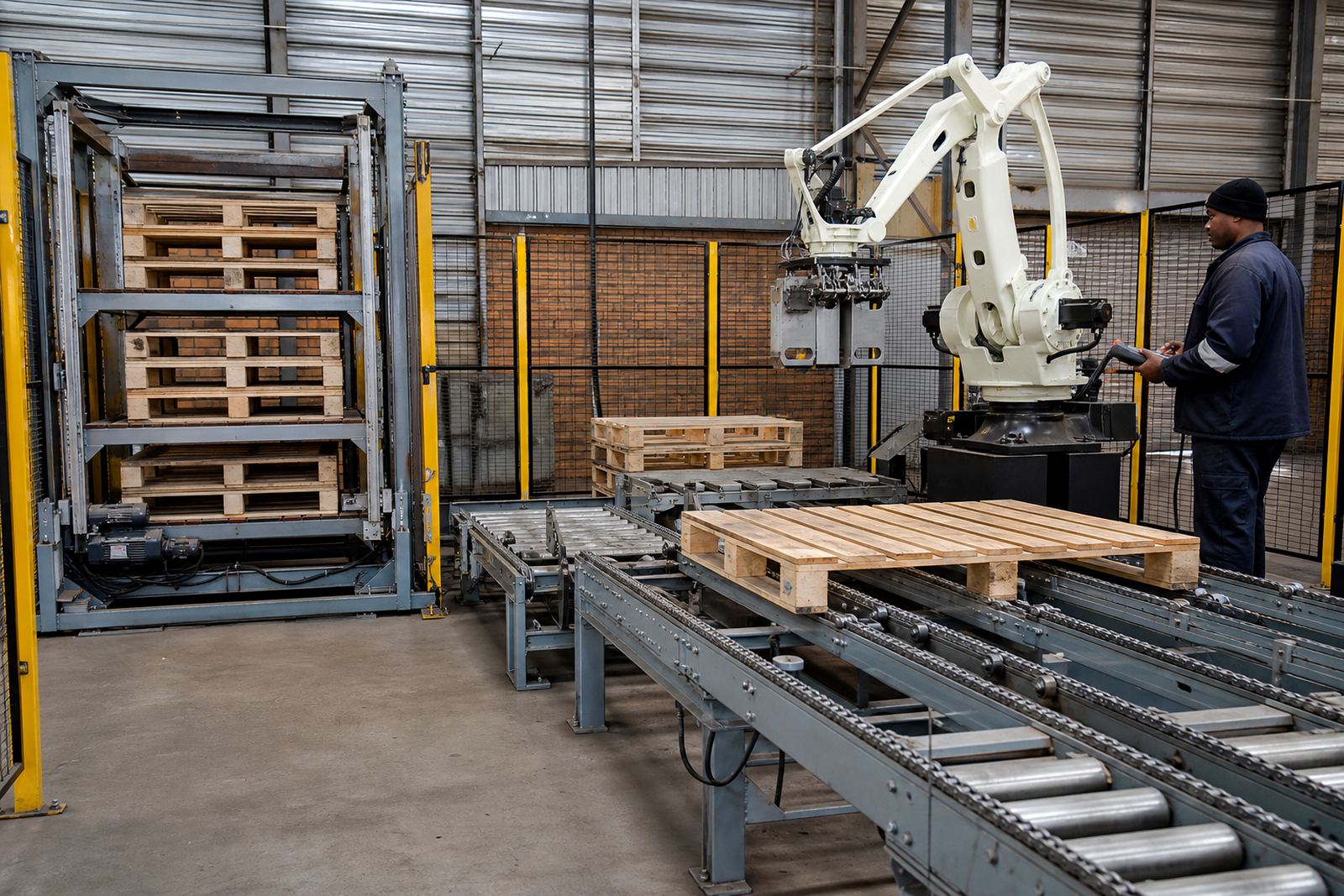
A pallet dispensing unit stores a stack of empty pallets and releases them one at a time into position for a robot or palletising system. In a retrofit, it sits alongside the existing conveyor and palletising area, then feeds pallets into the cell when the control system calls for the next load. This reduces manual lifting, keeps the palletising cycle moving, and helps separate people from moving equipment.
A properly chosen unit can handle standard timber pallets, and in some cases plastic pallets, as long as the dimensions and condition are consistent. The dispenser must match the pallet size, weight and stacking style used on site, otherwise the release action becomes unreliable and jams can slow the whole line.
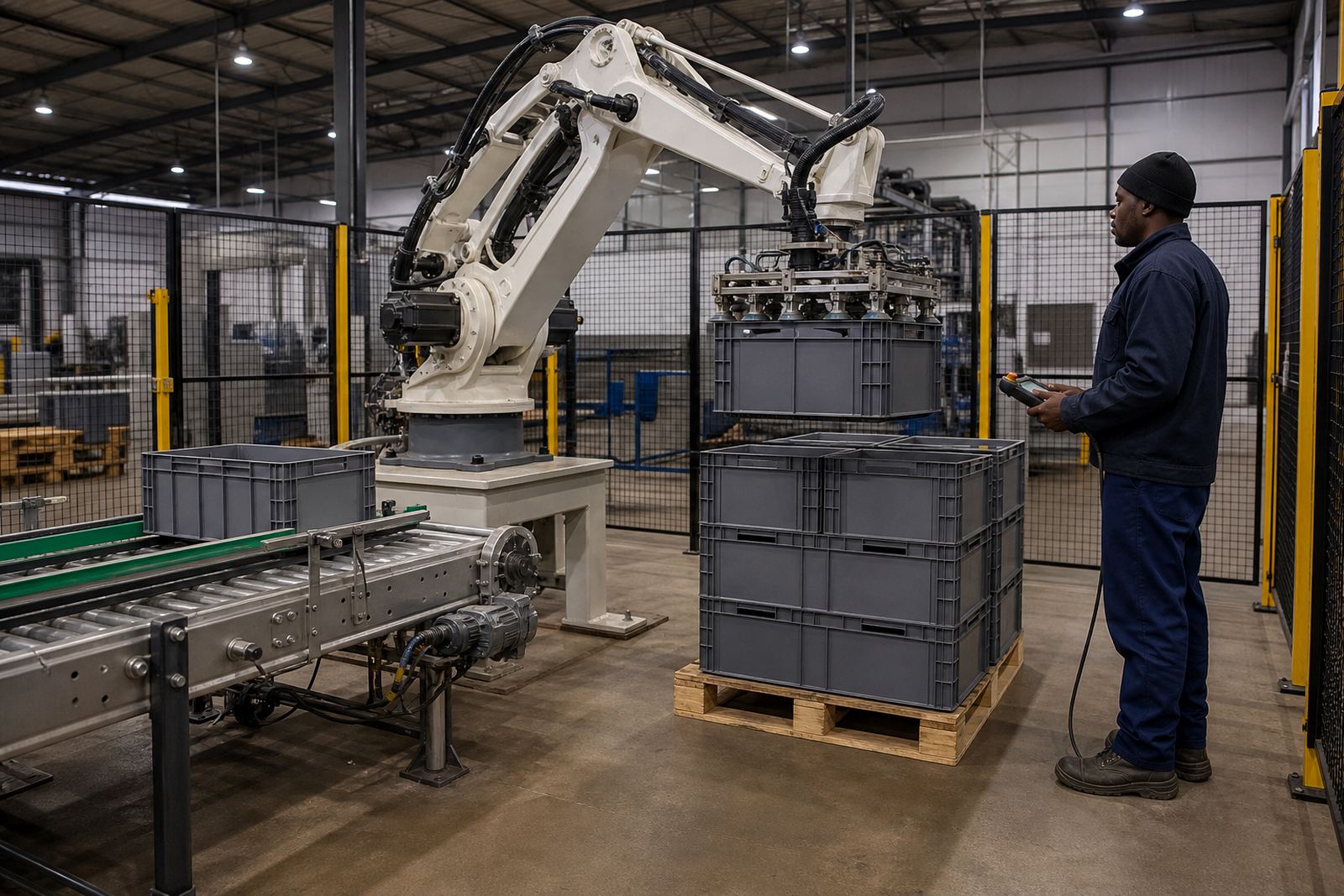
We design these units as part of the wider retrofit, not as a stand-alone gadget. That means checking infeed direction, space for pallet loading, access for forklift or pallet jack, guarding around pinch points, and the handshaking between the dispenser and the robot cell. If the line already has a conveyor, the dispenser can be tied in so the pallet is presented at the right height and timing for the next cycle.
Typical sizes, options and capacity ranges
Pallet dispensing units are usually specified by pallet footprint, stack height and output method. The right choice depends on whether the line uses 1200 x 1000 mm pallets, 1200 x 800 mm pallets, or another local standard. The frame can be built for floor loading with forklift access, or with a low-level stack magazine where pallets are introduced by hand or with a truck. In tighter sites around Johannesburg or Pretoria, compact footprints are often preferred because they leave room for guarding and service access.
- Single-stack magazine for one pallet size
- Adjustable guides for minor pallet variation
- Low-level feed for manual loading
- Forklift-loaded stack magazine for higher throughput
- Optional pallet presence sensing and release confirmation
- Integration with conveyor stop/start logic and robot signals
Typical specification points include stack capacity, cycle time, release height, and the maximum pallet mass the dispenser can manage safely. A unit used in a heavy-duty environment may need stronger structural members, more durable wear parts and better protection against dust. In coastal areas such as Durban or Gqeberha, corrosion protection becomes important too, especially if the unit is near open doors or exposed loading bays.
Some sites only need a simple automatic release device, while others need a more complete pallet handling module with guarding, interlocks and a dedicated control panel. If the pallet quality is uneven or the bottoms are damaged, the dispenser may need more tolerant guides or a pre-stack inspection step. That is why the site survey matters before anything is ordered.
Where it suits best in packing and palletising plants
This equipment suits manufacturers that run cartons, bags, shrink-wrapped packs or crates into a robotic palletising cell. It is especially useful where staff currently fetch pallets by hand, push them into place, or interrupt the line to keep the robot supplied. Food, beverage, chemicals, building materials and general goods plants often benefit, but the final decision should always be based on the product mix and pallet condition.
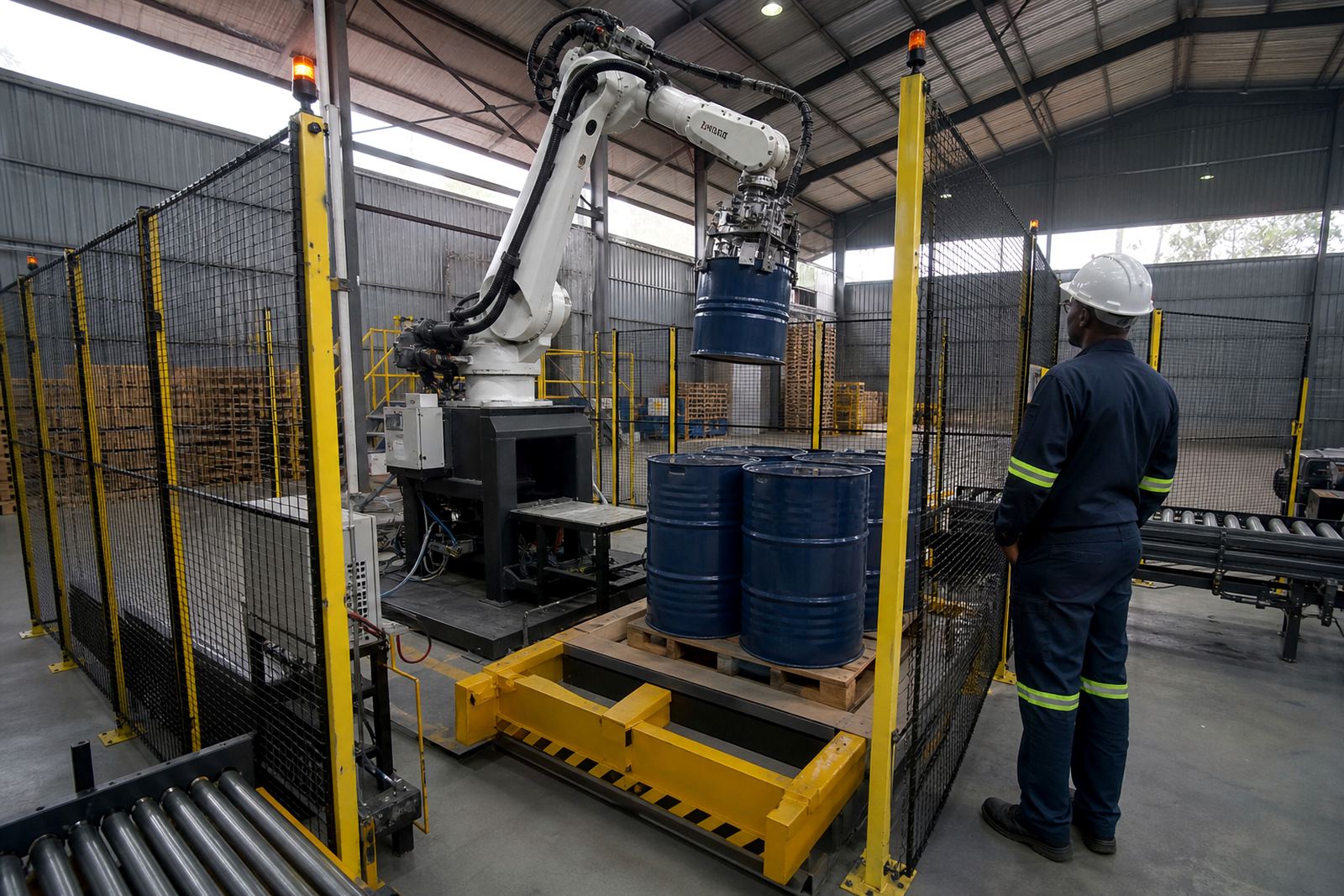
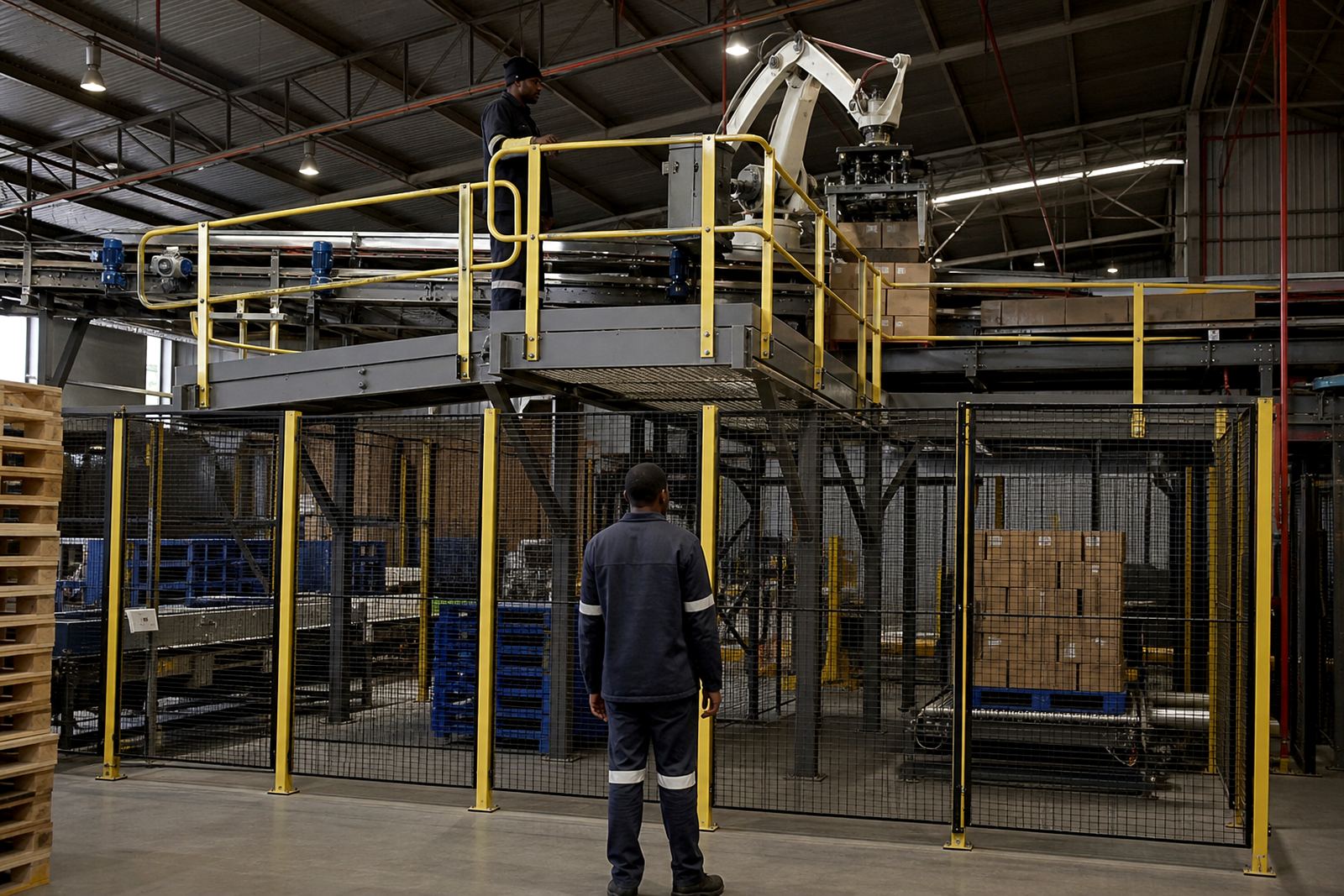
It also works well where floor space is limited and the pallet must be presented in a repeatable position every time. In many retrofits, the dispenser is installed at the entry point of the palletising zone, with safety guarding around the movement area and an operator access gate for loading the stack. On busy sites in Midvaal or the East Rand, the main benefit is usually less manual handling and fewer stop-start interruptions during the shift.
- Robot palletising cells with mixed shift patterns
- Lines where pallet supply is manual and inconsistent
- Sites looking to reduce lifting and handling injuries
- Plants needing cleaner traffic flow around the end of line
- Retrofits where new conveyors must link to old equipment
It is not a one-size-fits-all unit. A line with narrow aisles, low ceilings or an awkward conveyor route may need a custom frame, modified transfer height, or a different loading direction. We also look at municipal fire routes, emergency exits and where operators will stand during normal use and during clearing of faults, because those points shape the final layout.
Installation, power needs and site integration
Installation begins with a line survey and a risk assessment support review. We check the available floor space, pallet orientation, conveyor height, guarding envelope and the interface to the existing control system. The dispenser must fit the line, not force the line to change more than necessary. Where possible, we keep the retrofit practical so the plant can keep production moving during the changeover.
Most pallet dispensing units need a steady electrical supply, usually 400 V three phase on industrial sites, although the exact requirement depends on the drive layout and control hardware. If compressed air is used for any release or sensing function, the air quality and pressure must be checked during the design stage. Many units do not need process gas, but some sites may need air for linked devices or cleaning tools.
Integration with existing conveyors is a key part of the job. The dispenser must communicate with infeed and outfeed conveyors, pallet presence sensors, the robot controller and any safety relay or safety PLC arrangement on site. Good commissioning means testing the handover between pallet release, robot pick cycle and conveyor movement so the system does not bunch up or deadlock. If the site has multiple product codes, the controls logic may need recipe selection for pallet type, stack count or cycle timing.
Care, servicing and breakdown support
A pallet dispensing unit needs regular inspection to stay reliable. The guide rails, chain or lifting mechanism, sensors and end stops should be checked for wear, contamination and loose fixings. Dust, pallet splinters and strap debris can build up around moving parts and create misfeeds. In humid or coastal conditions, it is worth checking fasteners, panels and exposed steelwork for corrosion. Small issues left too long tend to become stoppages later, and that affects the whole line.
Servicing intervals should be set according to the actual duty cycle, not just the calendar. A unit running all day in a high-volume plant may need more frequent checks than one used on a single shift. We also recommend keeping a simple spares plan for wear strips, sensors, pneumatic components if fitted, and any control relays or contactors used in the system. That way, a minor failure does not hold the line for hours while parts are sourced.
- Inspect pallet guides and stop points weekly
- Check sensor alignment and cable condition
- Clean dust and pallet debris from moving sections
- Test safe stop and restart functions after maintenance
- Review stack condition before loading
Breakdowns are often caused by damaged pallets, poor stacking or a change in pallet supplier that was not flagged early. A good service plan includes operator training, so the team knows what a normal stack looks like and when to reject damaged pallets. That one habit can prevent unnecessary faults, and it keeps the dispenser doing its job instead of becoming a bottleneck.
What to check before ordering the unit
Before ordering, confirm the pallet size, pallet type, maximum stack height and the direction in which the pallet needs to leave the magazine. You should also know whether the dispenser is feeding a robot cell, a manual palletising point or a mixed line. The site must measure the available floor space, ceiling height and access route for installation equipment. If there is a conveyor already in place, check its height, width and transfer point so the pallet can meet it cleanly.
It helps to have a clear answer on who will load the pallet stack, how often the stack will be replenished, and whether loading will be done by forklift, pallet jack or hand placement. Also check the power supply, available control signals and any safety interlocks that need to be preserved. On some plants, the pallet dispenser has to work within existing guarding and walkways, so the final layout may need a small adjustment to keep access legal and practical. If the site has any special noise, dust or hygiene requirements, mention them early.
Finally, consider the pallet quality you receive from suppliers. If the pallets vary too much in size or condition, the dispenser will need more tolerance, and that can affect capacity and reliability. A short site line survey usually clears up these issues before fabrication starts, which saves time later and avoids a unit that is awkward to use.
Key facts
| Function | Automatically presents empty pallets to a robotic palletising or packing cell |
|---|---|
| Typical pallet footprints | 1200 x 1000 mm, 1200 x 800 mm or site-specific dimensions |
| Stack capacity | Specified to suit line speed and available floor space |
| Power requirement | Usually 400 V three-phase, subject to final design |
| Integration | Compatible with existing conveyors, sensors and control logic |
| Safety | Site-specific guarding, interlocks and risk assessment required |