What a High Infeed Palletiser Retrofit Does
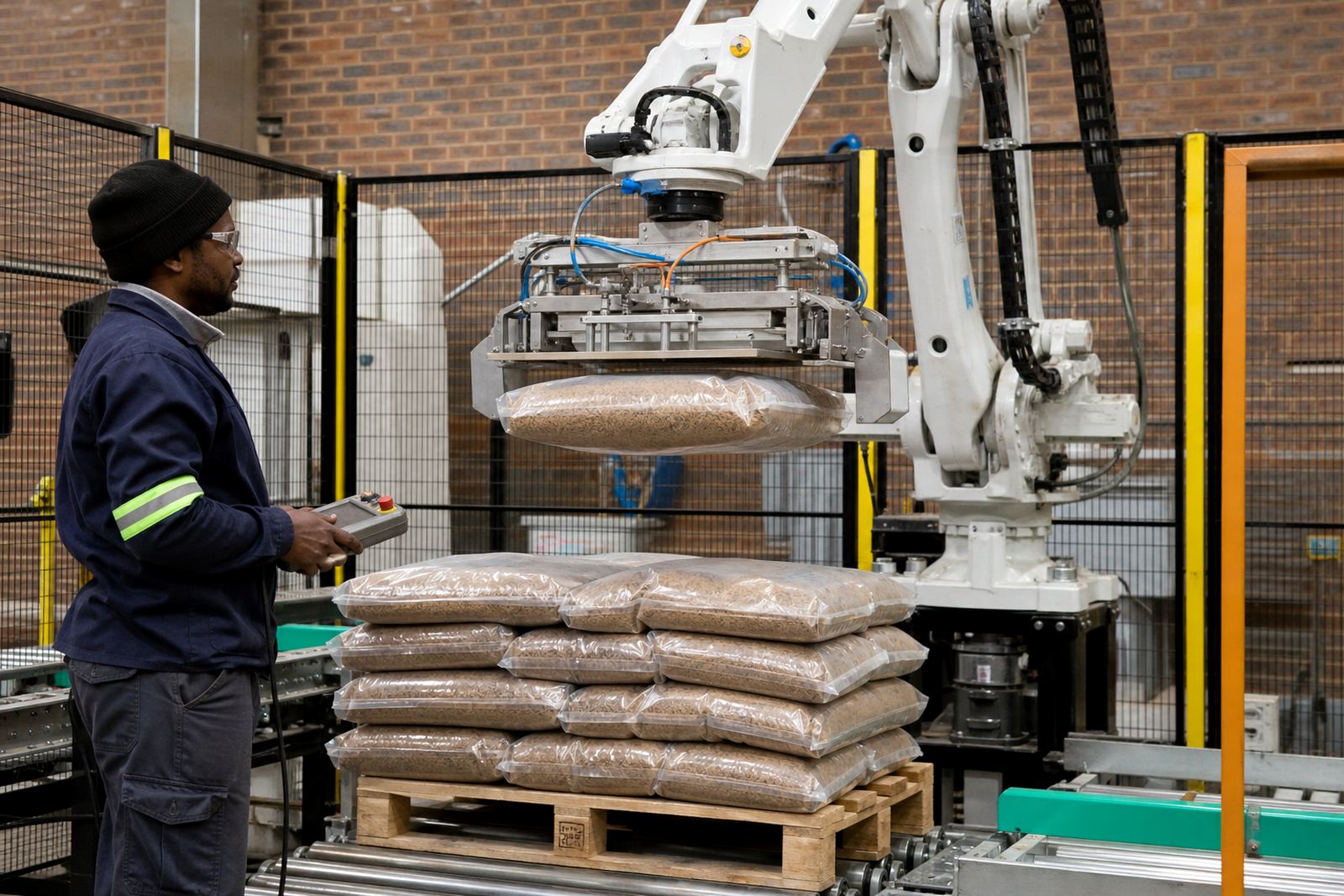
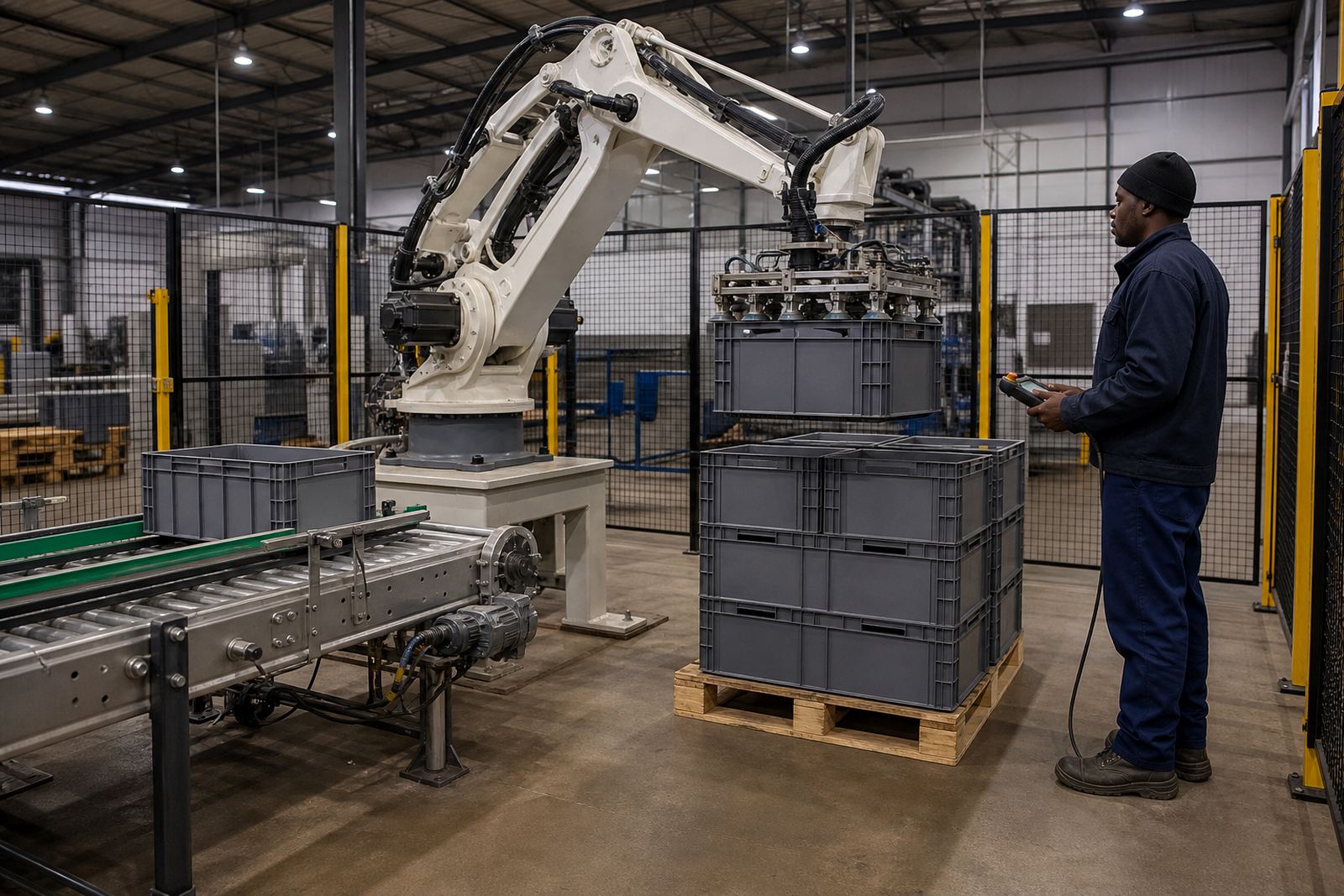
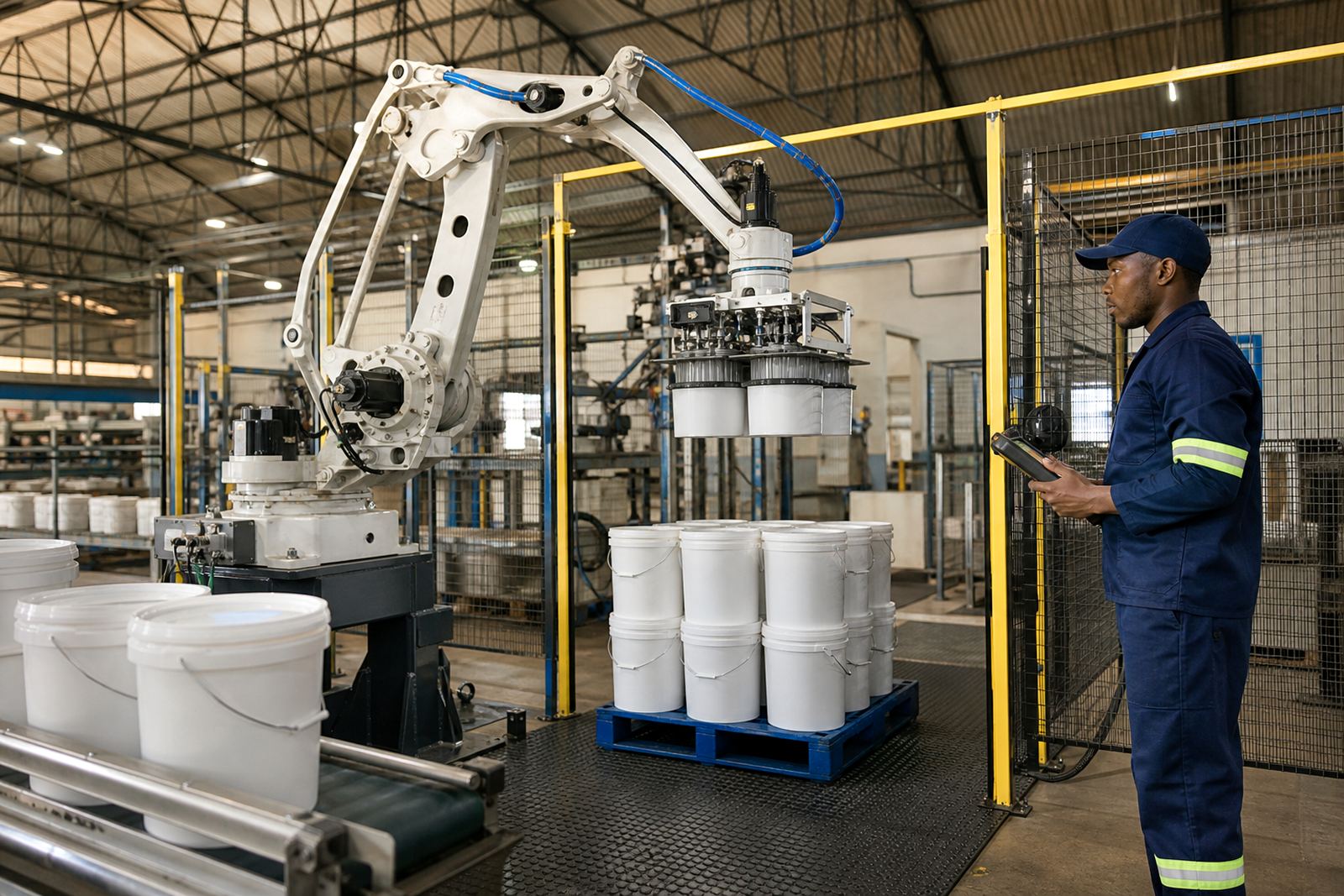
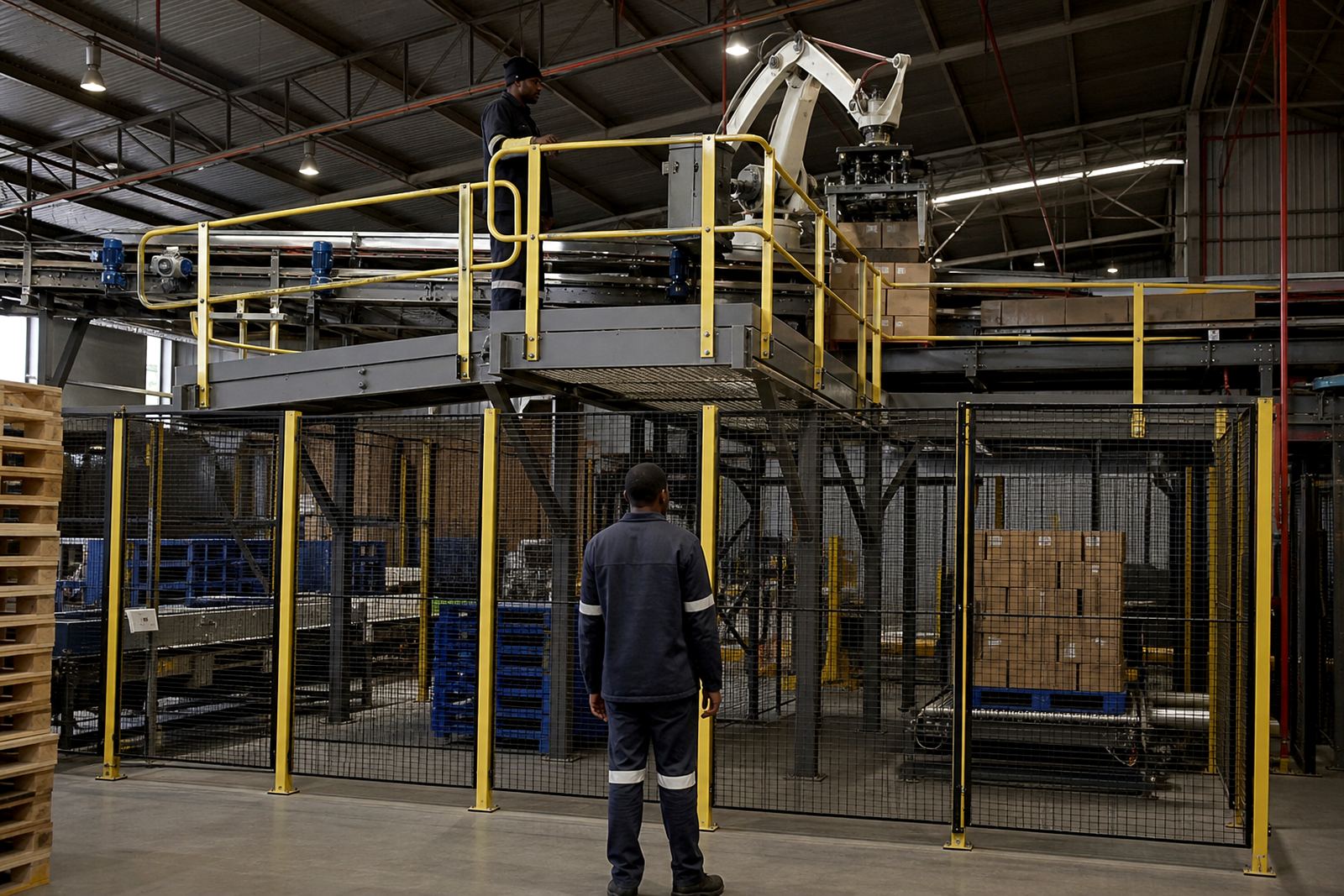
A high infeed palletiser is set up to accept packs, cases or bags from a conveyor that discharges above floor level. Instead of pushing product into a low, cramped end-of-line area, the feed enters at a raised height and the machine builds the pallet in a controlled pattern. That makes it useful where the packing line already runs on mezzanines, raised platforms, or where the product flow comes out of a shrink wrapper, case sealer or checkweigher at an raised level.
The retrofit approach means the palletiser is designed around the line you already have. In many plants, the existing conveyor route, pallet staging area and wrapping point can be kept in place with only the transfer section, controls and guarding updated. This is often the cleanest way to improve line-end handling without tearing out half the packing room.
High infeed systems are commonly used for cartons, shrink wrapped packs, trays and other stable loads. They work well where product orientation is consistent and the pallet pattern is repeated through the shift. Where product sizes change often, the control system can be set up for multiple recipes so the operator selects the load pattern on the HMI and carries on.
Space, Line Layout and Site Fit
One of the main reasons factories ask for this setup is floor space. A high infeed palletiser can reduce the amount of floor traffic around the line-end, especially where forklifts, pallet jacks and operators share the same area. By lifting the infeed, the pallet build zone can sit in a more compact footprint and the pallet exit can be arranged for easier removal or wrapping.
It suits plants in Johannesburg, Pretoria, Durban, Cape Town and Gqeberha where production floors vary from older brick buildings to newer industrial units with limited headroom at the back of the line. It is also a practical option for East Rand and Midvaal sites where there may be long conveyor runs and a need to keep the palletising section close to existing packing equipment.
- Suitable for raised conveyor discharges
- Useful where floor space at line end is limited
- Works with existing packing lines, wrappers and pallet exits
- Can be arranged for right or left hand line flow depending on the site
Every site needs its own layout check. Ceiling height, column positions, pallet movement, emergency walkways and municipal fire access rules can all affect the final arrangement. On some sites the best answer is a compact single-infeed layout, on others a higher transfer section with guarded pallet discharge makes more sense.
Sizes, Options and Typical Spec Points
High infeed palletisers are not one-size-fits-all. The right build depends on the pack size, product weight, pallet height target and the rate the line must maintain. A retrofit can be set up for light cartons or heavier grouped packs, but the feed mechanism, gripper or layer handling method must match the product properly.
Common options include conveyor infeed from an raised line, layer forming support, pallet magazine, interlocked guarding, scanner or light curtain protection, and controls integration with upstream and downstream equipment. Some sites need a semi-automatic arrangement with more operator involvement, while others need a fully automatic line-end palletiser with pallet dispenser and stretch wrapper connection.
- Infeed height: typically matched to the existing conveyor discharge, often around 1 200 mm to 2 400 mm depending on the line
- Pallet sizes: commonly 1 000 x 1 200 mm, 1 100 x 1 100 mm, or site-specific formats
- Payload: selected to suit product and load build, with site-specific weight limits
- Throughput: set by cases per minute or layers per hour depending on the product flow
- Power: generally three-phase supply, with final requirements based on drive and control load
- Air: some configurations need compressed air for gripping, stops or gates, others do not
In coastal areas like Durban and Gqeberha, corrosion protection and component selection matter because humidity can affect cabinets, bearings and exposed steel. In Gauteng, dust control and cable protection are often more important around busy packing floors and loading bays.
Installation, Power and Integration Requirements
Installing a high infeed palletiser retrofit starts with a site line survey and a process review. The team checks conveyor height, product orientation, pallet build area, access for maintenance, and where the existing controls can be tied into the new system. If the line already has conveyors, sensors or a wrapper, those items can often be kept and connected into the retrofit rather than replaced.
Power needs are site-specific, but most palletising retrofits will require a suitable three-phase electrical supply, a control panel, emergency stops and proper earthing. If the system uses pneumatic clamps, diverts or transfer devices, compressed air must be clean and dry.
- Check available three-phase supply and breaker capacity
- Confirm compressed air quality if the design uses pneumatics
- Allow space for guard access, pallet staging and maintenance access
- Confirm conveyor handshakes with upstream and downstream equipment
- Plan for safe restart after stoppages or power interruptions
Safety guarding is part of the design, not an add-on. Each site needs a risk assessment to decide on guarding, gate interlocks, light curtains, scanners, stop circuits and safe access points. The final setup must match the actual layout, the staff movement on site and the plant rules in force there.
Care, Servicing and Breakdown Support
Once commissioned, a high infeed palletiser should be checked regularly so small issues do not become line stoppages. Typical care includes inspection of chains, belts, rollers, sensors, cable runs, guarding fixings and air lines where fitted. Dust, carton wrap, product debris and pallet splinters can all cause trouble if they build up around the transfer area.
Operators should be trained to recognise abnormal noise, misfeeds, poor layer formation and recurring fault messages. Maintenance staff should keep to a planned service routine and replace wear parts before they fail. On a busy packing line, that sort of discipline matters more than last-minute repairs.
- Daily checks: product flow, safety stops, air pressure where used, and any unusual vibration
- Weekly checks: sensors, chain tension, guide rails and general cleaning
- Monthly checks: fasteners, cabinet condition, cable wear and control alarms
- Planned spares: belts, sensors, switches, wear pads and common fixings
For sites across South Africa, downtime planning should also cover local access and the availability of critical spares. A line in Kempton Park may need a different support plan to one in Cape Town or Durban because travel time, spares stock and shift patterns all affect line recovery.
What to Confirm Before You Order
Before ordering a high infeed palletiser retrofit, it helps to confirm the exact product, the line speed and the available space at line end. A quick sketch is not enough. The layout needs measured dimensions, conveyor heights, pallet sizes, product weights and the direction of flow through the packing room. Without that, even a well-made machine can be awkward to install.
It is also worth confirming what stays in place and what changes. Some lines only need a new palletising cell, while others need conveyor integration, control updates, safety guarding and operator training as part of the same project. If the site handles different pack sizes through the week, that should be listed up front so the control logic and recipe selection can be set up properly.
- Product type, size and weight
- Target throughput per minute or per hour
- Pallet size, pallet height and wrap method
- Available conveyor height and floor footprint
- Power supply, compressed air and control system details
- Any site rules for pedestrian separation, fire access or forklift movement
For manufacturers in Johannesburg, Pretoria, Durban, Cape Town, Gqeberha, Kempton Park, the East Rand and Midvaal, the best result usually comes from a proper site survey before the final design is signed off. That keeps the retrofit practical, safer and easier to run once the line is live.
Key facts
| Product type | High infeed palletiser retrofit for cartons, trays, shrink wrapped packs and similar stable loads |
|---|---|
| Infeed arrangement | Raised conveyor discharge into palletising cell |
| Layout options | Single infeed, left or right hand flow, compact line-end footprint |
| Power requirement | Three-phase supply, final load depends on site design and drive package |
| Utilities | Compressed air may be required depending on the transfer and gripping method |
| Safety | Guarding, interlocks and risk assessment matched to each site |