What a Bucket Packing Robot Does on an Existing Line
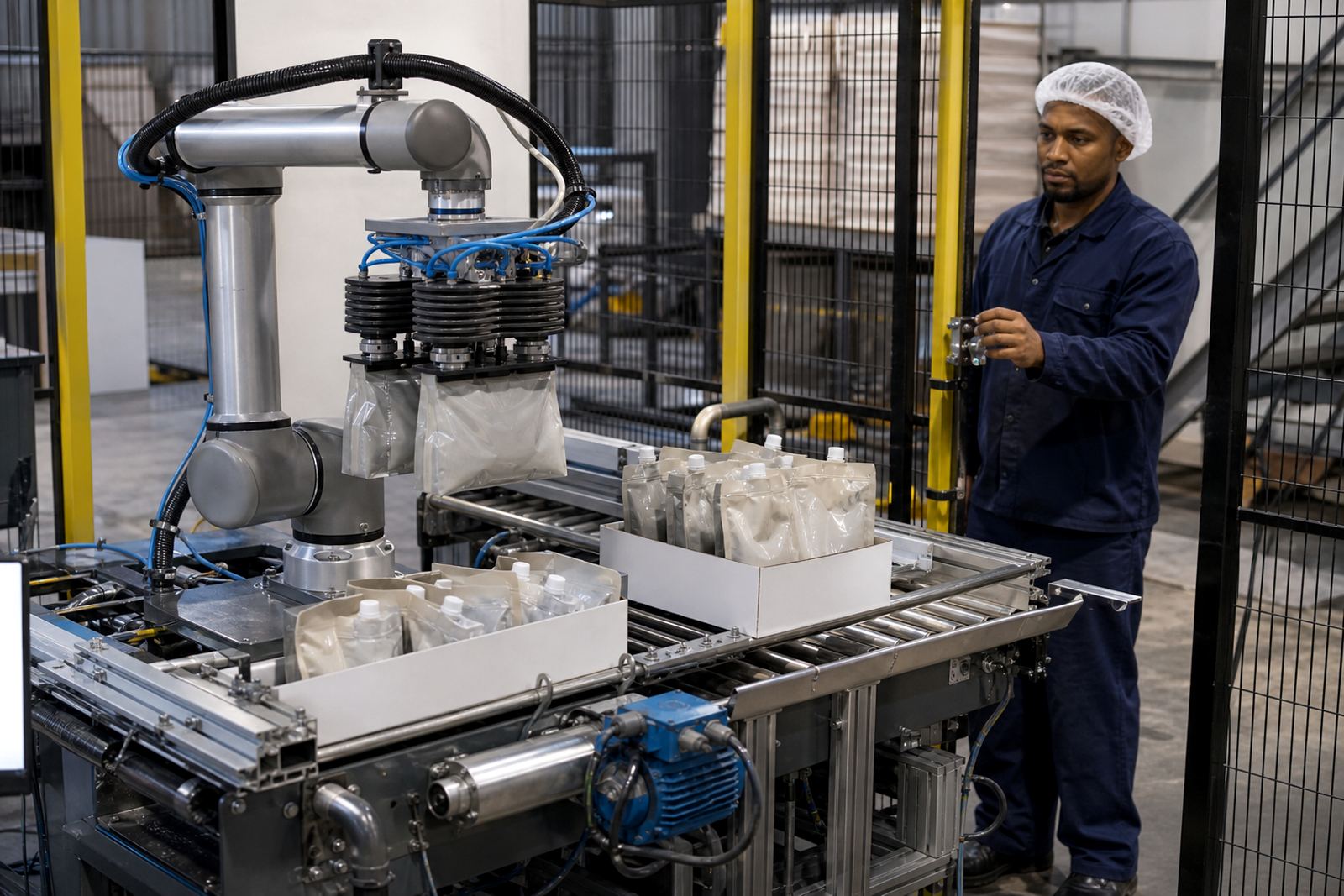
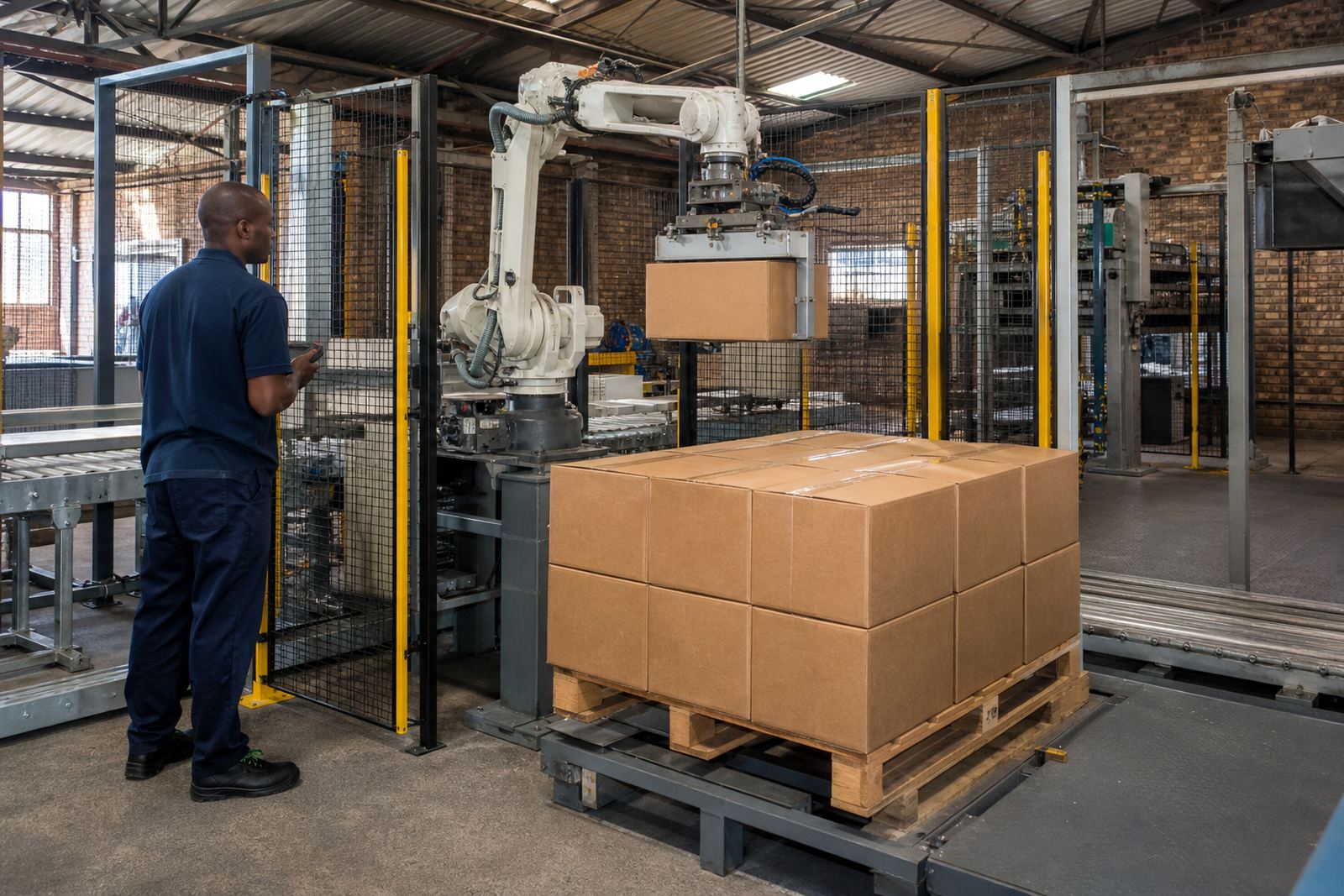
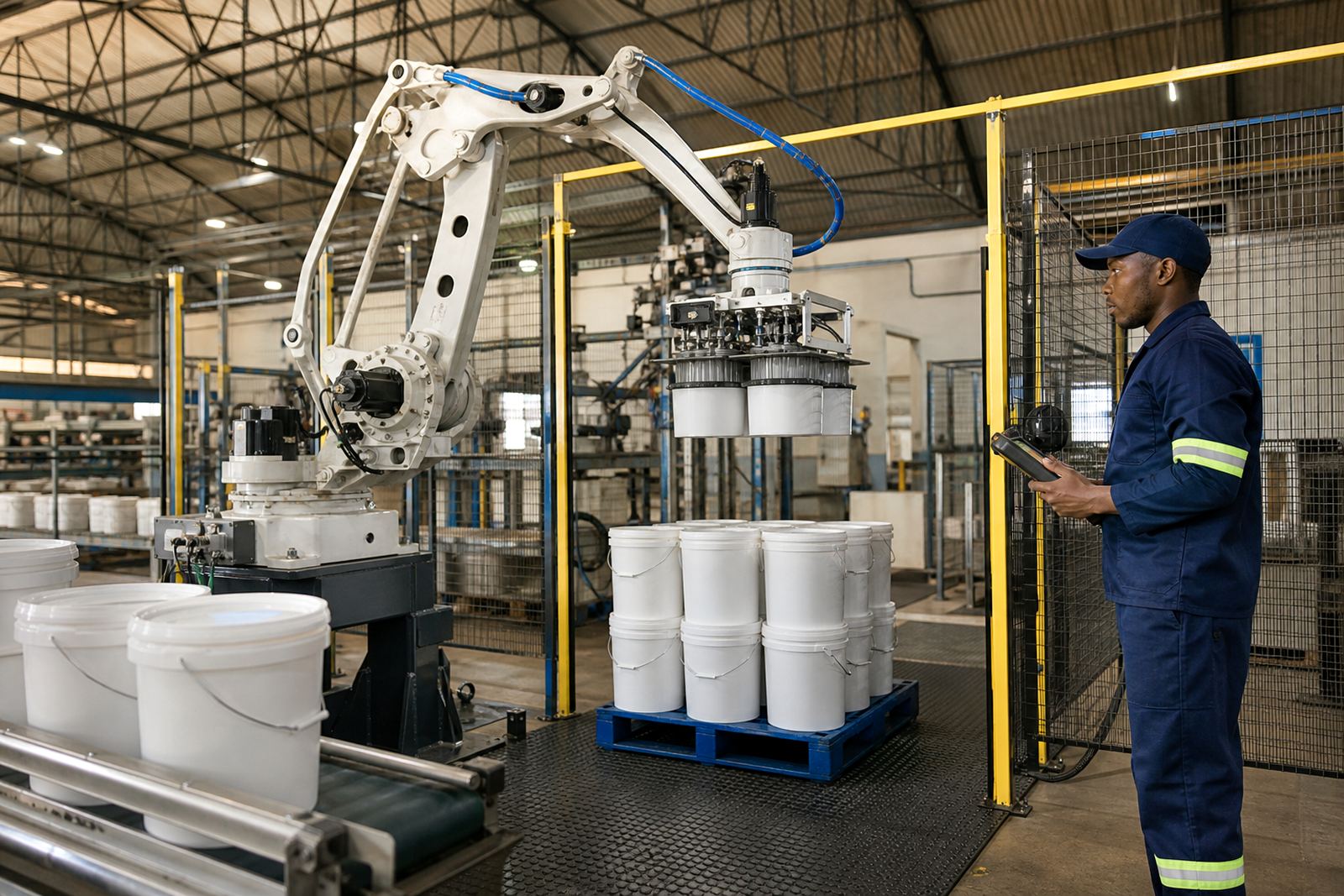
A bucket packing robot is fitted to an existing packing or palletising line to pick, place, orientate and stack buckets or pails in a controlled pattern. On many South African plants, that means taking a labour-heavy end-of-line task and turning it into a repeatable automated step without rebuilding the full line. The robot can work with existing conveyors, infeed accumulation, case packing stations or palletising zones, depending on how the product leaves the process.
These retrofits are commonly used where buckets need to be packed upright, grouped into trays, placed into outer containers, or arranged directly onto pallets. The exact motion depends on the product weight, handle style, fill level and the stability of the bucket base. A line in Kempton Park may need a different setup to a coastal plant in Durban because humidity, washdown routines and floor space can affect guarding, grippers and maintenance access.
For many factories, the main advantage is consistency. The robot repeats the same movement every cycle, which helps reduce product damage, awkward lifting and line stoppages caused by fatigue. It also makes it easier to plan output because the end of line no longer depends on how many operators are available on a shift.
Where Bucket Packing Retrofits Suit Best
Bucket packing robot systems suit manufacturers that fill, seal or finish buckets and pails in regular sizes. They are often used in food, chemicals, building products, coatings, cleaning products and general industrial packaging where buckets must be handled neatly and safely at line end. The retrofit can be adapted for light pails or heavier buckets, as long as the gripping method and line speed are matched to the product.
They are also practical where manual stacking creates bottlenecks. If operators are lifting buckets from a conveyor onto a pallet, or from a packing table into a case, the line may be working harder than it needs to. A retrofit can be designed to suit one line or several, depending on production flow and available floor space. In some sites the robot is installed close to an existing conveyor run, while in others it is set up with a new transfer section to create better spacing and access.
Typical sites include:
- Bucket filling and sealing lines
- End-of-line palletising stations
- Multi-product packing rooms
- Plants with limited labour availability or high shift turnover
- Facilities where manual handling must be reduced for safety reasons
Sizes, Layout Options and Gripping Methods
Bucket packing retrofits are specified around the bucket size, mass, handle style and required pack pattern. Some lines need a single pick-and-place arm for one bucket size, while others need a broader layout that handles several bucket diameters with changeover parts. The right arrangement depends on throughput, pallet height, conveyor position and whether the buckets must be packed into cartons, sleeves or directly onto pallets.
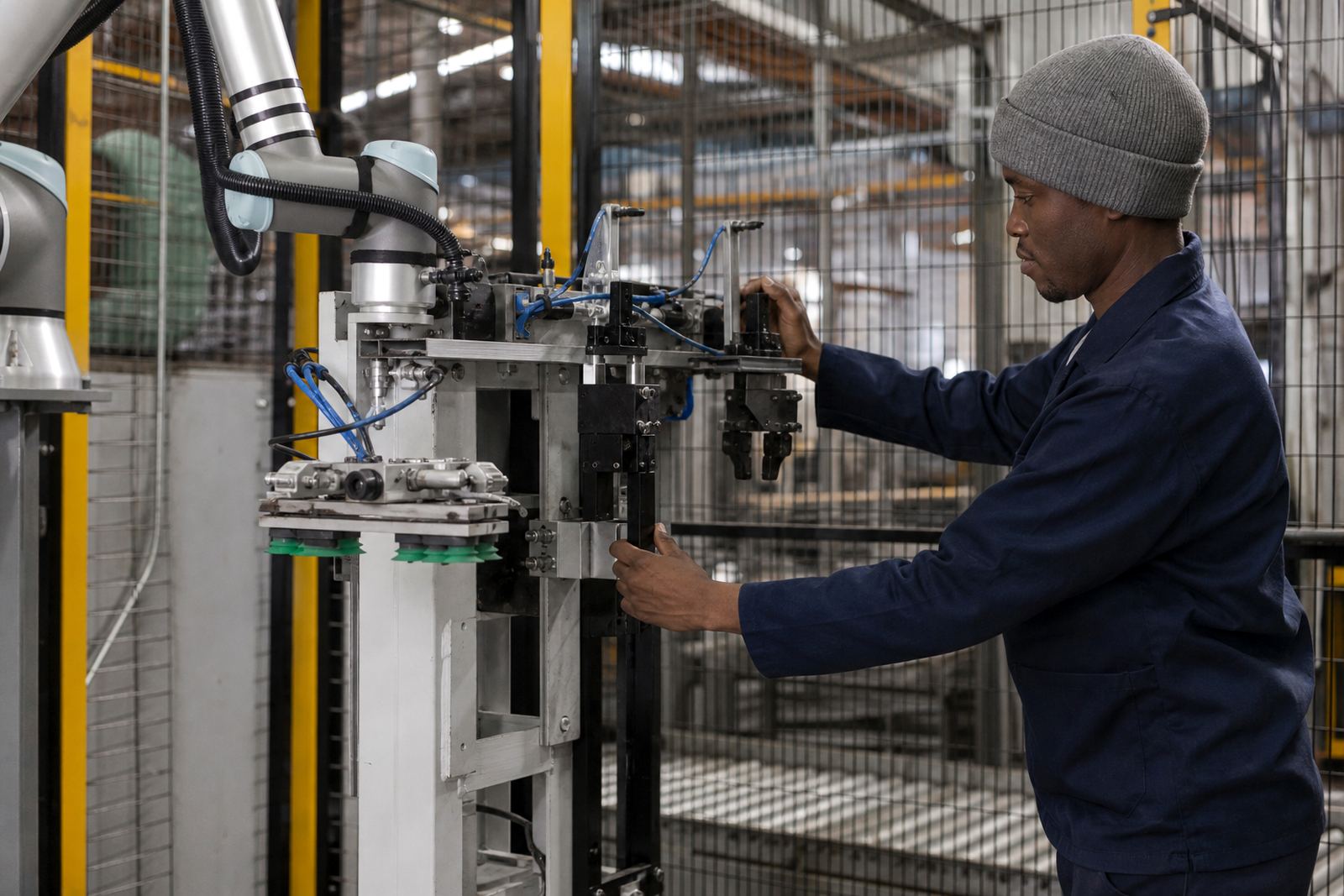
Gripping can be done with mechanical guides, side clamps or vacuum-assisted end effectors, depending on the surface and shape of the pail. Where the bucket has a handle that interferes with the pick, the system may need a modified gripping approach or a short orientation step before placement. The installation team also checks whether the bucket lid, fill level or surface finish makes the load more difficult to grip. A small difference in bucket taper can matter more than people expect.
Common options include:
- Single lane or dual lane infeed
- One size only or quick changeover for multiple bucket sizes
- Pick-and-place packing into trays, cases or pallets
- Layer formation with slip sheets or separators where needed
- Left-hand or right-hand line layouts to suit building constraints
For South African manufacturers with mixed product runs, it is worth checking if the robot can be set up for future bucket sizes as well, not just the current one. That can save rework later when the line changes.
Integration With Conveyors, Controls and Safety Guarding
Because this is a retrofit, the robot must fit into the existing process rather than force the process to fit the robot. That means checking conveyor heights, transfer timing, product gaps, discharge direction and the space needed for guarding and access doors. Controls integration links the robot to the line start and stop signals, sensors, emergency stops and any upstream or downstream equipment that must run in sequence.
Safety guarding is part of the design from the start. The final arrangement may include fixed fencing, interlocked access doors, light curtains or other controls depending on the task and the site risk profile. Every site needs its own risk assessment, because a bucket line in Pretoria may have a different layout and traffic pattern to a plant in Gqeberha. Forklift routes, pedestrian access, cleaning routines and maintenance access all need to be considered before the installation is signed off.
Installation planning normally covers:
- Line survey and footprint check
- Interface with existing conveyors and sensors
- Guarding layout and access control
- Electrical supply and control panel requirements
- Commissioning support and operator training
The aim is to keep the line practical for daily use, not just technically correct on paper.
Power, Services and Site Conditions to Plan For
Most bucket packing robot retrofits need a stable electrical supply, suitable control power and enough compressed air if the gripping method or ancillary devices use pneumatic components. The exact requirements depend on the final design, but a site should always allow for proper isolation, cable routing and maintenance access.
On coastal sites, especially around Durban or Cape Town, humidity and salt air can affect cabinets, sensors and moving parts if the environment is not considered properly. In industrial inland areas like Spartan, Midvaal or the East Rand, dust and vibration can be the bigger concern. A good retrofit takes these conditions into account when selecting enclosure protection, cable routes and service points.
Before ordering, check the following:
- Bucket diameter, height and full mass
- Required packing pattern or pallet layer pattern
- Conveyor height, direction and available floor space
- Power availability and compressed air supply
- Washdown, dust or corrosion conditions at the site
Care, Servicing and What to Confirm
Like any production equipment, a bucket packing robot needs routine care to stay accurate and safe. Daily checks usually include inspection of grippers, sensors, guards and air lines, plus a quick review of unusual noise, slow movement or missed picks. Weekly and monthly servicing may involve lubrication, fastener checks, cable inspection and a review of the robot program and safety devices. It is better to catch a small issue early than to wait for a line stop in the middle of a production run, which can be costly.
When ordering a retrofit, the most useful information is practical. Measure the bucket correctly, confirm the line speed, share product photos and explain how the pails are currently handled from the filling point to the pallet. It also helps to say whether the plant wants manual loading backup, full automatic operation or a semi-automatic arrangement for slower shifts. If a site has limited maintenance staff, that should be stated up front so the design can be kept as serviceable as possible.
Useful ordering details include:
- Bucket dimensions and target pack quantity
- Current line layout and conveyor drawing if available
- Preferred pallet height and stacking pattern
- Any site restrictions for noise, dust or floor loading
- Maintenance access limits, especially near walls or columns
With the right survey and integration, a bucket packing robot can support safer handling and steadier output without forcing a full line replacement.
Key facts
| Application | Retrofit bucket packing and palletising for existing conveyor lines |
|---|---|
| Typical load range | Dependent on bucket size, fill level and gripper design |
| Layout options | Single lane, dual lane, case packing or direct palletising |
| Integration | Existing conveyors, sensors, line controls and safety systems |
| Services | Survey, design, guarding, installation, commissioning and training |
| Regions served | Kempton Park, Johannesburg, Pretoria, Durban, Cape Town, Gqeberha and across South Africa |