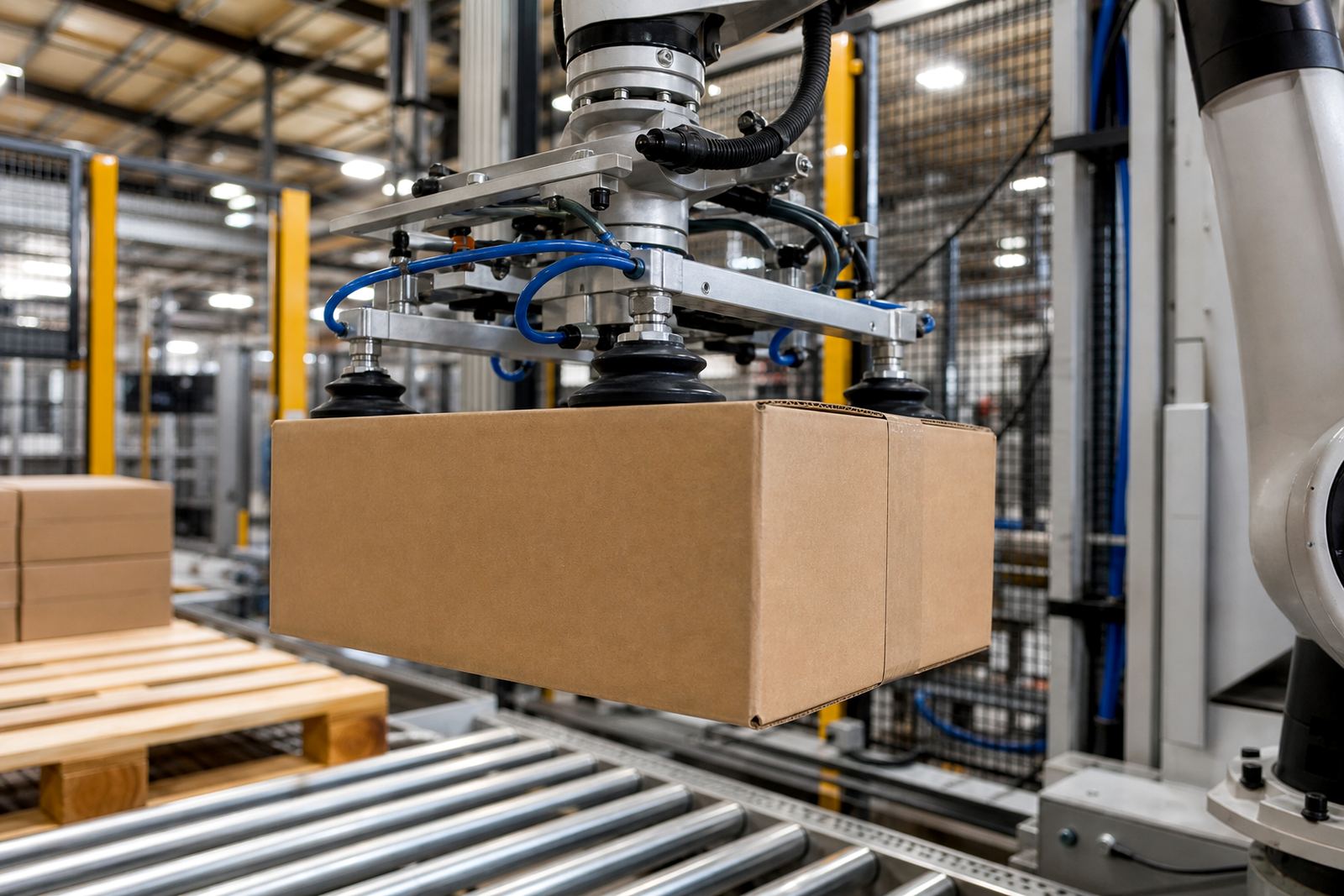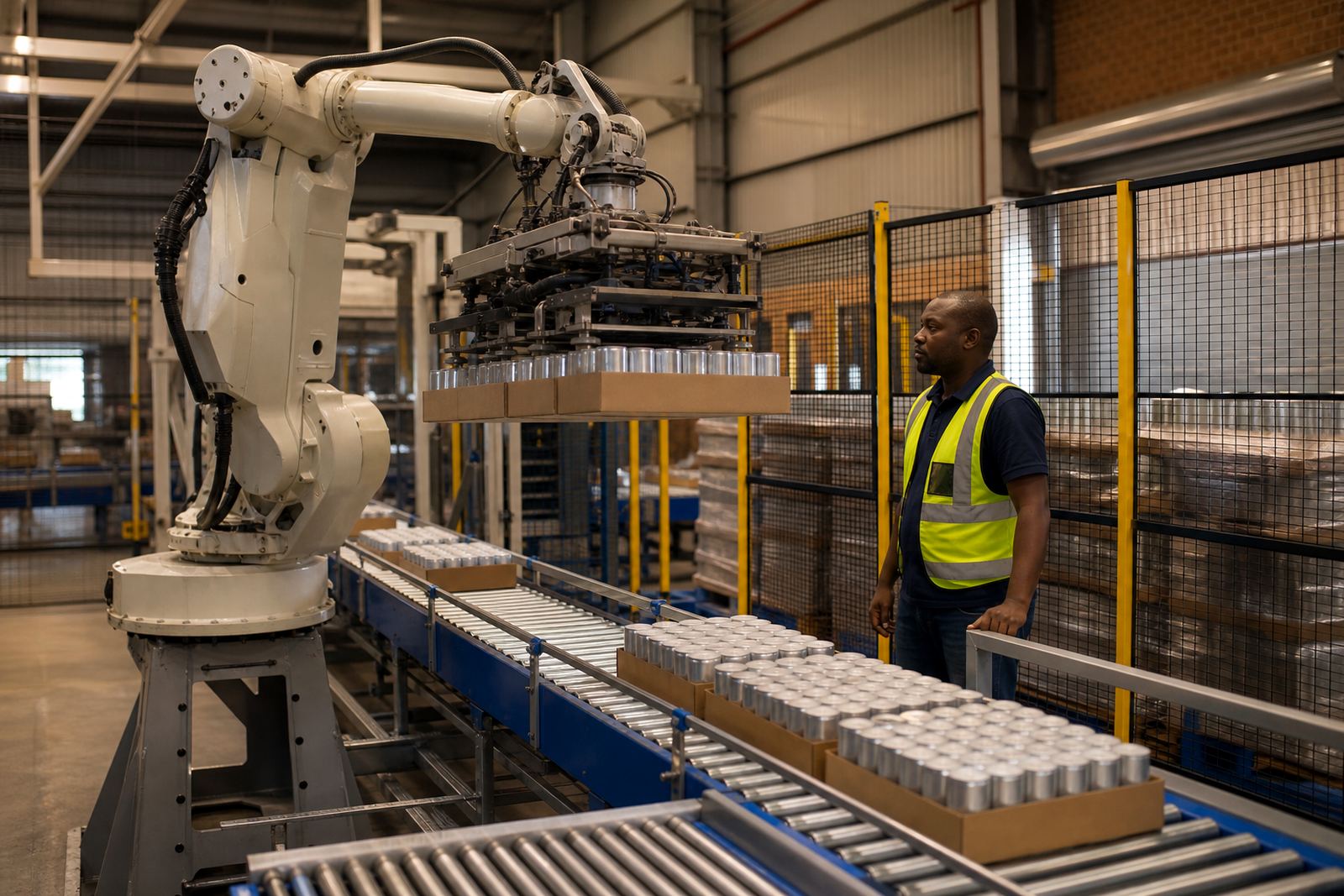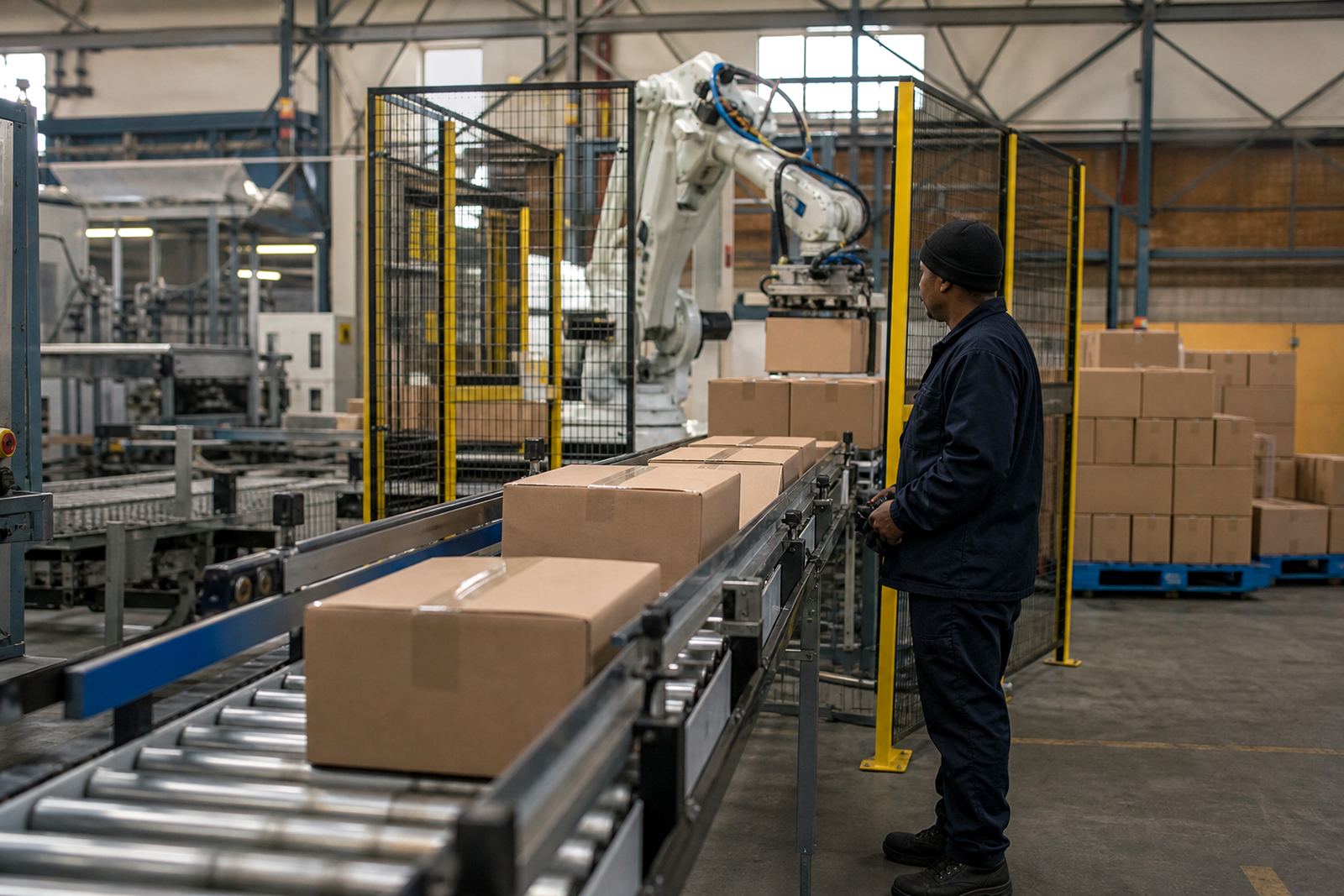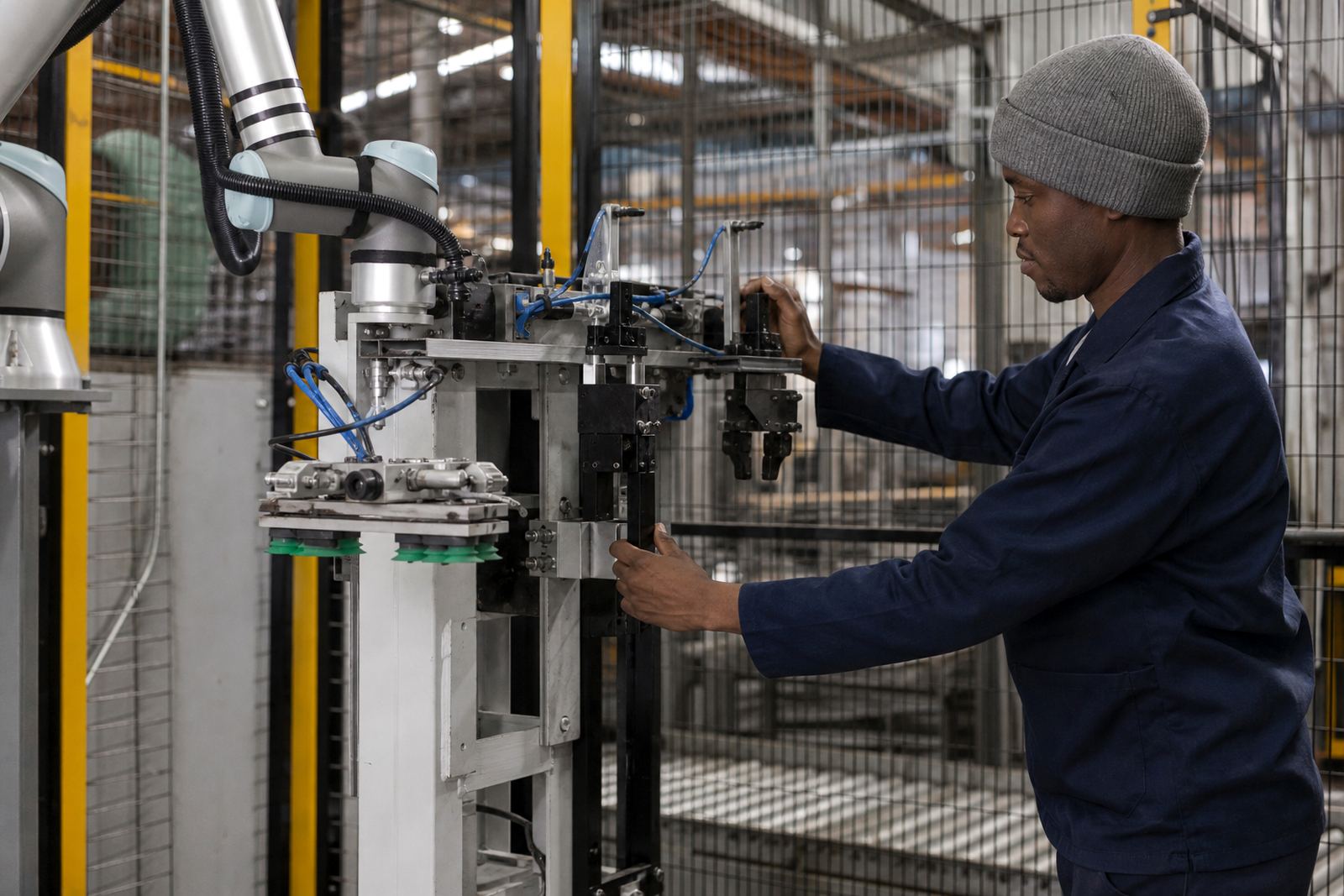
What a gripper change system does on a retrofit line
A gripper change system is the interface between the robot arm and the tool that handles the product. On a packing or palletising retrofit, it allows the robot to release one end effector and pick up another, then continue running with a different pack format or pallet pattern. That can be done manually, with guided docking, or through a more automated tool changer arrangement depending on the line and the product mix.
For South African plants that run several SKUs in one shift, this matters. A line in Kempton Park, Johannesburg or Pretoria may need to move from one carton size in the morning to a different tray or bundle later in the day, while a coastal site in Durban or Gqeberha may be dealing with humidity, washdown and corrosion risk. The change system needs to suit the site, the product and the way operators actually work.
In most retrofit projects the gripper change point is designed alongside the robot reach, conveyor infeed, case presentation and pallet build pattern. It is not a one-size-fits-all item. The mounting face, airline routing, signal connections and safety interlocks all have to be checked so the robot can dock the right tool and confirm it is locked before motion resumes.
Where this type of tool change suits best
This retrofit is useful where one robot cell must do more than one job, or where the same cell has to run mixed product types without a full retool. It is often used on packing lines, case packing cells, palletising stations and depalletising or rework areas where flexibility matters more than a single fixed format.
- Mixed product packs with different weights or dimensions
- Cartons, sleeves, crates or bags that need different grip methods
- Lines with seasonal demand and regular changeovers
- Plants that want one robotic cell to serve more than one product family
- Sites with limited floor space where a second robot is not practical
It also helps where labour is under pressure and changeover time is costing production. In many plants the problem is not just handling the product, it is stopping the line to swap tools and reset guides. A good change system cuts that downtime and makes the cell easier to manage for operators and maintenance teams.
Change system options and common specifications
Gripper change systems are sized according to robot payload, tool mass, connector type and the force needed to hold the product securely. For light carton or bag handling, the change unit can be compact and low mass. For palletising with larger clamp tools or fork-style end effectors, the interface needs more rigidity and a higher load rating.
- Manual change with guided mechanical locking for simpler cells
- Pneumatic tool release for faster exchange and cleaner operator workflow
- Automatic docking with position confirmation and tool presence feedback
- Single-signal or multi-signal connection sets for vacuum, clamps or sensors
- Corrosion-resistant options for coastal or washdown environments
- Safety rated interlocks tied into the cell control system
Typical retrofit details may include tool repeatability in the order of fractions of a millimetre, air supply points for vacuum or pneumatic clamps, and electrical connections for sensors or tool identification. The exact specification depends on the robot model, the load, and how often the line changes over. If a plant runs more than one format per shift, the design should be checked for speed as well as repeatability.
Installation, power and utility needs
Installation starts with a site line survey and a review of the existing conveyor layout, guarding and control panel space. The change system must fit the robot reach and the available transfer path, otherwise the exchange becomes awkward and slow. We also check whether the current line can support the added utilities required for the tool changer and the different grippers.
Power needs are usually modest for the change unit itself, but the full system may need a stable 24 VDC control supply, compressed air for release and locking functions, and sometimes vacuum air if the end effector uses suction.Clean dry air matters more than many teams expect.
For plants near the coast, stainless or coated parts can help reduce corrosion on exposed tooling and fittings. In dusty inland environments, especially around warehouse and packaging areas, cable routing and seals should be checked so grit does not work into the docking face. The installation must also allow safe access for maintenance, because no one wants to strip a tool change assembly while the line is still tight against a conveyor frame.
Safety guarding, risk assessment and operator control
Every site needs its own risk assessment. A gripper change retrofit changes the way operators work near the robot, and that means guarding, interlocks and lockout points must be reviewed before the system is commissioned. If the tool can be changed manually, the procedure must include safe isolation, residual energy release and a clear method for confirming the robot cannot move unexpectedly.
- Guarding around the change station and robot working envelope
- Interlocked access doors or gates where operators enter the cell
- Safe stop logic before any manual tool exchange
- Visual or sensor confirmation that the new tool is locked in place
- Operator training on changeover steps and fault recovery
For plants in Johannesburg, Durban, Cape Town, Pretoria, Gqeberha and the East Rand, we also look at how maintenance access affects the wider line. If a guarding panel blocks a gearbox cover or makes a sensor impossible to reach, it will cause shortcuts later. Good guarding supports the process instead of slowing it down.
Care, servicing and spares planning
A gripper change system is mechanical, so it needs regular checks. The locking face, guide pins, air fittings and sensors should be inspected on a planned basis. Any wear on the docking surface can affect repeatability and cause the robot to pick up the tool slightly out of line, which then shows up as poor grip or product drops.
Routine care normally includes checking fasteners, cleaning the mating faces, looking for air leaks, confirming sensor output and checking cable strain relief. If the end effector handles dusty cartons, shrink wrap or sticky product residue, cleaning intervals may need to be shorter. On wet or humid sites, corrosion checks should form part of the maintenance routine as well.
Spare parts planning is worth doing early. A site should know which seals, sensors, locking elements and airline fittings are critical, and keep a sensible holding stock on hand. Breakdown assistance becomes much faster when the team already knows the tool configuration and the common fault points.
What to confirm before you order a retrofit
Before a gripper change system is specified, the team should confirm the robot payload, the mass of each end effector, the product range and the target changeover time. The conveyor height, transfer direction and available floor space all affect the design. If the robot has to reach past a guard rail or over a case guide, that geometry has to be checked properly.
Useful information to gather includes the pack sizes, the pallet pattern, the number of formats per shift and whether the line will need future expansion. It also helps to know if the site uses vacuum, clamps, forks or mixed grip methods, because that affects the utility package and the control logic. If there are washdown zones, temperature swings or high dust levels, mention that too.
For a retrofit in Spartan, Kempton Park or another South African plant, the aim is to get the correct tool onto the robot fast, secure it safely and keep production flowing. The better the upfront information, the cleaner the installation and the less time spent on adjustments later.
Key facts
| Application | Packing and palletising robot retrofits |
|---|---|
| Change method | Manual, guided or automatic tool exchange |
| Utilities | 24 VDC control supply, compressed air, optional vacuum supply |
| Compatible tooling | Vacuum cups, clamps, forks, bag grippers and carton handling tools |
| Typical use | Multi-format lines, mixed SKU cells and fast changeovers |
| Site fit | Indoor production lines, including humid and dusty environments |