What the Infeed Alignment Unit Does on a Retrofit Line
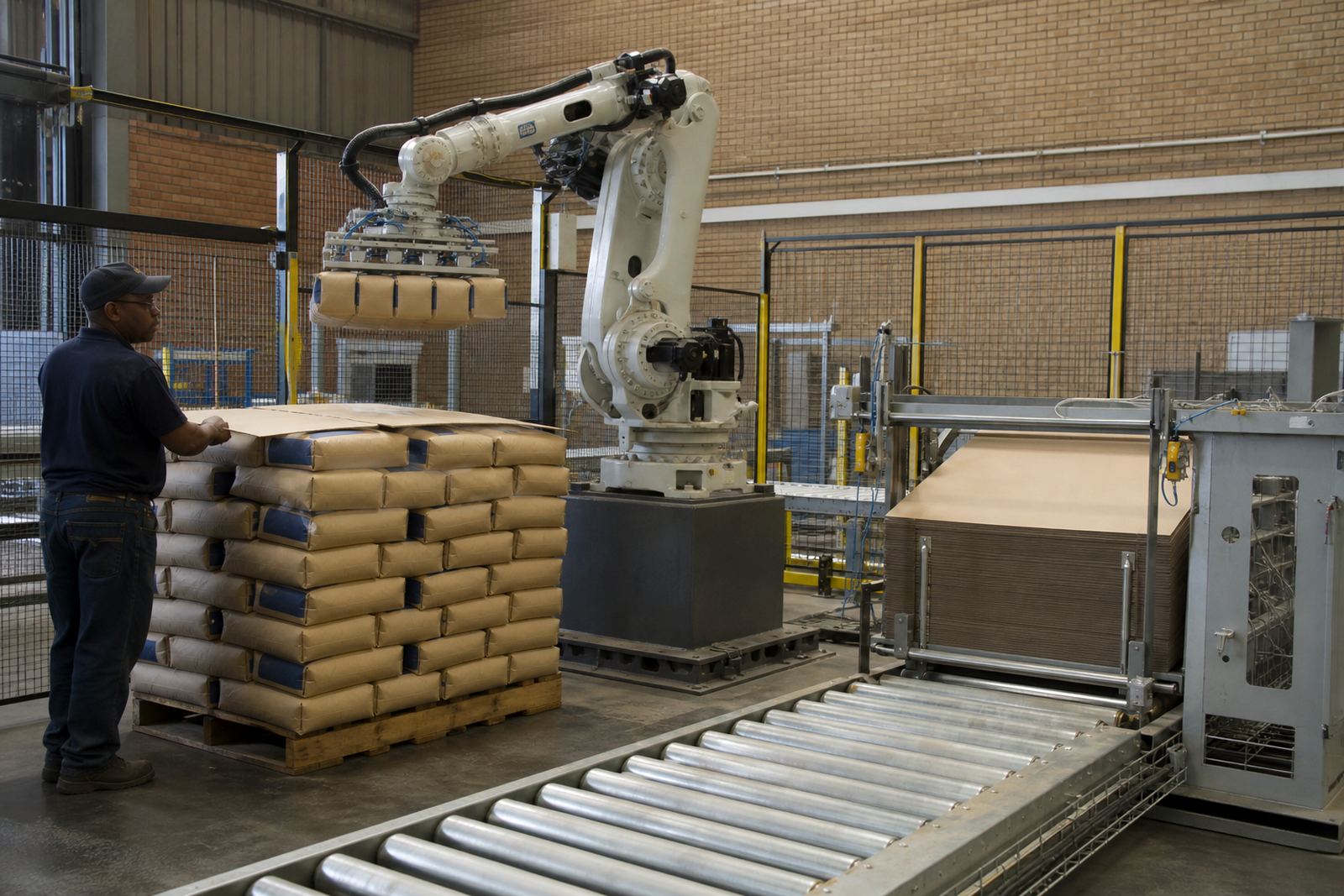
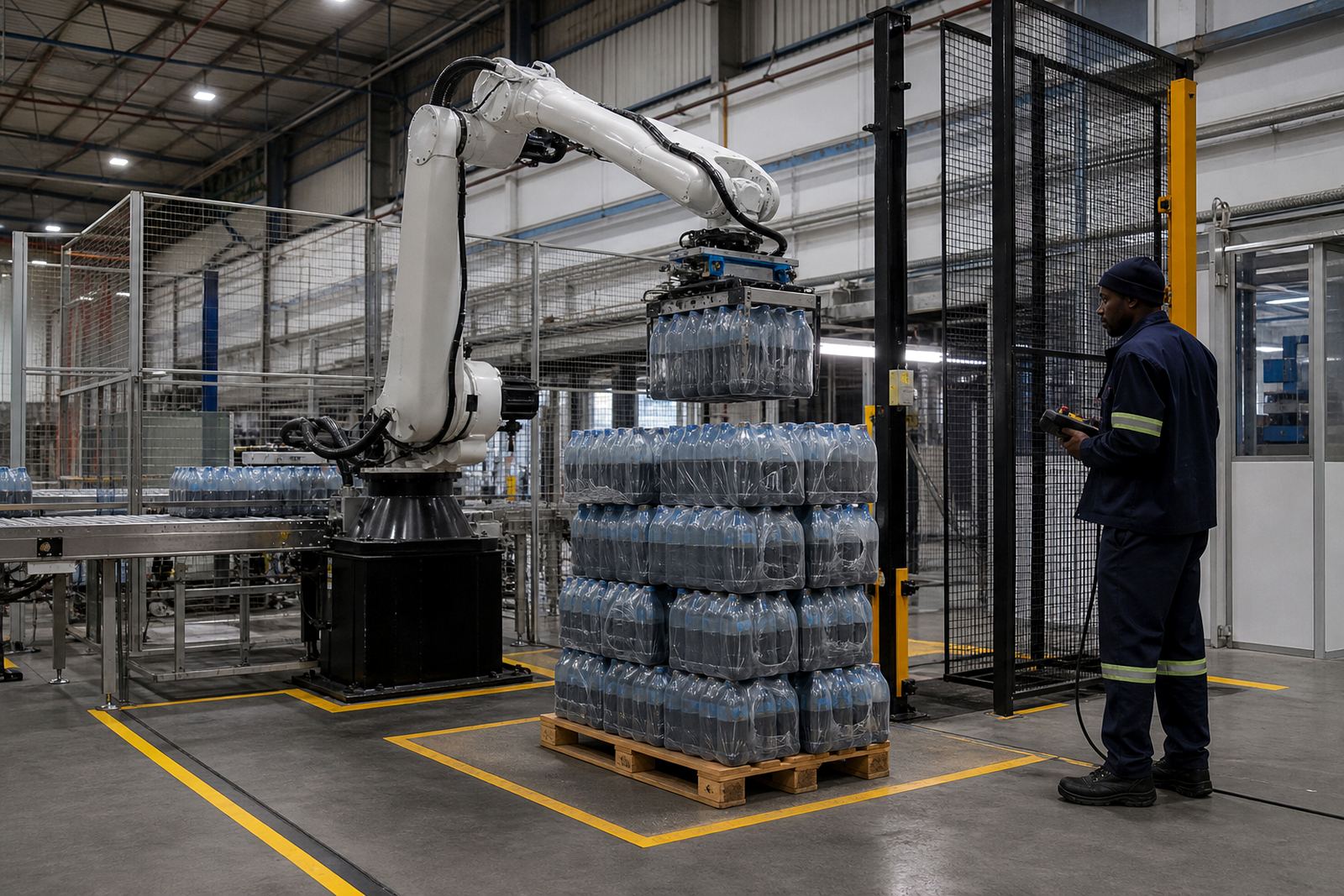
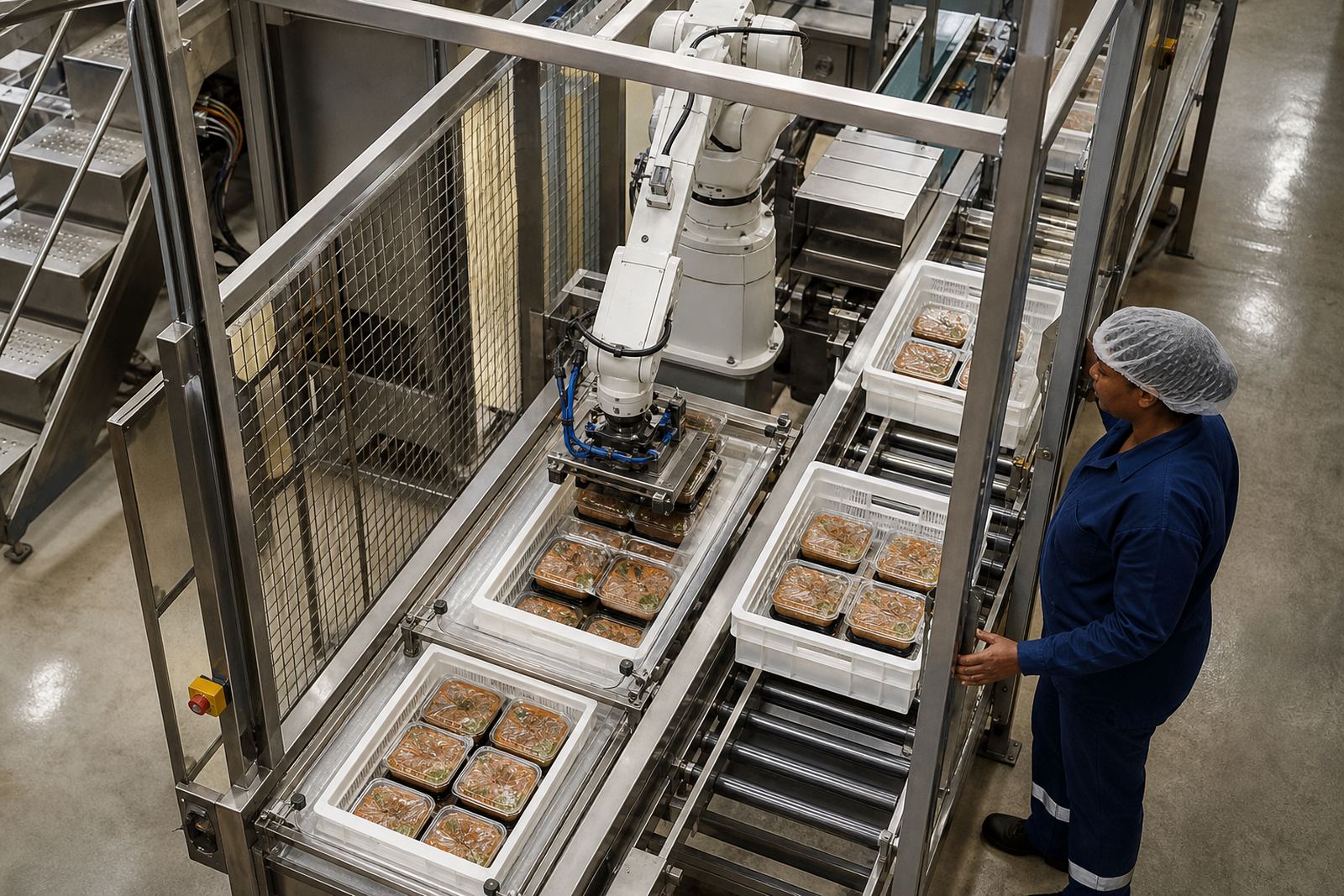
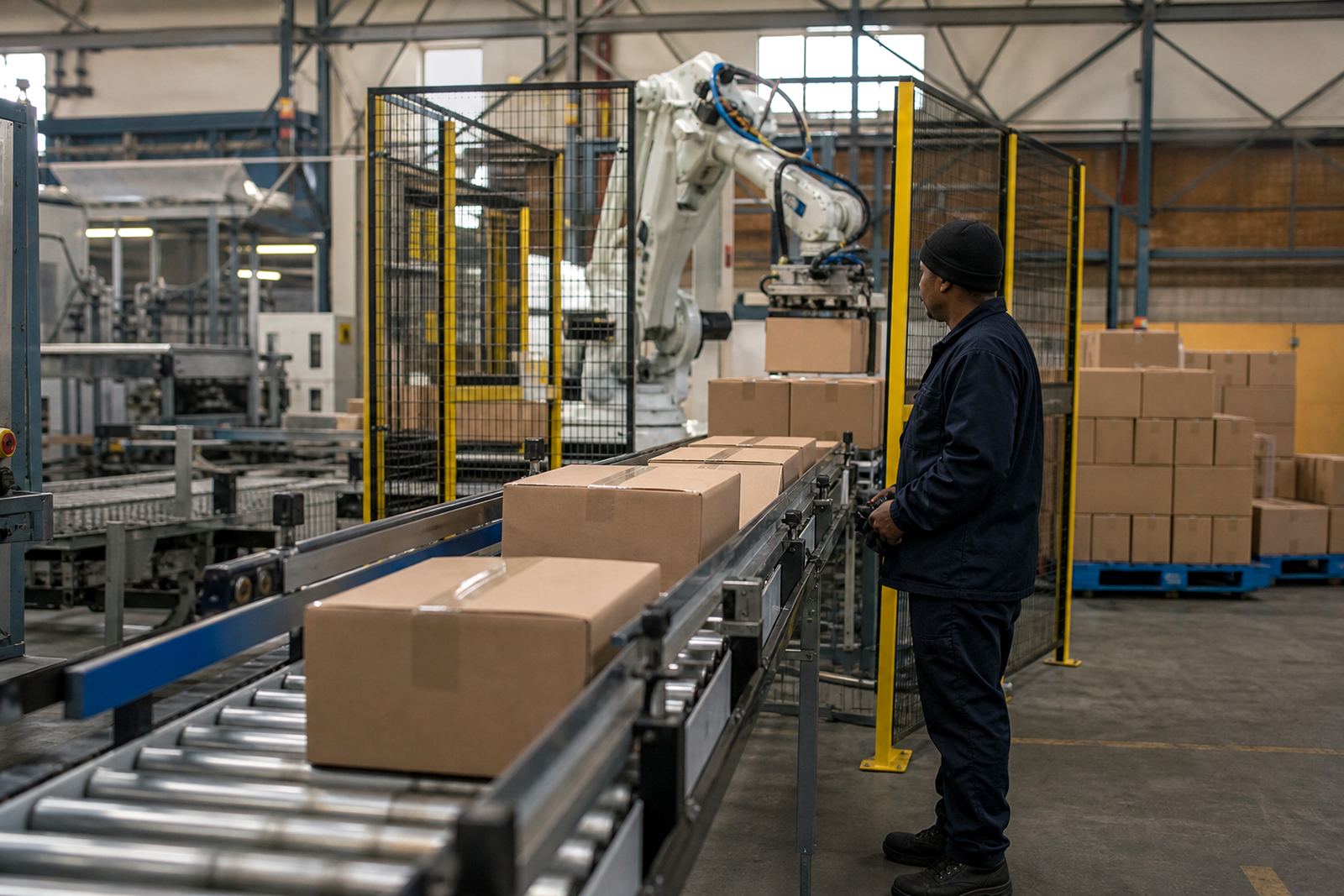
An infeed alignment unit sits upstream of the robot and corrects product presentation before the picking point. It can guide, singulate, square up or centre product so the robot receives a more predictable feed. That matters on packing and palletising lines where uneven product flow can cause missed picks, dropped packs or crooked layers on the pallet.
On retrofit projects in Kempton Park, Johannesburg, Pretoria, Durban, Cape Town and Gqeberha, the unit is usually added to existing conveyors rather than replacing the whole line. That keeps the footprint tighter and reduces downtime. The unit can be used with cartons, sachets, pouches, trays, shrink-wrapped bundles and many other regular pack formats, depending on the line layout and product behaviour.
- Improves product spacing before robot picking
- Helps keep case orientation consistent
- Reduces jams at the robot entry point
- Supports higher and more stable throughput
Sizes, Layouts and Options for Different Products
No two lines behave the same, so the infeed alignment unit is normally specified around the product size, conveyor width and target cycle rate. A compact unit may suit a single-lane packing line in a factory with limited floor space, while a wider arrangement may be needed where multiple products enter from side-by-side lanes. For heavier cases or unstable packs, the alignment section can include side rails, timing belts, pusher plates or transfer controls to keep product tracking accurate.
Available options are selected to suit the product type and the existing conveyor height. Where products arrive with mixed spacing or drift on the belt, additional sensing can be added to detect leading edges and manage release timing. Where the product surface is slippery or prone to scuffing, the contact surfaces may be changed to suit the application.
- Single-lane or multi-lane arrangements
- Fixed guides or adjustable side rails
- Sensor-based spacing control
- Options for cartons, bags, trays and bundles
Where It Suits Best in SA Plants
This retrofit suits manufacturers that already have packing or palletising lines but need better product control before robotic handling. It is commonly used in food packing, personal care, household goods, building products and general consumer packaging, where product presentation affects robot accuracy. It also helps on lines where manual feeding is inconsistent from shift to shift.
In Gauteng and coastal plants alike, the environment shapes the final specification. In humid Durban, the materials and sensors need to be chosen with corrosion and moisture in mind. In dry inland sites around Midvaal or the East Rand, dust control and easy cleaning are often more important. If the line is subject to municipal noise limits or safety inspections, the guarding and traffic flow around the unit should be planned early so the retrofit does not cause new compliance issues.
- Best for repeatable products entering a robot pick zone
- Useful when product arrives skewed, doubled-up or overlapping
- Works well on both new and older conveyor systems
- Helpful where labour availability changes across shifts
Installation, Power and Utility Needs
Most installations are tied into the existing conveyor control system and fitted during a planned shutdown or a staged weekend changeover. The installation sequence usually includes site line surveys, conveyor integration, controls integration, safety guarding design and commissioning support. Where the retrofit must run alongside live production, the work is split so the line can be handed back in phases.
Power draw depends on the final arrangement, but the unit normally runs from a standard industrial electrical supply, with control wiring matched to the rest of the line. Gas is not usually needed for this equipment unless another process on the line requires it. Space should be set aside for service access, sensor setting and safe product clearing. A clear path for forklifts and pallet jacks should also be left where the unit sits near transfer points.
- Integrates with existing conveyor speeds and controls
- Usually needs electrical power only
- Can be installed in stages to limit downtime
- Should allow safe access for cleaning and maintenance
Safety Guarding and Risk Assessment on Site
Every site needs its own risk assessment because product type, operator movement, line speed and access routes all change the final safety approach. An infeed alignment unit may need fixed guarding, interlocked access points, light curtains or other protective measures depending on how people interact with the line. The aim is to keep the entry point controlled without making routine operation difficult.
Safety guarding must also consider jam clearing, cleaning, maintenance and emergency stops. On many retrofits the biggest risk is not the unit itself but how operators reach into the area when a product misfeeds. That is why the guarding design is planned together with the line layout and the control logic. Clear signage, lockout points and proper instruction for operators are part of the handover, and the site should keep records updated after any change to the line.
- Site-specific risk assessment required for each installation
- Guarding selected to suit access and line speed
- Emergency stop points positioned for quick reach
- Lockout and maintenance access planned into the design
Care, Servicing and Order Checks
Routine care is usually straightforward. Keep the alignment surfaces clean, check sensor faces for dust build-up, inspect guides for wear and verify that fasteners and brackets stay tight. On lines running in dusty or humid conditions, a regular inspection schedule helps prevent drift and nuisance stops. A small service issue can grow quickly if the unit is left unchecked for a few weeks, so planned maintenance is worth keeping on the calendar.
When ordering, it helps to have product samples, full pack dimensions and details of the existing conveyor layout. The more exact the information, the easier it is to match the unit to the real line. If you are unsure, a site survey can confirm spacing, transfer heights and control needs before the design is finalised. That saves time later and avoids changes during commissioning.
- Product size, weight and surface type
- Conveyor width, height and speed
- Required pick orientation and spacing
- Available floor space and maintenance access
- Existing control system details
- Any cleaning, dust or moisture concerns
Key facts
| Function | Pre-aligns products before robotic picking for packing or palletising lines |
|---|---|
| Typical products | Cartons, cases, trays, bags, pouches and bundled packs |
| Integration method | Retrofit to existing conveyor lines with controls integration |
| Utility requirement | Electrical supply only, utility needs depend on site layout |
| Safety approach | Site-specific risk assessment with guarding matched to line access |
| Service areas | Kempton Park, Johannesburg, Pretoria, Durban, Cape Town, Gqeberha, East Rand and Midvaal |