How the tray loading robot works on an existing line
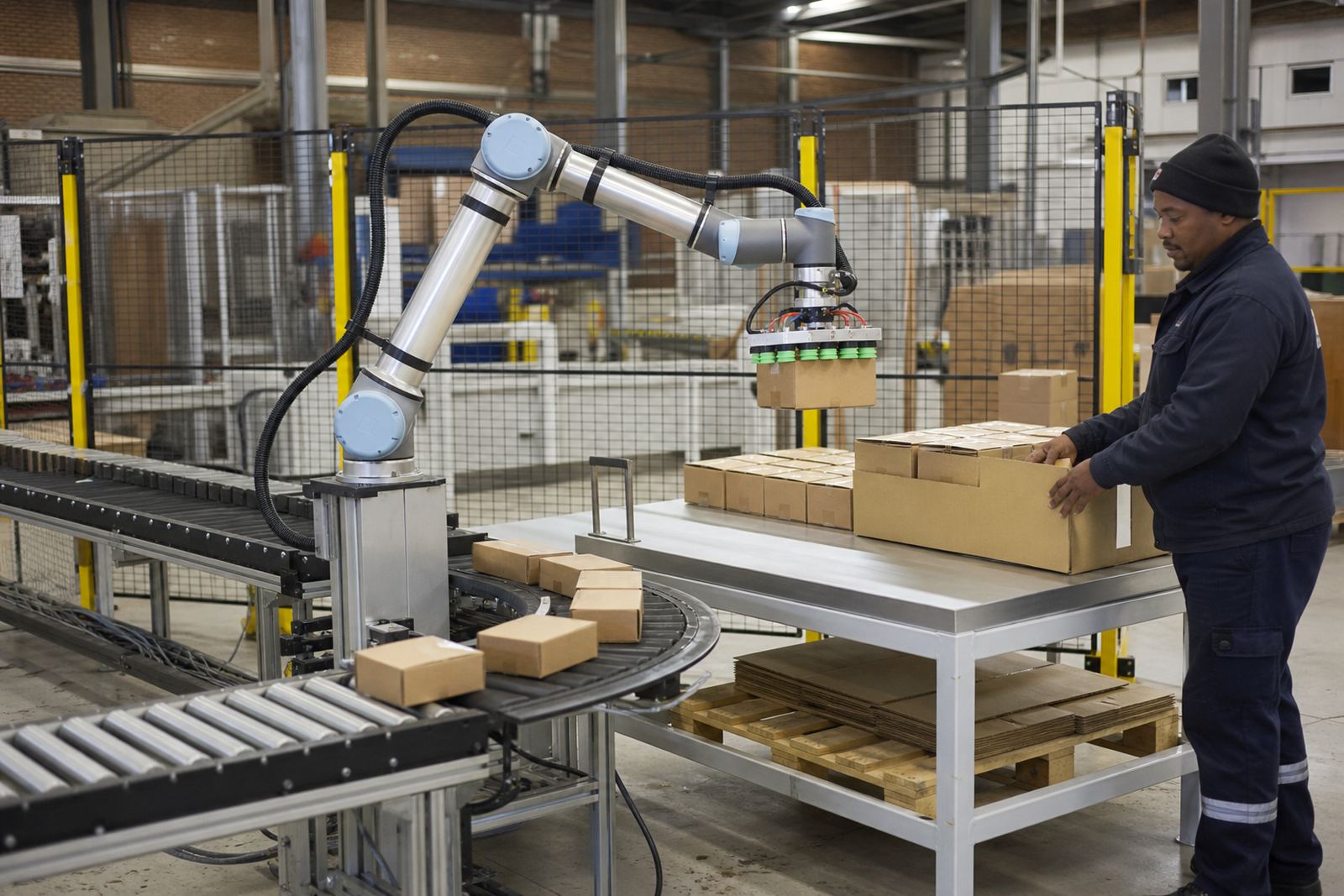
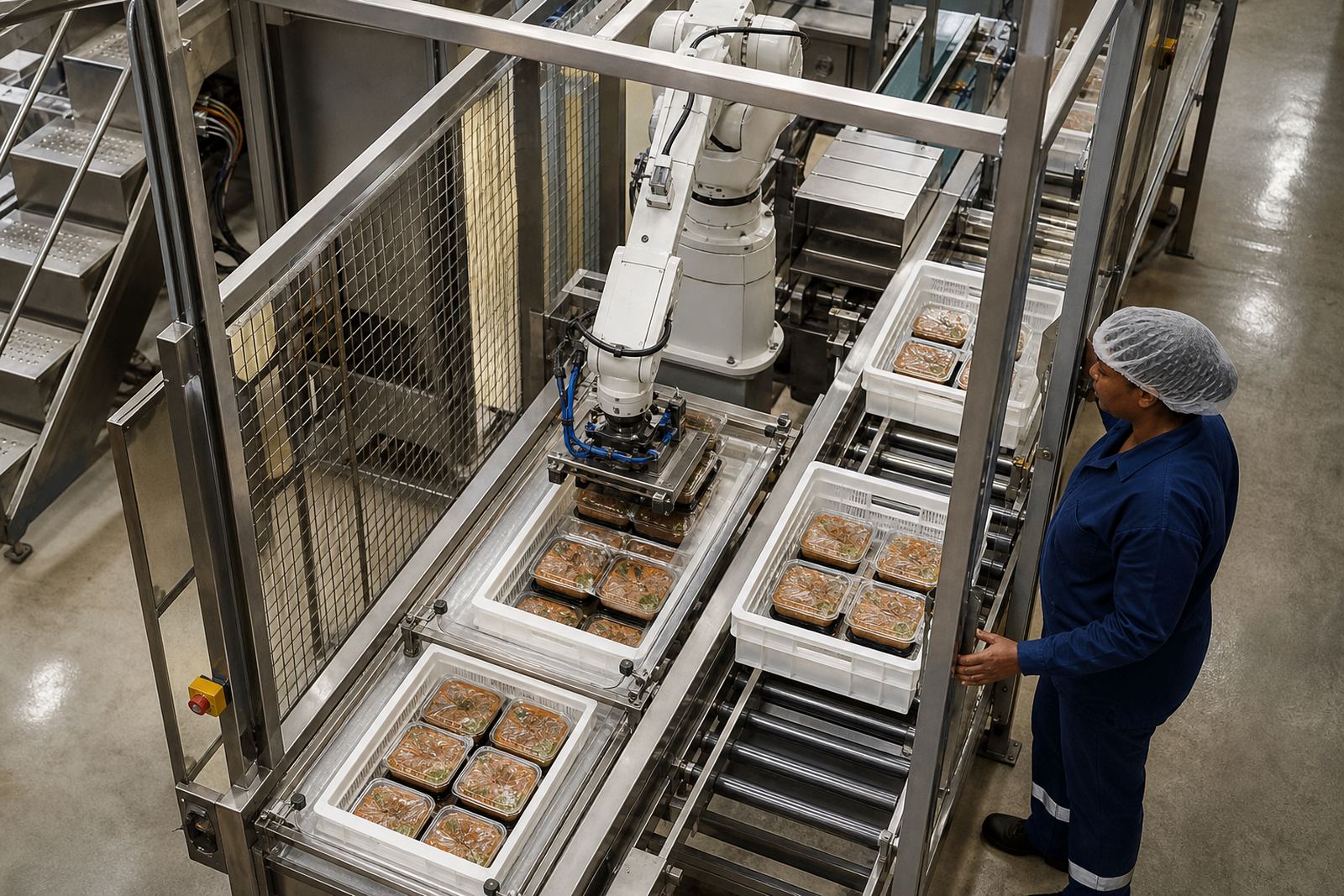
This retrofit sits alongside your current conveyor and takes product from an infeed stream, then places it into trays in the correct orientation and count. The system can be set up for single or multiple pick positions depending on product size, line speed and tray pattern, and it is normally tied into the line controls so the robot and conveyors start, stop and fault together.
On many sites in Kempton Park, Johannesburg, Pretoria and the East Rand, the main benefit is consistency. The robot does the repetitive loading work while your operators focus on checks, tray make-up, pack flow and end-of-line control. It is a practical option where manual loading is slowing the line or causing uneven pack presentation.
- Loads from an existing conveyor without changing the whole line layout
- Maintains product orientation for neat tray presentation
- Supports fixed pack counts for each tray size or format
- Can be set for food, general goods and light industrial packouts
Tray sizes, grippers and format options
Tray loading systems are usually built around the product and the tray, not the other way around. Tray size, height, divider style and target pack count all affect the robot reach, gripper type and infeed arrangement. Where products are fragile or slippery, the end effector may use soft gripping, vacuum pick, side support or a custom combination so the product lands squarely in the tray.
Common options include single-lane or multi-lane infeed, top load or side load tray entry, and recipe selection for different pack formats. If your site handles several pack sizes, the controls can be arranged so changeovers are straightfoward and repeatable, with set positions stored for each product type.
- Suitable for small, medium and larger tray footprints
- Can handle a range of tray depths and pack patterns
- Optional reject handling for missing, damaged or misaligned product
- Changeover settings for different SKUs and pack counts
Where tray loading suits South African production lines
This upgrade suits manufacturers that need orderly tray presentation, tighter count control and less manual handling. It is often used on packing lines for food, bakery, fresh produce, consumer goods and light industrial items, especially where the product arrives in a continuous flow on a conveyor and must be packed quickly into a tray for downstream sealing, wrapping or case packing.
In Gauteng, coastal humidity in Durban and Gqeberha, and dustier inland sites, the same basic design can be adapted to suit the environment. That means selecting suitable guarding, materials and enclosures, plus placing controls and electrics where they are protected from washdown, dust or heat as needed.
- Best for lines that need repeatable tray pack counts
- Useful where manual packing is becoming a bottleneck
- Fits new installations and retrofit work on older conveyors
- Can be planned around municipal access, noise and site safety rules
Installation, power and site needs
Every retrofit starts with a line survey so the robot, conveyors, trays and guarding can be placed properly. We look at floor space, conveyor heights, product flow, operator access, safety zones and where the robot can work without causing unnecessary stops. On most sites, installation is scheduled to limit downtime and to tie into existing production shifts.
Power requirements depend on the size of the robot cell, the gripper system and the controls package. Most systems need a suitable electrical supply, compressed air for certain grippers or actuators, and enough room for safe guarding and access doors.
- Electrical supply and distribution to suit the cell load
- Compressed air where vacuum or pneumatic gripping is used
- Space for guarding, access and maintenance clearance
- Existing conveyor speed and product spacing to be confirmed on site
Safety guarding, risk assessment and operator control
A tray loading robot must be matched with proper guarding and a site-specific risk assessment. The exact arrangement depends on the line, the product and the movement pattern, so the safety set-up should never be copied from one site to another without checking the actual hazards. Typical elements include perimeter guarding, interlocked access points, emergency stops, warning devices and safe access for cleaning and maintenance.
Operators also need clear routines for manual intervention, jam clearing and restart after a fault. Where cobots are considered for a lighter duty loading task, the final decision still depends on the risk assessment, speed, payload and how close people work to the cell. Safety is not a generic item and each site needs its own check.
- Perimeter guarding and interlocks where required
- Emergency stops positioned for practical operator access
- Risk assessment support for installation and operating modes
- Training for reset, fault finding and safe intervention
Servicing, spares and what to check before ordering
Good care keeps the retrofit accurate. Daily checks usually include air pressure, conveyor tracking, gripper wear, product feed consistency and any loose fixings on the guarding or frame. Planned servicing can cover lubrication, sensor cleaning, cable inspection and testing of stop functions so small faults are found before they become downtime.
Before ordering, it helps to have the product sample, tray drawing, target pack count, infeed speed and the available floor plan.The more detail you can give upfront, the better the retrofit will fit your operation and the less rework there should be.
- Product dimensions, weight and surface condition
- Tray size, pack count and presentation standard
- Infeed conveyor layout, speed and available space
- Utility needs, shift pattern and maintenance access
Key facts
| Application | Tray loading from an existing conveyor |
|---|---|
| Product handling | Orientation controlled pick and place |
| Pack count | Fixed counts per tray format |
| Integration | Conveyor, controls and safety guarding |
| Utilities | Electrical supply and compressed air as required |
| Typical use | Packing lines for food, general goods and light industrial products |