What a Pick and Place Cobot Retrofit Does
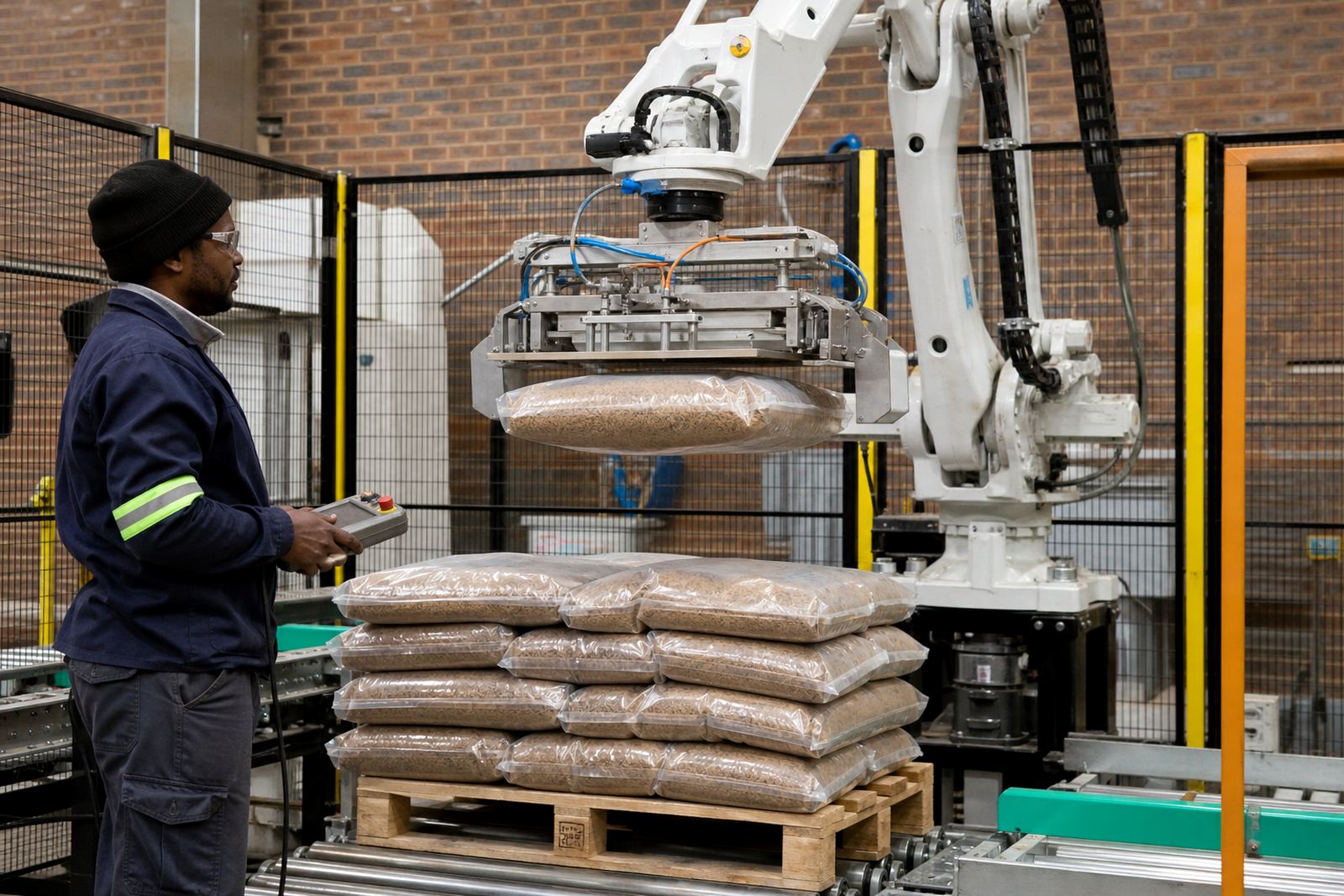
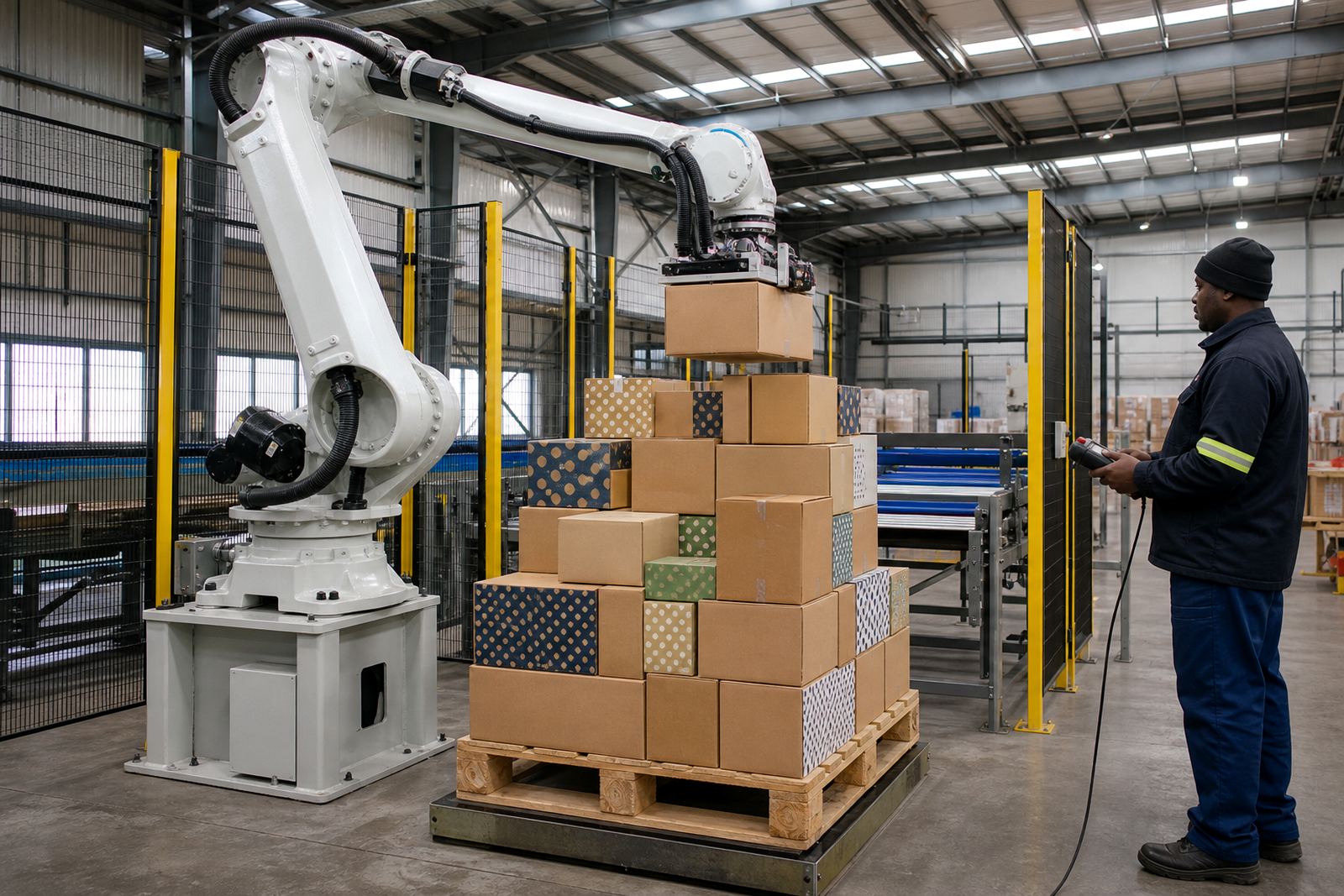
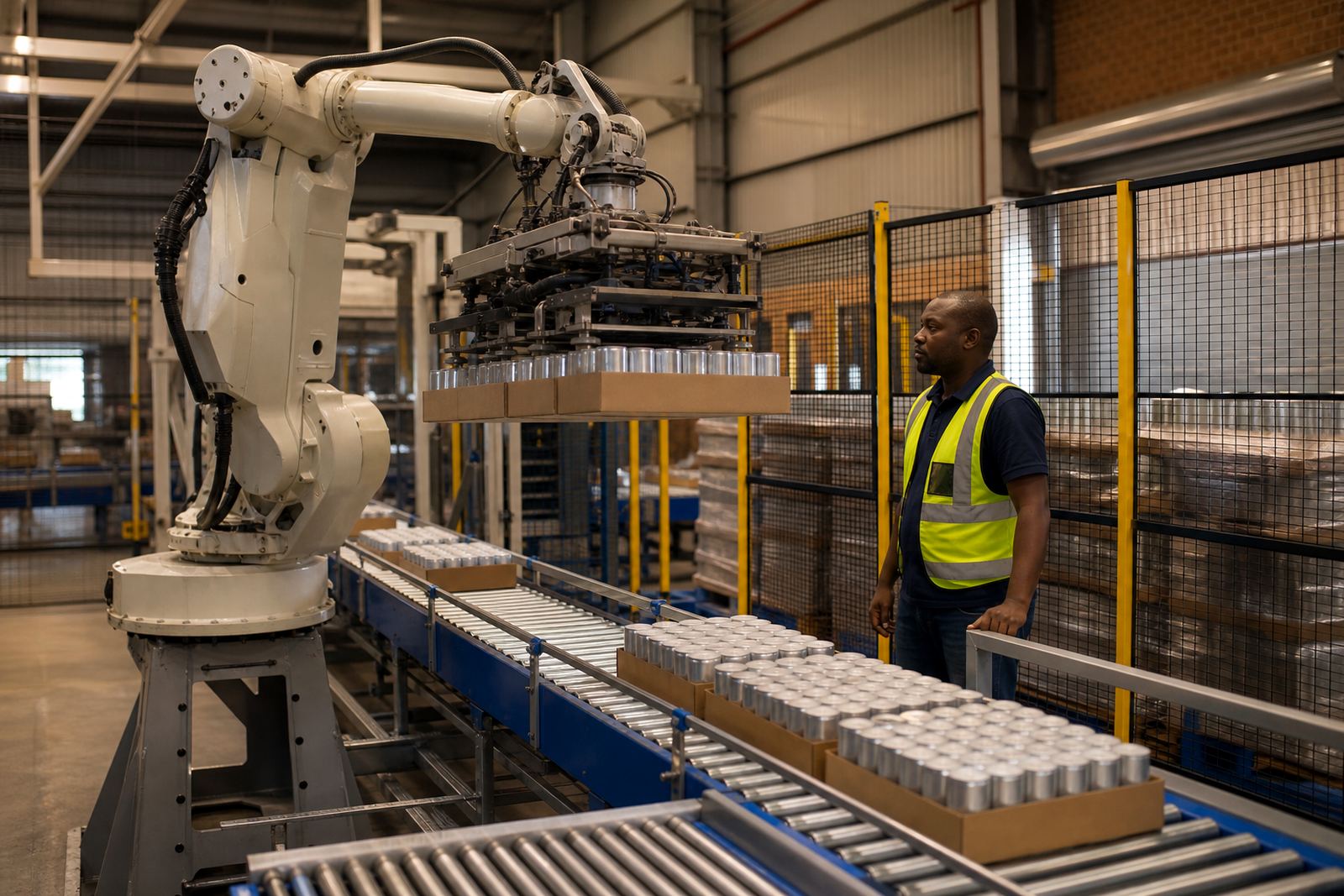
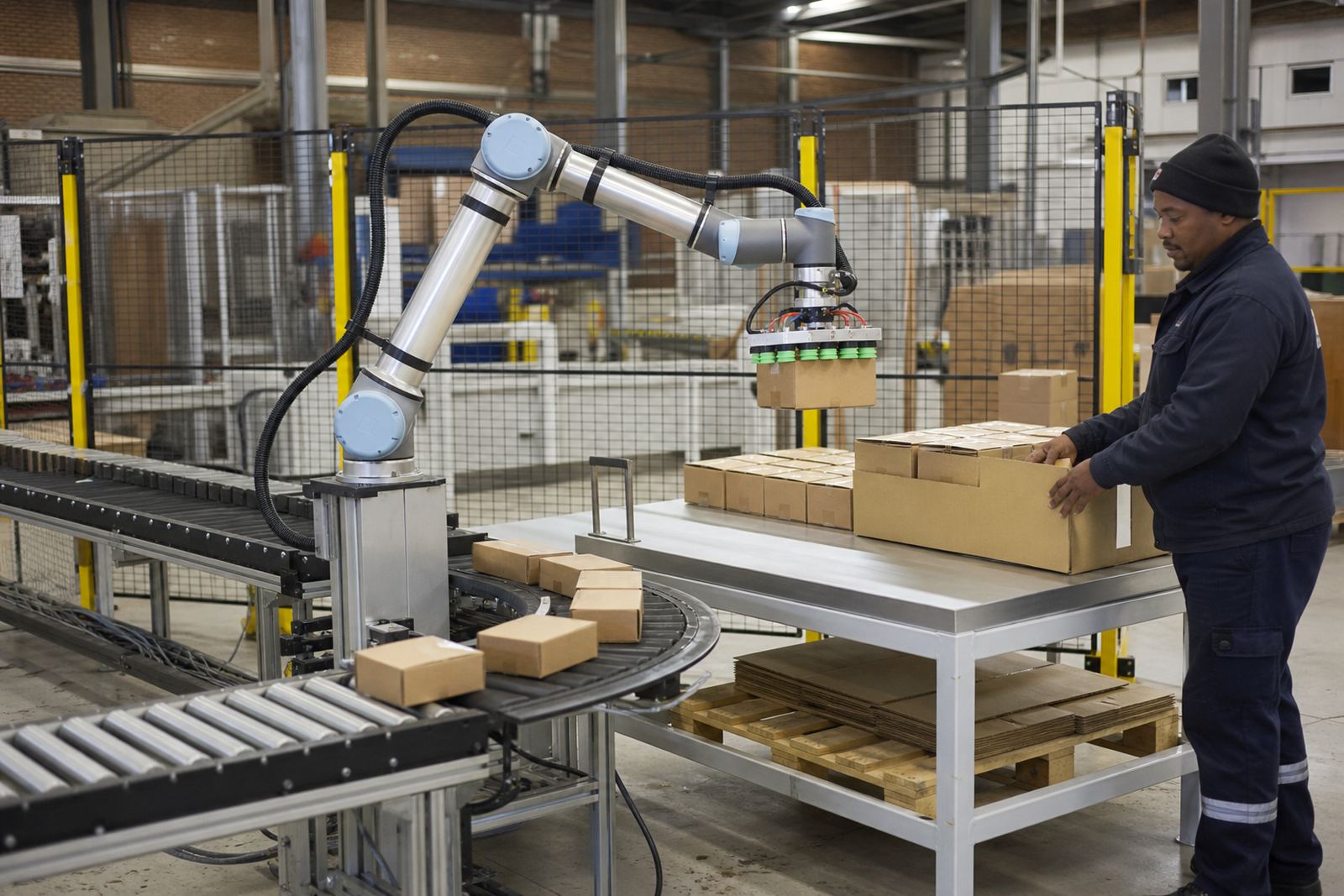
A pick and place cobot takes repetitive handling work off the line and places items into cartons, trays, sleeves or cases in a repeatable pattern. It is usually added to an existing packing or palletising line, so the conveyor, infeed and downstream equipment stay in use while the robot handles the picking and placing step.
These systems suit facilities in Gauteng, KZN, the Western Cape and the Eastern Cape where product changeovers form part of daily production. One shift may handle bags, the next cartons or tubs, so the cell must allow quick pattern changes and clear access for operators. The goal is steady output, fewer manual lifts, and less strain on the team.
In many cases a cobot retrofit is chosen when a full robot cell is not practical because of space, budget or line layout. It can fit into tighter floor plans and work alongside existing conveyors, provided the site is properly surveyed and the guarding plan is set out before installation.
Where It Suits Best on South African Lines
This type of retrofit suits flexible end of line packing where product formats change regularly. It is commonly used in food, beverage, personal care, household goods and light industrial packing lines. The best fit is usually a site that already has a stable conveyor feed and needs a more consistent way to load products into secondary packaging.
- Carton loading from a single infeed or multiple lanes
- Tray packing with regular layer or pattern placement
- Case packing for bottles, pouches, tubs or wrapped items
- Transfer from conveyor to pallet layer build zones
- Handling where manual packing is slowing the line
For manufacturers in Johannesburg, Pretoria, Durban, Cape Town and Gqeberha, the benefit is often in keeping the line moving during peak demand and reducing reliance on hard to retain manual labour. At Spartan in Kempton Park, our team often sees lines where the physical layout is sound but the packing step has become the bottleneck. A cobot can help there if the product is suitable and the motion path is kept clear.
Sizes, Reach and Payload Options
Pick and place cobots come in different reach and payload combinations, so the unit must be matched to the product, gripper and cycle time. The robot arm itself is only part of the job. You also need to allow for the end effector, product weight, and the space needed to move safely between pick points and place points.
- Typical reach options: about 800 mm to 1 300 mm, depending on the application
- Typical payload options: about 3 kg to 20 kg, including the gripper where relevant
- Floor mounted, pedestal mounted, or side mounted layouts depending on conveyor height
- Small footprint cells for compact packing areas
- Changeable grippers for cartons, pouches, tubs or mixed packs
For some sites, the right option is a lighter cobot for small packs and short cycle times. For others, the better choice is a heavier unit with a longer reach to handle wider conveyors or larger cases. Selection is not guesswork. It comes down to actual product weight, pick pattern, product presentation and how much room there is around the line. A unit that is undersized will struggle, while one that is oversized can take up more space than needed.
Installation, Power and Utilities
Installation normally starts with a site line survey, followed by a layout that shows the pick zone, place zone, guarding and operator access. The cobot then needs to be integrated with the existing conveyor controls, sensors and stop circuits so the line starts and stops in the right sequence. If a site already has a PLC based system, the retrofit can often be tied into that rather than starting from scratch.
Load demand is usually lower than for larger industrial robots, but the exact requirement depends on the arm, controller, gripper and any added equipment such as conveyors, printers or reject stations. Some gripping systems need compressed air, while others run electrically. Gas is not normally part of a pick and place cobot package unless the wider line includes process equipment that needs it.
- Single phase or three phase supply, depending on the selected system
- Compressed air may be needed for vacuum or pneumatic grippers
- Network links may be required for line signals, recipe changes or alarms
- Floor flatness, anchor points and access routes should be checked before delivery
In humid coastal areas like Durban and Gqeberha, enclosure selection and component protection should be considered carefully.Every site has its own conditions, so the final setup must follow a proper risk assessment and line review.
Safety Guarding and Risk Assessment Support
Even though cobots are designed for closer human interaction than traditional industrial robots, every installation still needs a site specific safety approach. That means the guarding, access points, sensor logic and operating method must be set around the actual task and the people working nearby. There is no standard layout that suits every site.
Safety guarding may include perimeter fencing, light curtains, interlocked gates, warning lights or defined collaborative work zones, depending on the risk assessment and how the cell is used. If an operator needs to enter the area for product loading, clearing jams or changeovers, the controls must be designed to support safe stop and restart procedures.
- Risk assessment support for the specific line and task
- Guarding design based on access needs and line speed
- Clear lockout points for maintenance and breakdown work
- Operator training on normal use, cleaning and resets
At ReAutomated we treat safety as part of the retrofit, not an add on. The point is to keep the cell practical for production while still protecting operators, cleaners and technicians. A well planned system should not force awkward workarounds or create a bottleneck at the entry gate.
Servicing, Care and Order Checks
A pick and place cobot retrofit should be easy to maintain if it is specified correctly. Routine care normally includes checking fasteners, cable runs, gripper wear, air lines if fitted, sensor alignment and the accuracy of the pick and place positions. Cleanliness matters too, especially where dust, cardboard fibre or product residue can build up around the cell.
Before ordering, it helps to confirm the actual product dimensions, pack weight, line speed and the number of picks per minute expected. You should also check whether the products arrive in a fixed orientation or if the robot needs to correct for variation. If product presentation changes too much, the gripper and vision setup may need to be adjusted or the line may need a better feed arrangement.
- Product size, weight and packaging material
- Required reach, infeed height and place height
- Cycle time, shift pattern and expected changeover frequency
- Available floor space and operator access needs
- Power supply, compressed air and control signals
Good spares planning helps keep downtime down. That usually means keeping sensors, gripper wear items and a few critical consumables on hand, especially for sites running long shifts or operating through public holidays. Our team supports installation, commissioning, training, maintenance and breakdown assistance from Kempton Park, with site support across the East Rand, Midvaal and major industrial areas nationwide.
Key facts
| Typical use | End of line pick and place for cartons, trays, cases and mixed packs |
|---|---|
| Reach range | About 800 mm to 1 300 mm, depending on the selected arm |
| Payload range | About 3 kg to 20 kg including gripper, subject to application |
| Power supply | Single phase or three phase, depending on the system design |
| Utilities | Compressed air may be required for vacuum or pneumatic grippers |
| Integration | Existing conveyors, sensors, PLC logic and stop circuits as required |