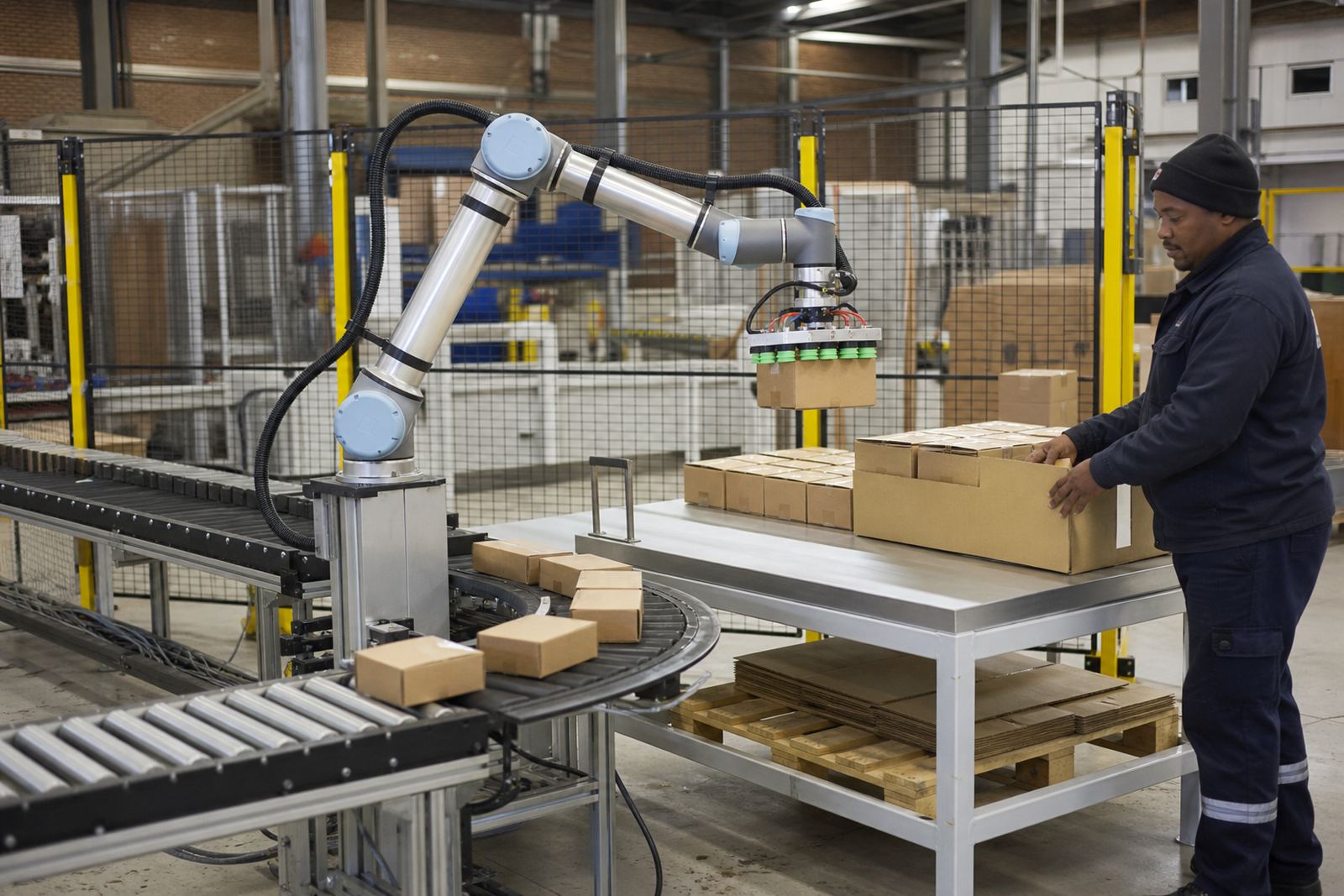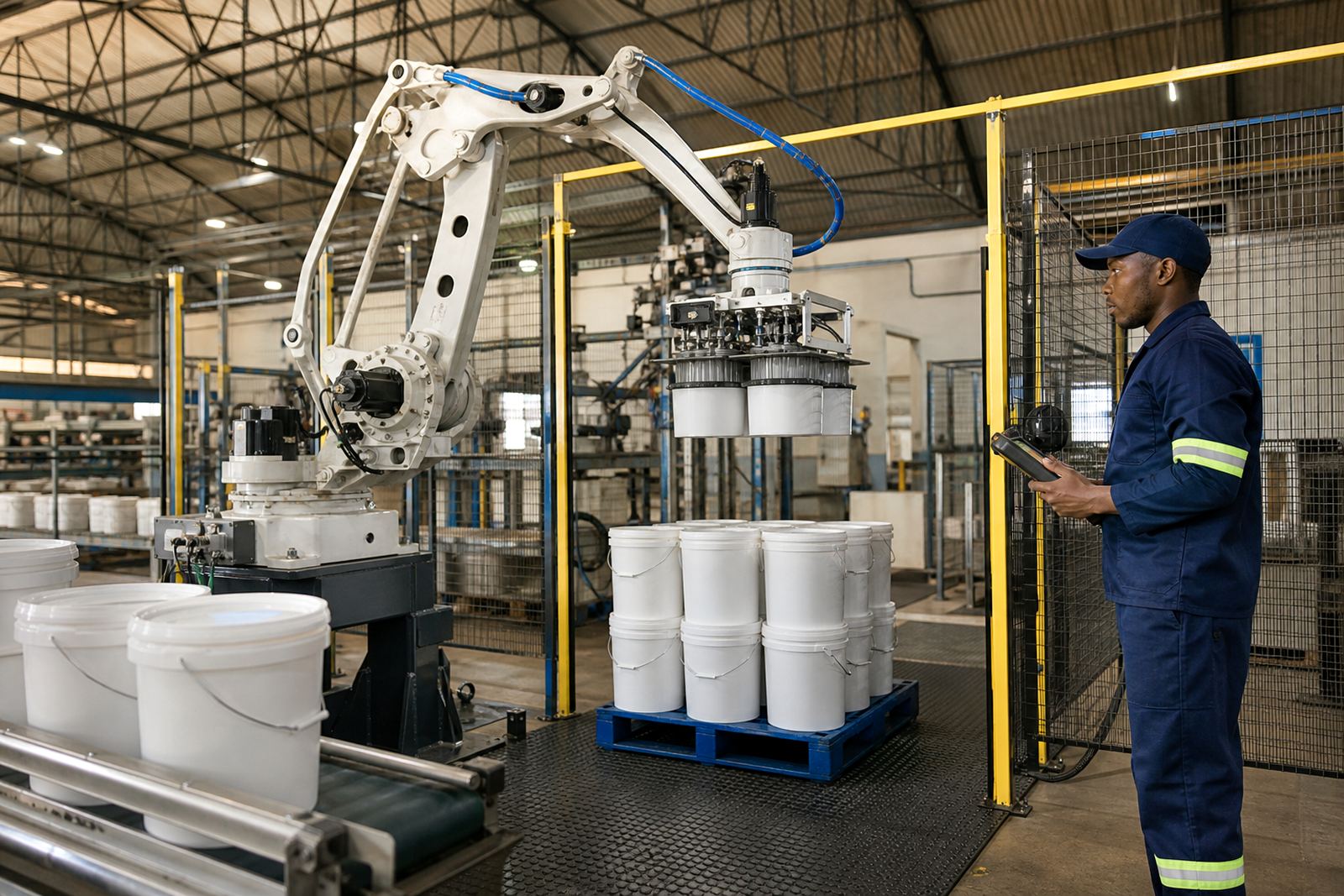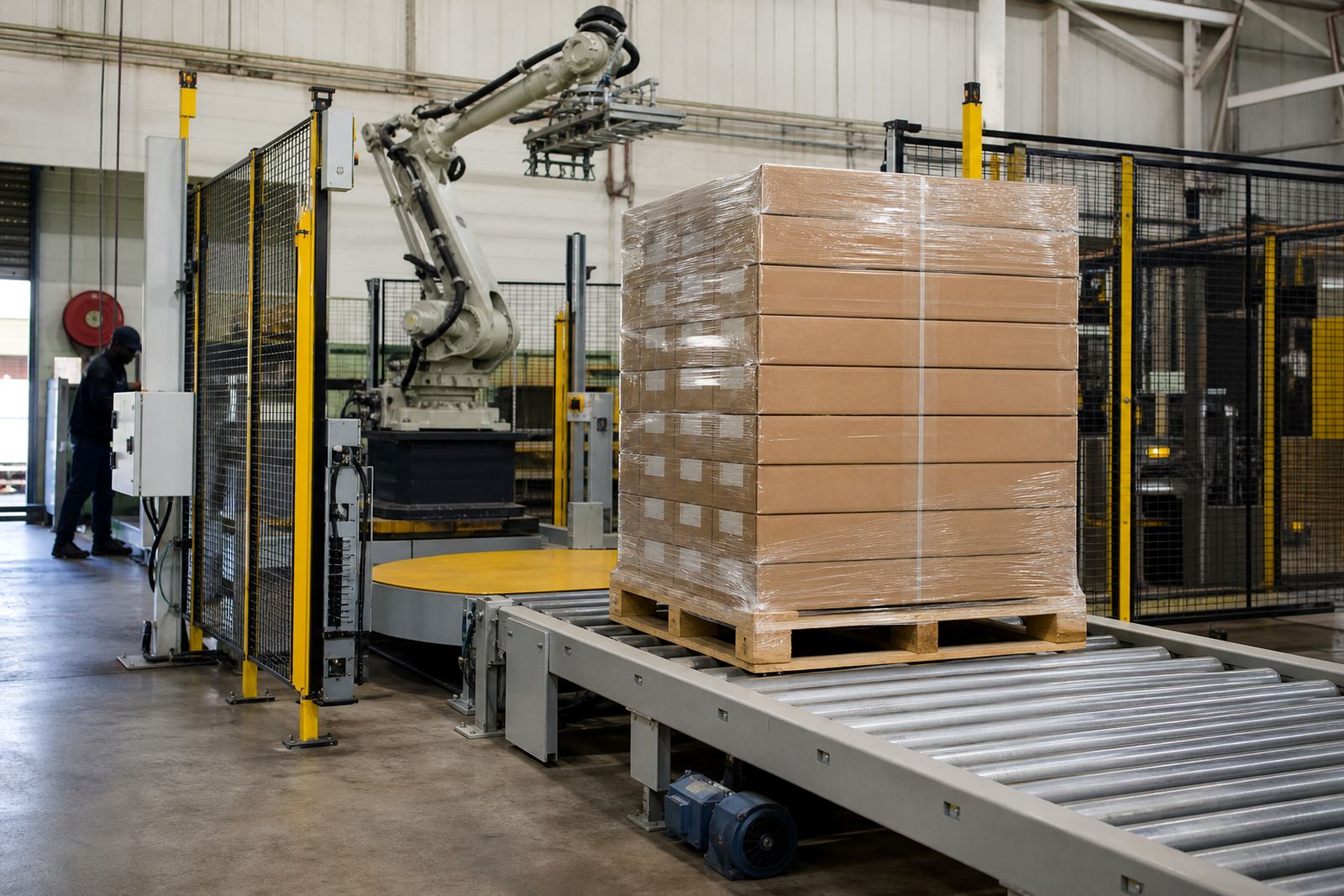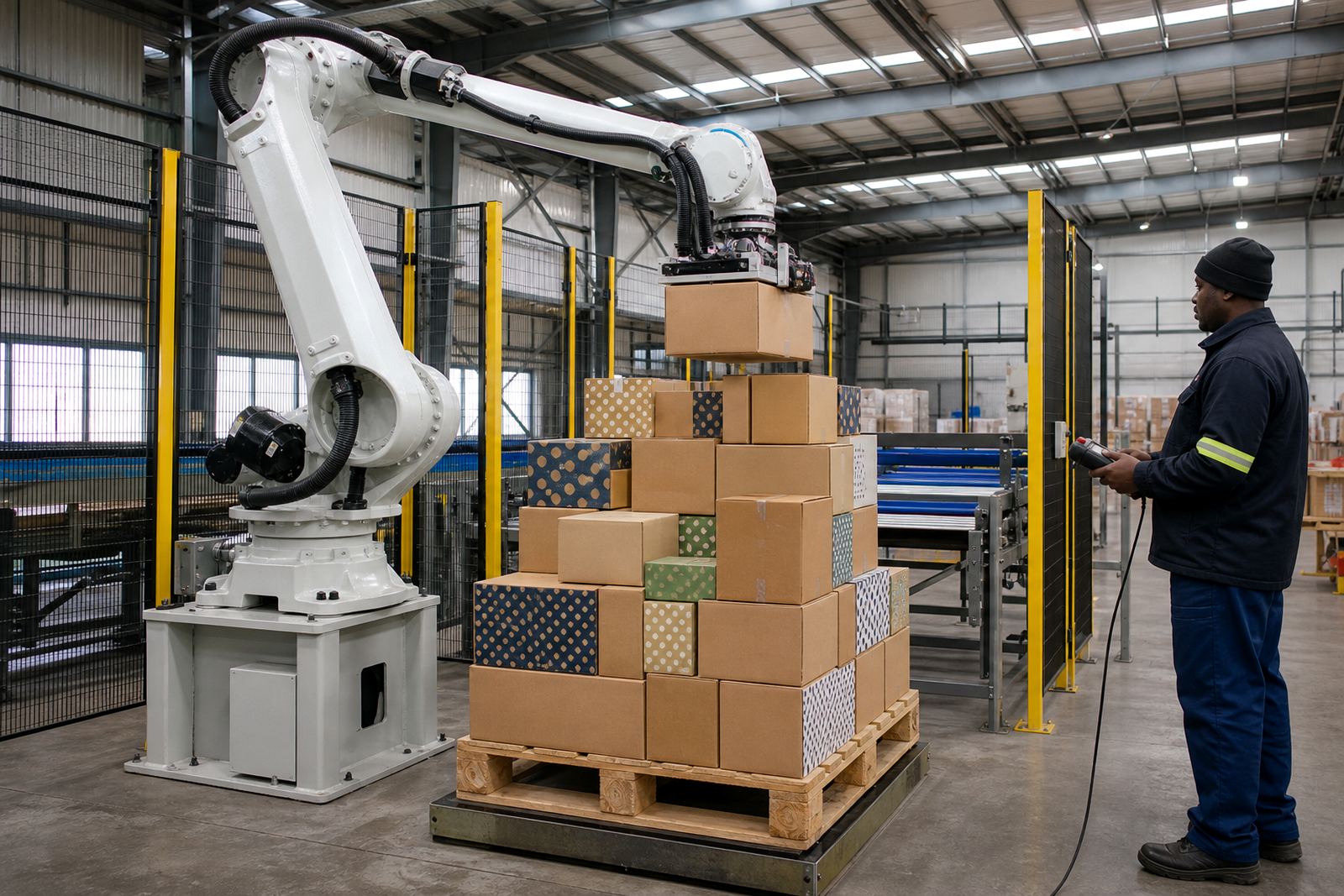
What a mixed case palletiser retrofit does on your line
A mixed case palletiser retrofit adds a controlled palletising function to an existing packing or end-of-line setup. Instead of one carton size only, the system handles a planned mix of case sizes, allowing each layer to be built to a defined pattern that suits product weight, carton footprint and pallet stability.
In many South African plants, the challenge is not just lifting boxes. It is matching different pack sizes, keeping the flow steady from the conveyor and making sure the pallet stays square for stretch wrap and fork handling. A retrofit is often the practical way to do this when the current line already has a conveyor, case sealer or pack station in place.
- Handles more than one carton size in a single pallet build sequence
- Works with existing infeed and outfeed conveyors where possible
- Supports layer patterns, interlocks and corner stability planning
- Reduces repetitive lifting at the end of line
Where mixed case palletising suits best
This type of retrofit is commonly used on packing lines that run multiple SKUs or mixed order profiles. It suits food, household goods, chemicals, building products and general manufacturing where cartons vary through the shift or by customer order.
It is especially useful where an operation serves Johannesburg, Pretoria, Durban, Cape Town or Gqeberha and has to deal with changing pack formats, pallet heights and dispatch schedules. It also helps where labour availability is tight, or where loading bays and warehouse teams need more predictable pallet quality for collection and storage.
- Multi-SKU packing lines with frequent carton changes
- Sites with limited floor space around the end of line
- Factories needing consistent pallet patterns for transport
- Operations working across two shifts or under pressure
Sizes, layout options and control methods
Mixed case palletisers can be arranged in different ways depending on carton size, pallet height and available floor area. Some plants need a compact cell beside the conveyor, while others need a larger layout with infeed accumulation, pallet dispense and wrap-ready discharge.
Control is usually based on product recipes, layer patterns and line signals from the existing conveyor system. The retrofit can use a simple operator interface so staff can select the pallet pattern, verify carton type and monitor the sequence. Where required, cobot-assisted handling may suit lighter cases and slower lines, but each application still needs its own review of speed, reach and guarding.
- Single infeed or multiple infeed conveyor arrangements
- Layer-by-layer or case-by-case pallet build sequences
- Compact cells for smaller plants and tight aisles
- Options for pallet dispenser, layer sheet handling and outfeed signalling
Installation, utilities and site needs
Retrofit installation normally starts with a site line survey and a check of the current conveyor heights, floor condition, pallet staging area and safety clearances. The goal is to fit the new palletising function into the line without unnecessary rebuilding. On some sites the work can be staged over a shutdown window, while others need phased installation so production can keep moving.
Load demand depends on the final line layout and the handling method. Most retrofit jobs need an industrial electrical supply, control wiring and space for a dedicated control panel. Compressed air may be needed for certain grippers, transfer units or pallet handling parts, but not every line uses air. Gas is not usually part of a mixed case palletiser installation.
- Check line height, conveyor direction and available footprint
- Confirm available electrical supply and panel location
- Allow access for maintenance, cleaning and pallet changeovers
- Plan safe forklift movement and pedestrian separation
Safety guarding, risk checks and operator training
Every mixed case palletiser needs a site-specific risk assessment. The guarding, interlocks, emergency stops and access points must suit the actual plant layout, the cartons being handled and the way operators work around the line. General safety rules are not enough on their own, because no two factories have the same traffic flow, fork routes or loading area pressure.
Guarding design can include fixed panels, access doors, light curtains where suitable and clear zones around the robot working envelope. Training is just as important as the hardware, especially where operators need to change recipes, clear minor stops or manage pallet staging. A well set-up line should be practical to run and safe to service, not just fast on paper.
- Site-specific risk assessment before installation and commissioning
- Emergency stops placed for the actual operating positions
- Safe access for cleaning, fault finding and maintenance
- Operator training for start-up, stop, fault reset and pallet changeover
Servicing, spares and what to confirm before you order
Mixed case palletisers need regular checks on belts, sensors, grippers, cable runs and software settings. In South African plants, dust, humidity and seasonal heat can affect both mechanical parts and panel condition, especially on coastal sites and in busy dispatch areas. Good servicing keeps the line stable and helps prevent avoidable stops during peak production.
Before ordering, it helps to confirm the carton range, pallet size, target build height, line speed and whether the sequence changes by customer order or by product family. Also confirm what happens when a carton is missing or the line stops mid-sequence. These details matter for the final control logic and the guarding layout.
- Carton dimensions, weights and print or grip sensitivity
- Pallet size, wrap method and maximum finished height
- Required line speed and expected changeover frequency
- Space for spares, access and maintenance staff movement
Key facts
| Application | Mixed carton pallet patterns on existing packing lines |
|---|---|
| Typical use | Manufacturers with multiple case sizes and planned pallet sequences |
| Integration | Existing conveyors, controls and pallet discharge areas |
| Utilities | Industrial electrical supply, optional compressed air |
| Safety | Site-specific risk assessment and guarding design required |
| Support | Installation management, commissioning, training and maintenance |