What a pallet transfer conveyor does on a retrofit line
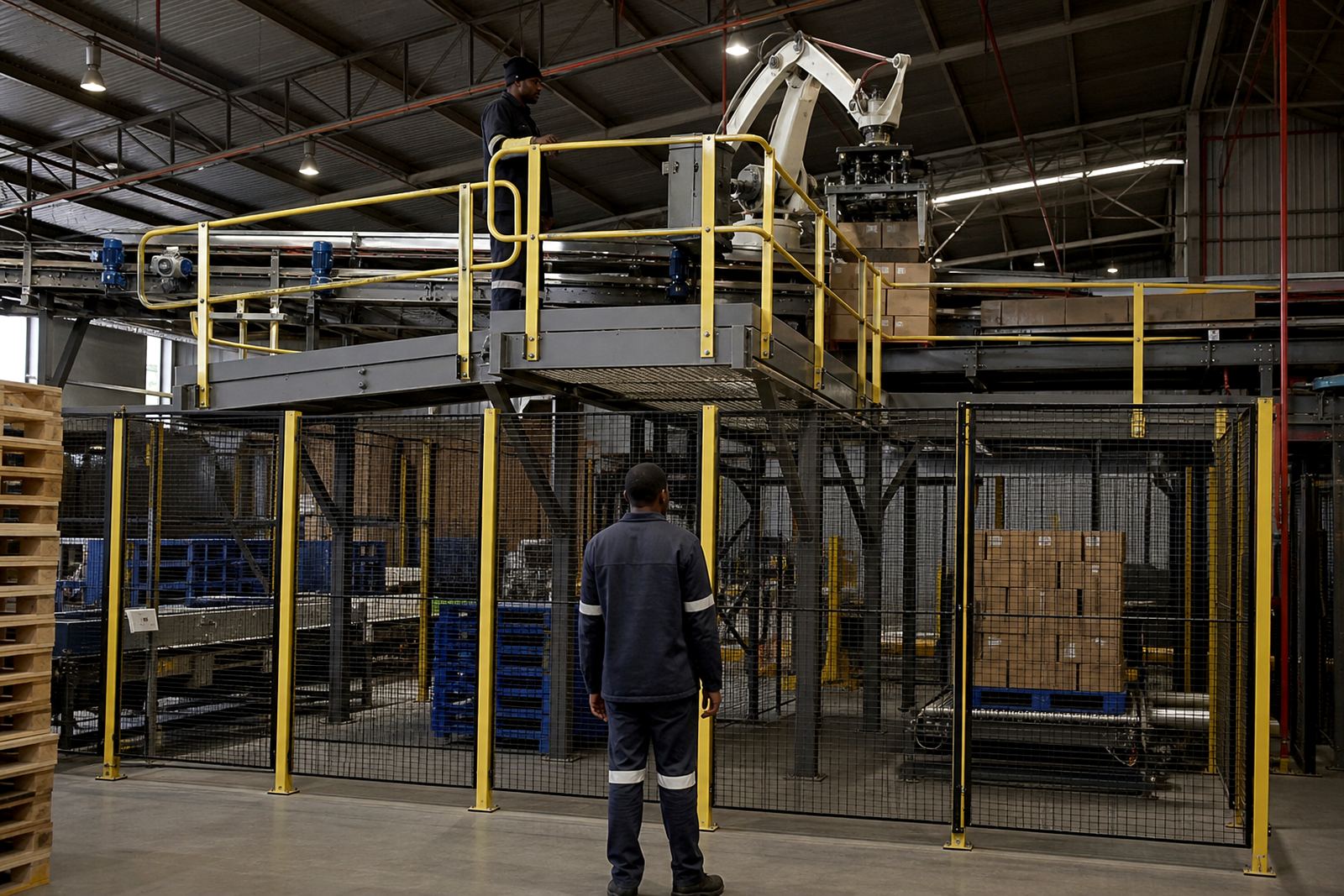
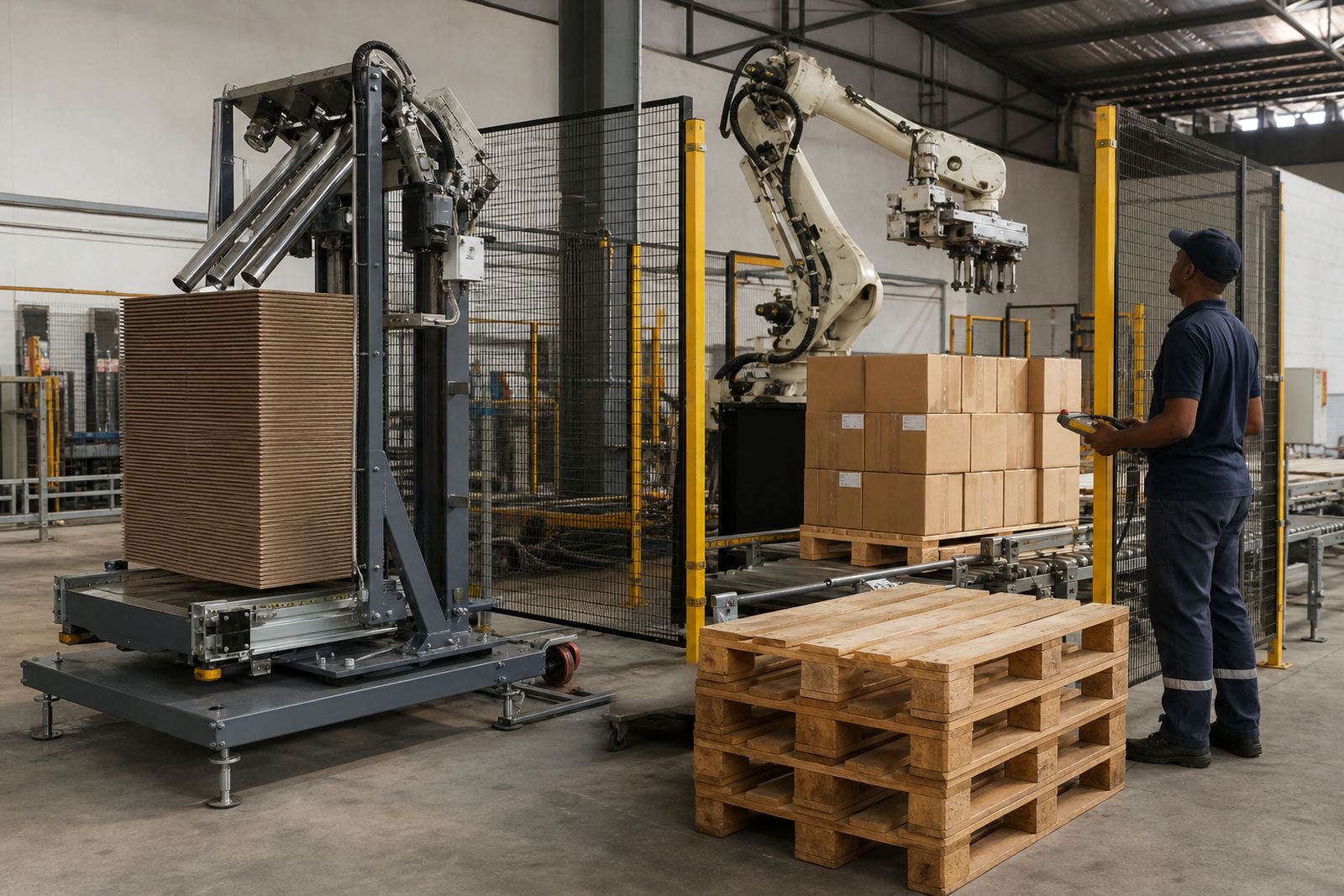
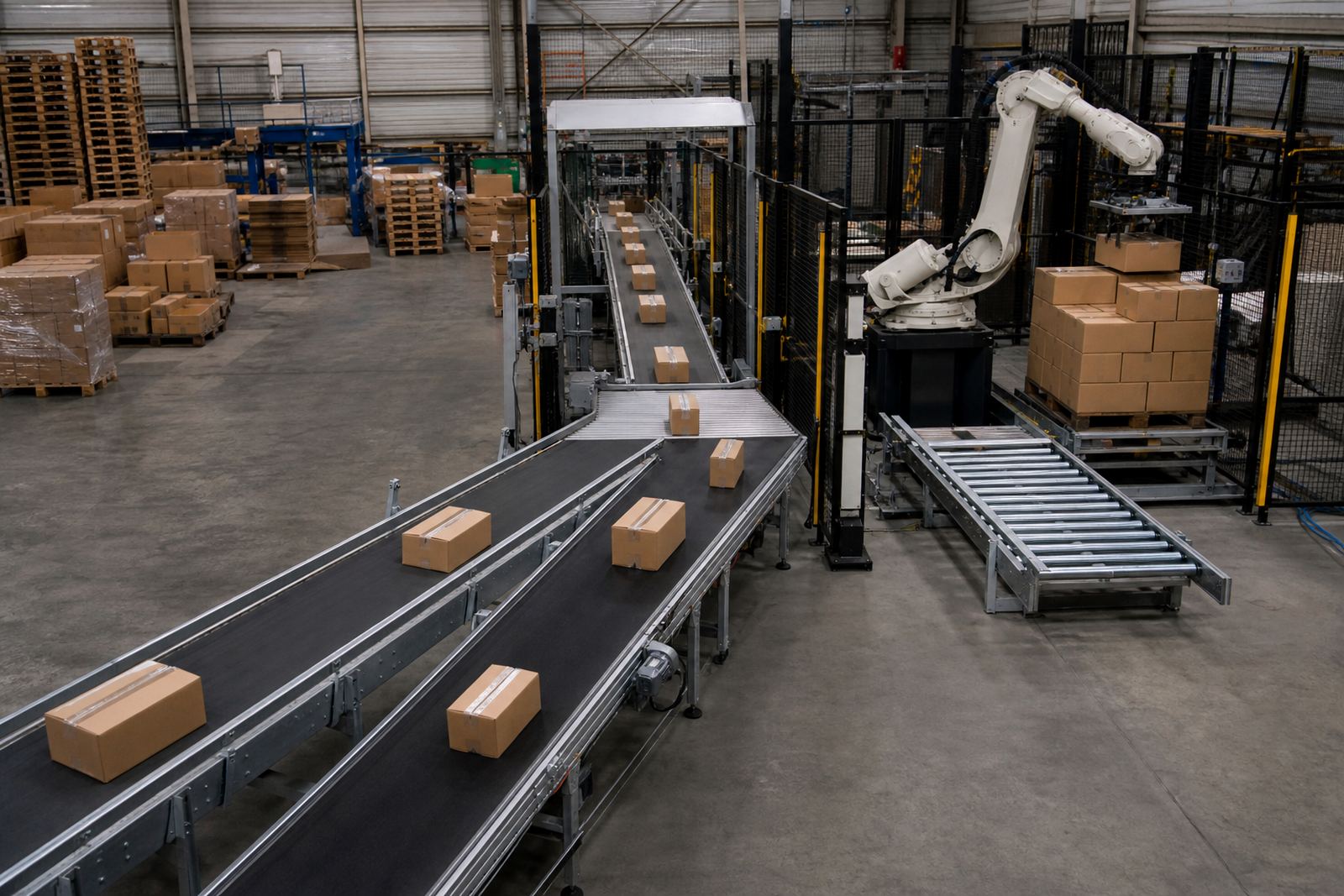
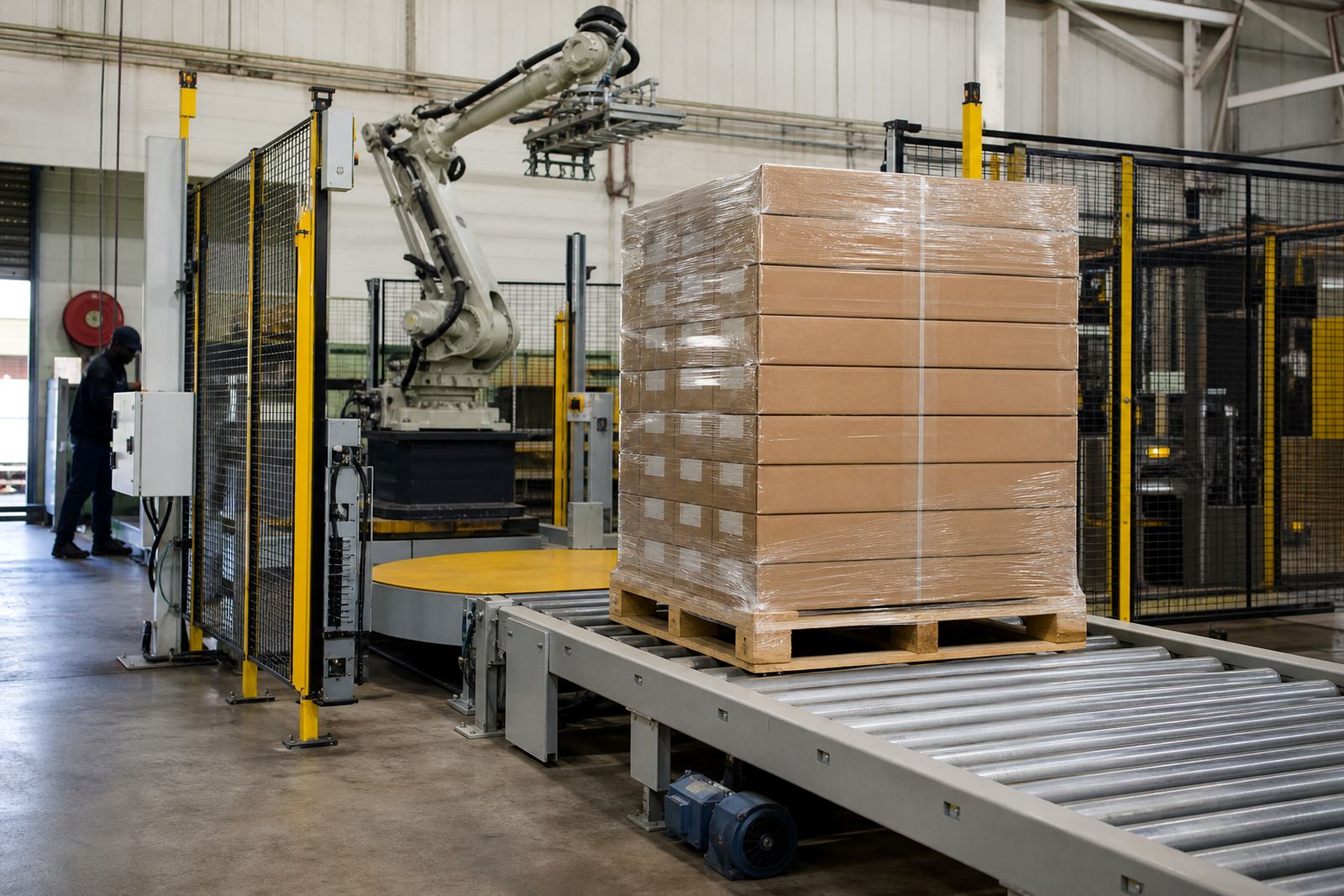
A pallet transfer conveyor is fitted after a robotic palletising cell or packing line to move completed pallets from the build point to the next process. In most South African plants, that next process is either stretch wrapping, labelling, accumulation, warehouse entry or collection by a forklift. The transfer section keeps the robot working while the load is moved clear of the cell, which helps reduce stoppages and manual handling.
These systems are especially useful where existing conveyors already run through a line and only the final transfer point needs to be improved. Rather than replacing the full line, the retrofit can link into the current floor plan, making use of the available route, bay spacing and traffic flow. That matters in busy factories in Kempton Park, Johannesburg, Pretoria, Durban, Cape Town and Gqeberha where floor space is tight and access for forklifts has to stay open.
The transfer conveyor can be built for single pallets or for buffered movement where a short queue is needed before the next station. Depending on the site, it may move loads in line, turn them through 90 degrees, or hand them over to a roller, chain or table section. The purpose is to move stable pallets reliably, without placing the robot cell at risk.
Typical sizes, layouts and transfer options
Every pallet transfer conveyor starts with the pallet size, load weight and direction of travel. A standard South African pallet may be 1 000 mm x 1 200 mm, but many sites use mixed pallet footprints, so the conveyor has to suit the worst case, not just the common one. Load height, wrap profile and pallet base condition all affect the transfer method. If the pallet bottom boards are uneven or damaged, the transfer section may need a more forgiving design.
Common retrofit options include powered roller transfer, chain transfer, turntable transfer and pop-up transfer units. Powered rollers are suitable for straight movement and accumulation. Chain transfer is often used for heavier pallets or where a full base support is needed. Turntables suit lines where pallets must change direction in a compact area. Pop-up transfer units are used where a pallet needs to be lifted briefly and moved across an intersecting conveyor path.
- Load sizes from small cases on pallets up to full-sized unit loads
- Straight transfer, 90 degree transfer or directional change in tight areas
- Low-level or raised-floor installation depending on existing conveyor height
- Integration with stretch wrapper infeed, outfeed or warehouse dispatch lines
- Manual or automatic accumulation, depending on traffic and layout
In coastal areas like Durban and Cape Town, the frame finish and electrical enclosure selection should take humidity and corrosion into account. In Gauteng plants, dust and fork truck traffic are often the bigger concern, so the supporting structure and guide rails must be specified with that in mind.
Where this retrofit suits best
This product suits manufacturers that already have a robotic palletiser or packing line in place and need a better handoff to the downstream area. It works well in food, beverage, building materials, personal care, chemicals, paper products and general manufacturing, as long as the palletised load is stable enough for mechanical transfer. It is also useful where manual pallet movement is slowing the line or where operators are spending too much time pushing loads into position.
It is a good fit for sites with limited floor space, multiple product sizes or changing production runs. A transfer conveyor can reduce forklift movement inside the cell, which helps with safety and keeps the route clearer for people and vehicles.
We often see this type of retrofit used where the robot cell itself is working well but the finish point is not. In those cases, the conveyor is the practical fix. It helps the site get more value out of the existing line without a full rebuild.
- Retrofits onto existing robotic palletising cells
- Packing lines that feed into warehouse staging or dispatch
- Plants with forklift and pedestrian separation needs
- Sites that need better flow without expanding the building
Installation, power and site requirements
Installation depends on the condition of the floor, the conveyor height, the available electrical supply and the route the pallet must travel. The first step is normally a site line survey, followed by layout review and interface checks with the existing conveyor or robot cell. Floor levels, anchor points, traffic routes and emergency stops are all checked before installation begins. If the conveyor crosses a doorway, fire route or service aisle, that has to be managed before the equipment goes in.
Most transfer conveyors need a suitable electrical supply for motors, sensors and controls. Depending on the design, this may include 3-phase power, local isolators and control wiring back to the line panel. If the site has compressed air available, it may be used for some transfer functions, but many pallet transfer conveyors are fully electric. We always check the actual site conditions first, because the final requirement depends on the layout and load.
Installation should be planned with the production team so that disruption stays low. In busy plants around the East Rand or Midvaal, work is often phased over shutdown windows or weekend stoppages. Commissioning should include test runs with empty pallets and then loaded pallets at operating speed. Safety devices must be checked before handover, and any integration with existing conveyors should be tested in the full line sequence.
Safety guarding and risk assessment on the transfer section
A pallet transfer conveyor is not just a moving frame. It is part of a machine system, so the guarding, interlocks and stop devices need to match the actual risk at site. A general design is not enough on its own. Each installation needs its own risk assessment based on pallet weight, travel path, access points, operators, forklifts and maintenance routines. That assessment should also include cleaning access and jam clearing.
Typical safety features may include fixed guarding, interlocked access gates, emergency stop pull cords or push buttons, warning beacons and clear floor marking. Where people may need to enter the area for maintenance, lockout points and safe isolation methods should be built into the design. If the conveyor interfaces with a robot cell, the safety logic must be checked as a complete system, not as separate pieces of equipment.
- Interlocked gates where access is required for clearing or maintenance
- Emergency stops placed at practical reach points along the line
- Fixed side guarding to keep pallets and limbs clear of moving parts
- Clear signage for forklift routes and pedestrian exclusion zones
Safety rules are general in nature and the final setup always depends on the site conditions, the local layout and the plant's operating procedures.
Care, servicing and what to confirm
For reliable service, pallet transfer conveyors need regular checks on rollers, chains, bearings, drive units, sensors and frame alignment. Dust build-up, wrap film off-cuts and broken pallet boards can cause tracking issues if they are left too long. In humid coastal conditions, corrosion and electrical enclosure seals deserve attention. In inland plants, vibration and impact damage from fork trucks are more common.
Routine servicing should include lubrication where required, bolt checks, sensor cleaning, roller inspection and test stops. If the line runs on shifts, plan simple daily checks for unusual noise, drag or damaged guide rails. Spares planning is important too, because a small part can stop the transfer section if it is not on hand.
Before ordering, it helps to confirm the following details so the conveyor is matched to the job from the start.
- Pallet footprint, load height and maximum load mass
- Direction of travel and required transfer points
- Available floor space, ceiling height and nearby services
- Existing conveyor height, speed and control interface
- Power supply details and any compressed air available on site
- Whether the line must allow forklift access or manual intervention
With the right information, the transfer conveyor can be designed to suit the line rather than forcing the line to suit the conveyor. That is the practical way to retrofit.
Key facts
| Product type | Retrofit pallet transfer conveyor for packing and palletising lines |
|---|---|
| Typical pallet size | From mixed footprints up to 1 000 mm x 1 200 mm, subject to load and layout |
| Transfer styles | Straight, 90 degree, turntable or pop-up transfer |
| Power requirement | Usually 3-phase electric supply with local isolator, exact duty to suit site |
| Control integration | Can interface with existing conveyors, robot cell controls and line safety circuits |
| Installation scope | Site survey, design, guarding, installation management, commissioning support and training |