What an outfeed merging system does on a live line
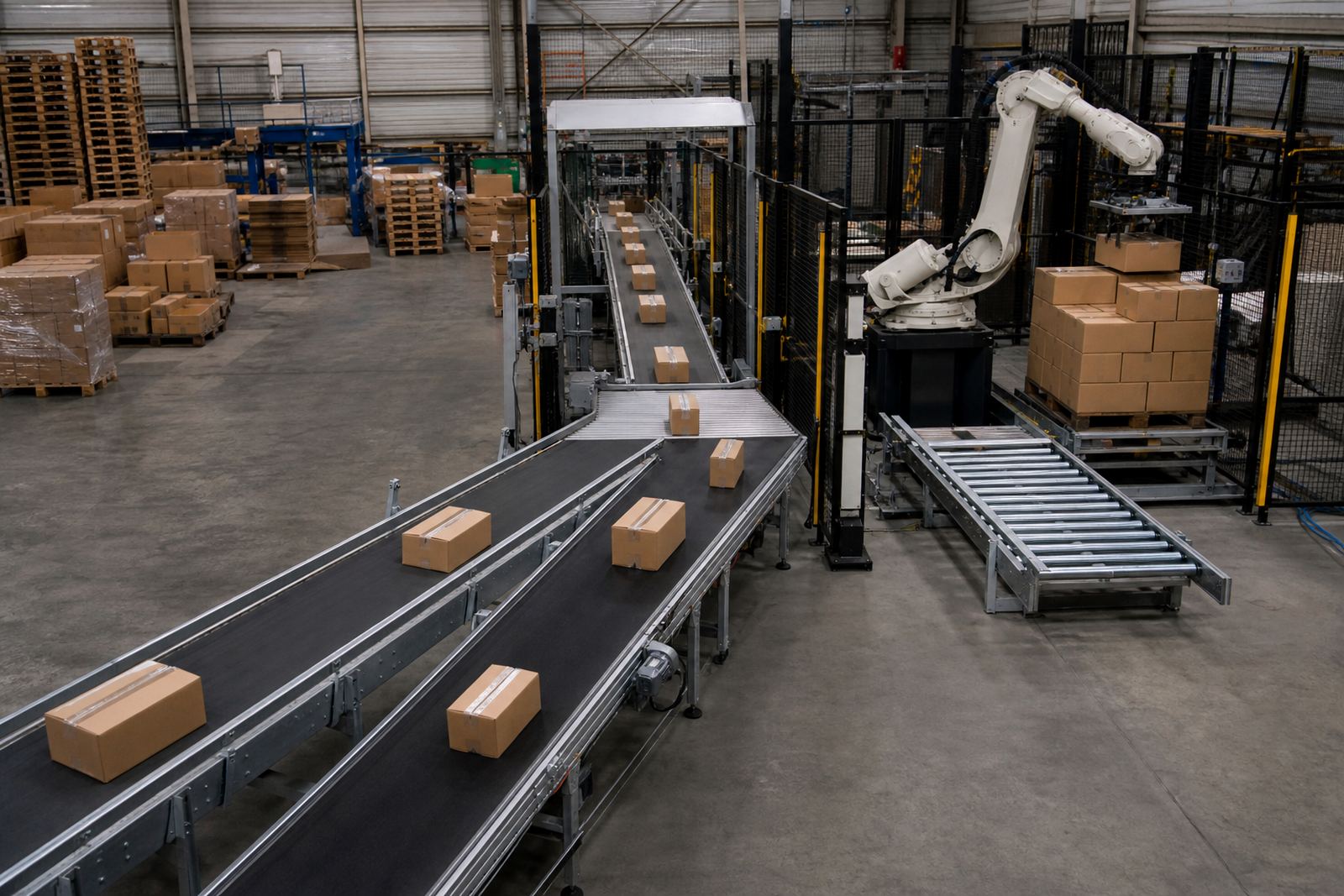
An outfeed merging system is used where product comes from more than one conveyor source and must be presented to a robot or packing station in one ordered stream. In practical terms, it takes separate feeds from production or case packing lines and combines them onto a common outfeed conveyor, with timing and spacing managed so the next machine does not starve or flood. That matters on busy sites in Kempton Park, Johannesburg, Pretoria, Durban and Cape Town where floor space is tight and line speeds can change during the day.
The system can be set up for cartons, totes, trays, shrink-wrapped bundles or other stable product forms. It is not a one-size-fits-all unit. Merge angles, conveyor widths, accumulation length and transfer points are selected around the product weight, friction, case size and the robot or palletiser that sits downstream. On some lines the merge is simple and direct, on others it needs a controlled buffer so operators have time to clear rejects or adjust upstream flow.
Typical sizes, layouts and options for South African plants
The right layout depends on product dimensions, throughput and the amount of changeover a site expects. A small merge for light cartons may only need a short transfer section and a single buffer lane, while a heavier palletising feed often needs a longer accumulation zone, side guides and stronger drive sections. For coastal sites in Durban, Gqeberha or Cape Town, material selection and enclosure details should also consider humidity and corrosion, especially where washdown or salty air is part of daily operation.
Common options include side merging, angled merging, stop-start accumulation, singulation before the merge and controlled discharge to a robot infeed. Some systems are built with adjustable rails for more than one case size, while others are dedicated to one pack format for faster running and easier set-up. Where a line has mixed product or variable pack patterns, we may add sensors, reject gates or transfer logic to keep product spacing consistent. The aim is to keep the robot busy without forcing operators to sort product by hand.
- Typical conveyor widths range from 300 mm to 1200 mm depending on case size
- Frames can be mild steel or stainless steel depending on the site environment
- Options may include side guides, accumulation, diverters, sensors and motor control integration
Where the system suits best
Outfeed merging works well on manufacturers that run more than one packing line into a single robot cell or palletising end. It is common where one line feeds product from a filler and another line feeds product from a secondary packer, then both need to arrive at one palletiser. It also suits sites that want to reduce manual trolley movement between lines, which is often a bottleneck when the production area is spread across a long building or split across bays.
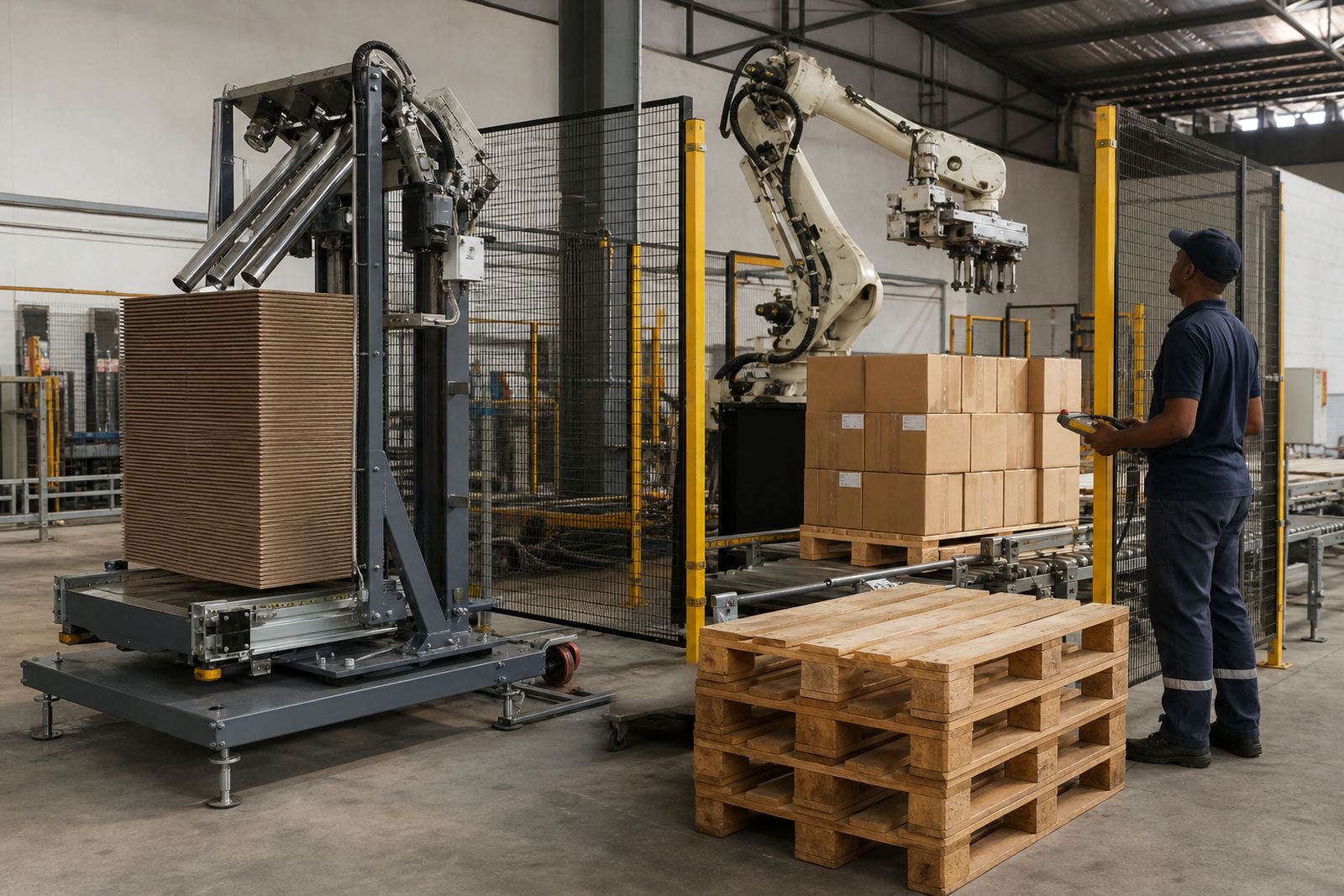
We see strong demand for this type of retrofit in food, beverage, personal care, household goods, chemical packs and light industrial manufacturing. The system is also useful where a plant is adding a cobot or compact palletiser and needs a neat way to combine flow without rebuilding the whole line. On many older facilities, the best answer is not to start from scratch but to integrate a merge section into existing conveyors and controls, then tune the flow around the current production rhythm.
Installation, power and utility needs
Installation starts with a site line survey and a practical look at the available floor area, floor level, service access and product flow. The merge must line up correctly with upstream conveyors and with the infeed of the robot or palletiser. If the transfer height is wrong by even a small amount, operators end up fighting product jams, so the survey has to be accurate and measured on site. Our team handles retrofit design, conveyor integration, controls integration and installation management with the rest of the plant in mind.
Most outfeed merging systems use electric drive motors and control parts only, so gas is not normally required. Load demand depends on conveyor length, motor count, sensors and any accumulation sections or lift transfers. A standard installation may need a suitable electrical supply, local isolation points and neatly routed cable trays. Where a site has voltage dips or planned interruptions, the controls should be arranged so the line restarts in a safe sequence and does not push product into a blocked area. As with any automation retrofit, each site needs its own risk assessment and the safety guarding must suit the actual layout, not just the drawing.
Safety guarding and controls integration around the merge
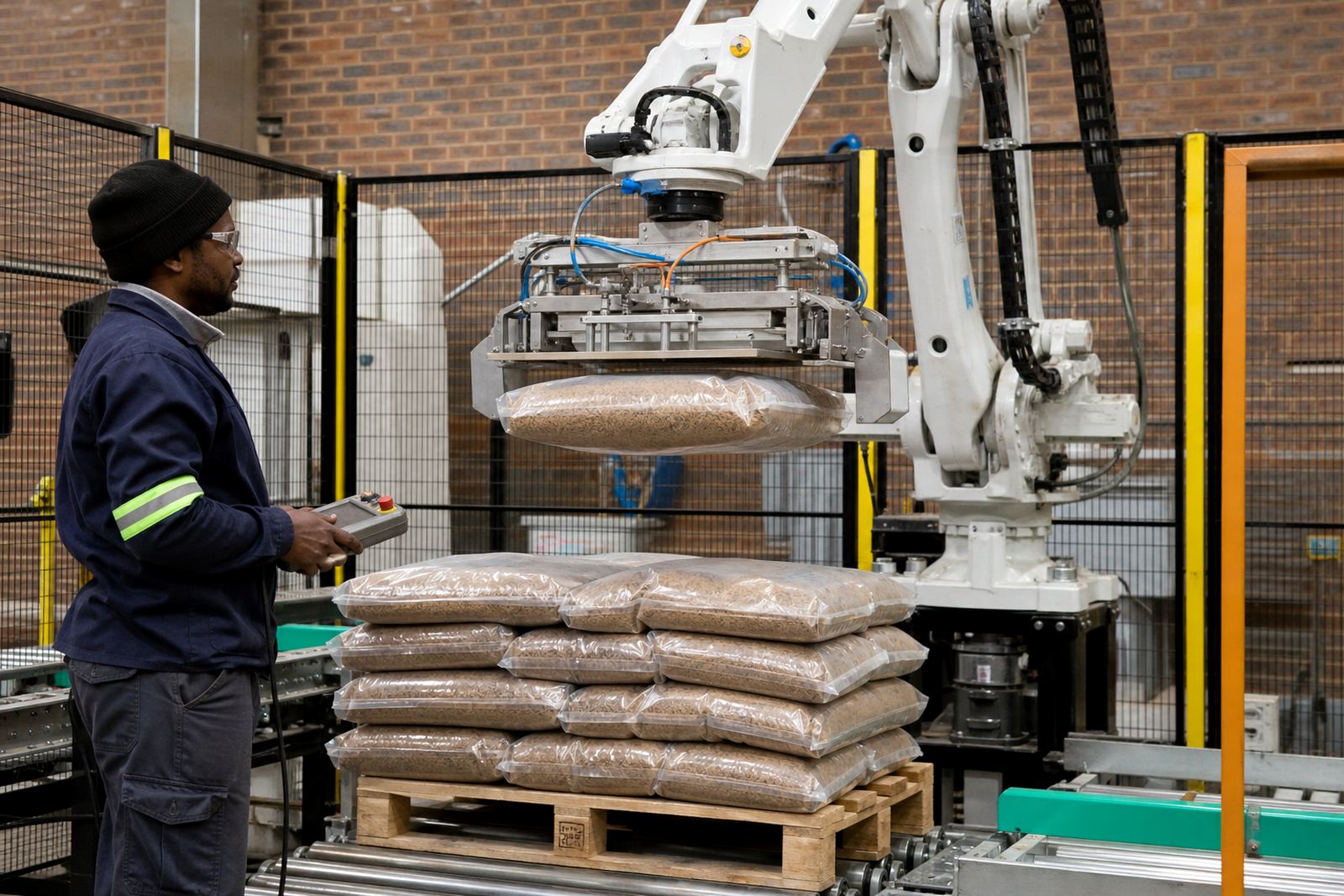
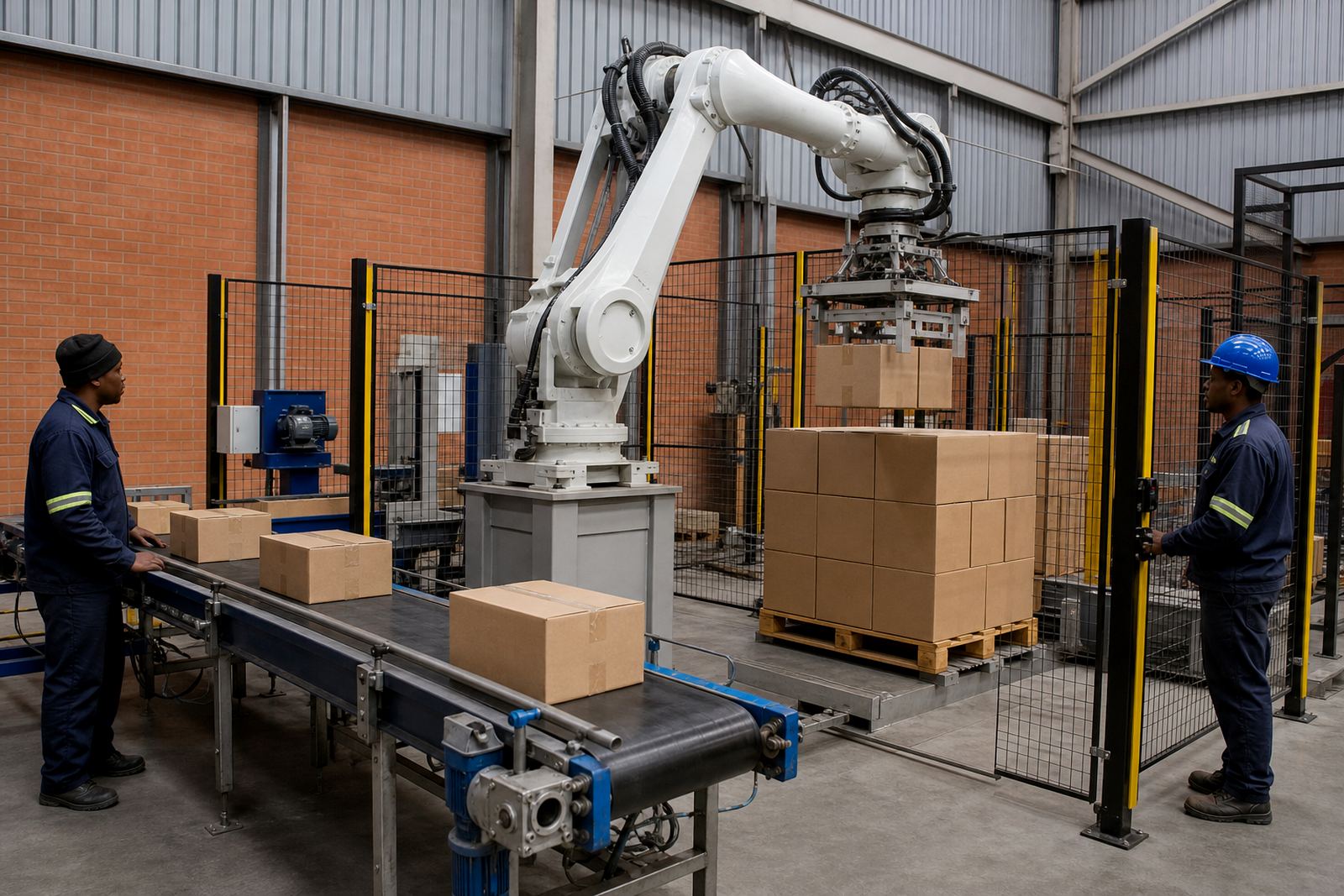
Because the merge sits between different conveyors and often near a robot cell, safety needs careful planning. Guarding may include fixed fencing, interlocked gates, light curtains or other protective devices depending on the site layout and access requirements. The point is to protect operators while still allowing cleaning, changeover and maintenance to happen without unnecessary delays. A good installation also avoids pinch points where cartons or trays can be pulled into rollers or trapped at transfers.
Controls integration matters just as much as the mechanical frame. The merge should communicate with the upstream line, downstream robot or palletiser, and any reject or buffer functions. That can include start-stop signals, product presence checks, jam detection and line permissives. If the downstream cell is not ready, the merge must slow or stop cleanly instead of forcing a blockage. Our automation engineer and controls specialist work through the sequence with the site team so the system behaves in a way operators can understand. A line that is simple to run is usually also easier to maintain, and less likely to be bypassed.
Upkeep checks and what to verify before ordering
Routine care is straightforward if the system is set up correctly. Belts, chains, rollers and guide rails should be checked for wear, debris build-up and loose fasteners. Sensors need regular cleaning so dust and product wrap do not cause false readings. On sites near the coast or in humid areas, inspect exposed steel, fasteners and cable entries more often. If the merge is carrying sticky or dusty product, housekeeping should be part of the daily routine, not left for planned shutdowns only.
When ordering, the most useful information is accurate product and line data. That includes carton or tray dimensions, weight range, throughput per minute, infeed orientation, conveyor heights, available floor space and the position of the robot or palletiser. It also helps to know whether the site wants one product only or several pack formats, and whether operators need manual bypass or future expansion space. We also ask about municipal and plant access rules, loading bay arrangements, and any restrictions that affect installation times. The better the starting information, the less rework on site. It's a practical approach that saves time and avoids surprises.
Key facts
| Function | Merges product from two or more conveyor sources into one controlled outfeed for packing or palletising |
|---|---|
| Typical product types | Cartons, trays, totes, bags, shrink-wrapped packs and similar stable packs |
| Control method | Sensor-based sequencing with line permissives, jam detection and conveyor speed coordination |
| Materials | Mild steel or stainless steel frame options, with suitable conveyor surfaces for the site |
| Utility needs | Electrical supply only in most cases, with no process gas required |
| Integration | Can link into existing conveyors, robot cells, palletisers and control panels |