Compact Palletising For One Infeed Line
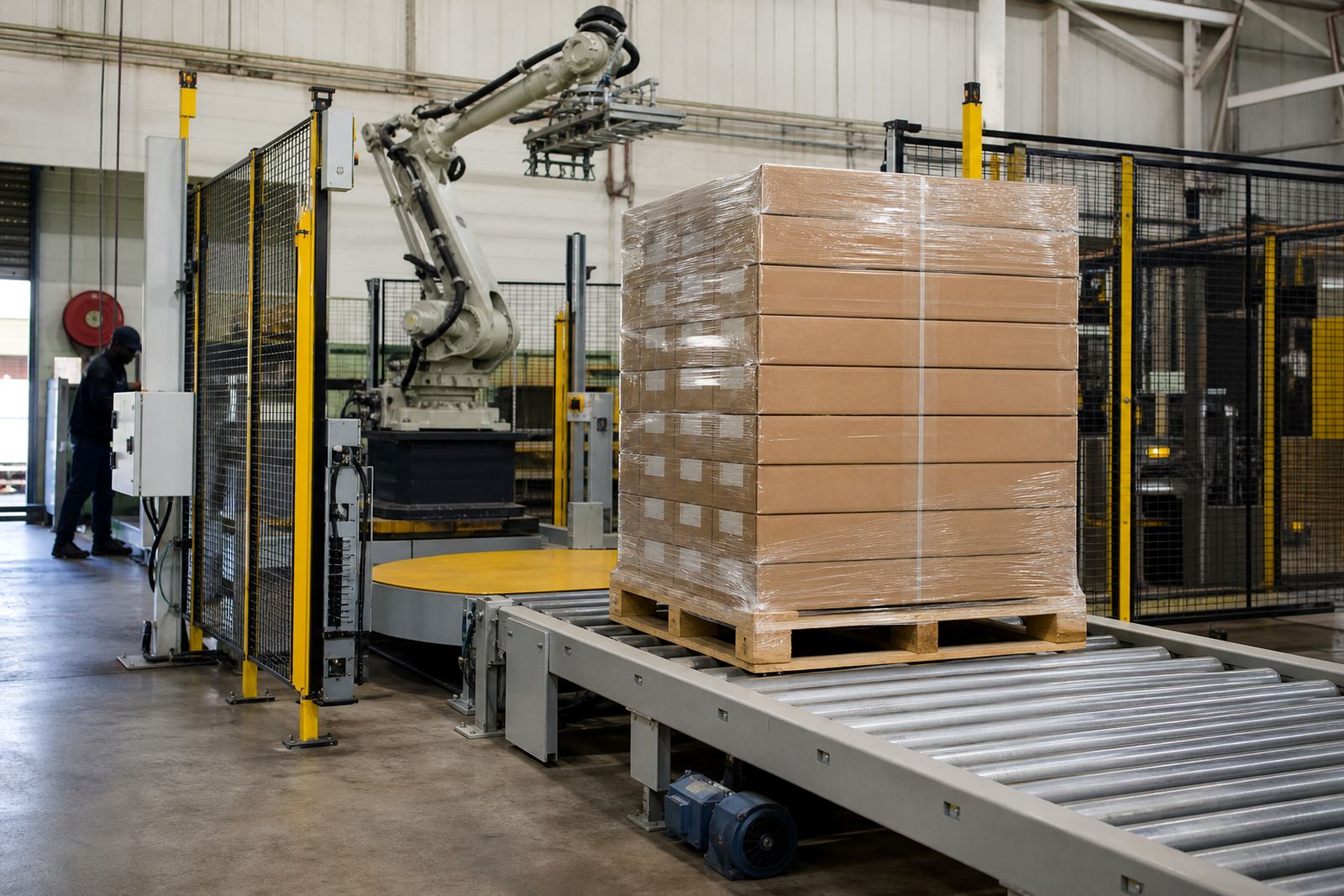
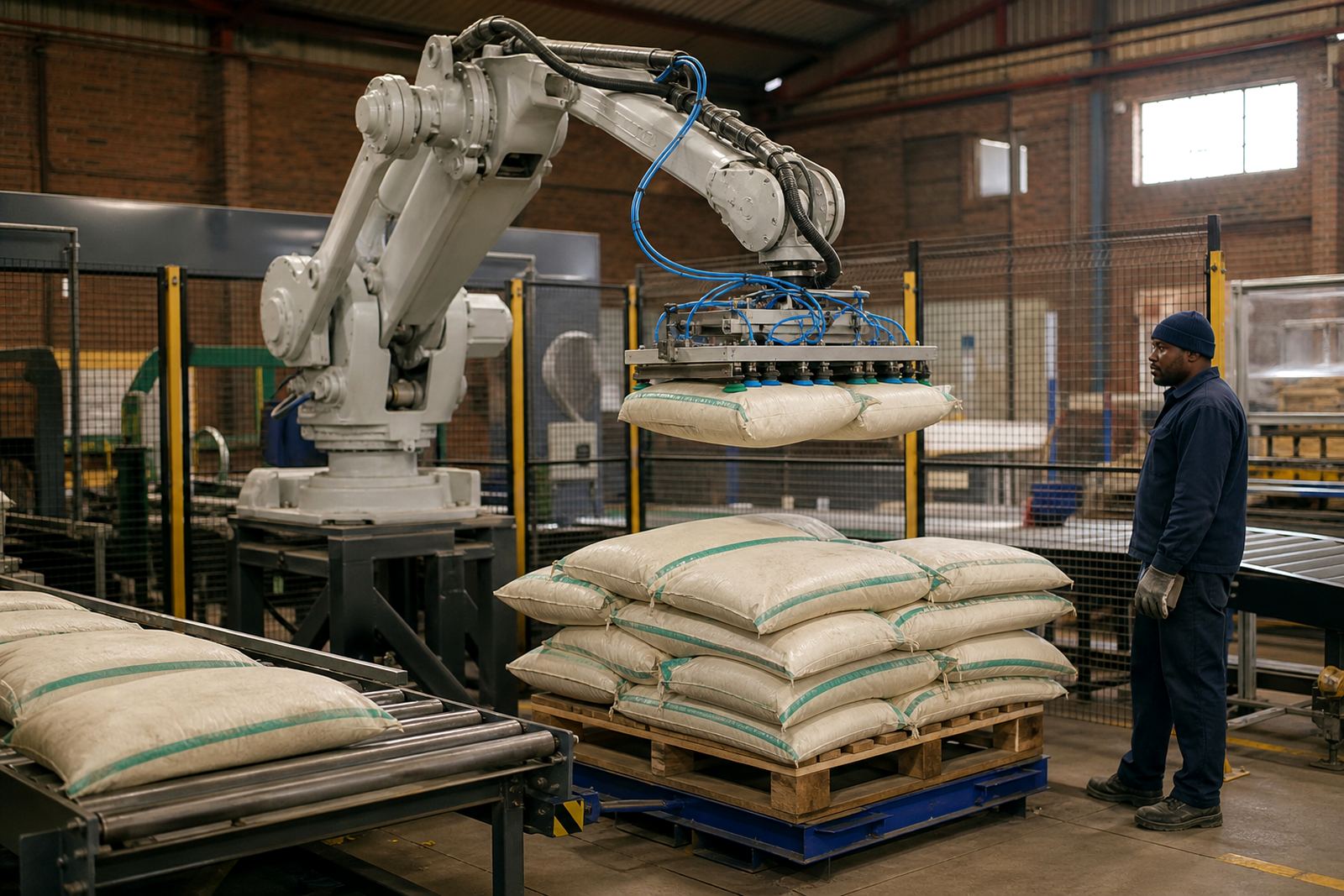
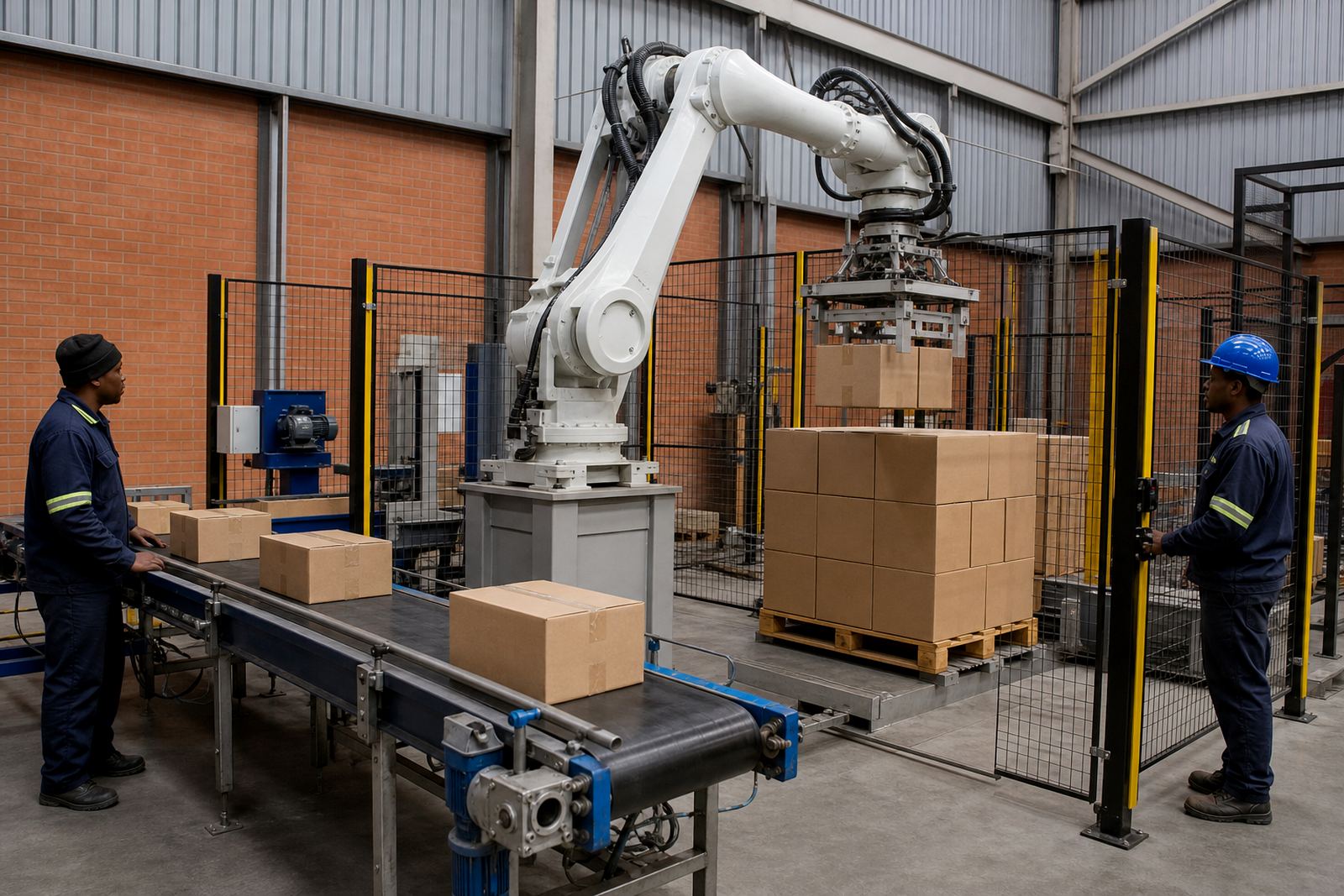
A single line palletiser is a robotic retrofit built to accept product from one existing conveyor and place it onto pallets in a fixed, repeatable pattern. It is commonly used where a plant wants to automate the end of line without rebuilding the full packing area. The station can be arranged for bags, cartons, trays, bundles or shrink wrapped packs depending on the product, pack size and pallet pattern.
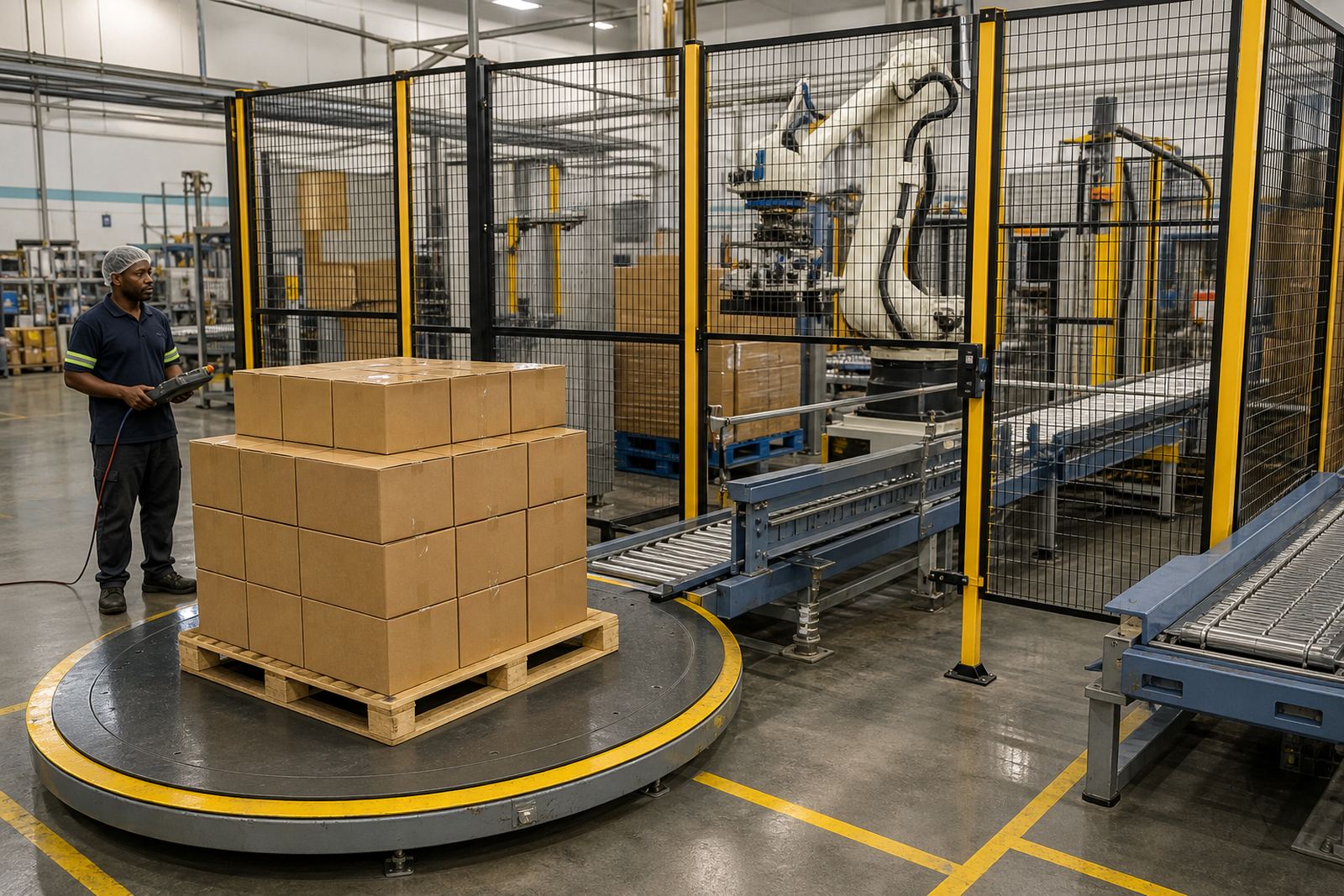
In practice, the retrofit usually includes a robot or cobot, a product infeed transfer, a pallet dispense area, safety guarding, operator access points and controls that talk to the existing conveyor line. The layout is kept compact so it can fit into a factory bay in Spartan, Midvaal or an older warehouse in Johannesburg where floor space is tight.
Where A Single Line Palletiser Works Best
This option suits manufacturers with one steady stream of product coming off the line and a need for controlled pallet build quality. It is a good fit for food packing, beverages, building materials, agriculture, personal care and general consumer goods. Sites in Durban and Cape Town often ask for enclosed guarding where humidity, washdown routines or dust make manual palletising less practical.
- One conveyor feeding one palletising point
- Consistent pack size and weight
- Production shifts with repeated pallet patterns
- Sites wanting less manual lifting at the end of line
- Plants needing a retrofit rather than a full line replacement
If the product is awkward, soft or unstable, the end effector and layer pattern must be matched carefully. That is why a site survey and product sample check are important before any final layout is confirmed.
Size Options And Layout Choices
Single line palletisers can be arranged in several footprint sizes. A compact cell may suit a small warehouse or a production bay with limited headroom, while a larger layout may include pallet buffering, slip sheet handling, load stabilising and space for more than one pallet position. The choice depends on product size, pallet height, throughput and how the goods leave the conveyor.
Typical layout choices include side loading or straight ahead transfer, a floor mounted robot with fenced access, or a collaborative unit where the risk profile allows it. The safest and most suitable arrangement is decided after a risk assessment support review, because each site has different traffic paths, operator movements and municipal compliance needs.
- Compact cell for tight floor space
- Buffered pallet station for higher throughput
- Single or dual pallet positions
- Optional slip sheet or layer pad handling
- Integration with label check or product reject signals
Installation, Power And Utilities
A retrofit installation is planned around the existing conveyor, available floor space and how the line currently starts and stops. The work normally includes mechanical mounting, controls integration, guarding installation, cable routing, testing and operator training. On many South African sites, the main challenge is to keep the line running while the retrofit is fitted in stages.
Power needs vary by robot size, end effector and support equipment, but the station usually requires a suitable three phase supply, a correctly rated isolator and enough capacity for the controls cabinet, drives and any pallet handling accessories. Pneumatic air may be needed for grippers, clamps or pallet stop devices. Exact requirements are confirmed during the site line survey and are not guessed. If the site is coastal, corrosion protection and cable management matter more because of humidity and salt air.
Clearances, access gates and emergency stops must suit the plant layout and the movement of forklifts, pallet jacks and operators. If the line is in a regulated food or hygiene area, washdown access and cleaning routines need to be considered from the start.
Controls, Safety Guarding And Risk Review
Every palletising retrofit needs proper controls work and a site specific safety review. A single line palletiser often sits behind fenced guarding with interlocked doors, emergency stops, warning lights and safe access for maintenance. Cobots can be used in some applications, but they still need a risk based assessment. There is no one standard answer for every plant.
The controls package normally links the robot, conveyor sensors, pallet infeed and any reject or accumulation devices so the system starts and stops in sequence. This reduces jams and helps the palletiser keep a consistent cycle. Good guarding design also protects against pinch points, falling product and forklift traffic nearby. In many factories, the real issue is not the robot itself but how people move around it during shift change and break times.
- Risk assessment support for each site
- Interlocked gates and emergency stops
- Conveyor handshakes and start stop logic
- Forklift and pedestrian route planning
- Operator access for clearing faults and cleaning
Care, Servicing And Spares Planning
Like any machine on a busy packing line, a palletiser needs routine care. That includes checking sensors, gripper condition, cable wear, air supply quality, fasteners and the condition of the guarding. In dusty plants or humid coastal areas, regular cleaning and inspections matter even more. If the line runs long shifts, a service plan helps prevent small issues from becoming downtime.
Maintenance support can cover scheduled checks, breakdown assistance, operator refresher training and spares planning for items that wear over time. The aim is to keep the line dependable and easy to support on the ground. For manufacturers in Gauteng, KwaZulu-Natal and the Western Cape, this matters when production targets are tight and shutdown time is limited.
It is also worth keeping a record of wear parts, sensor settings and pallet patterns so future changeovers are quicker. A well supported retrofit should be practical to run, not difficult to understand.
What To Confirm Before Ordering
Before ordering a single line palletiser retrofit, the plant should confirm the product type, pack dimensions, weight range, conveyor height, line speed and pallet pattern. It helps to know whether the packs arrive in a single stream or with gaps, whether the product needs orientation control, and whether the pallet height must stay within warehouse or transport limits.
You should also confirm the available power, compressed air, floor loading, operator access and whether there is enough room for pallet supply and finished pallet removal. If the line includes existing conveyors, sensors or reject stations, those details should be listed during the line survey so integration is planned correctly from the outset.
- Product size, weight and pack material
- Required throughput per hour or shift
- Pallet size, height limit and layer pattern
- Available floor space and ceiling height
- Power supply, air supply and existing controls
Clients in Kempton Park, Johannesburg, Pretoria, Durban, Cape Town, Gqeberha, East Rand and Midvaal can submit an enquiry through the contact page for a site review and retrofit discussion.
Key facts
| Type | Single line robotic palletiser retrofit |
|---|---|
| Infeed | One existing conveyor line |
| Typical products | Cartons, bags, trays, bundles and wrapped packs |
| Power | Three phase supply, final rating confirmed on site |
| Utilities | Compressed air may be required for grippers or stops |
| Support | Survey, design, guarding, installation, commissioning and training |