What Bag Gripper Tooling Does on a Packing Line
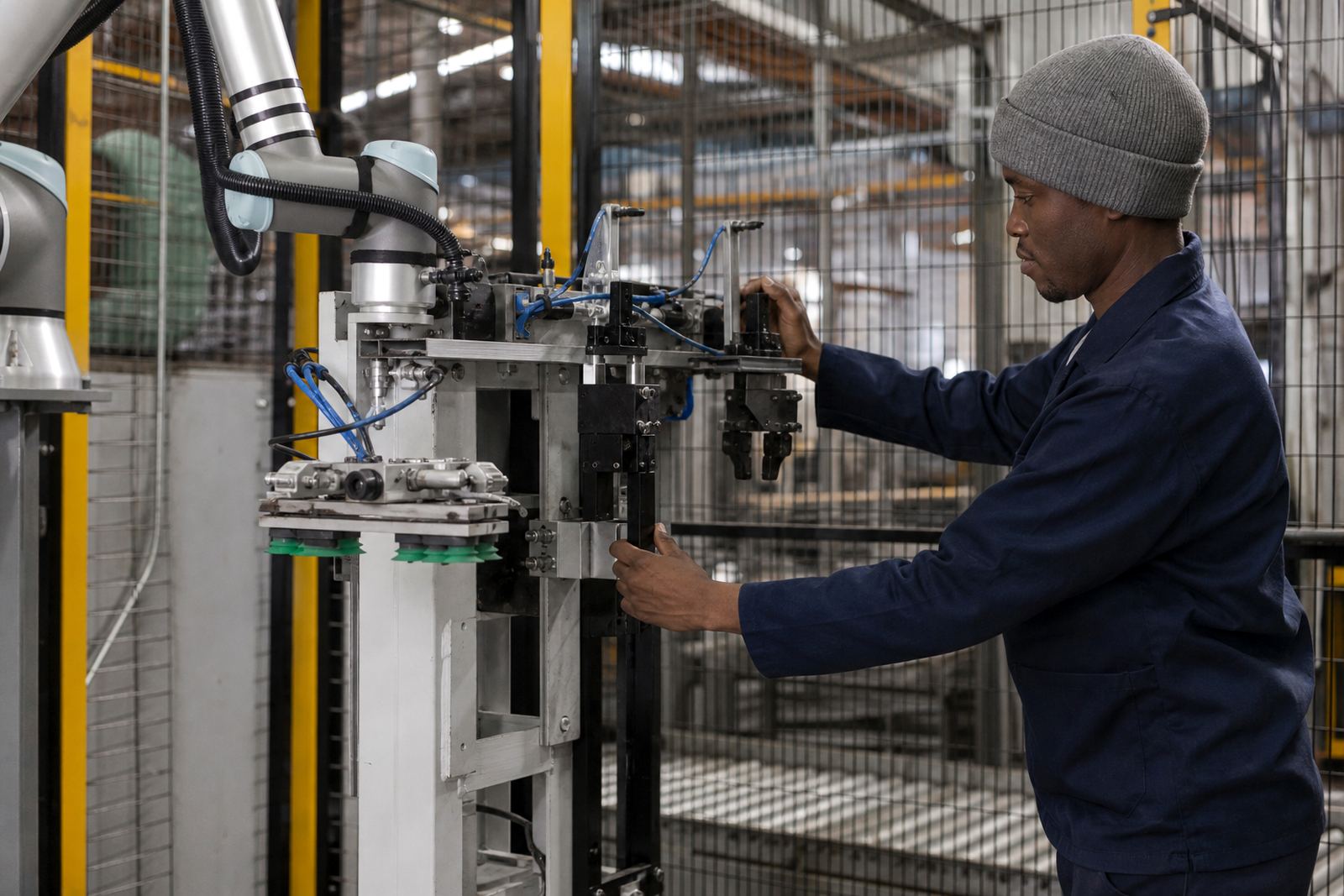
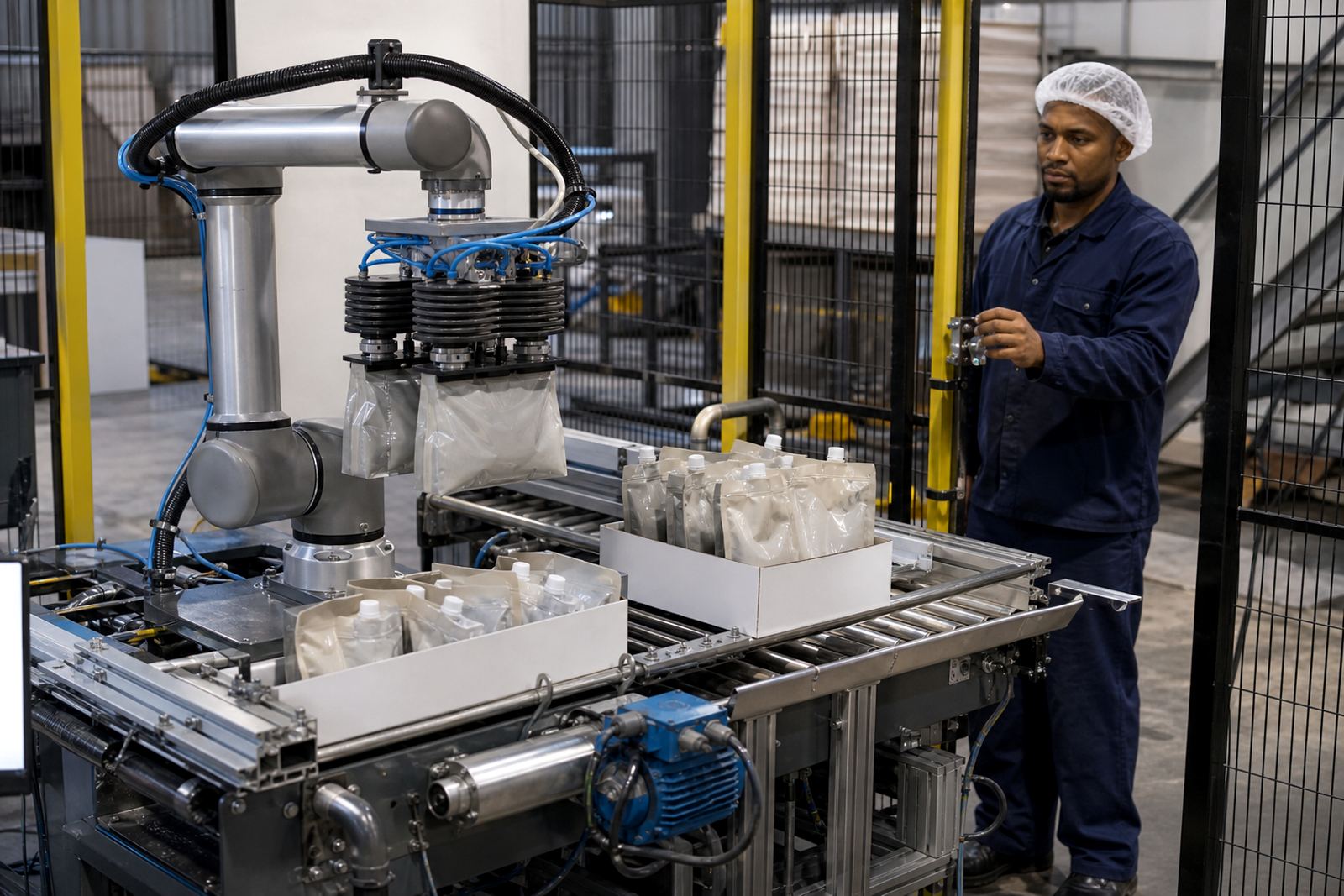
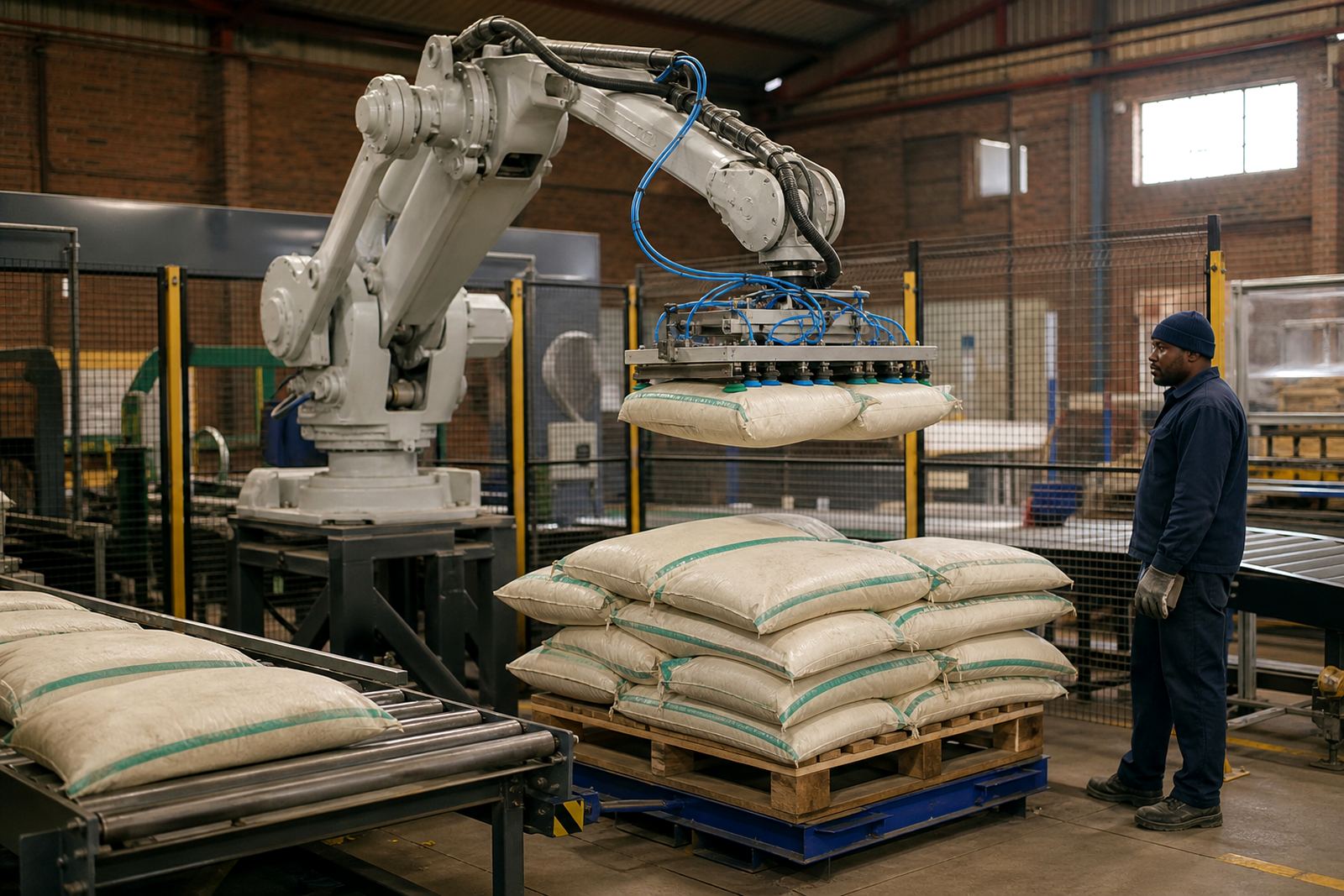
Bag gripper tooling is the end of arm device that lets a robot or cobot pick up filled bags, sacks or soft packs without crushing the product or damaging the seal area. On South African lines this is often used after a conveyor, bag closer, checkweigher or case packing point, then onto a pallet pattern that must stay square and stable through transport from Kempton Park to Durban, Cape Town or inland depots.
The right tool depends on how the product is filled, how much the bag flexes, and whether the top seal, side seal or stitched closure must be protected. Some bags behave like a firm carton once filled, while others need a gentler grip across a wider face. A good retrofit starts with bag weight, dimensions and surface finish, then matches the tool to the speed of the line and the pallet pattern required.
A controlled tool with consistent pressure helps avoid dropped bags, skewed layers and rework when power returns and the line restarts. It keeps the handover to the palletiser predictable, even on older conveyor layouts.
Tool Styles and Size Options for Different Bag Types
Bag gripper tooling varies by bag type and weight. A line handling 10 kg feed bags, 25 kg powder sacks or 30 kg granule bags may need a different grip surface, opening width and clamp force. Soft woven bags usually need broader contact areas and better edge control. Laminated or heat sealed packs need more seal protection, not just higher clamp pressure.
- Bag width ranges commonly handled: about 300 mm to 700 mm, depending on the product and gripper geometry.
- Bag weights typically suit 5 kg to 35 kg, with special cases reviewed during the line survey.
- Options can include side grip, top grip, vacuum assist, pinch style jaws or hybrid tooling for awkward pack shapes.
- Surface contact can be configured with soft pads, textured faces or lined contact points to reduce slip and marking.
- Tooling can be built for single bag picks or multi-pick handling where the pallet pattern needs faster cycle times.
The best choice is usually the simplest one that protects the product and gives the pallet a neat face. If the bag is slippery, dusty or slightly uneven after filling, the gripper needs extra margin built in. That is why site testing and sample product checks are part of the design process.
Where Bag Grippers Work Best
Bag gripper tooling suits food ingredients, chemicals, animal feed, fertiliser, building materials and other dry goods packed into sacks or soft packs. It is also used where manual lifting is hard on operators, particularly on shifts with repeated movement, hot conditions or long pallet runs. In Gauteng, many plants want to reduce lifting strain while keeping the existing conveyor and packaging equipment in service.
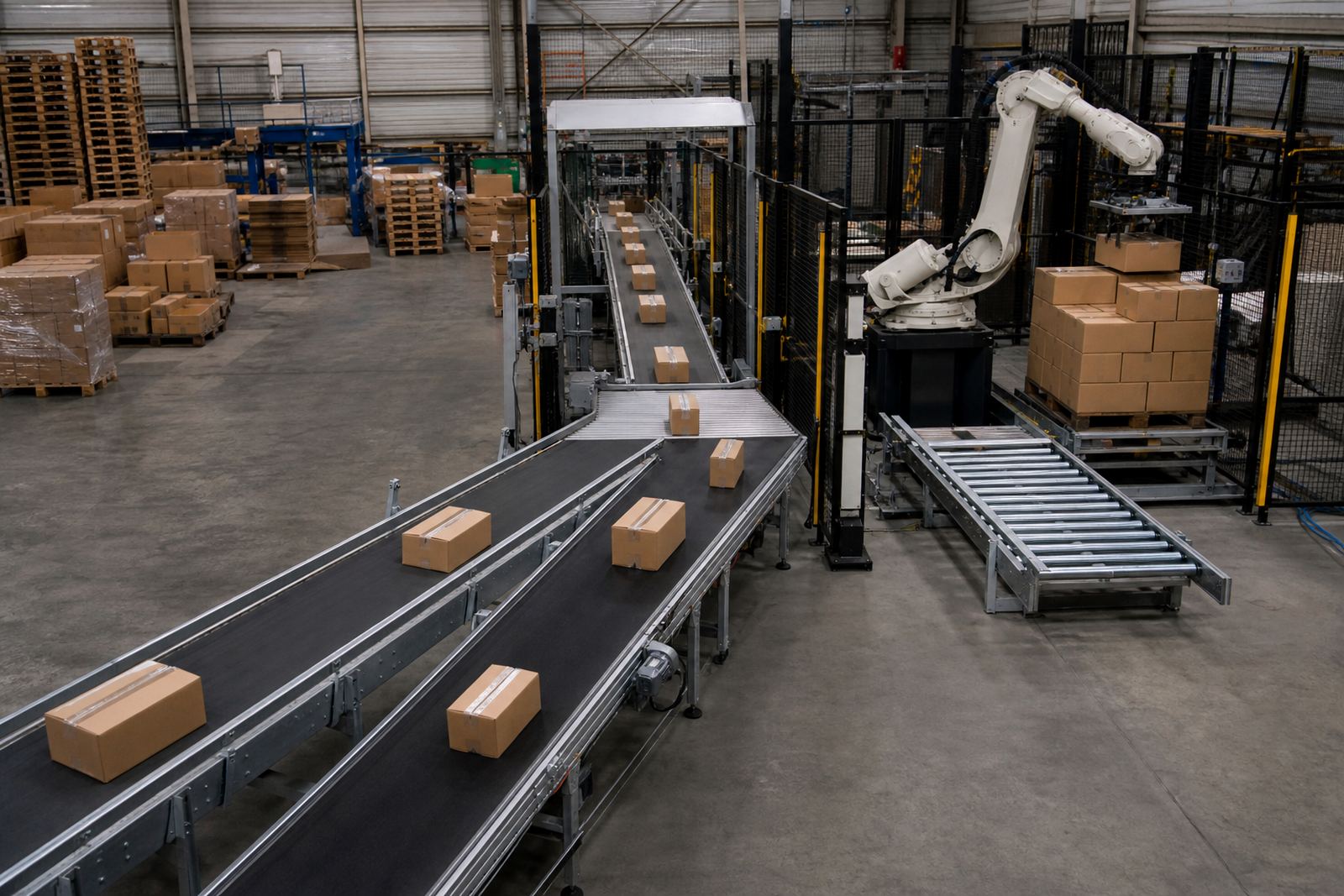
It works well on new automation cells and retrofit projects alike. If the line already has infeed conveyors, a bag placer, a staging conveyor or a pallet wrapper, bag gripper tooling can be designed to fit the current layout with minimal disturbance. For sites in Durban or Gqeberha, corrosion resistance and humidity exposure need to be considered too, especially where packing areas are near open loading bays.
- Best for uniform bag sizes and repeatable fill weights.
- Suitable where stack quality matters more than high speed alone.
- Useful when manual palletising is slow or inconsistent.
- Can support standard pallet patterns for warehouse handling and truck loading.
It is not only about lifting the bag. The tool has to place each unit neatly, layer after layer, so the stack does not settle badly during storage or transport. That makes a real difference when the product is moved between Johannesburg, Pretoria, the East Rand and coastal distribution points.
Installation, Power and Line Integration Needs
Retrofit installation normally starts with a site line survey and a review of the conveyor heights, transfer points, pallet positions and available floor space. From there, the tooling is matched to the robot reach, product orientation and cycle time. A proper install also checks guarding, operator access and the path for maintenance without shutting down the whole line.
Most bag gripper tooling runs without gas, although some ReAutomated builds use pneumatic cylinders or vacuum assistance, depending on the duty. That makes plant air quality and a steady pressure supply worth checking on site. Electrical and control interfaces must suit the existing conveyor logic, emergency stop chain and safety system. If the plant has an unreliable supply, the restart sequence should be mapped carefully so the tool does not pick a bag from the wrong position after a power cut.
Where needed, ReAutomated supports the control interface, guarding layout and commissioning so the tooling works with the current line instead of forcing a full rebuild. Each site is different, and the final setup should reflect the actual bag, conveyor and pallet arrangement in use on that floor.
Care, Cleaning and Servicing on Busy Plant Floors
Bag gripper tooling needs regular checks to stay accurate and safe. Dust, product fines and packing residue can build up on contact surfaces, sensors and moving parts. On some products, especially powders or hygroscopic materials, that build-up can affect grip quality quite quickly if cleaning is neglected.
- Inspect pads, jaws and seals for wear, cracking or surface hardening.
- Check fasteners, guides and bearings for looseness after extended shifts.
- Confirm air pressure and vacuum performance where those functions are used.
- Keep contact areas clean and free of product spill, oil and moisture.
- Review the pick alignment after any change in bag size, filling weight or packaging film.
In coastal areas, extra attention should be given to corrosion and condensation, while inland plants often deal more with dust and heat. Either way, small issues can grow into missed picks, poor layer formation or unnecessary stops if they are left too long. Good servicing also means keeping a few wear parts on hand, so the line can keep running when a pad or seal needs replacement.
What to Check Before Ordering Bag Gripper Tooling
Before ordering, gather a few practical details from the line. This makes the design more accurate and avoids delays during fabrication and commissioning. The more complete the sample information, the better the tooling can be matched to your actual product and stack requirement.
- Bag material, closure type and whether the seal area must stay untouched.
- Filled weight, bag length, width and thickness range.
- Surface condition, including dust, film slip or woven texture.
- Required pallet pattern, layer count and target throughput.
- Existing conveyor height, transfer direction and available robot reach.
- Site services available, including power, compressed air and access for maintenance.
It also helps to note whether the line runs one product or several, and whether changeovers must happen quickly between shifts. If the plant has strict hygiene rules, municipal or internal safety requirements, or limited floor space, that should be part of the brief from the start. ReAutomated uses this information to plan the retrofit around your real operating conditions, not just a drawing.
Key facts
| Handling range | Bag and sack sizes typically from about 300 mm to 700 mm wide, subject to product testing |
|---|---|
| Payload range | Common applications from 5 kg to 35 kg per bag, depending on product density and tool design |
| Grip types | Side grip, top grip, vacuum assist, pinch jaws or hybrid arrangements |
| Integration | Retrofit-ready for existing conveyors, palletisers, wrappers and control systems |
| Utilities | Usually electrical control plus compressed air where pneumatic or vacuum actuation is used |
| Typical uses | Packing and palletising for dry goods, feed, fertiliser, powders and similar soft packs |