What A Slip Sheet Feeder Does On A Palletising Line
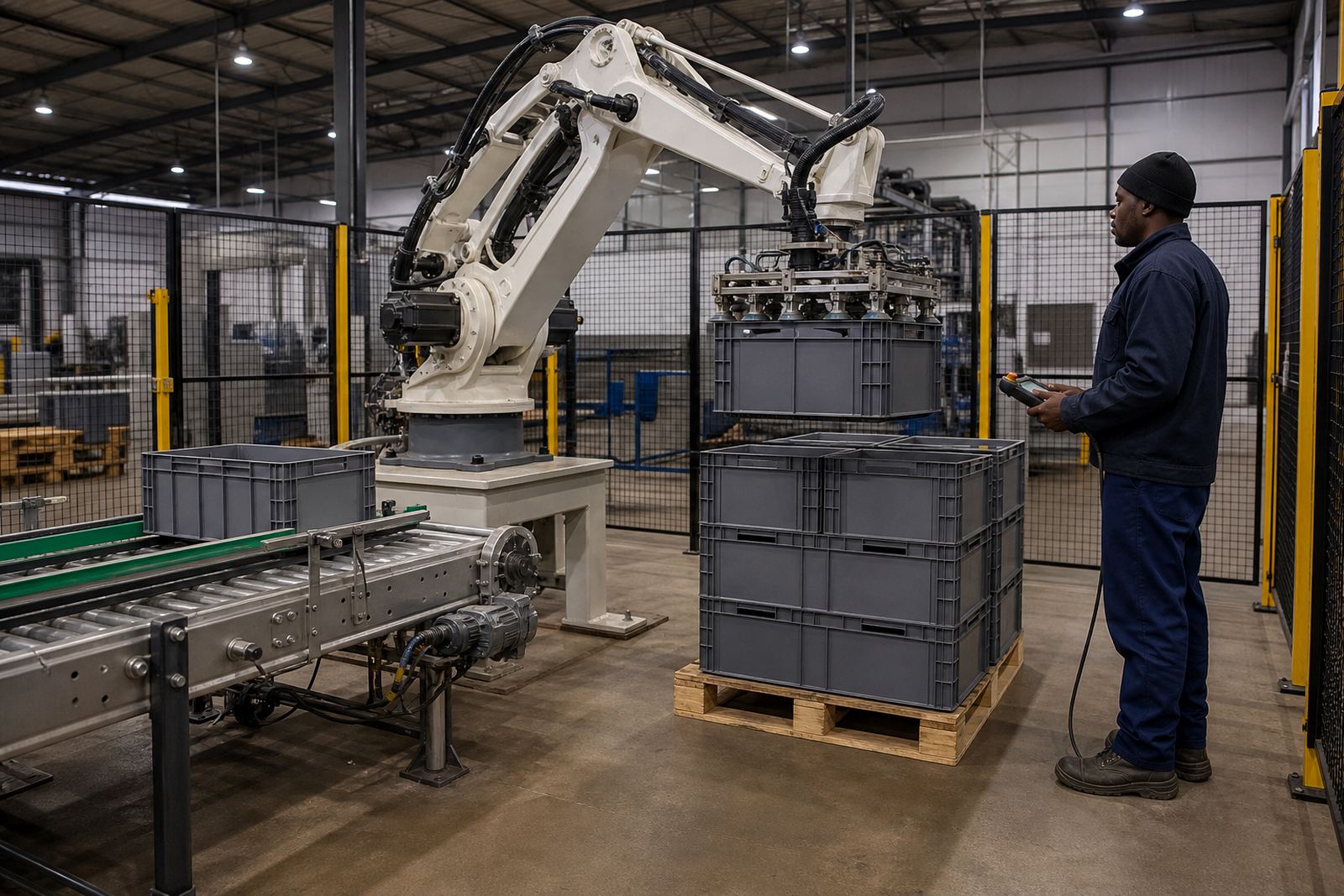
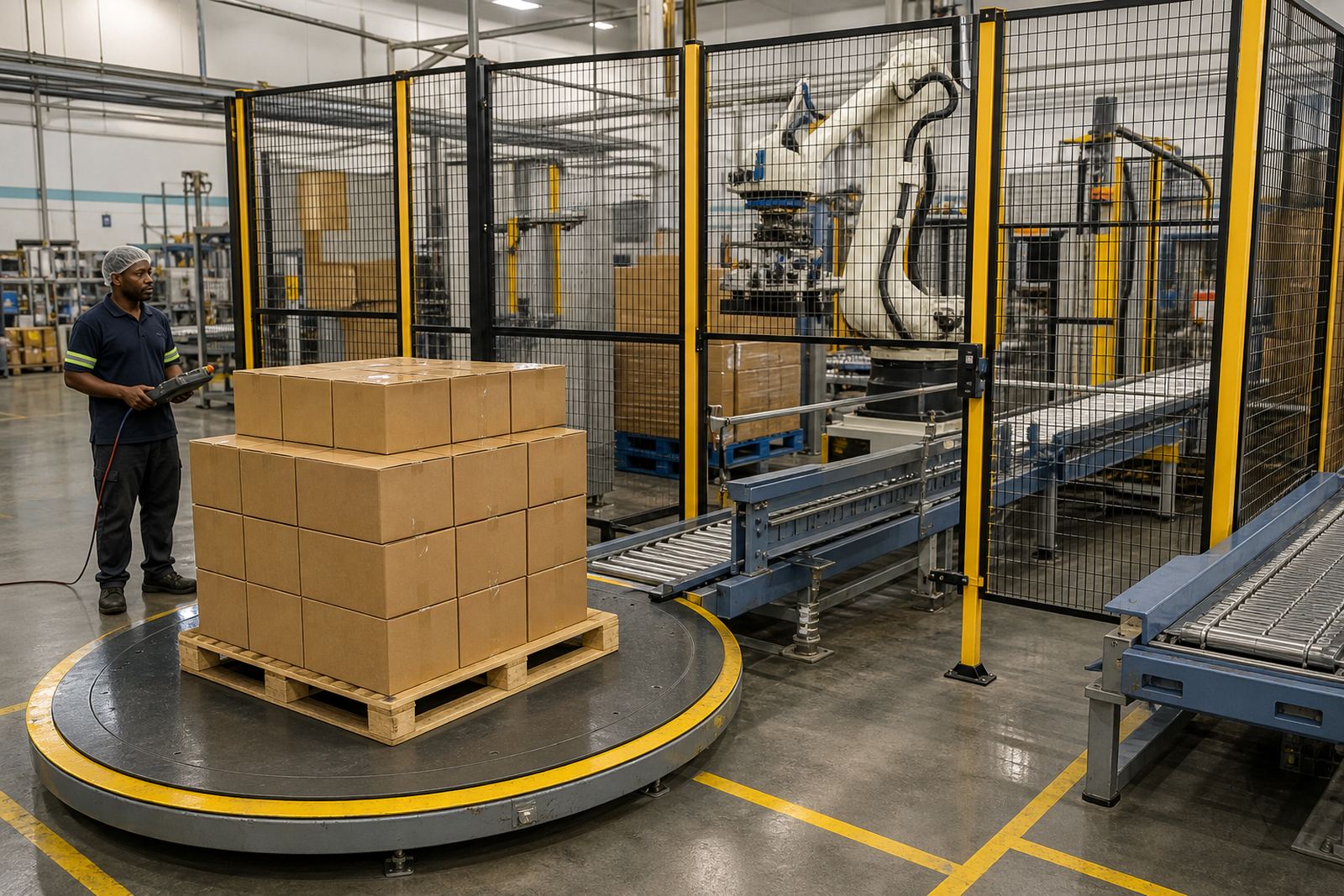
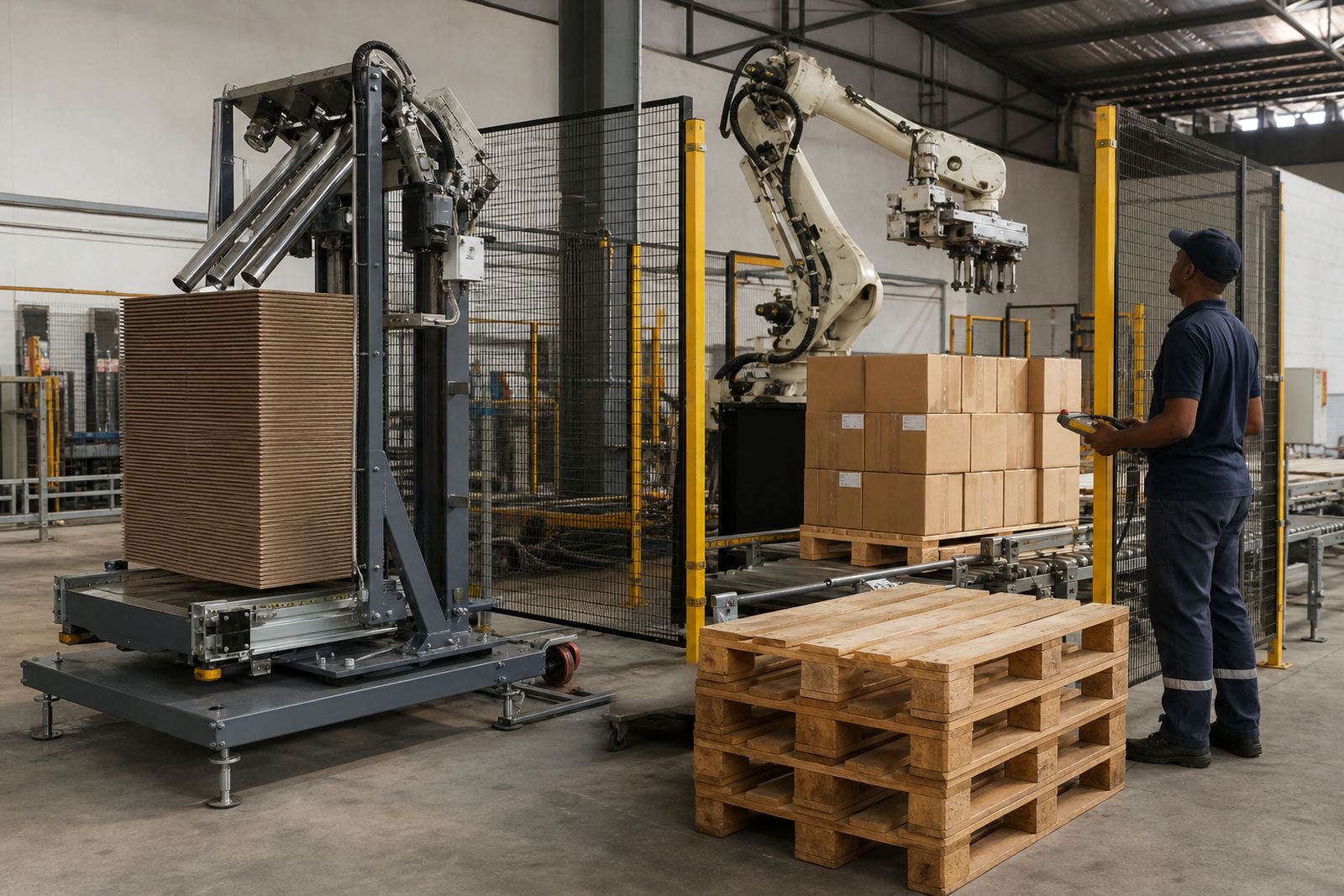
A slip sheet feeder places a thin layer sheet between product layers or under a stack during palletising. It is used where a full pallet is not the only load base, or where a slip sheet is needed to improve load stability, reduce pallet cost, or suit export and warehouse handling methods. In a robotic palletising cell, the feeder is timed to match the robot cycle, the conveyor flow and the layer pattern so the sheet lands in the correct position without slowing the line.
For South African sites, this retrofit is often added to existing end of line equipment rather than replacing the whole line. That makes it suitable for plants in Kempton Park, Johannesburg, Pretoria, Durban, Cape Town and Gqeberha that want to improve packing and palletising output without major civil work. Each line is different, so the sheet feed method, pickup point and release position must be set to suit the product weight, wrap method and pallet pattern. A proper risk assessment is needed before any installation, because guarding and access requirements change from one site to another.
Where Slip Sheet Feeder Retrofits Suit Best
Slip sheet feeding works well on lines handling bags, cartons, cases, trays and other unit loads that are already being palletised by robot or by a conventional stacking system. It is especially useful where a business wants cleaner pallet presentation, lower pallet usage, or better load containment for transport over long distances. Many factories in Gauteng use these systems in distribution and manufacturing areas where forklift traffic is busy and floor space is tight.
It suits a range of industries, including food, beverages, personal care, building products, plastics and general packaging. The sheet type and feeding method should be selected around the product weight and surface finish. For example, light cartons may only need a single sheet between layers, while heavier or less stable products may need a more controlled insertion point and stronger sheet handling. In humid coastal conditions, the sheet stock and storage method must also be considered, because damp sheets can stick or misfeed.
- Layer sheet insertion for pallet stacks
- Robot palletising cells with existing conveyors
- High mix lines that need pattern changes
- Sites looking to reduce pallet damage and handling issues
- Plants that need a neater load for warehousing and export
Sizes, Formats And Feeding Options
Slip sheet feeders are built around the sheet size, stack height and handling speed required on site. Common sheet sizes are usually set to the pallet footprint used on the line, but the exact length and width should be confirmed against the product overhang, pallet type and transfer method. The feeder can be arranged for single sheet dispensing or repeated insertion through a cycle, depending on the stack pattern.
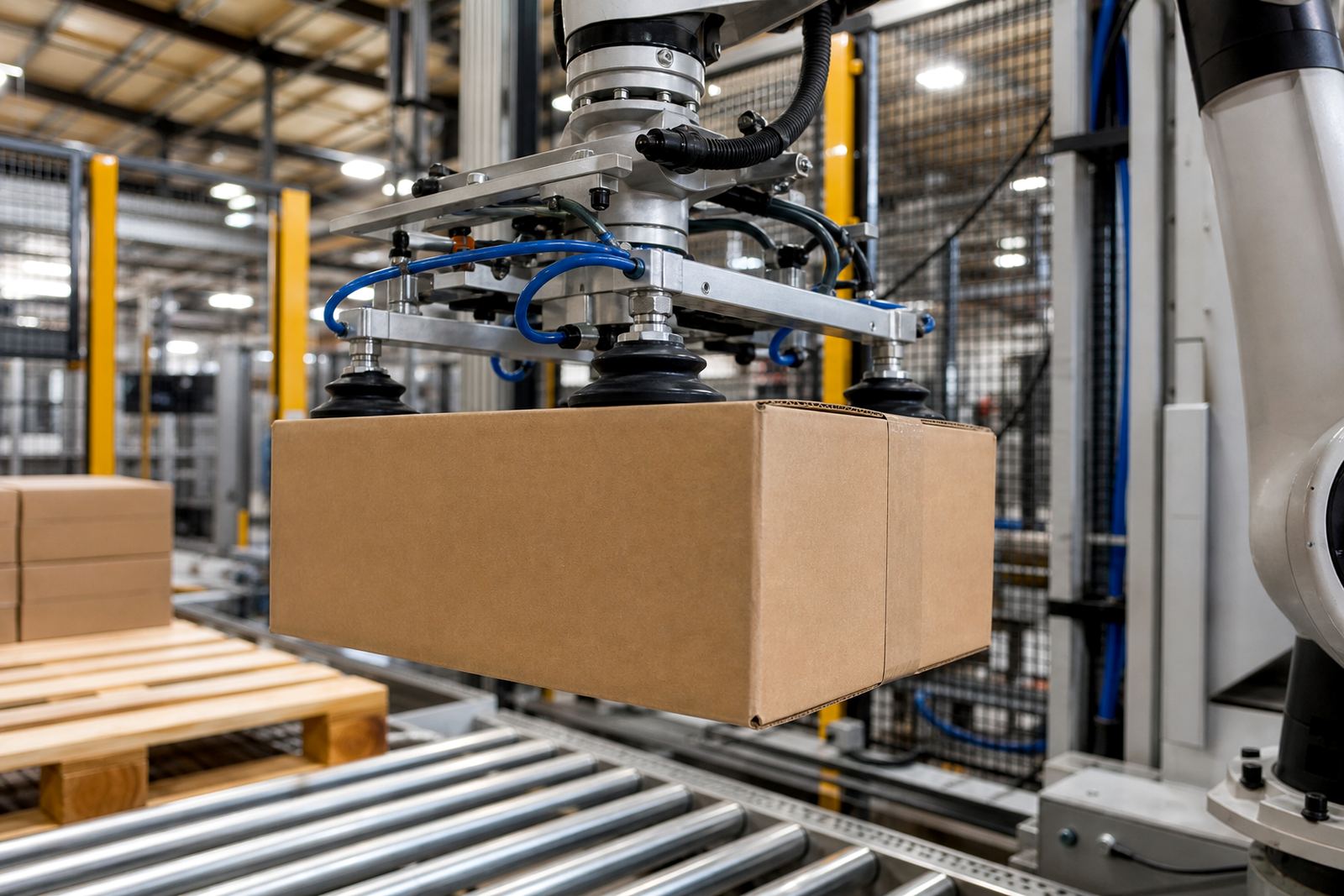
Options can include vacuum pick, mechanical pick or guided feed systems, depending on the sheet material and line speed. The holding and release method must suit the sheet finish, because coated or textured sheets can behave differently. On some lines the sheet is taken from a magazine, while on others it is presented from a stack or fed from a side-mounted store. The right choice depends on available space, access for maintenance and how often the format changes. Our team checks the full line layout before recommending a setup, so the feeder fits with the robot reach, conveyor height and pallet transfer path.
- Sheet sizes matched to pallet footprint
- Single layer or multiple layer feeding
- Magazine, stack or side-feed arrangements
- Vacuum or mechanical handling methods
- Format change handling for mixed products
Installation, Power And Line Integration
Installing a slip sheet feeder retrofit usually starts with a line survey and layout check. ReAutomated looks at the conveyor route, pallet infeed, robot reach, sheet storage area and guarding points before finalising the design. The feeder then needs to be tied into the existing controls so it follows the palletising sequence, with signals for sheet present, sheet picked, sheet placed and fault condition. If the line already has a PLC and conveyor control system, the retrofit should be integrated rather than worked around.
Most installations need standard industrial electrical supply and compressed air for certain handling methods, but the exact requirements depend on the feeder design. Power needs are normally modest compared with the full palletising cell, yet the panel load, cable route and isolators still have to be planned properly. Some sites need extra air dryer checks or pressure stability if they are already using pneumatics elsewhere on the line. If the feeder sits in a washdown or dusty area, enclosure rating and component protection must also be considered.
Safety Guarding And Risk Assessment Matters
A slip sheet feeder is not just a bolt-on machine. It forms part of the palletising cell, so guards, interlocks and access points need to be reviewed as a full system. A site-specific risk assessment is required because the hazards change with robot reach, conveyor position, operator access and the type of sheet handling used. Safety measures may include fixed guarding, light curtains where appropriate, lockable access doors and clear stop positions for maintenance work.
General safety practice should also cover sheet jams, trapped air or vacuum lines, moving transfer points and the handover between conveyor and robot. Operators need to know when it is safe to clear a fault and when maintenance staff must isolate the equipment. Good guarding design makes daily operation easier, not harder, because the line can be serviced without awkward climbing or reaching. On busy East Rand sites, where floor traffic and pedestrian movement share the same area, guarding layout has to be thought through carefully. A quick setup can save time now, but poor access later becomes a problem.
- Site-specific risk assessment before commissioning
- Guarding sized to the exact line layout
- Interlocked access for service work
- Clear isolation points for maintenance
- Operator walkways kept free of moving parts
Care, Servicing And Spares Planning
Slip sheet feeders work best when kept clean and adjusted. Dust, fibre build-up and off-cut debris can affect pick reliability, especially on busy packing lines. Routine checks should include sheet stack condition, suction or gripping performance, wear on guides and rollers, and correct alignment with the robot cycle. If the feeder starts missing sheets or pulling more than one sheet, that is usually a sign that the stack condition or handling settings need attention.
Planned servicing helps reduce breakdowns and stops the line from being held up by a small mechanical fault. ReAutomated can support maintenance scheduling, spare part planning and breakdown assistance for retrofitted lines. On coastal sites, extra attention should be given to corrosion, moisture and stored sheet condition. In inland plants, dust and vibration may be the main issues. A simple weekly check can prevent bigger stoppages later, so it is worth building the feeder into the normal maintenance round rather than leaving it until something fails.
What To Confirm Before You Order
Before ordering a slip sheet feeder retrofit, it helps to confirm the line details in writing. That includes the pallet size, product dimensions, layer pattern, target line speed and available space around the conveyor and robot. You should also confirm whether the feeder must work with one product format or several, because changeover needs affect the design. If the plant uses existing conveyors, the infeed height, pallet transfer direction and buffer area all matter.
It also helps to check the site conditions. For example, is the feeder going into a dry warehouse, a humid packing room or a dusty production hall? Is compressed air already available? Is there enough electrical capacity? Are operators expected to load sheet stacks by hand or should the feeder be set up for easier access? The more accurately these points are captured upfront, the smoother the retrofit will be. ReAutomated works with manufacturers across South Africa to match the feeder to the actual line, not a generic layout, and that usually saves time during installation and commissioning.
- Pallet footprint and sheet size
- Product type, weight and layer pattern
- Robot or conveyor cycle timing
- Available electrical and air supply
- Space for sheet storage and maintenance access
Key facts
| Product | Slip sheet feeder retrofit for robotic palletising lines |
|---|---|
| Typical use | Layer sheet insertion during pallet stacking |
| Integration | Existing conveyors, robot controls and pallet transfer equipment |
| Power | Site-specific industrial electrical supply, confirmed at survey |
| Air supply | Compressed air may be required depending on feeder method |
| Support areas | Kempton Park, Johannesburg, Pretoria, Durban, Cape Town, Gqeberha, East Rand, Midvaal |