How a shrink pack palletiser retrofit works
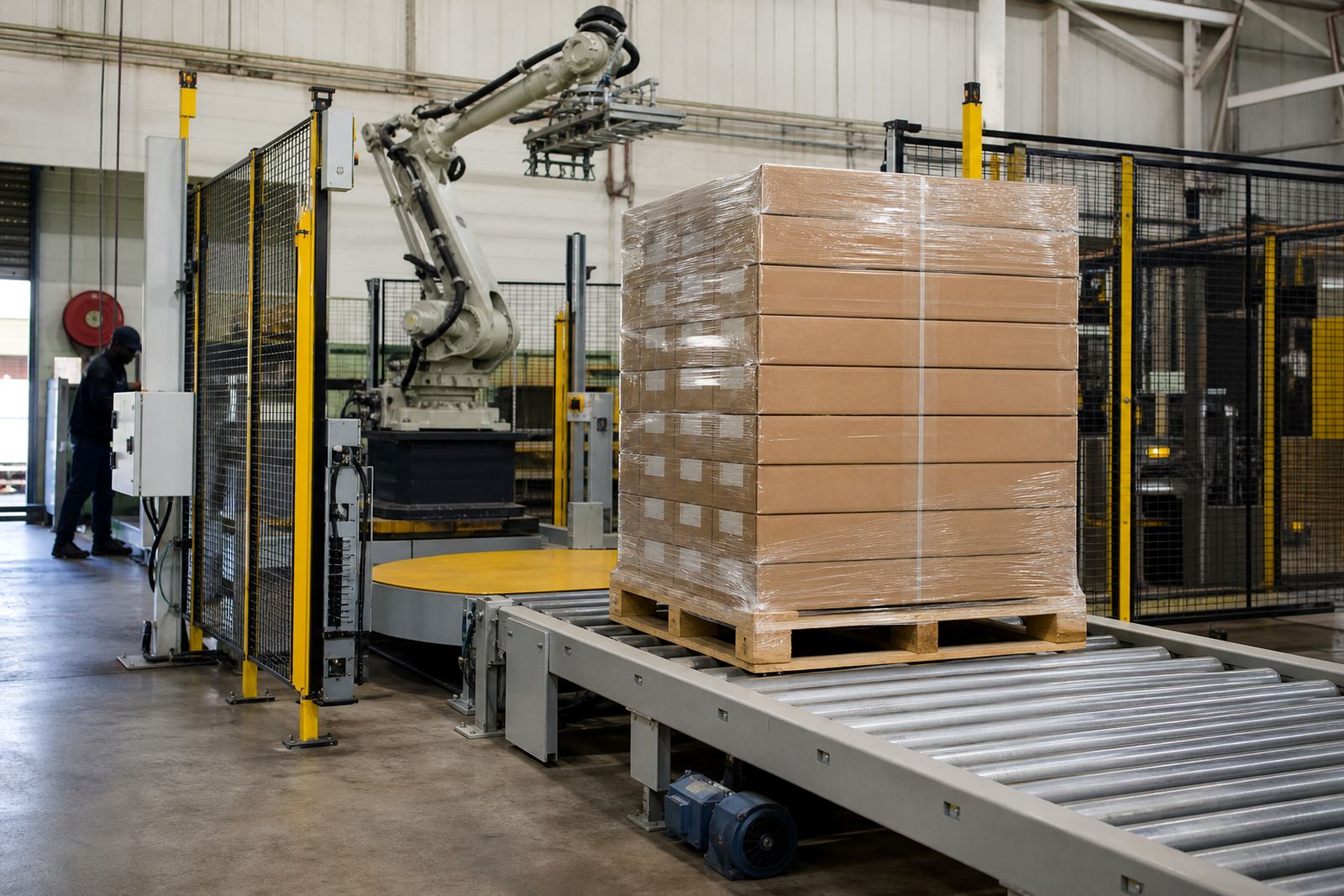
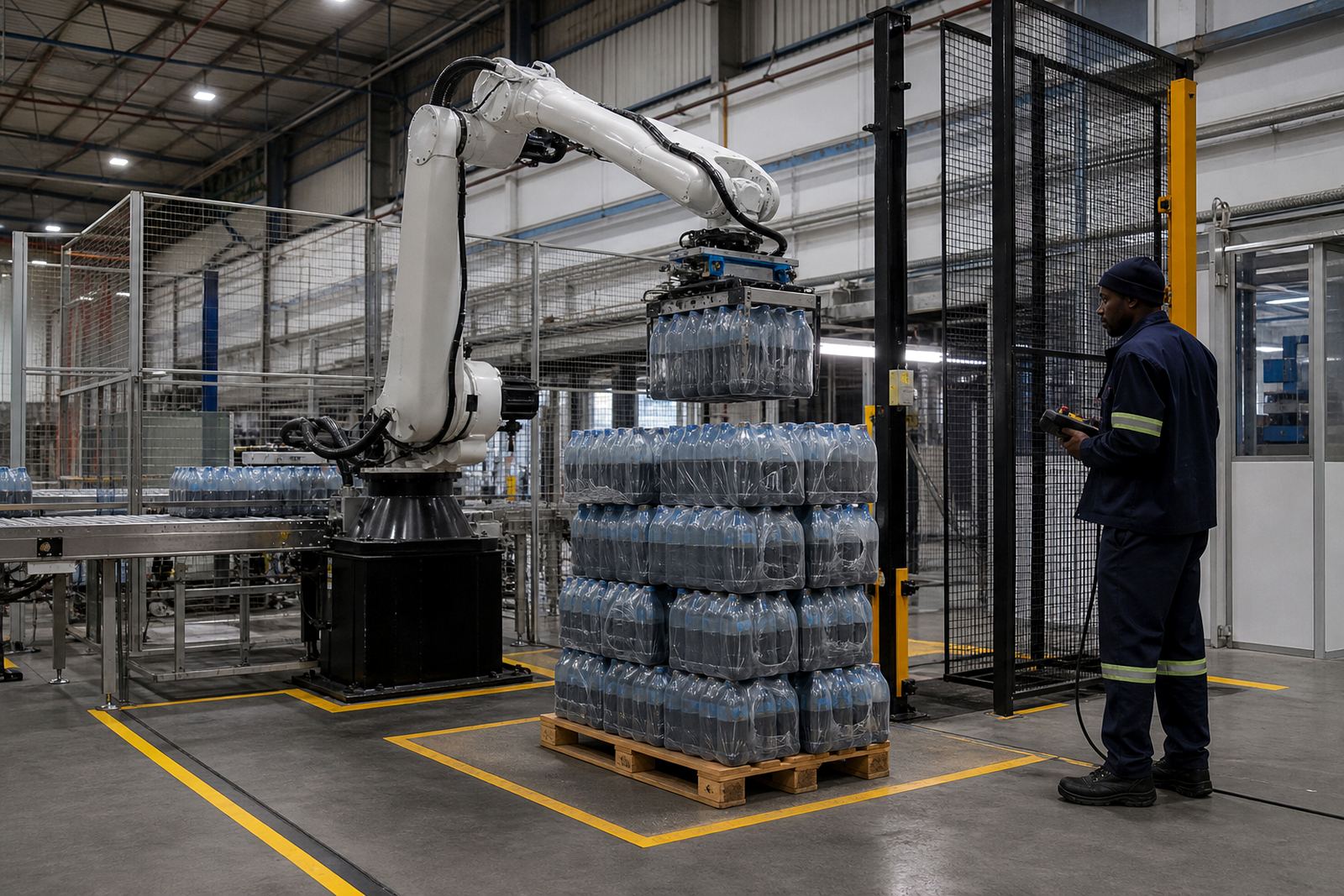
A shrink pack palletiser is built around the packs you already run through your shrink tunnel or wrapping process. The retrofit collects wrapped multipacks, indexes them into position and places them layer by layer onto a pallet according to the chosen pattern. On many sites the equipment feeds from the end of an existing conveyor, so the line layout can often stay close to what the plant already has. That means less civil work and less disruption to production.
The system can be arranged for single lane or multi lane infeed, depending on the pack size and line speed. A typical retrofit may include a robot arm or palletising unit, product transfer conveyor, pallet dispense point, layer formation area, safety guarding and controls interface. Each site needs its own assessment because pack weight, case stability and floor space all affect the final design. In practice, a clean infeed and predictable pack spacing make a big difference to how well the line runs.
- Handles wrapped multipacks at line end
- Builds repeatable pallet patterns for dispatch
- Connects to existing conveyors and controls where suitable
- Can be arranged for limited floor space or a wider cell
Sizes and layout options for different pack formats
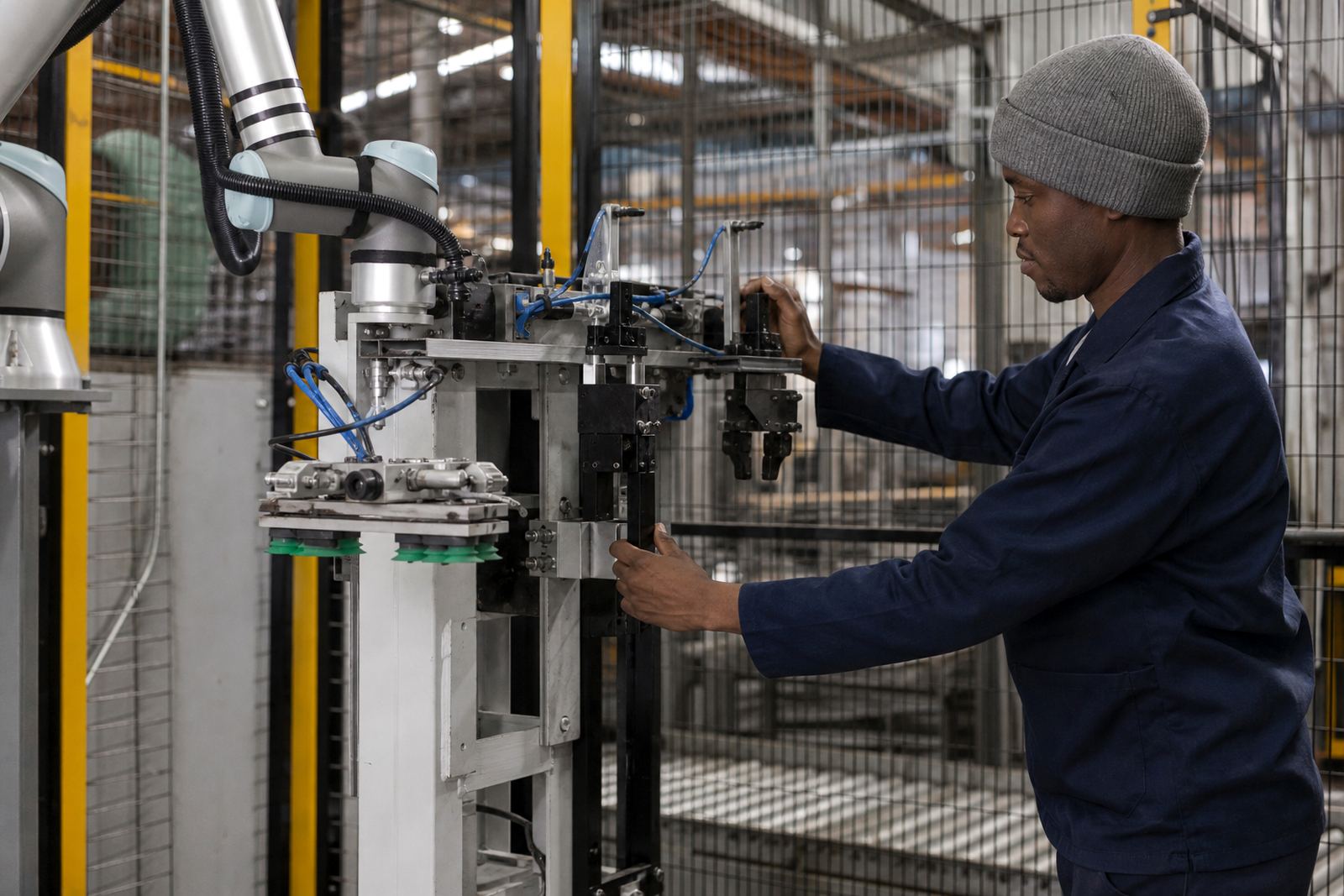
These retrofits vary by site. Smaller operations in Midvaal or the East Rand may need a compact cell around an existing wrapper and conveyor, while larger plants in Johannesburg, Durban or Cape Town may need higher throughput and more pallet buffers. Pack size, product weight and pallet height usually determine the cell size and the gripper or layer handling used. Lighter packs may suit a vacuum or mechanical gripper, while heavier wrapped units often need a different end effector.
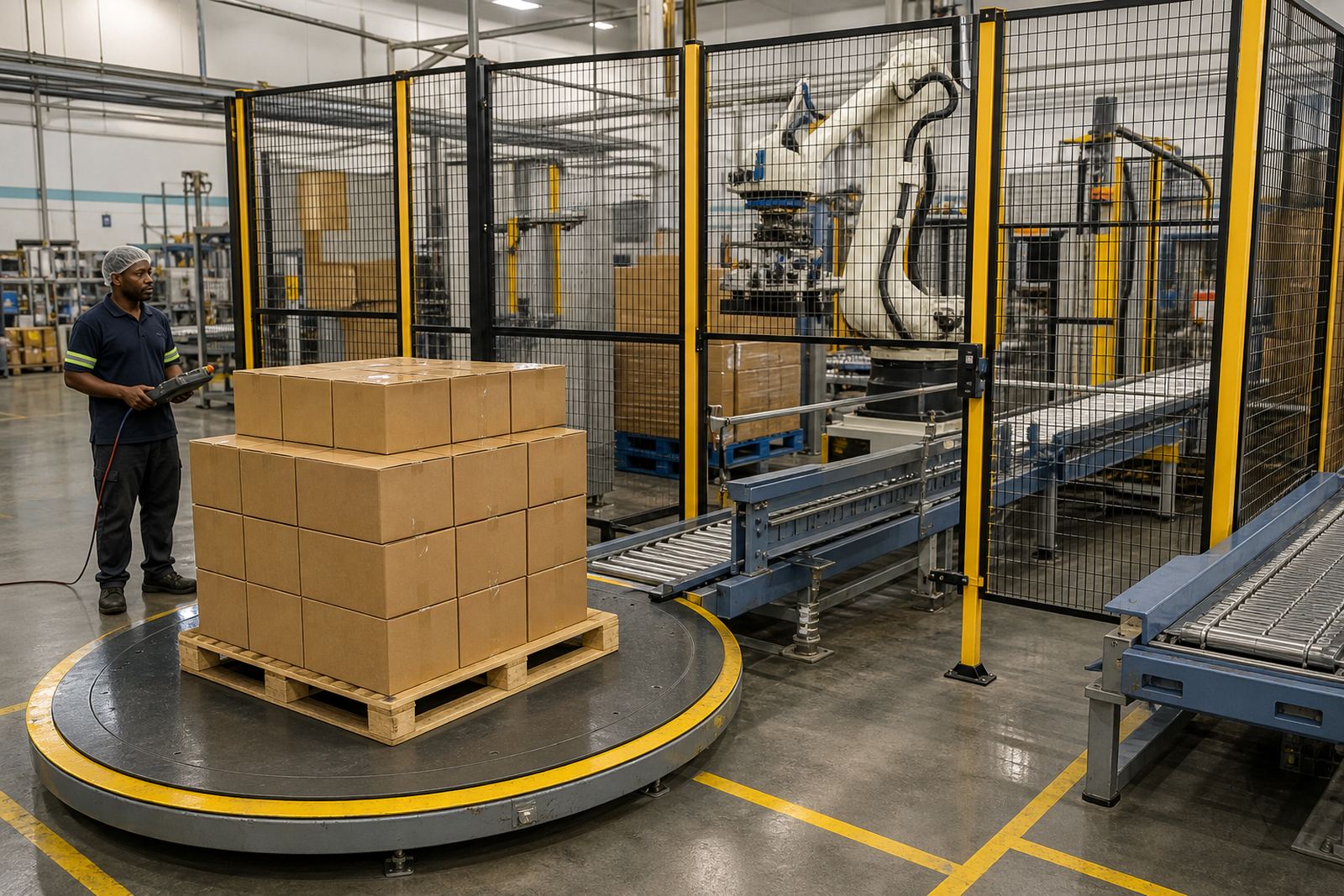
Typical layout options include a simple end of line robot, a palletising cell with safety fencing, or a semi automated station where an operator loads pallets and the machine forms layers. Some lines need a right angle transfer, others need a straight push from the shrink wrapper to the palletiser. If your packs vary in height or the film finish changes in hot weather, the layout should allow for that too. Coastal humidity in Gqeberha and Durban can affect film grip and handling, so the setup should be checked carefully.
- Compact cells for tight plant rooms or older buildings
- Single infeed or multiple infeed lanes
- Custom pallet patterns for box, crate or bundle formats
- Options for low, medium and higher throughput lines
Where this retrofit suits best
This type of palletiser retrofit suits manufacturers that send out wrapped multipacks on pallets and want neater, more consistent loads. It is commonly used on food packs, beverage packs, household goods, personal care items and other products that leave the line in shrink wrap or bundled packs. It is also useful where manual stacking is slowing dispatch or where repeated lifting is creating strain for staff.
A well planned retrofit helps with that because the line can be set up to recover in a controlled way after a stop. If your operation in Pretoria or Kempton Park runs mixed pack sizes, the controls and line logic should be planned around changeovers, product flow and pallet replacement. It is best suited to sites that want reliable end of line handling but do not want to redesign the whole factory.
- High labour areas where manual stacking is inconsistent
- Sites with existing shrink wrap or bundle packs
- Operations needing better pallet quality for transport
- Factories that want to keep current conveyors and wrappers
Installation, power and utilities to plan for
Installation usually starts with a line survey, followed by a retrofit design that maps the current conveyor route, pallet position and control points. From there, the team plans the guarding, cable routes, sensor positions and any interface work needed to link the new system into the existing line. Most projects are done with the line still in mind, so downtime is planned around production windows and access to the floor. If your plant has tight access or overhead services, that needs to be checked early rather than after steelwork is ordered.
Load demand changes with the cell size and the selected equipment. Some layouts need only an electrical feed and compressed air for grippers or stops, while others may need extra air volume for specific handling functions. In a standard palletiser setup, no gas supply is needed. If the site has an unstable supply, the restart logic and safe stop response should be planned properly. On older sites it is also wise to inspect floor condition, anchor points and whether the pallet area needs rework before installation starts.
- Electrical supply sized to the cell and controls package
- Compressed air may be needed for some handling functions
- No process gas is usually required
- Floor flatness and anchor points should be checked before install
Safety guarding and risk assessment support
Any palletising retrofit needs proper guarding, access control and a site specific risk assessment. That is not something to leave to guesswork, because each plant has its own traffic routes, maintenance access and operator habits. Guarding may include perimeter fencing, interlocked access doors, warning lights, floor marking and safe stop circuits. If a cobot is used, the application still needs careful assessment because the pack weight, speed and reach pattern all affect the safety case.
We normally look at the full flow around the cell, not just the robot itself. Forklifts, pallet jacks, wrapped pack movement and maintenance access all need to be considered. In some cases, a manual pallet take off zone is fine, but in others the design needs a buffer or a transfer table to keep people clear. The goal is a setup that is practical to operate and straightforward to maintain, while still meeting general safety expectations for the site. Each plant is different, so the final guarding plan has to match the actual risk profile.
- Perimeter guarding and interlocked access where required
- Risk assessment support for the full end of line area
- Forklift and pedestrian separation around the pallet zone
- Safe stop and reset logic for maintenance and changeover
Care, servicing and checks before ordering
Once installed, the cell should be kept clean and checked on a regular schedule. Shrink pack handling can leave film dust, glue residue or debris around rollers and sensors, so routine cleaning matters. Bearings, belts, grippers, sensors and safety devices should be inspected before they start giving trouble. If the plant has heavy dust or coastal moisture, like on some sites near Cape Town or Gqeberha, it is worth planning extra protection and a sensible spares list.
Before you order a retrofit, check your pack dimensions, weight, pallet size, target throughput, available floor space and how the line should run during changeovers. You should also know whether the packs arrive on a single lane or multiple lanes, how stable the wrapped product is, and whether the existing conveyor height can be kept. If the product changes often, tell the integrator early so the controls can be set up for quick recipe changes. A bit of planning at the start avoids costly rework later, and keeps the line easier to live with day to day.
- Pack dimensions, weight and wrap style
- Required throughput and pallet pattern
- Available floor space and conveyor height
- Changeover needs, maintenance access and spares planning
Key facts
| Application | Shrink wrapped multipack palletising at line end |
|---|---|
| Infeed | Existing conveyor or new transfer conveyor |
| Handling method | Robot, cobot or other palletising unit depending on site |
| Pallet formats | Standard pallet sizes and custom load patterns |
| Utilities | Electrical supply and compressed air where required |
| Services | Survey, design, integration, guarding, commissioning and support |