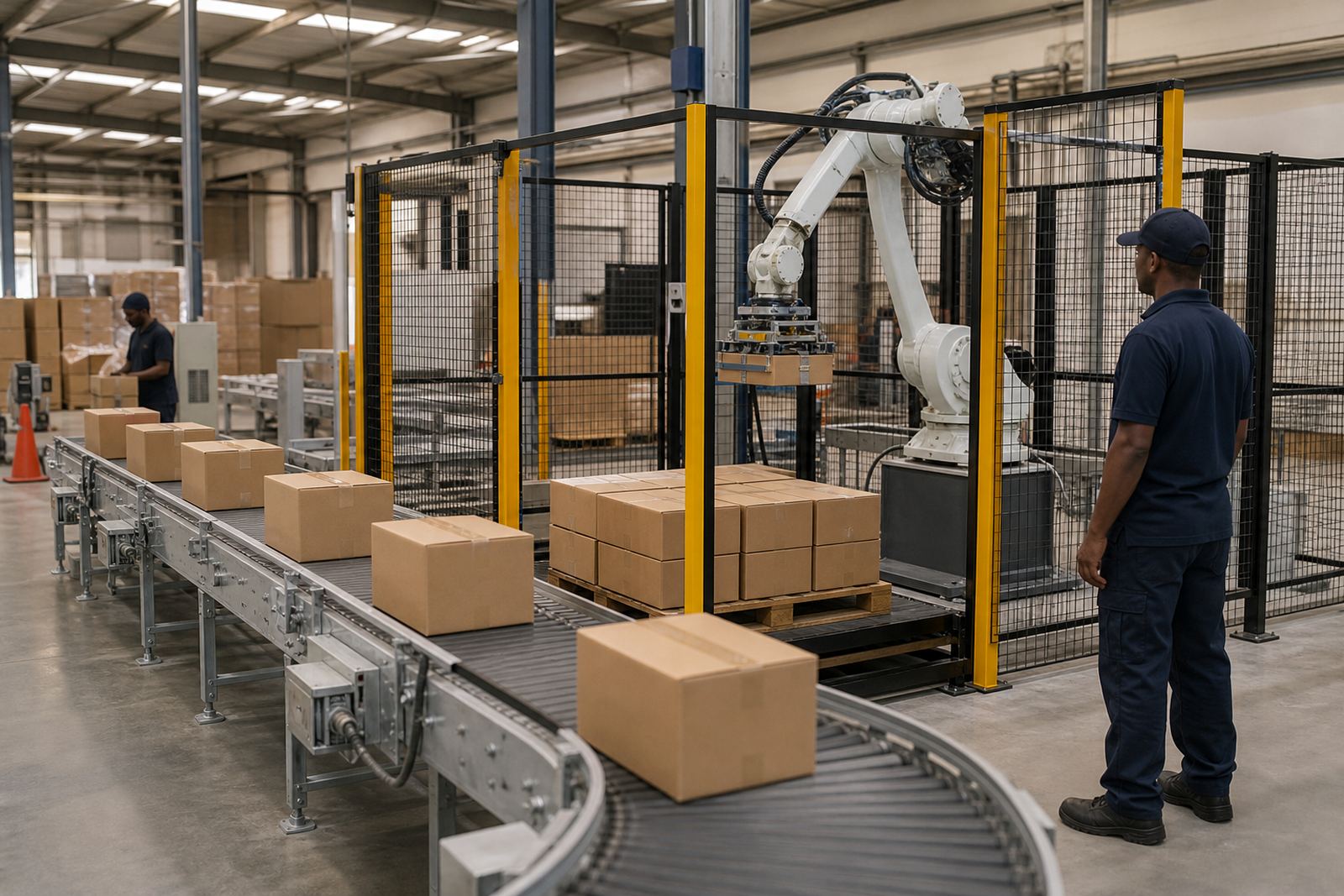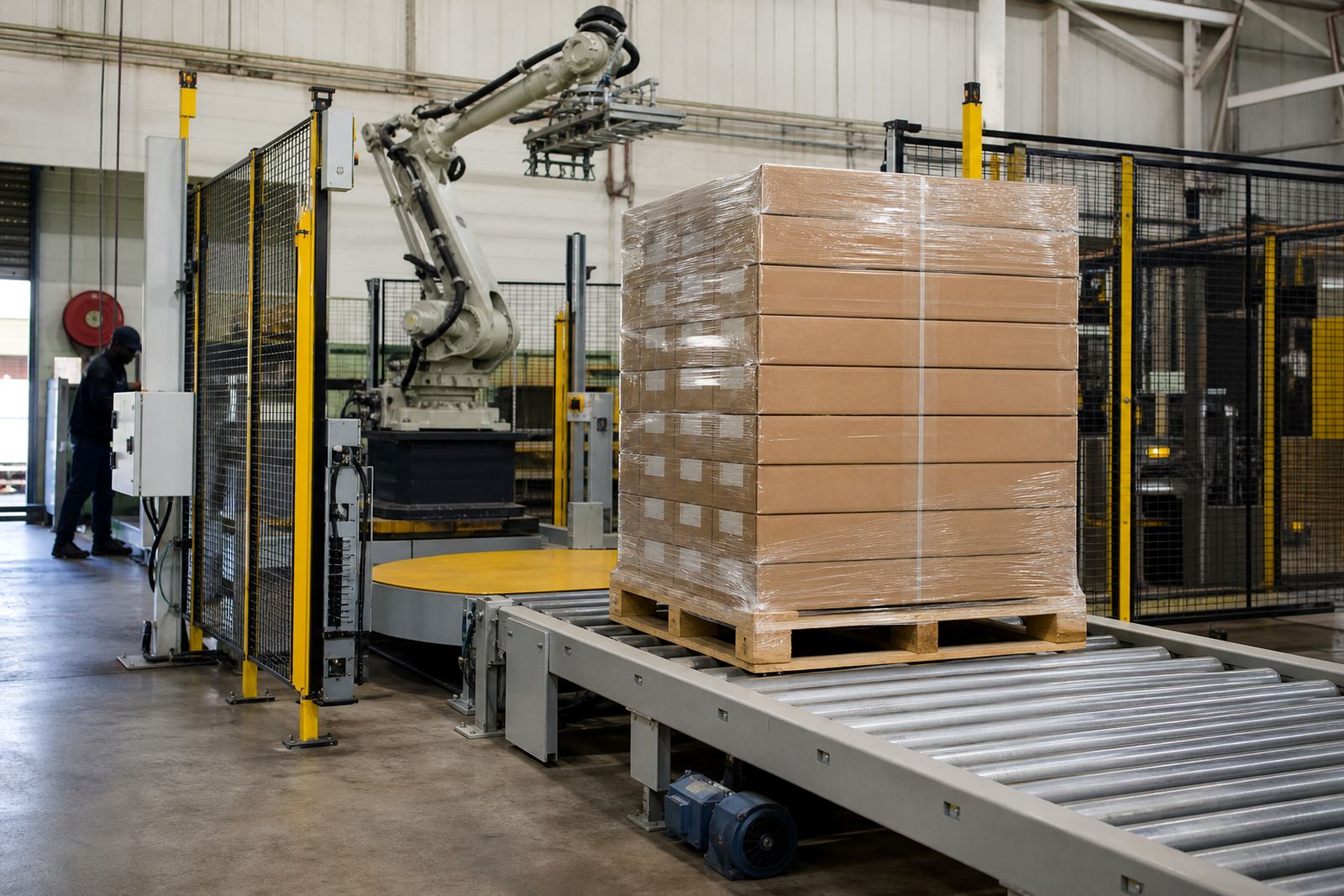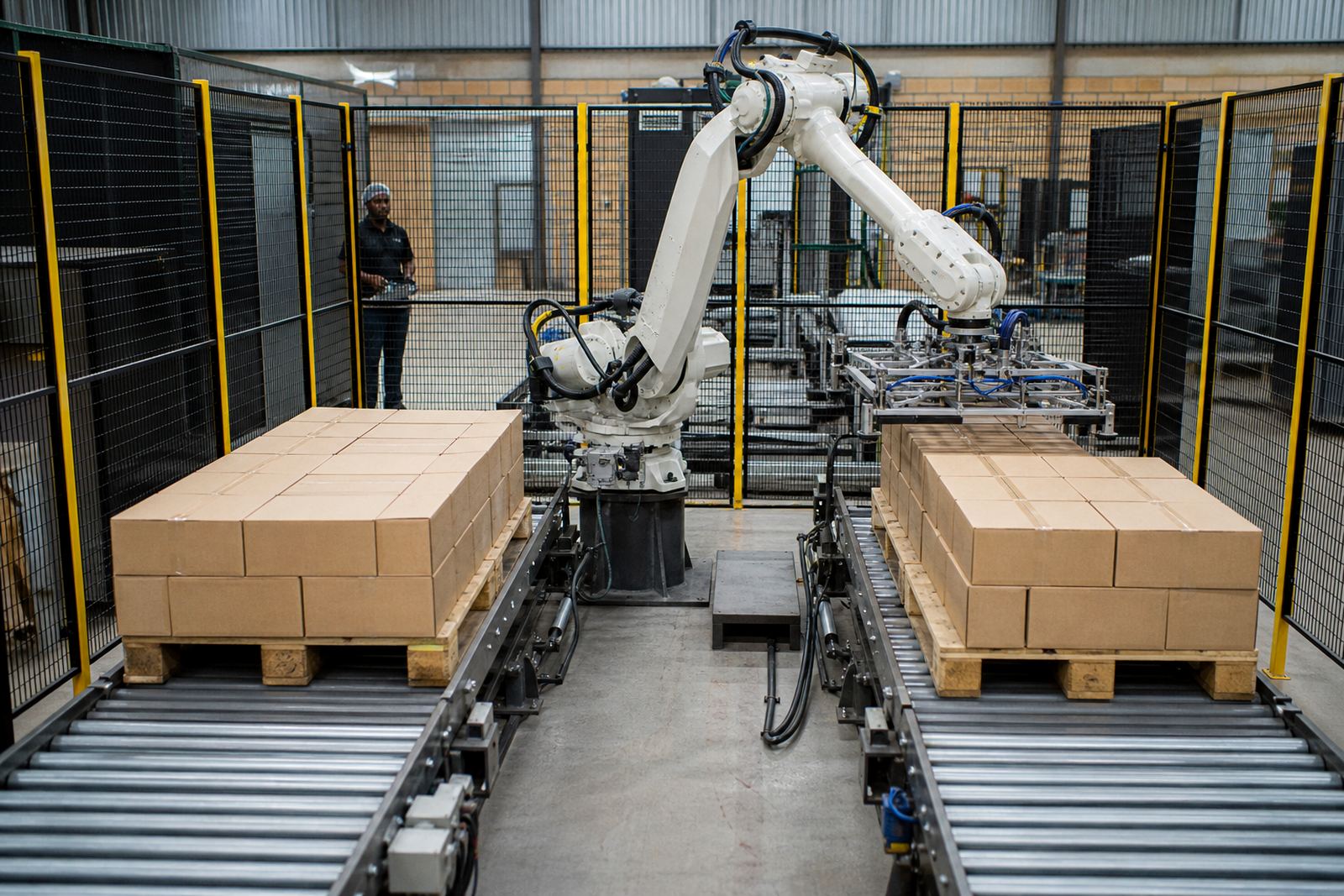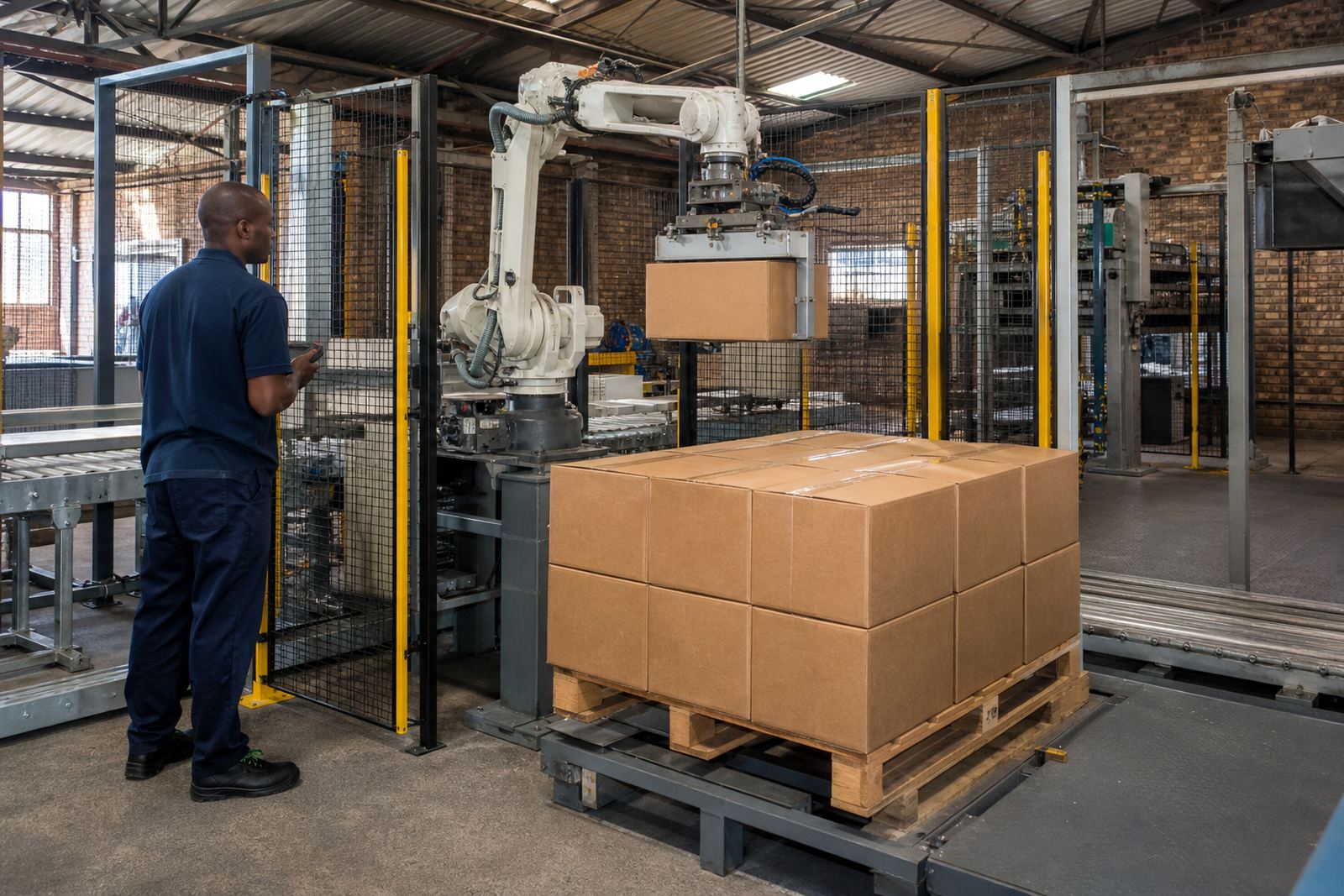
What a carton palletiser retrofit does on your line
A carton palletiser retrofit adds automated stacking to an existing packing or dispatch line. Instead of staff lifting cartons by hand, the system receives cartons from the conveyor, groups them in the right pattern, and places them neatly onto a pallet. The aim is consistent layer formation, fewer handling injuries, and a cleaner handover to wrap and dispatch.
For manufacturers in Gauteng, KwaZulu-Natal, the Western Cape and the Eastern Cape, this is often the best step when manual palletising has become too slow or too inconsistent. It suits operations that already have cartons, a stable outfeed conveyor, and enough floor space for a pallet station, guarding and service access. A proper retrofit is planned around your current line, not the other way round.
We look at carton size, weight, case count per minute, pallet type, floor condition and the route cartons take from the pack area to the pallet load. On many sites the best result comes from keeping the existing conveyor path and adding transfer points, controls and safety guarding in the right places.
Sizes, layouts and common retrofit options
Carton palletiser retrofits are not one-size-fits-all. The right layout depends on box dimensions, line speed and whether you need one pallet lane or multiple pallet positions. We can configure a compact cell for a tight factory in Spartan or a larger line in Midvaal where there is more room for buffer conveyors and pallet infeed.
- Low to medium speed lines: Suitable for smaller packing rooms, lighter cartons and shorter run times.
- High throughput lines: Better for continuous packing where manual stacking is slowing output.
- Single or dual pallet stations: Useful where one pallet can be wrapped while the next is being built.
- Top layer handling: Options may include slip sheet handling, layer compression or layer alignment tools where product shape allows it.
- Carton pattern control: Layouts can be set for alternating rows, interlocked loads or simple block stacks, depending on your product.
Where cartons vary in size, the retrofit may need adjustable guides and pattern settings. If the cartons are prone to scuffing or crushing, the design should keep transfer forces low and limit sudden stops. In coastal areas like Cape Town or Durban, materials and guarding layout also need to suit humidity and cleaning routines.
How the retrofit integrates with conveyors and controls
The carton palletiser has to speak to your existing line. That means matching conveyor height, carton spacing, line control signals and pallet release timing so the cartons arrive in the right order. We assess whether the present conveyor can be kept, shortened, extended or re-routed to suit the new end of line position.
Controls integration is a major part of the job. Sensors, stop gates, lane guides and pallet presence devices must all work together cleanly. The system should also handle line pauses, pallet changeovers and fault conditions without causing carton pile-ups.
- Conveyor infeed and outfeed tie-in
- Sensor and stop gate sequencing
- Pallet present and pallet full signals
- Stack pattern selection from the operator interface
- Fault handling and safe stop logic
We also check where operators will clear jams, reload pallets and access the wrap area. Good integration is not only about speed, it is about keeping the process predictable and safe during daily use.
Safety guarding and risk assessment for each site
Every carton palletiser retrofit needs its own risk assessment because no two sites are exactly the same. Carton weight, operator movement, forklift routes, access doors and the size of the pallet area all influence the guarding layout. General safety rules apply, but the final design must suit the actual line and the actual room.
Typical safeguarding may include fixed guarding around the pallet build zone, interlocked access doors, light curtains or presence sensing where appropriate, floor markings and clear pedestrian routes. If forklifts collect full pallets nearby, the layout must separate people and vehicles properly. In a busy plant in Johannesburg or Pretoria, this becomes especially important where multiple departments share the same aisle space.
- Physical guarding around moving parts and pallet lift areas
- Access control for maintenance and setup work
- Emergency stops placed where they can be reached quickly
- Risk review for manual intervention points
- Safe lock-off for maintenance and cleaning
Safety guarding is not an add-on at the end. It shapes the whole retrofit from the first line survey through to commissioning.
Installation, power requirements and site conditions
Installation usually starts with a line survey, then retrofit design, controls review and a detailed shutdown plan. On site, we manage mechanical fitment, conveyor alignment, wiring tie-in, testing and commissioning support. Many projects can be phased to reduce downtime, which helps when production windows are tight or when only a weekend shutdown is available.
Power needs depend on the final layout, the robot or cobot size, the conveyor changes and any pneumatic equipment used for stops or guides. In practical terms, you should expect a dedicated electrical supply, local isolation points and sufficient space for cables and control panels. Pneumatic air may be needed for some transfer devices, although not every palletiser uses air. If the site has dusty conditions, washdown areas or coastal moisture, enclosure choice and panel location should be planned properly.
Floor loading, anchor points and forklift access also matter. A stable foundation and clear approach paths make a big difference to installation speed and day-to-day reliability. We also check whether your existing conveyor supports can carry the extra load without vibration or misalignment.
Care, servicing and breakdown support after commissioning
A carton palletiser retrofit should be easy to live with. Routine care includes cleaning sensors, checking guarding, inspecting belts or rollers, confirming air pressure if used, and keeping the pallet area clear of loose film or broken cartons. On coastal sites, corrosion checks matter too, especially on fasteners, brackets and exposed frames.
Operators should be trained to recognise early warning signs such as uneven carton spacing, misaligned stacks, noisy bearings or repeated sensor faults. Small issues caught early are cheaper to fix and less likely to stop the line. Planned maintenance also helps keep changeovers neat, which matters when a line alternates between carton sizes or product ranges.
- Daily cleaning and visual checks
- Weekly inspection of guides, sensors and stops
- Periodic review of conveyor wear and alignment
- Spare parts planning for common wear items
- Breakdown support for urgent line faults
We can also support maintenance planning and spares planning so that the most likely failure points are kept on hand instead of waiting on courier lead times.
What to check before you order a retrofit
Before ordering a carton palletiser retrofit, gather the details that shape the final design. The more accurate the input, the better the fit on site. If the carton sizes vary too much or the pallet format changes often, tell us upfront so the controls and mechanical layout can be planned accordingly.
- Carton length, width, height and typical weight
- Cartons per minute and target pallet height
- Current conveyor height and direction of travel
- Pallet size, type and whether slip sheets are used
- Available floor space and ceiling height
- Forklift access, pedestrian routes and nearby obstacles
- Power supply details and any air supply available
You should also note any municipal or site rules that affect drilling, anchor work, noise, access times or waste removal. If the line serves multiple products, it helps to know which carton sizes are most common and which ones cause the most trouble. For plants across South Africa, from East Rand to Durban and Cape Town, a clear site brief saves time and reduces surprises during installation.
Key facts
| Application | Automatic carton palletising retrofit for existing packing and dispatch lines |
|---|---|
| Typical carton range | Small to medium cartons, subject to site survey and product weight |
| Layout options | Single lane, dual lane, buffer conveyor, one or two pallet positions |
| Control interface | PLC-based integration with conveyor signals, sensors and operator controls |
| Safety features | Guarding, interlocks, emergency stops and site-specific risk controls |
| Site services | Electrical supply, optional compressed air, floor space and forklift access |