One robotic cell for two packing lines
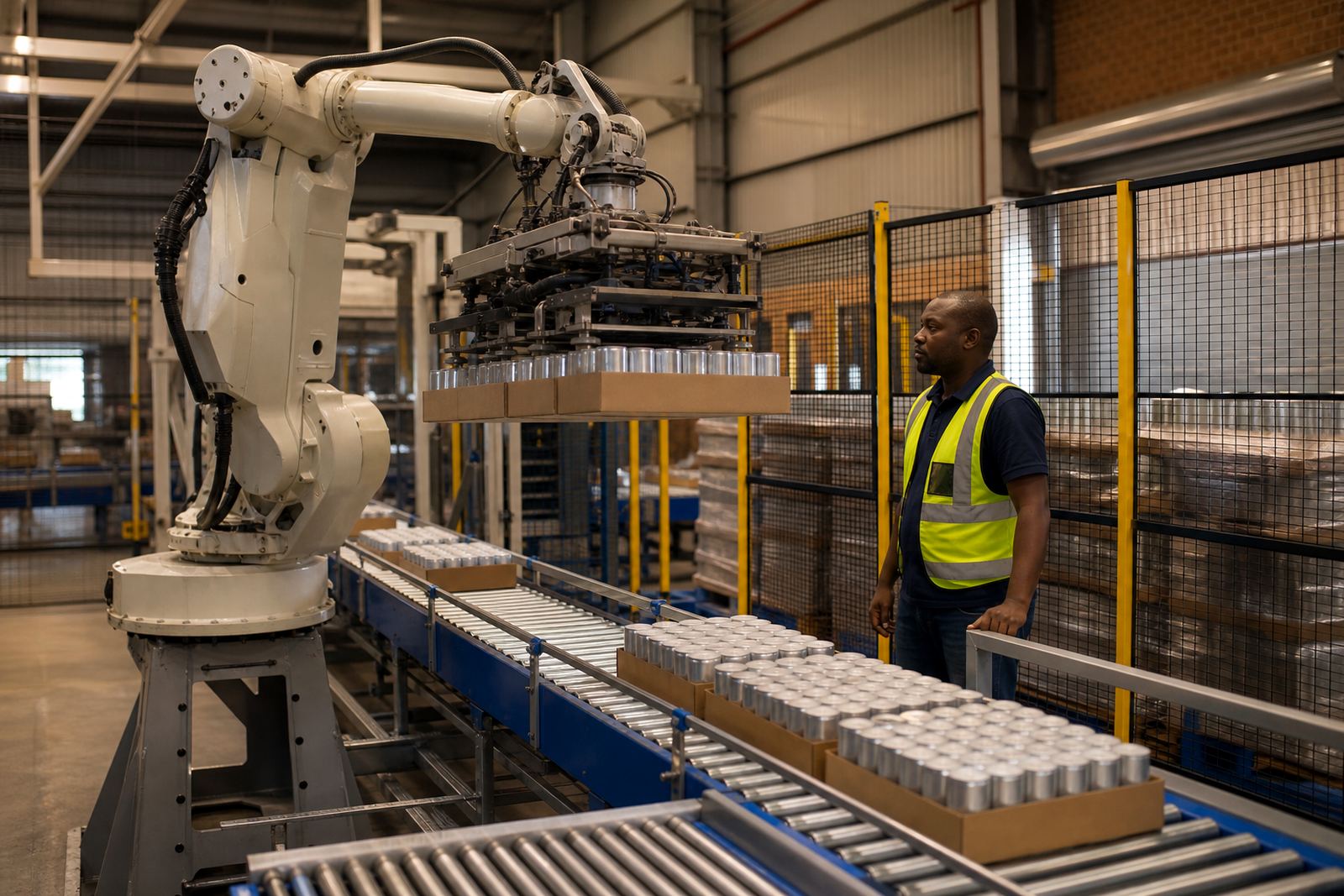
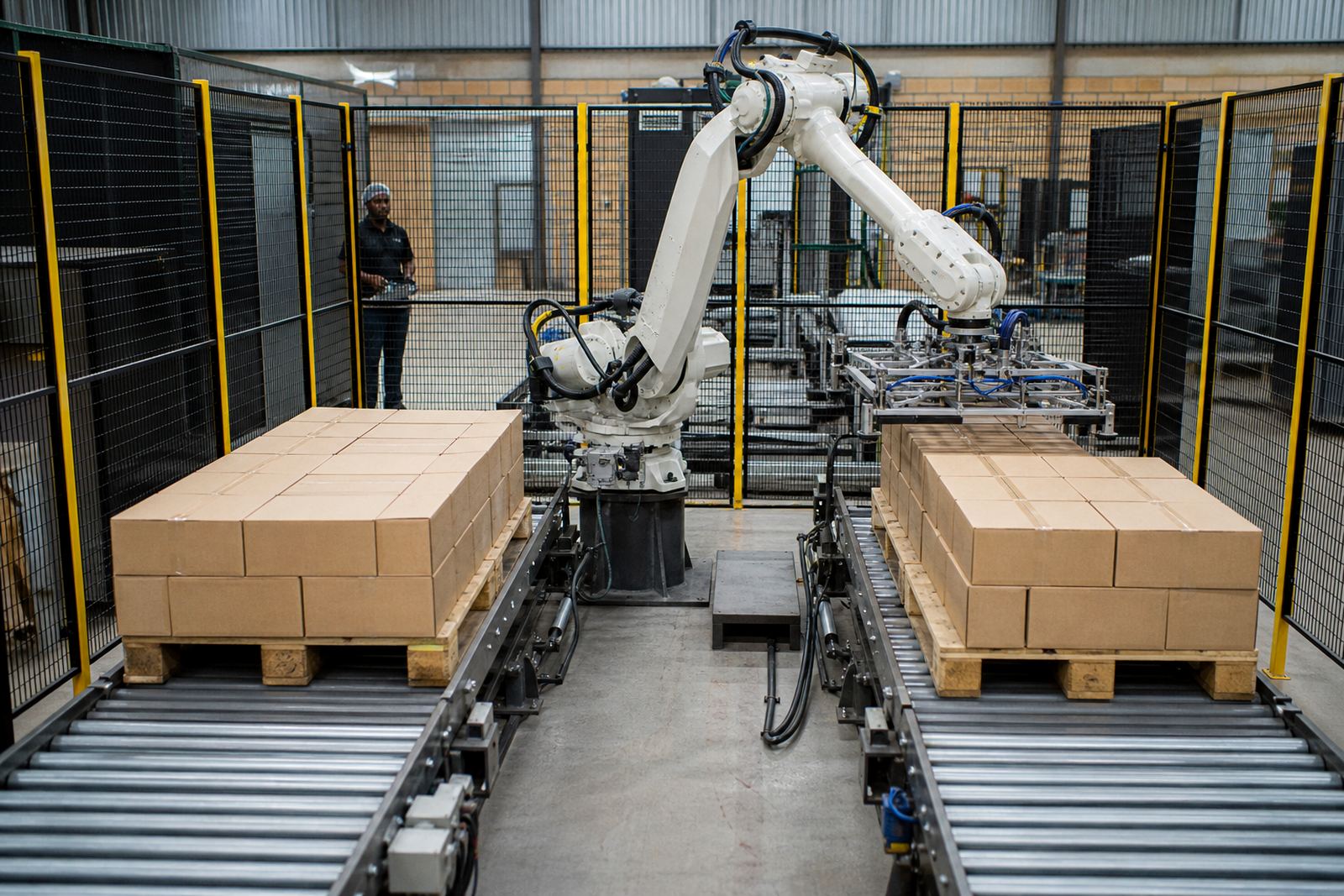
A dual line palletiser is a retrofit cell arranged so one robot can take product from two adjacent packing lines and place it into pallets in a controlled sequence. In practical terms, it helps a plant in Kempton Park, Johannesburg or Durban get more from the same floor area by using shared infeed, shared guarding and a coordinated control system. The product flow is timed so the robot knows which line is feeding, where the case or bag is arriving, and how each pallet build should be layered.
This setup is often considered where both lines run similar pack sizes, or where the production plan needs the robot to switch between lines without stopping the full area. It can be designed for cartons, shrink wrapped bundles, bags, tubs or trays, depending on product stability and the pallet pattern. If the two lines differ in speed, the sequencing logic and accumulation points need proper attention otherwise one side can starve while the other backs up.
- Serves two adjacent lines from one robotic cell
- Supports controlled product sequencing between lines
- Reduces manual pallet handling at the end of line
- Can be adapted to cartons, bags, trays and bundles
Typical sizes, layouts and options
There is no single standard size because the layout depends on line pitch, pallet height, product dimensions and the available service space around the conveyors. A compact dual line cell may fit into a tighter aisle in Midvaal or on the East Rand, while a higher throughput site may need a wider safety envelope, more pallet staging and better access for a forklift or pallet jack. The robot reach, gripper style and pallet magazine arrangement all influence the footprint.
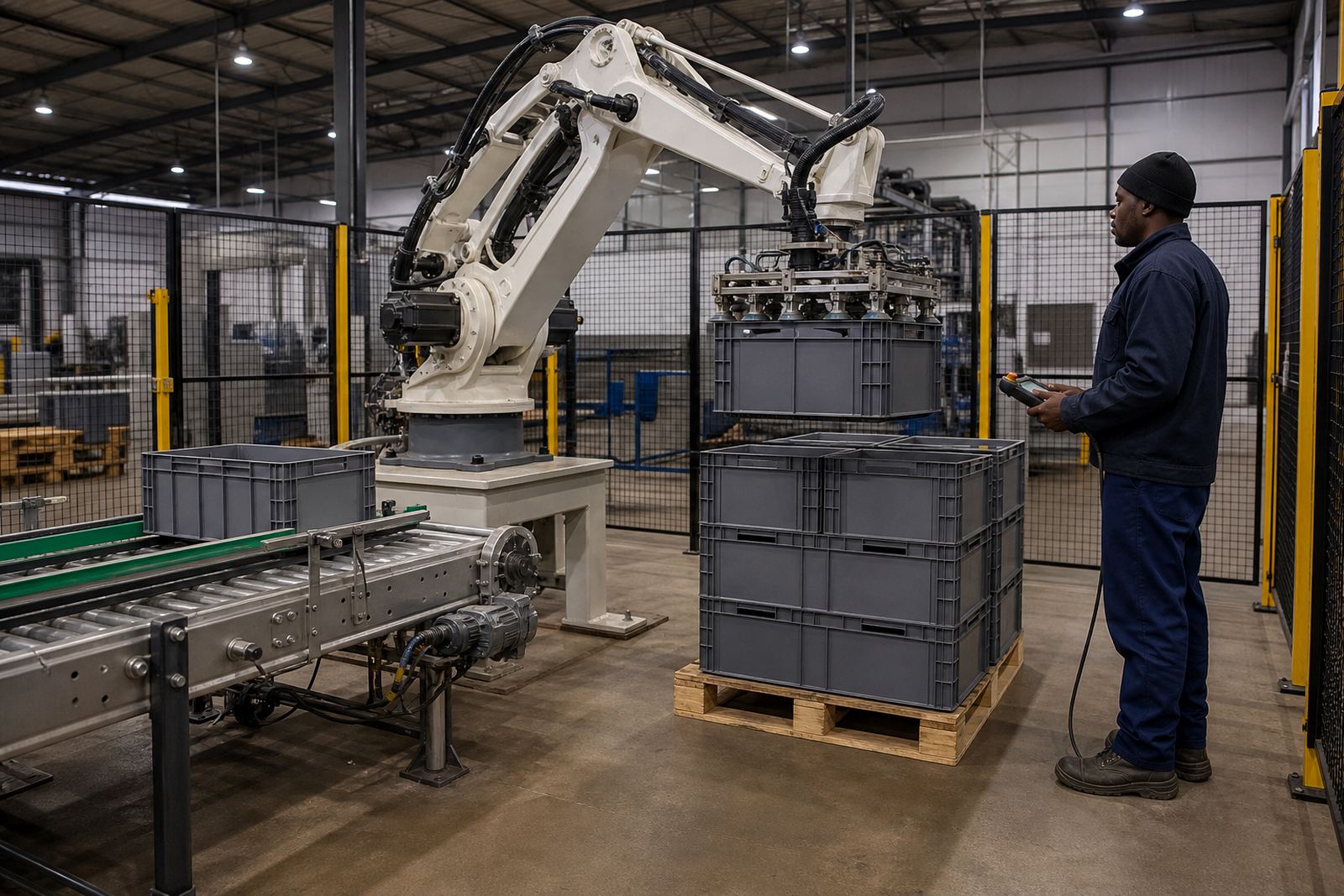
Options normally include single or dual pallet positions per line, empty pallet dispense, slip sheet handling, layer pads, top frame handling and barcode or photoeye based product confirmation. Some sites prefer a fully fenced cell with interlocked gates. Others may use a collaborative robot for lighter products and lower speeds, but that still needs a site specific risk assessment before any final decision is made.
- Robot reach selected to cover both lines and pallet positions
- Single or dual pallet staging, depending on output needs
- Optional layer pad or slip sheet handling
- Can include product confirmation and pallet build checks
Where a dual line palletiser suits best
This product suits manufacturers that run two similar packing lines and want to reduce manual labour at the end of line without reworking the full plant. It is common in food, beverage, personal care, household goods, building products and general manufacturing where cases or bags need stable pallet builds before despatch. In Cape Town, coastal humidity can influence carton grip and slip sheet performance, so product testing matters.
It is also a sensible choice where a site wants a step-by-step retrofit rather than a full line replacement. You can integrate the palletiser into existing conveyors, then phase in guarding, controls and operator training. This helps keep the line running while the upgrade is carried out, subject to normal shutdown planning and municipal or site safety requirements.
- Best for two similar lines feeding one end-of-line area
- Useful where floor space is limited or shared
- Good fit for phased retrofit work
- Suitable for sites facing labour pressure or shift changes
Installation, conveyors and site services
Installation starts with a site line survey to confirm product sizes, conveyor heights, pallet dimensions, line speeds, stopping distances and access for maintenance. From there the retrofit design can be matched to the existing conveyors and the controls panel. The team will normally look at infeed transfer points, pallet discharge, accumulation, guarding lines, E stops and how the cell will be isolated during maintenance.
Load demand depends on the robot, end effector, conveyors and any extra hardware such as pallet magazines or layer sheet dispensers. Most installations call for a steady electrical feed, the correct breaker protection and proper earthing. If the gripper or gate package works on pneumatics, clean dry air is usually needed, with pressure matched to the hardware. Gas is normally unnecessary for palletising itself unless the site has another line requirement. For a retrofit in Pretoria or Gqeberha, the installation plan should also allow for weekend shutdowns, weather exposure and how quickly the line must be brought back into production.
- Site survey before final design and quoting
- Interfaces with existing conveyors and line controls
- Electrical supply, earthing and air supply checked during planning
- Shutdown work staged to limit production loss
Safety guarding and risk assessment support
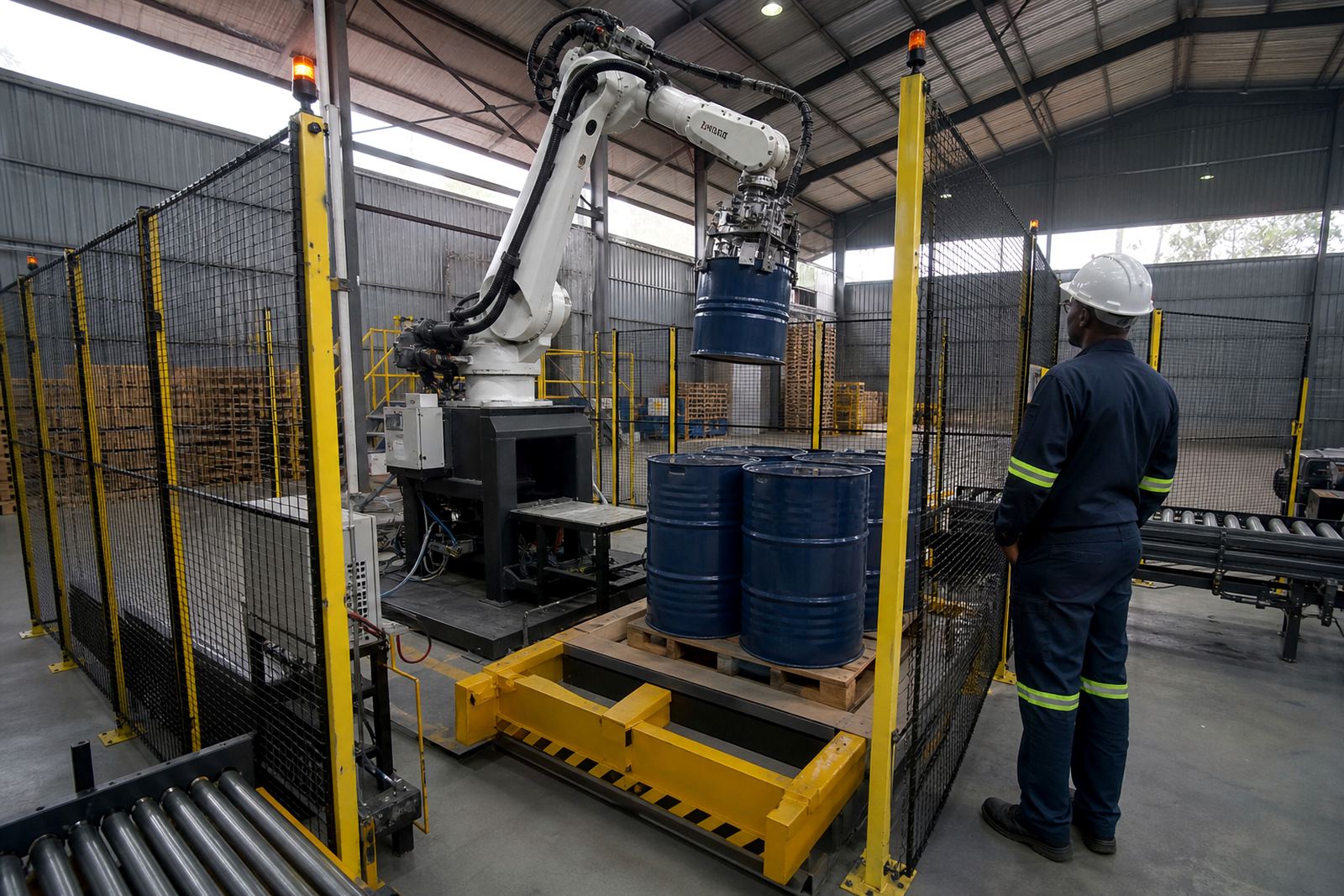
A dual line palletiser must be treated as a machine safety project, not just a robot installation. Guarding, interlocks, light curtains where suitable, access gates and safe stop functions must all be selected for the real line layout. Each site needs its own risk assessment because product, access routes, pallet movement, forklift traffic and operator duties are never identical. A good design should make it clear where the operator loads, where maintenance happens and how a person gets in safely when the cell is isolated.
Safety guarding design should also consider the nearby packing lines, especially where workers need to clear jams or inspect product. The aim is to keep the robot cell secure while still allowing sensible access for supervision and cleaning. On older plants, this often means rethinking the old conveyor route and making sure the guarding does not create blind corners or pinch points. It is a practical issue, not a paperwork exercise.
- Guarding matched to the actual site layout
- Interlocked access points for maintenance and cleaning
- Risk assessment needed for every installation
- Forklift and pedestrian routes must be separated where possible
Care, servicing and spare parts planning
A dual line palletiser performs best when the gripper, sensors, conveyor transfers and safety devices are checked on a regular schedule. Dust, shrink wrap offcuts, broken straps and carton debris can cause small faults that build into downtime if nobody clears them. In humid coastal areas, inspect electrical enclosures, cable routing and exposed fittings for corrosion. In dusty or high traffic plants, keep an eye on photoeyes, chain guides and wear strips.
Routine servicing should cover lubrication where required, fastener checks, sensor alignment, pneumatic leaks and software backups. It is also sensible to keep a small spares list for belts, sensors, valve components, contactors and gripper wear parts. Breakdown support is easier when the line drawings, control notes and spare part list are kept current. That may sound basic but it saves time when a pallet build is blocked at 3pm on a Friday.
- Regular cleaning around sensors, grippers and conveyors
- Check cable routing, air lines and wear parts
- Keep a local spares list and updated drawings
- Plan maintenance around production windows
What to check before you order
Before ordering, confirm the product size range, pack weight, line speed, pallet pattern and the number of pallets you want the cell to handle in a shift. You should also know whether the two lines run at similar output, whether the products are stable enough for robot handling, and how much floor space is available for guarding and service access. If your existing conveyors are older, measure transfer heights carefully because a small mismatch can create recurring stoppages.
It also helps to confirm power availability, air supply, operator training needs and whether the cell must work around municipal or site specific noise and access rules. If you need integration across Johannesburg, Durban, Cape Town, Pretoria or Gqeberha, the install plan should reflect local shutdown timing and spares availability. ReAutomated works from Spartan, Kempton Park and supports sites across South Africa with site surveys, retrofit design, installation management, commissioning support and breakdown assistance.
- Product dimensions, weight and pack style
- Line speed, pallet pattern and output target
- Available floor space and service clearances
- Power, air and existing conveyor details
Key facts
| Cell type | Dual line robotic palletiser retrofit for two adjacent packing lines |
|---|---|
| Typical products | Cartons, bags, trays, shrink wrapped bundles and similar pack formats |
| Layout | One robot service cell with shared sequencing, guarding and pallet staging |
| Integration | Interfaces with existing conveyors, controls and safety devices |
| Utilities | Electrical supply, earthing and compressed air where required |
| Service support | Site surveys, commissioning support, training, maintenance and breakdown assistance |