What a drum palletiser cell does on a packing line
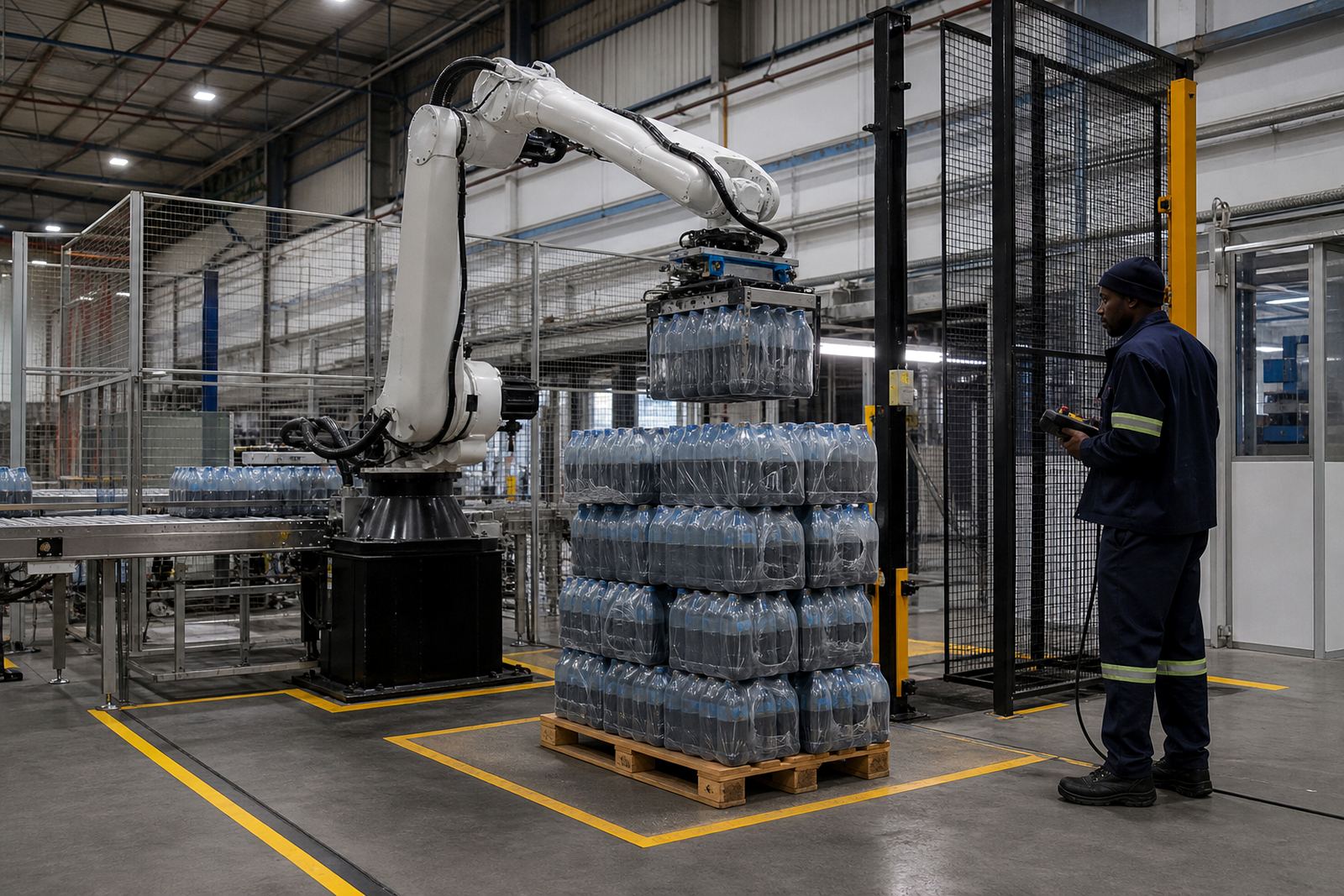
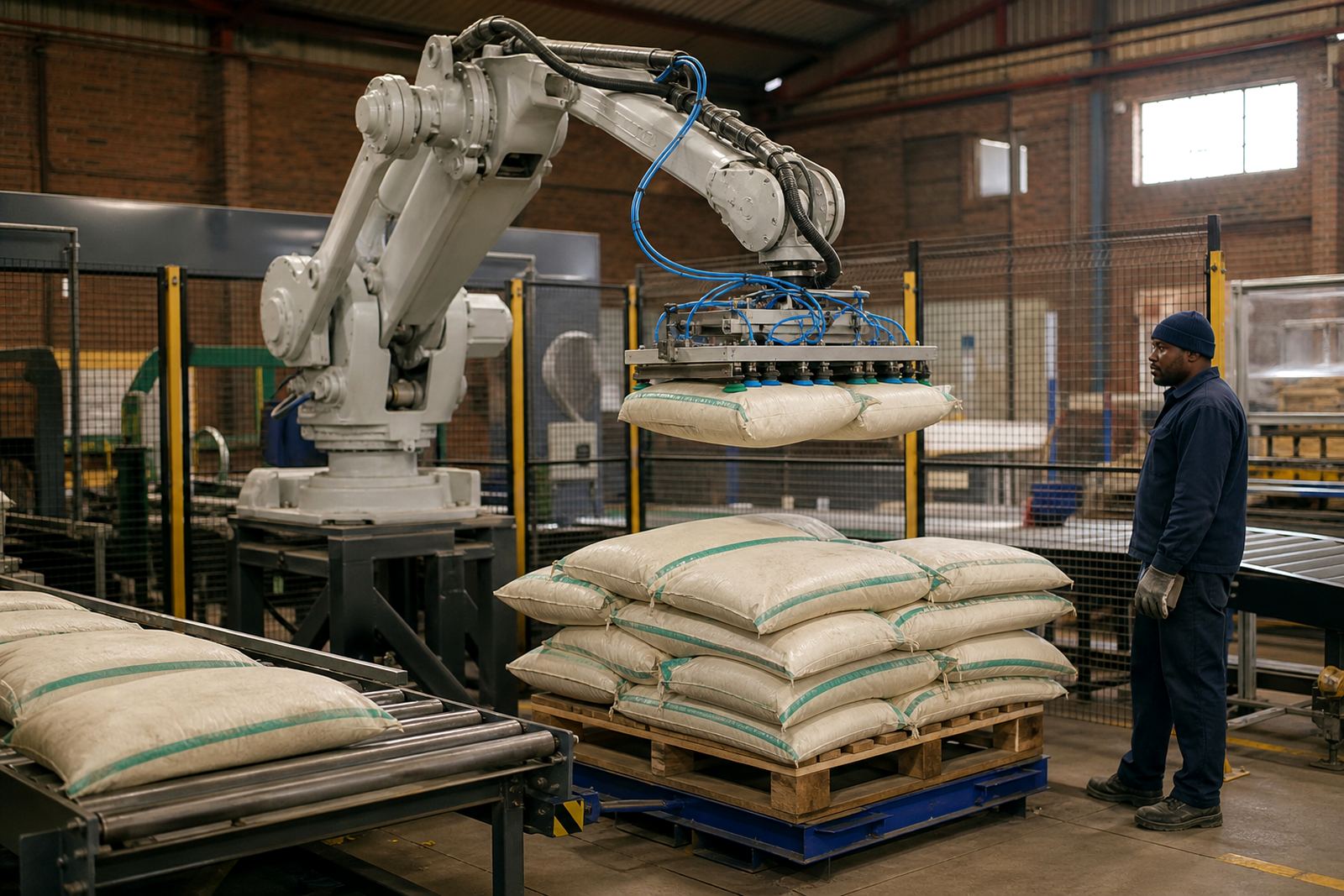
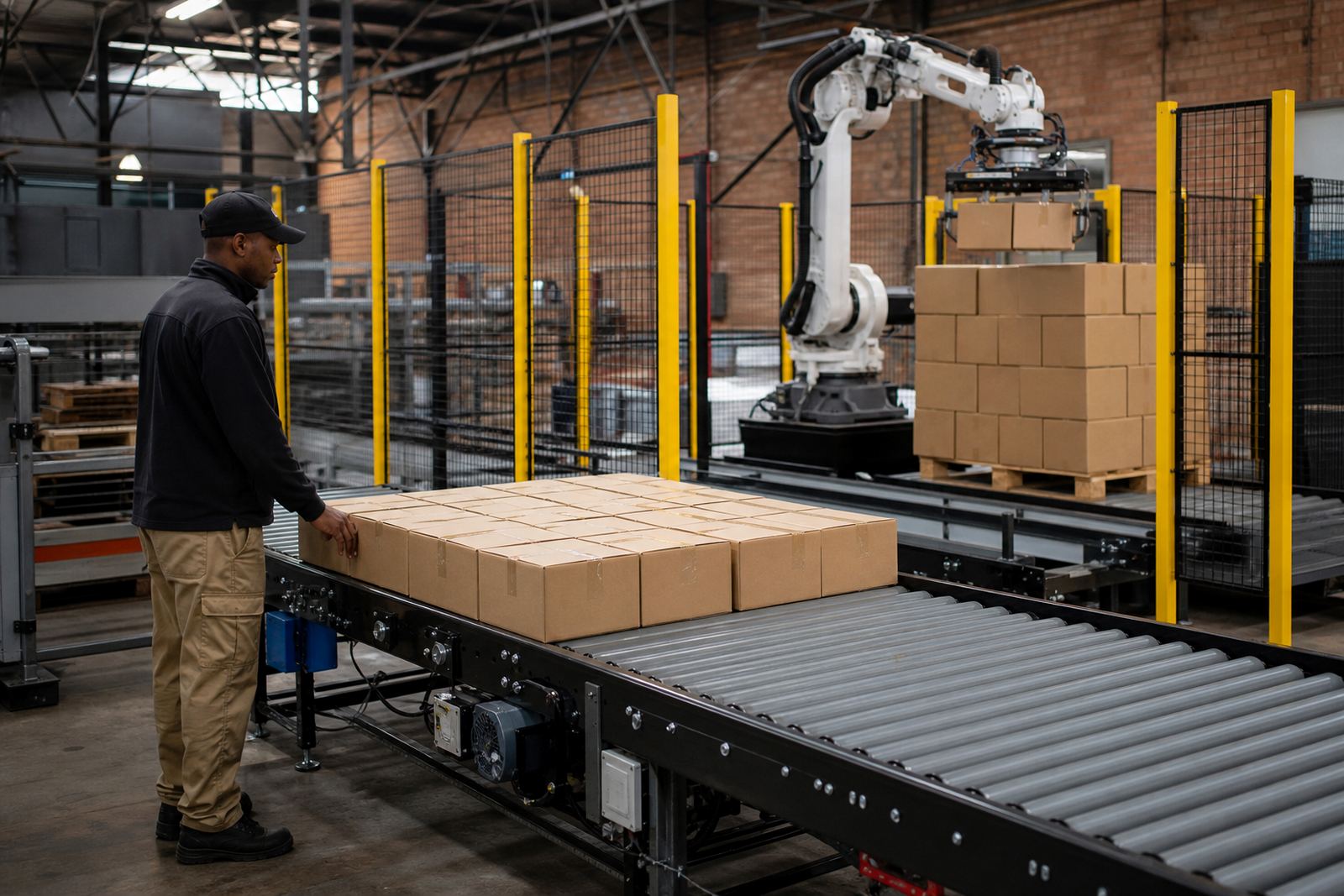
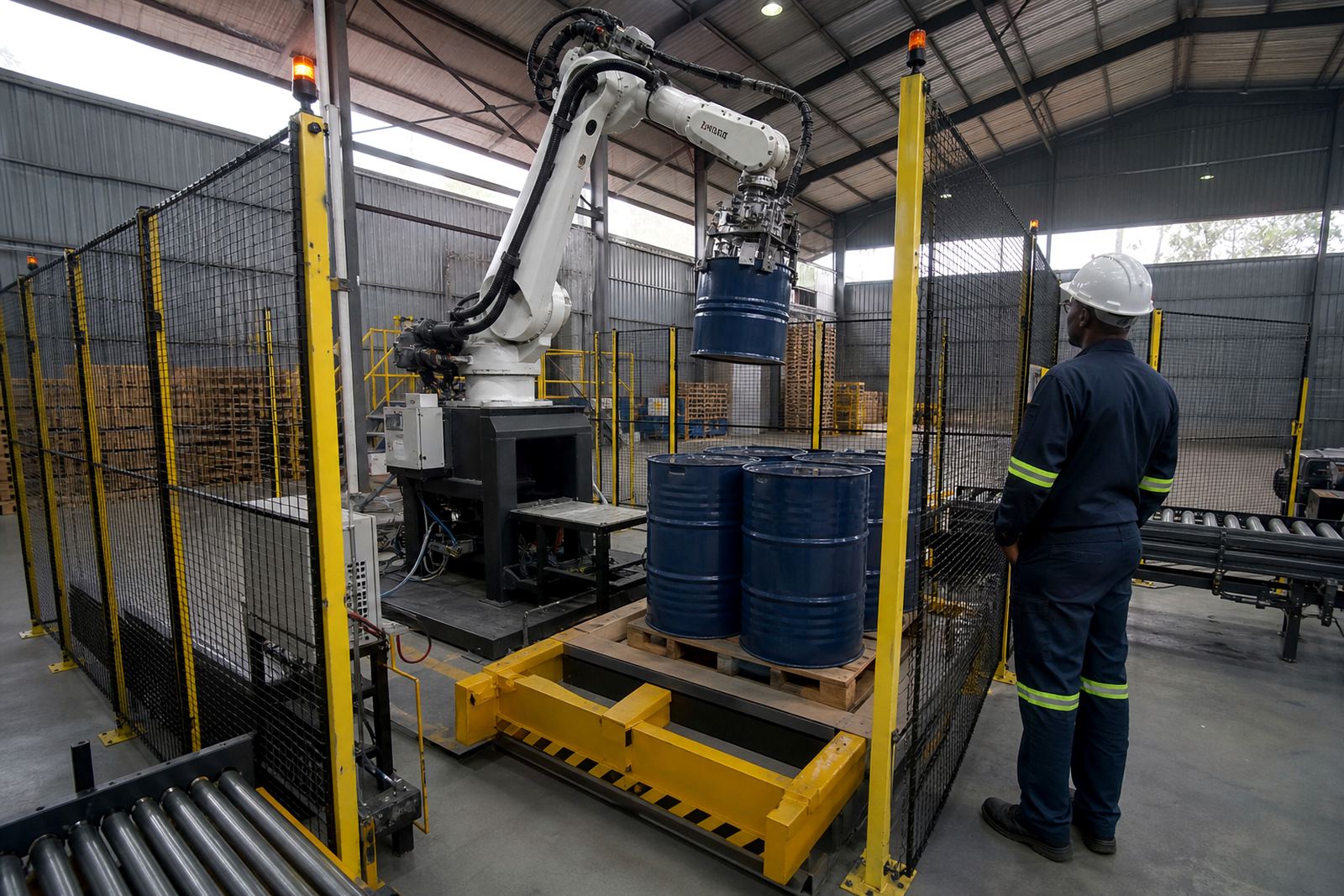
A drum palletiser cell is a compact robotic or semi automated workcell used to pick up drums from an infeed conveyor, orient them correctly and place them onto a pallet in a repeatable pattern. It is commonly used where manual palletising is slow, physically demanding or inconsistent, especially with steel, fibre or plastic drums of different heights and closures.
On a retrofit project the cell is designed around your current line layout, so the drum exit conveyor, pallet station, stretch wrapper and forklift access all still work together. That matters in busy plants in Kempton Park, Johannesburg, Pretoria, Durban, Cape Town and Gqeberha where floor space is often tight and changes have to fit into an existing shed or warehouse without disrupting the whole operation.
The cell can be configured for one drum size or multiple sizes, depending on the product mix and how often changeover happens. The gripping method, pallet pattern and discharge height are set to suit the drum type and the required stack stability. If the line also needs label protection, pallet slip sheet handling or interlayer placement, those functions can be added during the design stage.
Sizes, options and layout choices for different drums
Every drum palletiser cell starts with the product dimensions, weight and surface condition. A smooth plastic drum behaves differently from a steel drum with rolled edges, and a filled container needs a different grip and transfer method than an empty one. The cell can be arranged as a straight through line, an L shaped cell or a compact enclosed cell depending on the available floor area.
Typical options include mechanical gripping, top support, side clamping or a combination of controlled handling methods. For higher throughput lines the cell may be paired with a robot on a pedestal or a gantry style handling system. For lower volumes, a simpler layout with fewer movements and a manual pallet feed point may be more practical.
- Single drum or multi size drum handling
- One infeed conveyor or dual lane infeed
- Empty pallet magazine or manual pallet loading
- Slip sheet and top frame handling where required
- Integration with existing stretch wrapping and dispatch conveyors
The spacing between drums on the pallet is planned for stability, pallet strength and downstream wrapping. In coastal areas where humidity is high, especially around Durban and Cape Town, pallet condition and wrap tension need attention as moisture can affect cardboard, labels and some pallet materials. It is also worth checking local floor level tolerances, because older warehouse slabs can create alignment issues if not measured correctly.
Where a drum palletiser cell suits best
This type of cell suits manufacturers and packers that move chemicals, oils, coatings, food ingredients, cleaners, fertiliser blends or industrial liquids in drum format. It also suits operations where manual lifting is a concern, or where the current palletising method causes strain injuries, slow shift handovers or uneven load building. Plants running multiple shifts often see the biggest benefit because the cell keeps the same pace through the day and night, even when labour is tight.
If the line must restart after an outage, the controls and guarding need to allow for a clear, controlled recovery. That is particularly important where drums are filled and leaks can spread quickly across a production floor.
- FMCG and industrial packing rooms
- Chemical and cleaning product filling lines
- Oil and lubricant dispatch areas
- Food ingredient and additives plants
- Warehouses with repetitive pallet build requirements
For plants in Midvaal, the East Rand and other industrial areas, a retrofit approach often makes better sense than replacing the whole line. The existing conveyors, pallet transfer points and wrapping equipment can stay in service if they are still sound, while the drum handling section gets the automation upgrade it needs.
How installation works on an existing line
Installation begins with a site line survey and a risk assessment support process so the cell is matched to your actual floor space, product flow and operator movement. Existing conveyors are checked for height, stability and control compatibility. The team also reviews where pallets enter and leave the line, where operators stand, and how forklifts or trolleys move through the area.
A typical retrofit installation includes mechanical mounting, conveyor tie in, controls integration, safety guarding design and commissioning support. Where needed the cell can be fitted with interlocked fencing, light curtains, access gates, emergency stops and safe pallet release points. Each site needs its own risk assessment, because a drum line in a chemical plant is not the same as one in a warehouse packing dry goods.
Power needs depend on the final layout, the robot or handling unit selected and any ancillary equipment such as air driven clamps or pallet magazine devices. In most cases you should plan for a standard industrial electrical supply with clean earthing, protected control panels and enough spare capacity for start up surges. If compressed air is required for grippers, it should be dry and adequately filtered to reduce wear and sticking in humid conditions.
Where the plant has municipal or insurance requirements around guarding, access routes or emergency isolation, these are built into the design before installation begins. That helps avoid rework later and keeps the line practical for operators, maintenance staff and auditors.
Care, servicing and breakdown support
A drum palletiser cell works best when the mechanical parts, sensors and control devices are checked on a planned basis. Drum handling puts repeated load on guides, grippers, belts, chains and pneumatic components, so routine servicing matters. Dust, moisture and product residue can also build up around the infeed and pallet station, especially on busy shifts.
Good care includes cleaning the cell, checking fasteners, verifying sensor alignment, inspecting hoses and cables, and confirming that safety devices still function correctly. If the site uses wrap or slip sheet handling, those stations should be checked for correct timing and wear. A small problem on a drum line can turn into a full stoppage if it is left too long.
- Planned service checks based on shift pattern
- Spares planning for wear items and sensors
- Operator training for safe clearing of jams
- Breakdown assistance to reduce downtime
- Control checks after power interruptions or reset events
For Gauteng plants with heavy daily throughput, service planning should also consider dust from traffic and forklift movement around the bay. On coastal sites, corrosion protection and enclosure condition need extra attention. A simple preventative schedule is often cheaper than waiting for a fault to stop the line at the end of a run.
What to check when ordering a drum palletiser cell
Before ordering, confirm the drum dimensions, filled weight, label positions and any special handling needs such as bung orientation or top protection. It is also useful to know the desired pallet pattern, pallet height limit and whether the drums need to be built in a single layer or in a stacked pattern. If the product range changes often, tell us the minimum and maximum sizes so the cell can be designed with enough flexibility.
You should also check the following points:
- Infeed and discharge conveyor heights
- Available floor space and access for maintenance
- Power supply, control panel location and cable routes
- Need for compressed air or other utility connections
- Wrap station, pallet dispenser and forklift interface
- Any plant rules for guarding, access control or emergency stops
If the line is to be retrofitted into an operating plant, plan the installation window carefully. A good handover includes commissioning support, operator training and a clear maintenance schedule so the team knows what to do from day one. That approach is practical for manufacturers in Johannesburg, Pretoria, Durban, Cape Town, Gqeberha and surrounding industrial areas where production cannot stop for long.
Key facts
| Typical payload | Up to 250 kg per drum, depending on product and handling method |
|---|---|
| Drum sizes | Commonly 200 to 500 litre drums, subject to line survey |
| Throughput | Designed to suit low to medium or higher shift based rates |
| Power | Industrial electrical supply, final load depends on layout and utilities |
| Utilities | Compressed air may be required for certain grippers or auxiliaries |
| Footprint | Compact retrofit layouts available, exact size set by site constraints |