What a layer forming unit does on a packing line
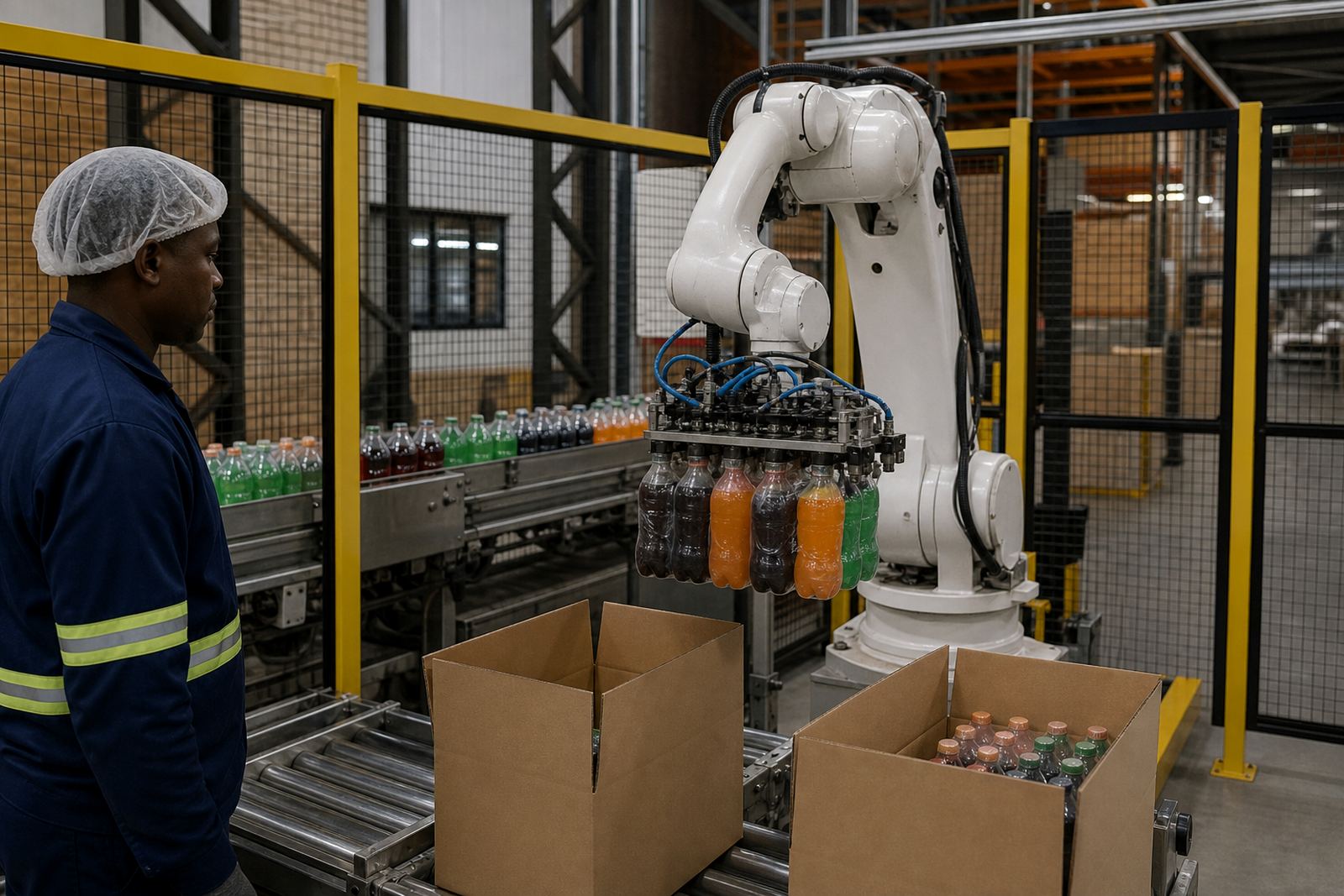
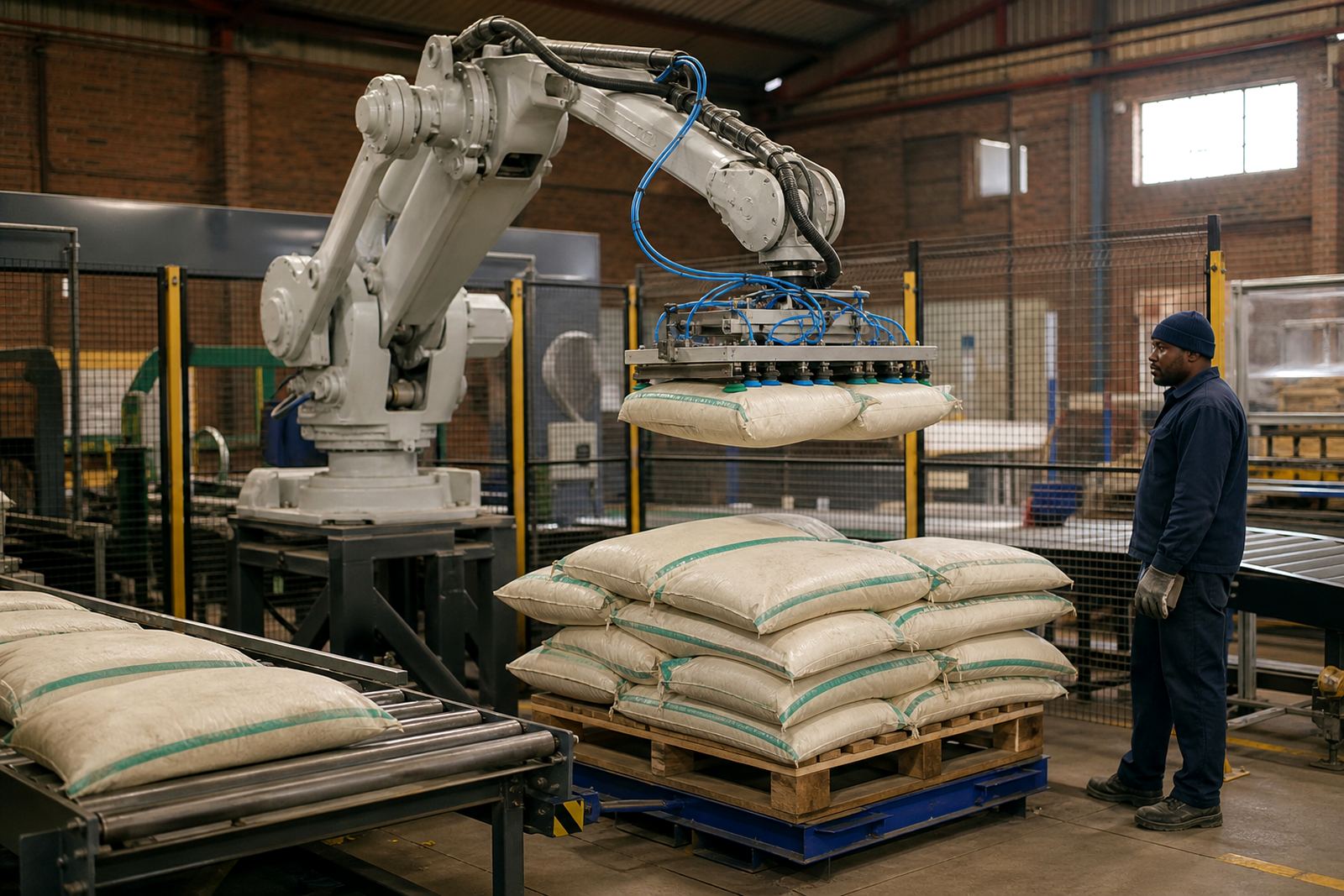
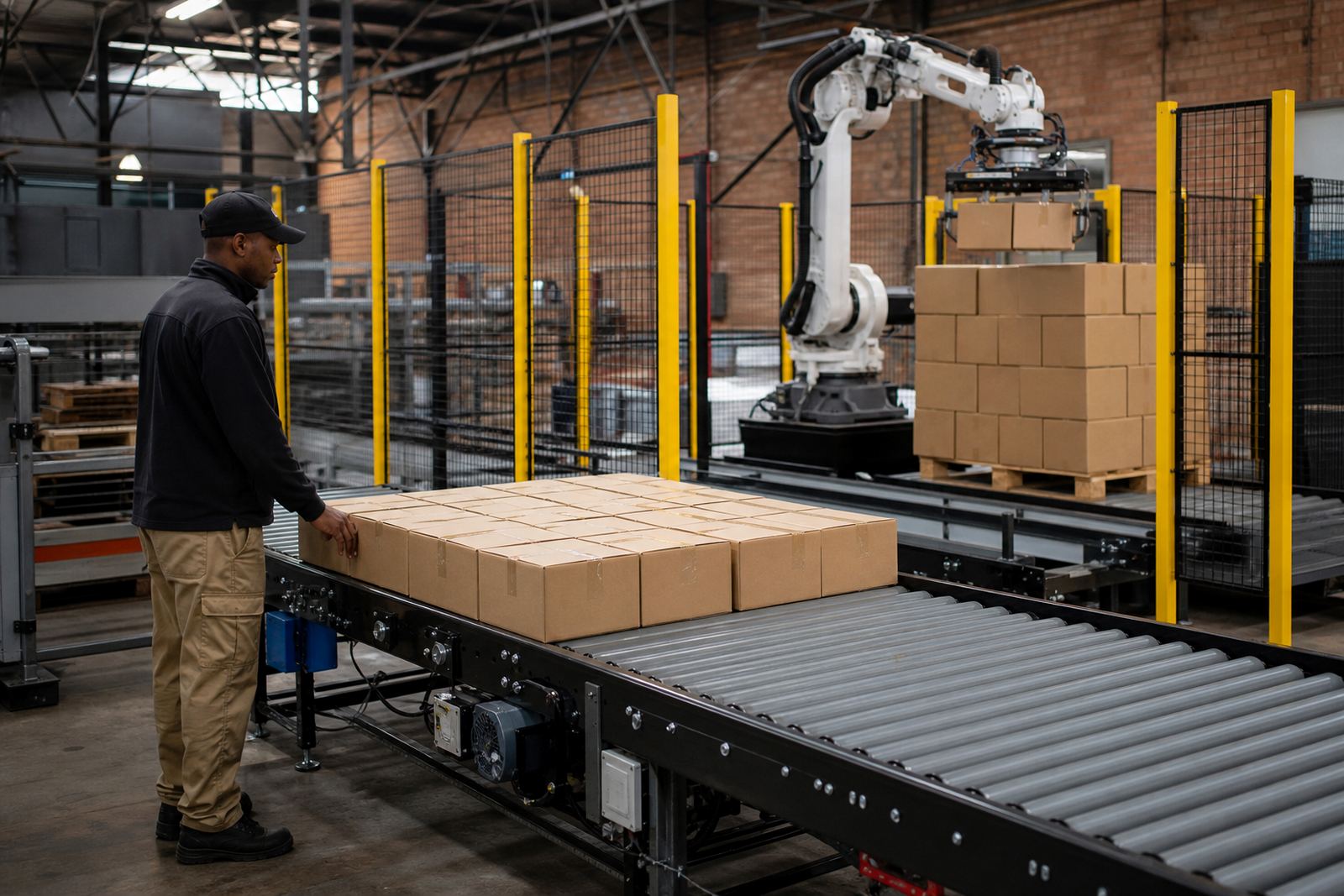
A layer forming unit takes a stream of packed product and arranges it into a fixed pattern, ready for transfer as a complete layer. On many South African lines that means cartons, bags in trays, shrink-wrapped bundles or plastic crates are guided into rows and columns before the layer is released to a pallet stack or interlayer station. The goal is simple: keep the layer square, stable and repeatable so the pallet builds evenly from the first layer to the last.
In retrofit work, the unit is normally positioned after the final pack-out point and before palletising. It can be fitted to new or existing conveyors, depending on the available footprint and how the product enters the line. Because every plant handles product differently, the forming pattern, transfer timing and discharge height must be set to suit the pack size, product weight and line speed. A good layout reduces manual handling and helps avoid skewed pallets, crushed corners and uneven stacks.
Where product is soft, unstable or prone to shifting in transit, a layer forming unit often works together with side guides, stop gates and controlled transfer devices so the layer stays aligned while it is being formed. On dusty inland sites and humid coastal plants alike, the setup also needs to be practical for cleaning and daily checks.
Typical sizes, layouts and options
Layer forming units are built to suit the product and the available floor space. A compact unit may be used for a single line with limited length, while a wider multi-lane layout is better for higher output or mixed pack sizes. In retrofit projects, the most common consideration is not just the machine size, but how it fits around existing conveyors, guards, pallet feed zones and operator access.
- Forming width: matched to carton or crate dimensions, commonly set to single lane, twin lane or multi-lane groupings
- Layer pattern: fixed pattern, alternating pattern, or custom arrangement for load stability
- Transfer method: push transfer, sliding transfer, accumulation table, or conveyor based release
- Height options: low-profile layouts for tight ceilings, or raised frames for fork access and discharge clearance
- Changeover: manual adjustment, quick set guides, or recipe driven settings where the controls allow it
For plants in Johannesburg, Pretoria, Durban, Cape Town and Gqeberha, the right option often depends on the product mix as much as the speed. A line packing one carton size all day can use a simpler arrangement. A site with multiple formats may need adjustable guides, centring devices and a more flexible discharge section. The more variable the packs, the more important it is to allow proper set-up time and clear reference points for operators.
Where layer forming suits best
Layer forming is well suited to operations that need clean, regular pallet layers rather than loose or hand-arranged stacking. It is commonly used in food and beverage, building materials, household goods, personal care, plastics and general manufacturing. Any site that already has dependable pack output but struggles with manual pallet build consistency can benefit from a forming unit placed upstream of the palletiser.
It is especially useful where one layer must be complete before the next is added. That can improve stack stability for stretch wrapping, freight movement and warehouse storage.It also helps on lines where product must not be lifted too many times, since fewer touches usually mean less damage.
For coastal factories, corrosion resistance and enclosure choice matter. For inland sites, dust control and simple servicing access may be more important. In either case, the unit needs to be matched to the actual plant conditions, not only the pack dimensions.
Installation, power and utility needs
A layer forming unit usually fits into an existing line through mechanical integration and controls integration. It may need new conveyor supports, sensor mounting, a product infeed section and a controlled discharge point to the next stage. If the line already has a palletiser, case sealer or wrapper, the forming unit must be timed to that equipment so there is no bottleneck between stations.
- Power: typically electric drive motors and controls, with the exact supply confirmed during the site survey
- Compressed air: required on some layouts for stops, diverts or product gating, depending on the design
- Floor space: enough clearance for maintenance access, guarding and safe operator movement
- Utilities: cable routing, air line routing and emergency stop positions planned for the line layout
On retrofit projects across South Africa, the installation team also needs to work around existing production schedules. Many plants cannot stop for long, so the sequence is usually planned in stages, with the conveyor tie-ins, guarding and control changes done in a way that limits disruption. Commissioning should include dry runs, product trials and handover checks with the operators who will run the line every day.
Safety guarding, risk checks and operator handover
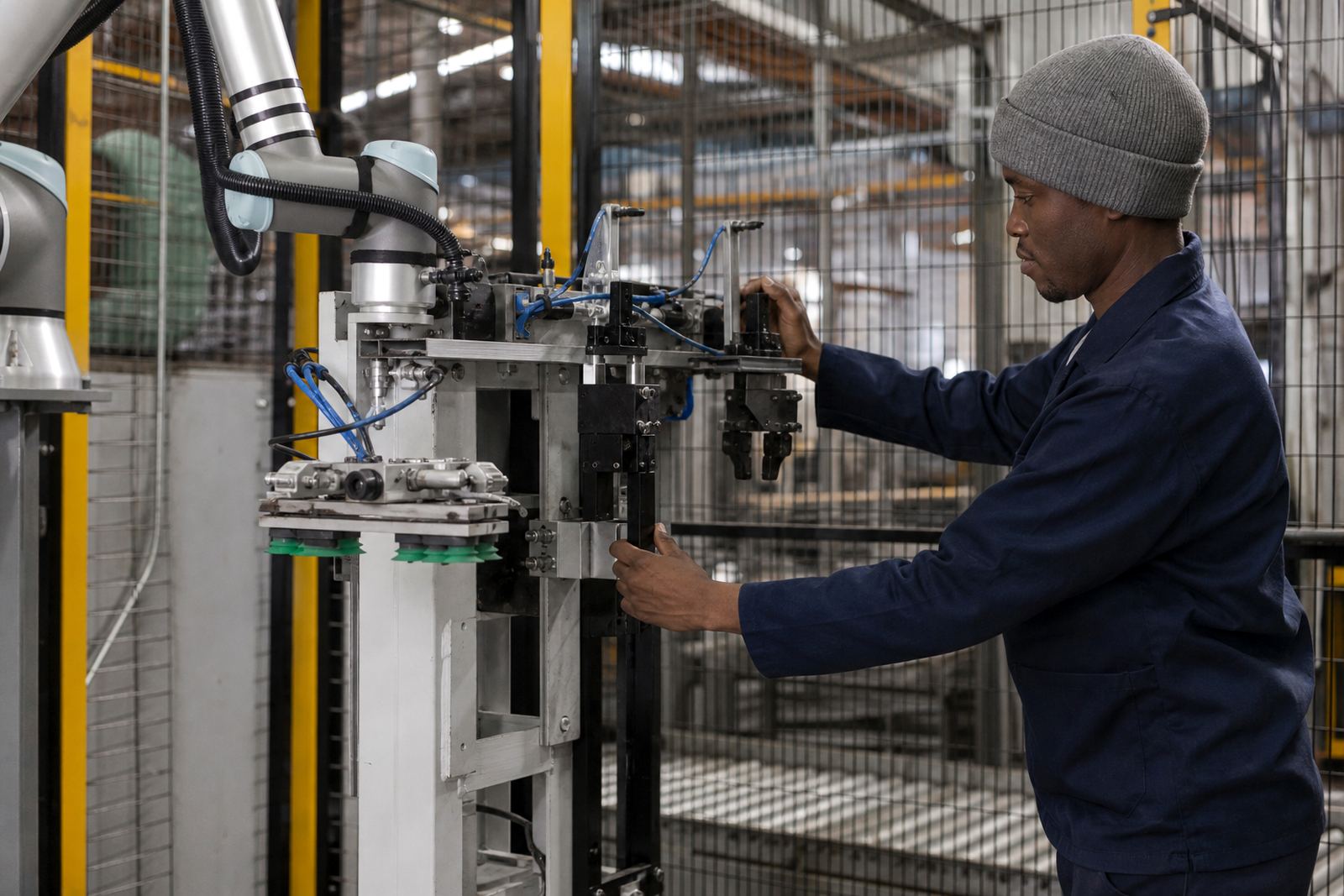
Every layer forming unit should be backed by a site-specific risk assessment. There is no one-size-fits-all safety setup, because the hazard points depend on the product, the transfer method, the speed of the line and how people move around the machine. General measures usually include perimeter guarding, access doors where needed, interlocked panels, emergency stops, safe maintenance access and clear signage. Where cobots are used near operators, the layout must be assessed carefully so contact risks and pinch points are properly managed.
Safety guarding design should take into account the entire line, not only the forming unit itself. A good retrofit will consider conveyor infeed and outfeed zones, pallet pick areas, walkways, cleaning access and any place where a hand could enter the moving section.If a machine restarts unexpectedly after an outage, the controls and guarding arrangements need to prevent unsafe movement.
Operator training matters just as much as the mechanical work. Staff should know how to start the unit, clear simple faults, load the correct product settings and stop the line safely. A well-trained operator usually spots small changes in product flow before they become bigger problems.
Upkeep checks and what to verify before ordering
Routine care keeps a layer forming unit accurate and reliable. Daily checks often include sensor cleanliness, guide condition, chain or belt tension, air pressure if pneumatic parts are used, and the general alignment of the transfer section. Weekly or monthly service may involve fastener checks, lubrication where specified, inspection of wear parts and test runs under normal product load. On dusty or humid sites, cleaning and inspection should be more frequent, as build-up can affect tracking and sensing.
- Confirm the exact product size, weight and pack orientation
- Provide the target layer pattern and pallet size
- Share line speed, shift pattern and expected hourly output
- State whether the unit must handle one product or multiple formats
- Confirm available power, air supply and floor footprint
- Advise if the line must be fitted around existing conveyors or a palletiser
Before ordering, it helps to know whether the unit will run with cartons, bags, trays or crates, and whether the layer needs to be square, staggered or mixed. It also helps to confirm if the site has enough clearance for guard doors, service access and maintenance tools. If the line is in a busy plant, think about where operators will stand, where pallets will be removed, and how the area will be cleaned at the end of shift. Small details like that can save a lot of trouble later.
Key facts
| Function | Forms products into complete pallet-ready layers before stacking |
|---|---|
| Typical products | Cartons, crates, tubs, trays and wrapped packs |
| Integration | Fits with existing conveyors, palletisers and line controls |
| Power needs | Electric supply to suit the installed drives and control system |
| Air needs | Compressed air only where the selected design requires it |
| Safety | Per-site risk assessment, guarding and operator training required |