What a Buffer Conveyor Module Does on a Robotic Line
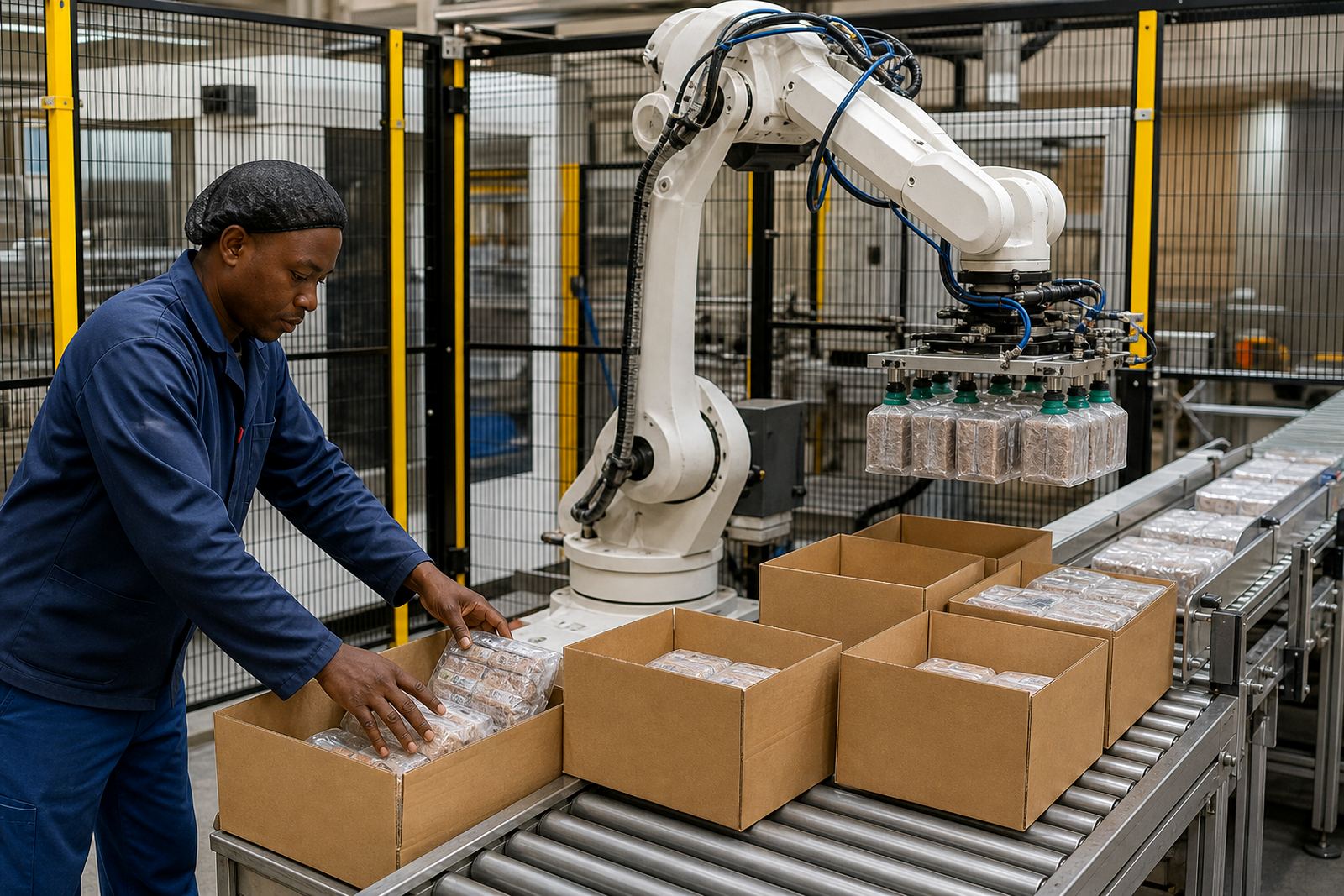
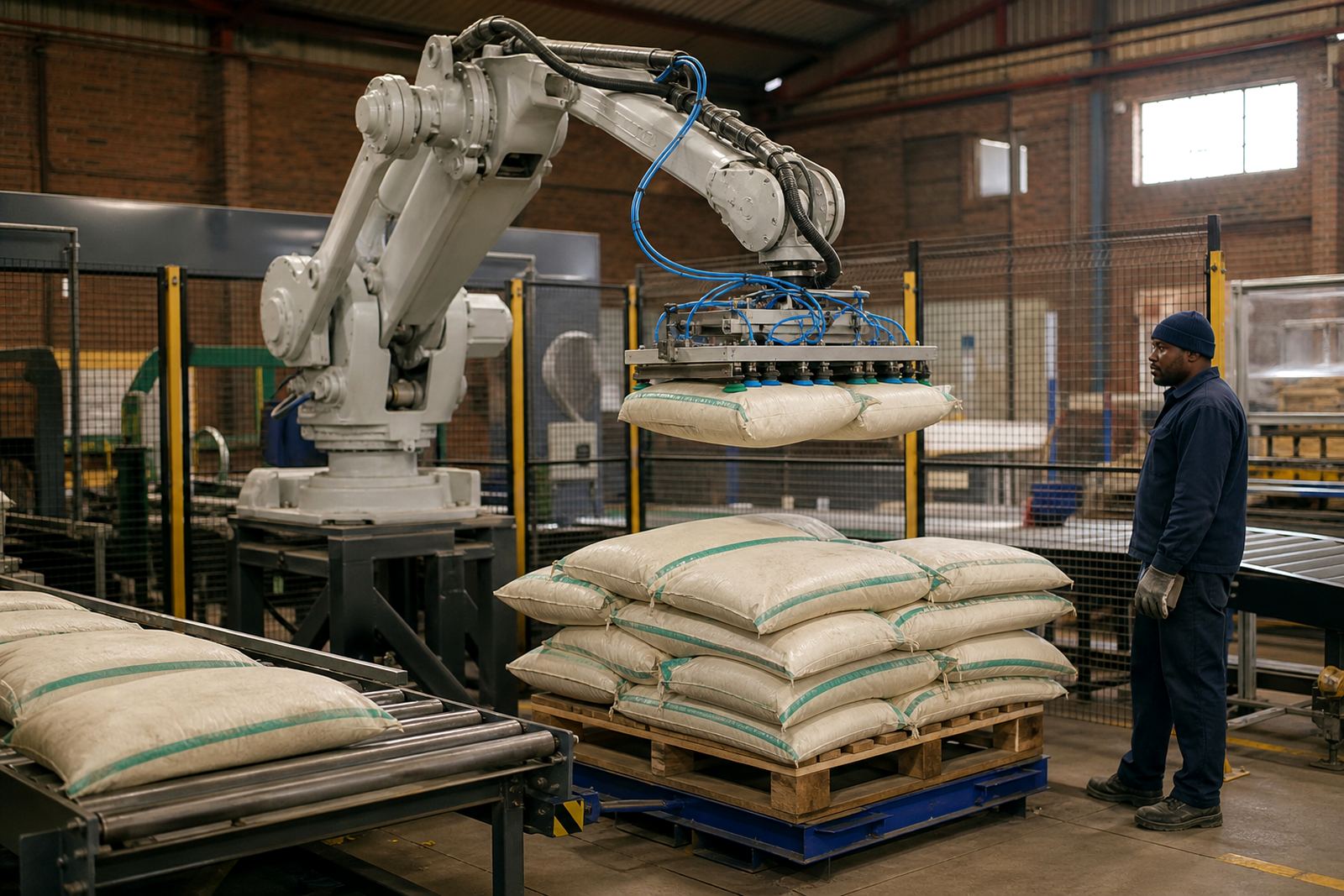
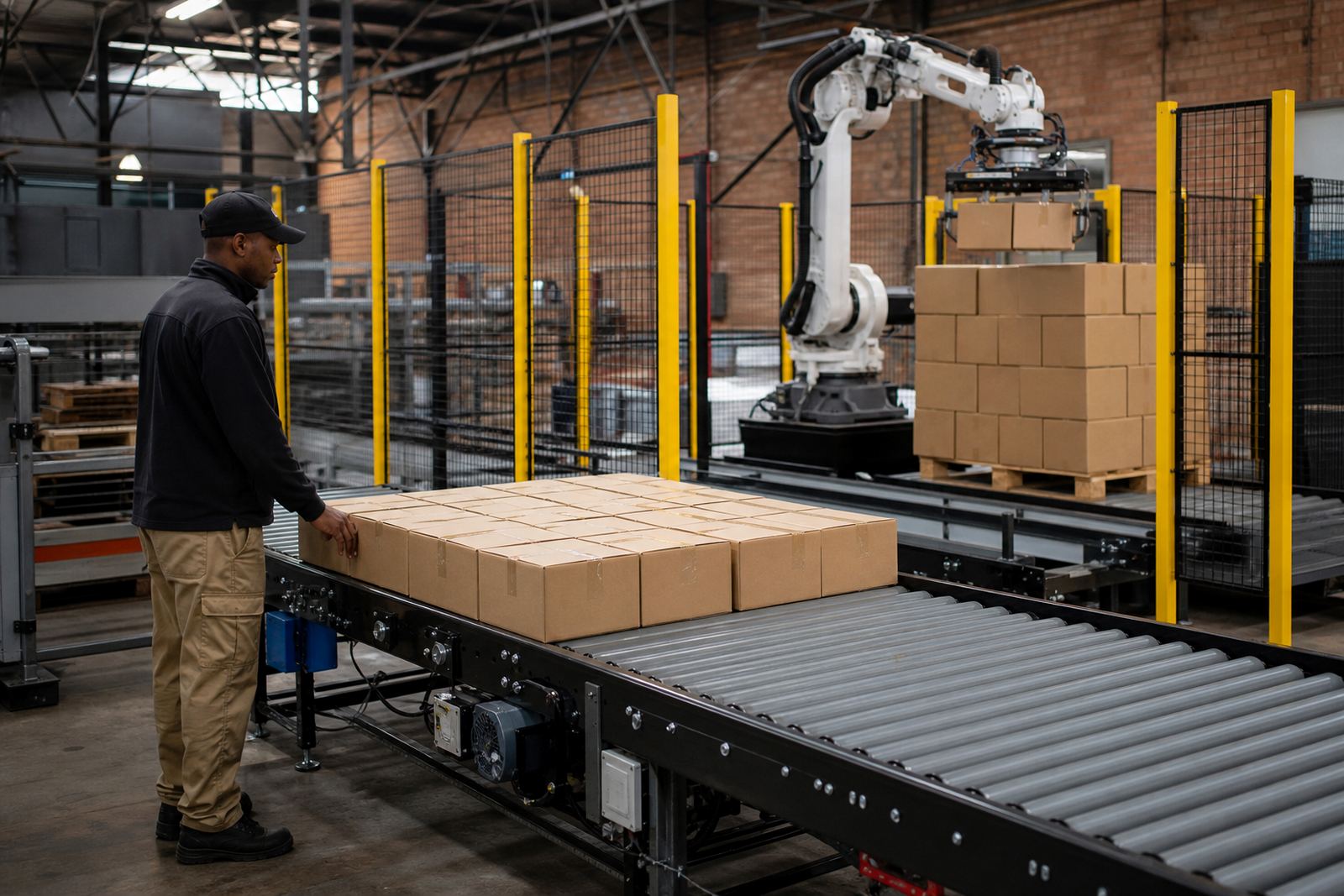
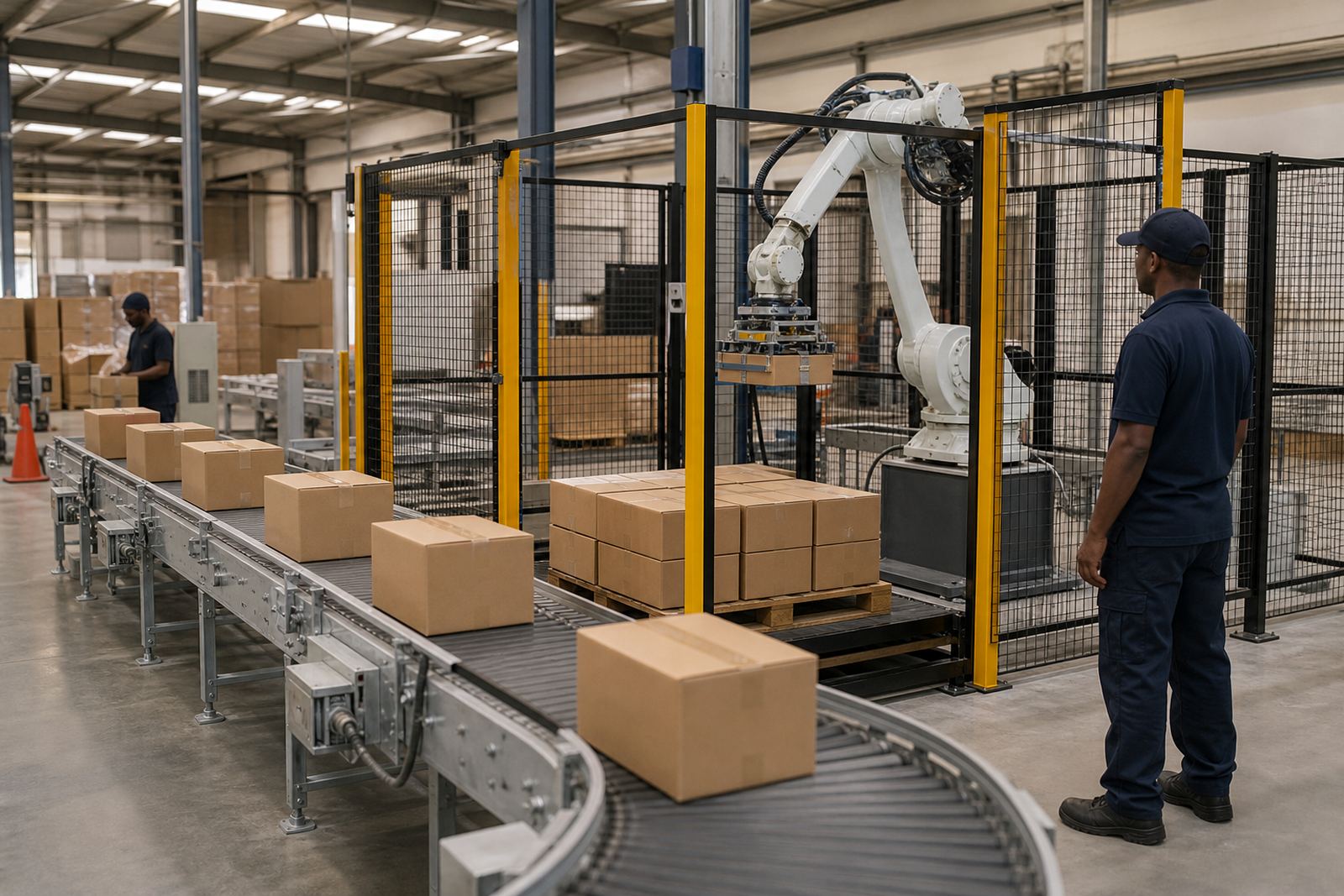
A buffer conveyor module is a short-term accumulation section fitted into a packing or palletising line so product can keep moving even when the robot is momentarily busy. On many South African sites, the issue is not the robot itself but the variation in feed from fillers, sealers, case packers or manual pack stations. The buffer gives the line breathing room, so the robot receives a more even stream of cartons, bags, trays or shrink wrapped packs.
In practical terms, it reduces stop start cycling, helps prevent product bunching, and lowers the chance of a full line stoppage when one machine pauses for changeover or a brief fault. It is especially useful where the upstream equipment is older and the packing area has been retrofit over time. The module can be set up for gravity flow, powered accumulation, or controlled release into a singulation point before the robot picks or stacks.
Every site is different, so the buffer length, roller pitch, side guides and control logic are chosen around the product size and the available floor space. That is why a site line survey matters before finalising the layout, because a module that suits a bakery in Midvaal may not suit a beverage line in Durban or a FMCG plant in Gqeberha.
Typical Sizes, Layouts and Options
Buffer modules can be built in compact or extended formats depending on line speed and the amount of temporary accumulation required. Short modules are often used where space is tight near the robotic cell, while longer sections are better for lines with frequent upstream variation or a higher carton count per minute. The frame, conveyor type and entry and exit angles are selected to suit the existing conveyors, transfer points and guarding arrangement.
Common options include powered roller, belt or chain transfer sections, adjustable side guides, accumulation control, and reject or bypass points for damaged packs. For palletising lines, the buffer may be used before a case orienter or a layer forming area. For packing lines, it can sit before a case packer, top loader, tray former or robotic pick cell.
- Standard widths are usually matched to the product footprint and conveyor centreline.
- Module length can be kept compact for tight rooms or extended for higher buffering capacity.
- Guide rails may be fixed or adjustable for mixed pack sizes.
- Infeed and discharge heights are set to suit existing conveyor levels.
- Controls can be simple start stop logic or fully tied into the main line PLC.
Where a plant handles mixed sizes, the buffer is often designed with enough adjustment to handle more than one format, but not every size at once. That is the practical trade off, and it should be agreed up front so the module does not become too loose or too complex to run day to day. A neat installation also helps with cleaning around the line, which matters in dusty inland plants and in coastal sites with higher humidity.
Where Buffering Helps Most
This module suits lines where the robot must keep working while upstream machinery is not perfectly regular. It is common on food, beverage, personal care, household products, building products and light industrial packing lines. It also helps where manual operators place cases onto a conveyor and the rate changes during shift handovers or breaks.
Buffering is valuable when packs are light enough to accumulate safely but too valuable to let fall over or rub against each other. If the product is fragile, the conveyor surface and accumulation method need more care. If the product is heavy, the frame and drive selection must account for the load, especially where the floor is uneven or where a municipal building has limited slab capacity near the production area.
- Sites with frequent upstream stops or short changeovers.
- Lines feeding a single robot from more than one machine.
- Plants needing a small accumulation zone before case packing or palletising.
- Retrofits where there is not enough room for a full line redesign.
We also see good results where management wants to cut down manual shuffling between machines. A buffer can make the flow more predictable, so operators spend less time rescuing product and more time keeping the line fed. That said, a buffer is not a fix for poor process control, it is a support module that must fit the whole line.
Installation, Power and Integration Requirements
Installation normally starts with a site measure, conveyor survey and controls review. The buffer must line up with the upstream and downstream conveyor heights, transfer points and access routes, and it must leave enough room for maintenance and safe operator movement. In retrofit work, the biggest challenge is often not the module itself but the surrounding plant layout, cable routes and guarding clearances.
Power needs depend on the drive arrangement and whether the module is simple accumulation or actively controlled. Most units require a suitable electrical supply for motors, sensors and control gear, and some layouts need compressed air for stops, gates or product diversion points. If the plant has limited services, these must be checked early. We also look at emergency stops, isolators, cable protection and the way the buffer communicates with the robot cell and upstream machinery.
Where a site already has conveyors in place, integration work may involve adapting chain speeds, aligning photo eyes, fitting accumulation logic and testing the handover between machines. Safety guarding may need to be extended or changed to suit the new moving section. Each site needs its own risk assessment, because access, speed, product type and operating method all influence the final design.
Care, Cleaning and Servicing Between Shifts
A buffer conveyor module is straightforward to look after if it is kept clean and checked regularly. On dusty sites or in humid coastal areas, build-up on rollers, belts and sensors can affect tracking and detection. Regular wiping, vacuuming and inspection help keep the module stable. It is worth checking for loose fasteners, worn bearings, damaged belt edges and misaligned guides before they turn into breakdowns.
Operators should be trained to clear small product jams safely and to know where the local isolators are. The module should not be bypassed or modified in a hurry just to get production moving, because that often creates bigger problems later. Maintenance support usually includes lubrication schedules where needed, sensor cleaning, chain or belt tension checks, and periodic testing of stops and interlocks.
- Check drive chains, belts or rollers for wear.
- Confirm sensors are clean and firmly mounted.
- Inspect guards, access doors and interlocks.
- Keep the accumulation zone free of broken packs and offcuts.
- Record repeated stoppages so the controls can be adjusted if needed.
For plants running extended hours, spares planning is worth doing early. A small stock of belts, sensors, bearings and fixings can save a lot of downtime when there is a breakdown on a Friday afternoon and the line needs to run again before the next shift.
What to Check Before You Order
Before ordering a buffer conveyor module, it helps to confirm the product dimensions, weight, surface type and normal flow rate. We also need to know what equipment sits before and after the buffer, how much floor space is available, and whether the line will handle one product or several pack sizes. If the product is unstable, fragile or slippery, that changes the design quite a bit.
Useful information includes the infeed and outfeed heights, available power, air supply, access for installation, and whether the site needs guarding changes or traffic separation around the line. If the buffer is feeding a robotic palletising cell, the layer pattern and case orientation should be clear too. For packing lines, the discharge method into the next machine matters just as much as the accumulation zone itself.
- Product size, weight and packaging type.
- Normal line speed and peak flow speed.
- Available length, width and height for the module.
- Existing conveyor type, speed and height.
- Control system details and any required signals.
- Site conditions such as dust, washdown or coastal humidity.
With the right details, a buffer module can be sized to fit the line rather than forcing the line to fit the module. That keeps the retrofit practical, easier to maintain and less likely to cause trouble once production starts.
Key facts
| Module type | Temporary accumulation buffer for packing and palletising lines |
|---|---|
| Conveyor options | Powered roller, belt, chain transfer or mixed layout |
| Typical use | Smoothing product flow between upstream machines and a robotic cell |
| Integration | Can interface with existing conveyors, sensors and line controls |
| Installation scope | Survey, layout, controls tie-in, guarding adjustments and commissioning support |
| Site suitability | Manufacturing plants in Gauteng, KwaZulu-Natal, Western Cape and Eastern Cape |