How a case packer retrofit works on an existing line
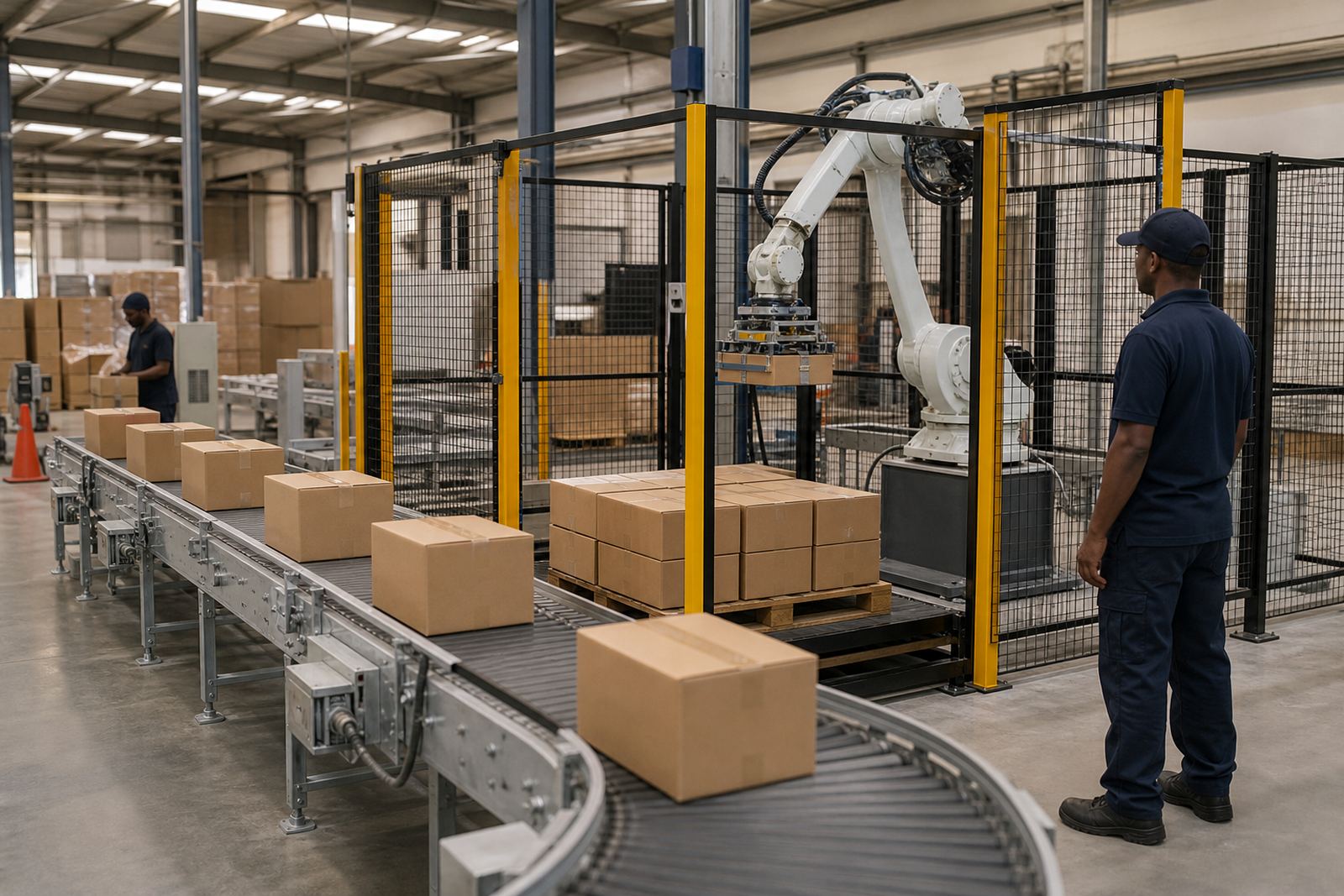
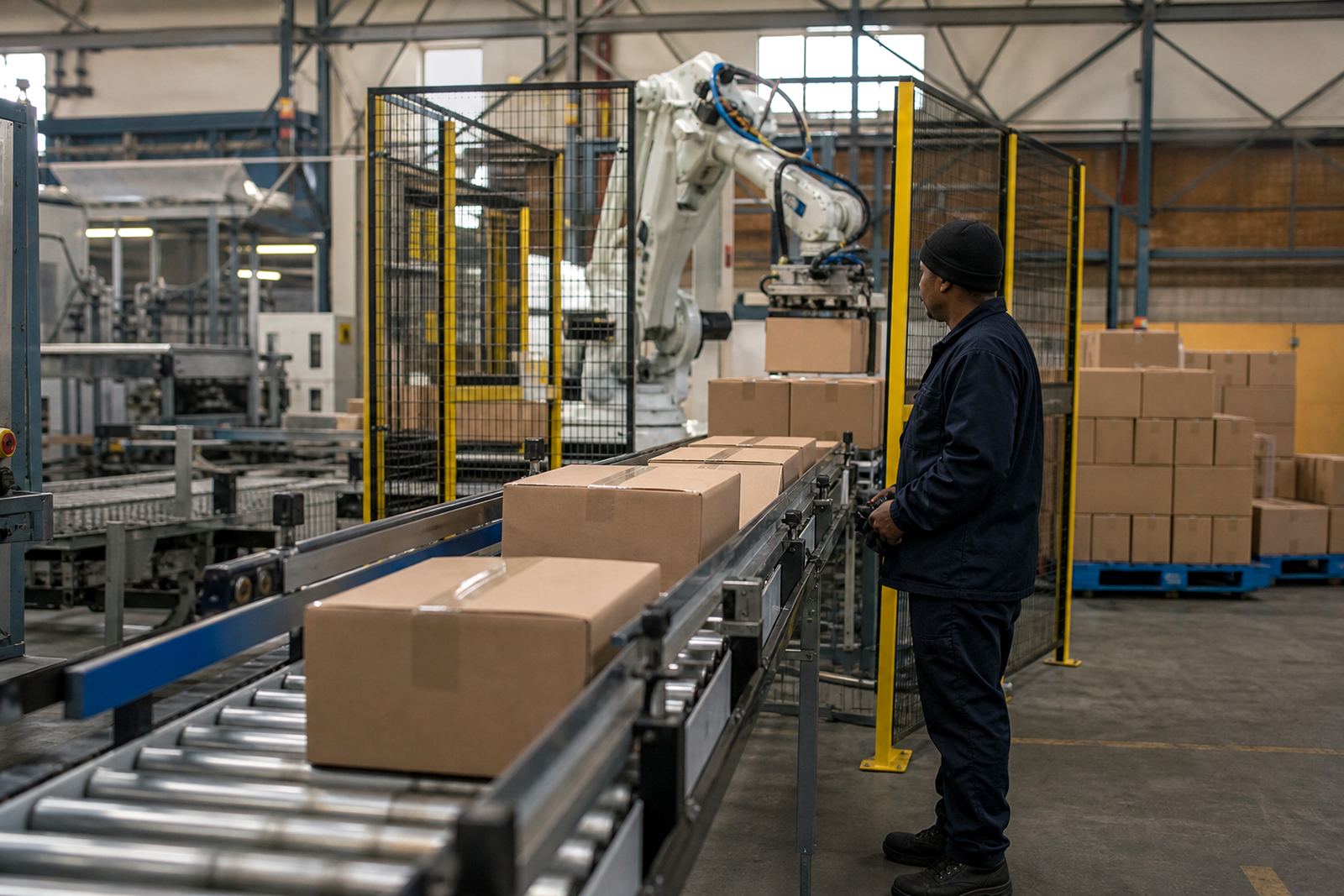
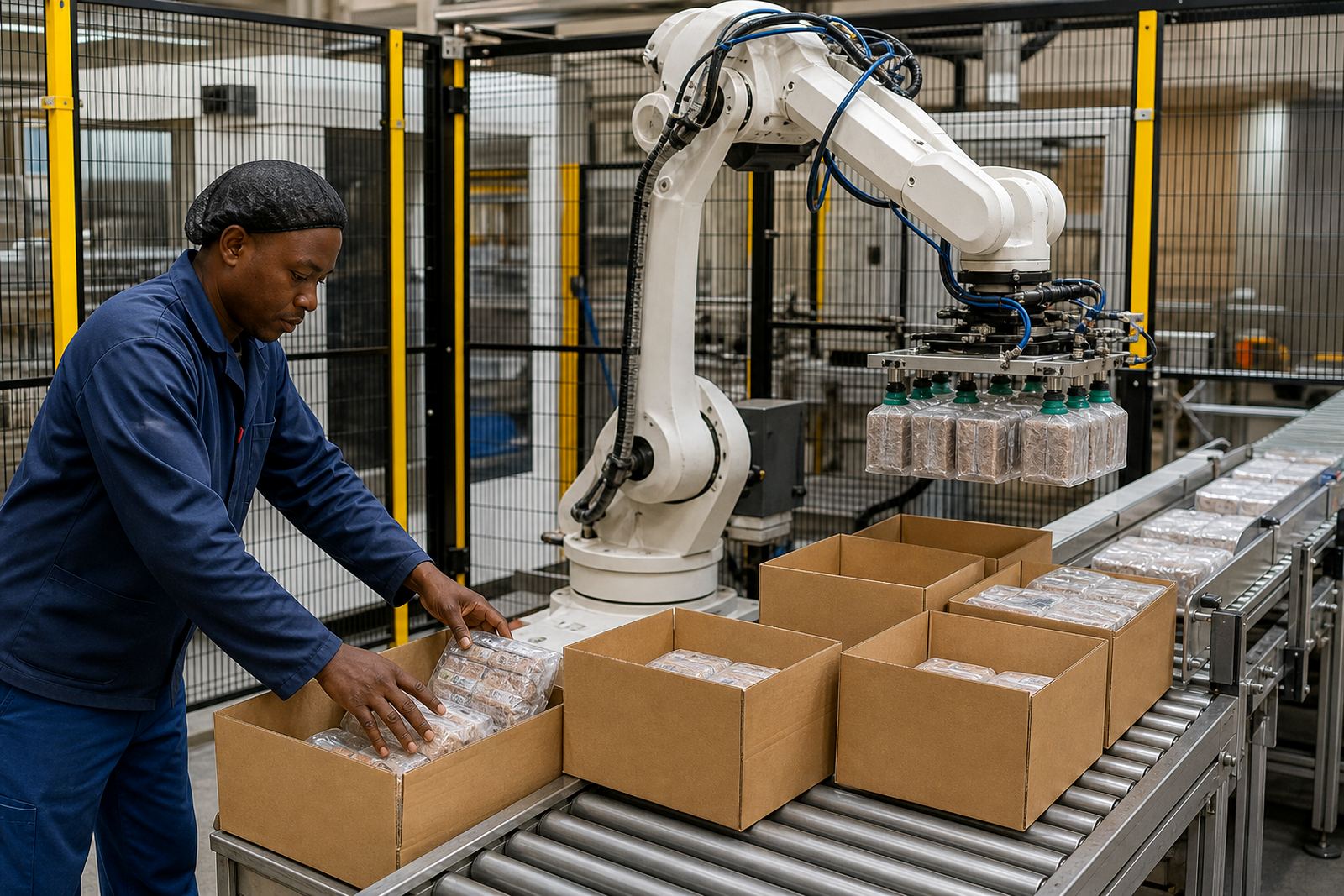
A case packer retrofit takes the current product infeed, carton erection or carton loading point, and the outfeed conveyor already on site, then adds automated handling around that process. In practical terms, the system picks products from a moving or staged infeed and places them into open cases in the right count, orientation and pattern. That can suit tray pack, wraparound case, top load or side load applications, depending on the product and carton style.
This is a good option where the existing line still has value but manual packing is slowing output, creating uneven fill, or putting strain on staff. It is also useful where floor space is tight and a full line replacement is not realistic. A retrofit can be built around your current conveyor heights, case sizes and plant layout so the new equipment fits into the available footprint without unnecessary civil work.
For many sites in Gauteng, the main gain is steadier packing during shift changes and peak orders. It also helps reduce hand packing injuries from repetitive lifting and twisting, especially on heavier cases or awkward product formats.
Typical options, sizes and line arrangements
Case packer retrofits are not one-size-fits-all. The final layout depends on pack speed, product stability, carton dimensions and how much space is available around the machine. Some lines need a compact cell with a single robot and one infeed track. Others need a wider arrangement with product buffering, carton forming, reject handling and guarded access points. A site in Midvaal will not always need the same setup as a facility in Durban with a humid coastal environment and more washdown activity.
Common options include one or more pick heads, servo driven product presentation, carton indexing, and simple or more advanced pattern forming. Depending on the application, the cell can be designed for small cartons, larger cases, or mixed product packs. Where changeovers are frequent, the controls can be arranged for recipe selection so operators can switch between case sizes with less downtime.
Because every plant is different, the right answer is usually based on the line speed in units per minute, the case count per load, the available floor length and the conveyor infeed direction. If the existing line is older, extra attention may be needed for frame alignment, belt condition and upstream product spacing before the retrofit is installed.
Where a retrofit suits best in South African plants
Case packer retrofits suit food, beverage, personal care, homeware, chemical and general manufacturing lines where cartons must be packed at a steady rate. They are often used on sites with labour pressure, shift variability, or repeated packing bottlenecks. They also work well where product damage is being caused by inconsistent manual handling, or where the business wants to standardise pack quality across several shifts and sites.
Plants in Johannesburg, Pretoria and the East Rand often need retrofits that can handle dust, vibration and long operating hours. Coastal sites in Cape Town, Durban and Gqeberha may need extra corrosion awareness, proper cable routing and careful selection of guarding materials, especially where humidity and cleaning routines are part of the day to day operation.
ReAutomated supports manufacturers across South Africa from Spartan, Kempton Park, with site line surveys, retrofit design and commissioning support. The aim is not to force a new line into an old building, but to make the existing one work better for the product, the staff and the available plant space.
Installation, utilities and site preparation
A case packer retrofit normally needs a proper site survey before installation. The survey checks conveyor heights, product infeed, case supply, available headroom, guarding lines, access for maintenance and the route for cables and panels. If there are old machine tie-ins or floor irregularities, those need to be mapped before the equipment is moved in.
Electrical demand depends on the finished cell, the drives selected and the control layout. Many retrofit packages run on a three phase supply, with neat cable runs to the main panel and local isolation points where required. Compressed air may be needed for certain gripping, case handling or support functions, while others run entirely on electricity. The case packer itself normally has no gas need, although the wider line can still have its own utility demands.
Installation management covers mechanical setting, controls integration, safety guarding design and commissioning support. The work should also allow for municipal and site rules around access, noise, lockout procedures and contractor control. Every site needs its own risk assessment, because line speed, access points and product type all affect the final safety plan.
Safety guarding, risk assessment and operator training
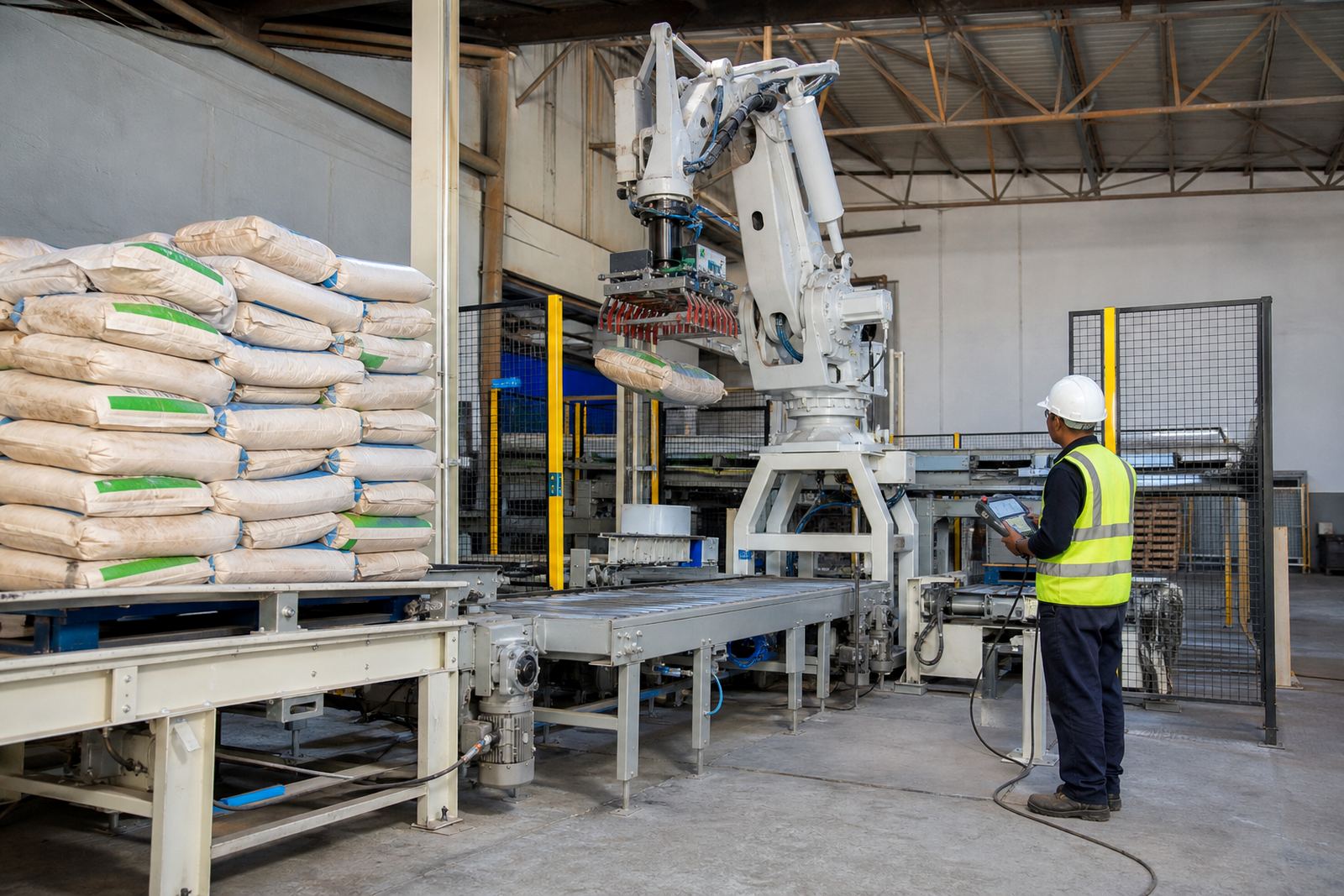
Any robot retrofit must be matched with proper guarding, interlocks and operating procedures. Safety guarding design normally includes physical barriers, access doors, emergency stops and clear walkways around the cell. Light curtains or scanner based protection may be used where the layout allows, but the final arrangement depends on the risk assessment and the movement of people, forklifts and pallets around the line.
Risk assessment support is part of a sensible retrofit process. The assessment should look at pinch points, reach in areas, product jam clearing, case magazine access, and what happens during a fault or restart. It should also consider local conditions such as traffic flow in the packing hall, shared aisles and the way maintenance teams enter the area. A safe design is not only about guarding the robot, it is about the whole line and how staff use it every shift.
Operator training is equally important. Staff should know the start up sequence, stop sequence, fault reset steps, safe jam clearing and daily checks. If the line is not explained properly, downtime rises and the retrofit becomes harder to use than it should be.
Upkeep checks and what to verify before ordering
After commissioning, the retrofit should be kept in good condition with planned servicing, spare parts planning and regular checks on belts, grippers, sensors, cable runs and safety devices. In humid or dusty areas, cleaning routines matter just as much as mechanical wear. It helps to have a simple maintenance schedule so the team can spot early issues before they become a stoppage.
When ordering a case packer retrofit, the main things to confirm are product size range, case size range, target output, infeed orientation, pack pattern, available floor space and the current conveyor layout. You should also confirm whether the line needs changeover between SKUs, what power is available, whether compressed air is on site, and how the equipment will tie into existing controls. If the product is fragile, slippery or irregularly shaped, that must be stated up front so the handling method can be set correctly.
ReAutomated can also support breakdown assistance and spares planning after installation. That helps keep the line moving, especially where packing windows are short and production cannot wait for long call outs.
Key facts
| Application | Retrofit robotic case packing for existing packing lines |
|---|---|
| Typical line fit | Top load, side load or tray loading, depending on product |
| Utilities | Usually three phase power, optional compressed air |
| Integration | Existing conveyors, carton handling and line controls |
| Safety | Guarding, interlocks, emergency stops and site risk assessment |
| Service area | Kempton Park, Johannesburg, Pretoria, Durban, Cape Town, Gqeberha, East Rand and Midvaal |