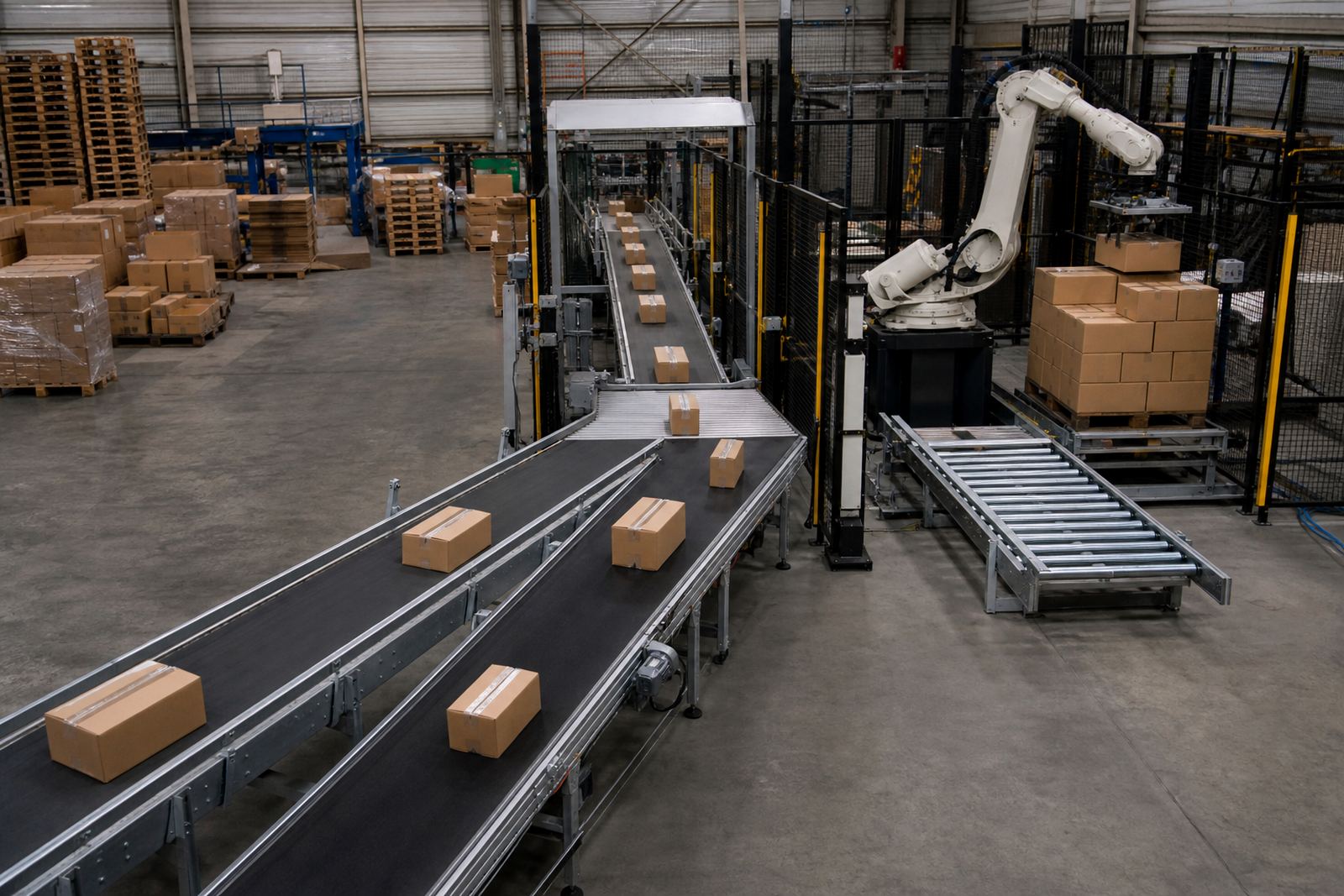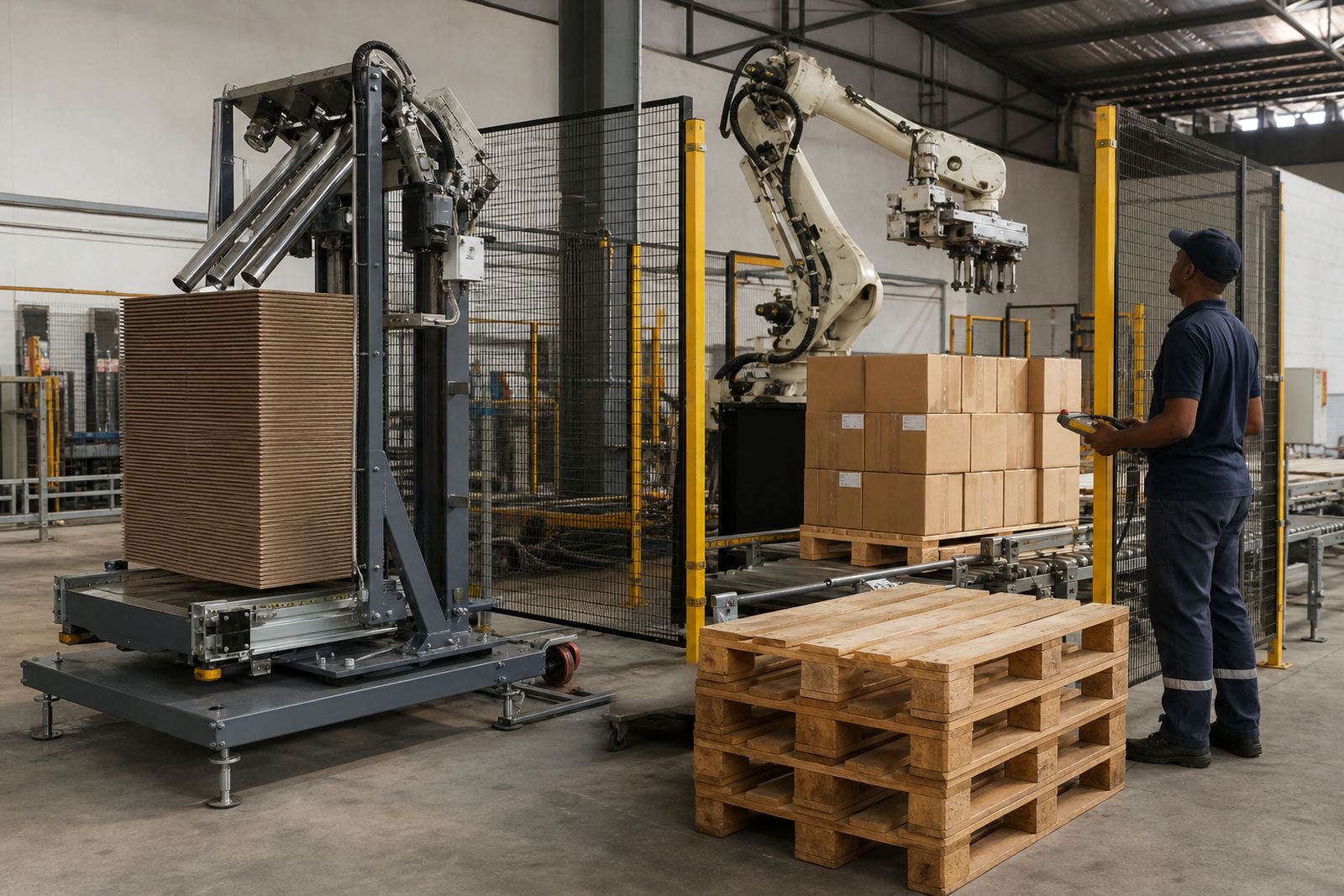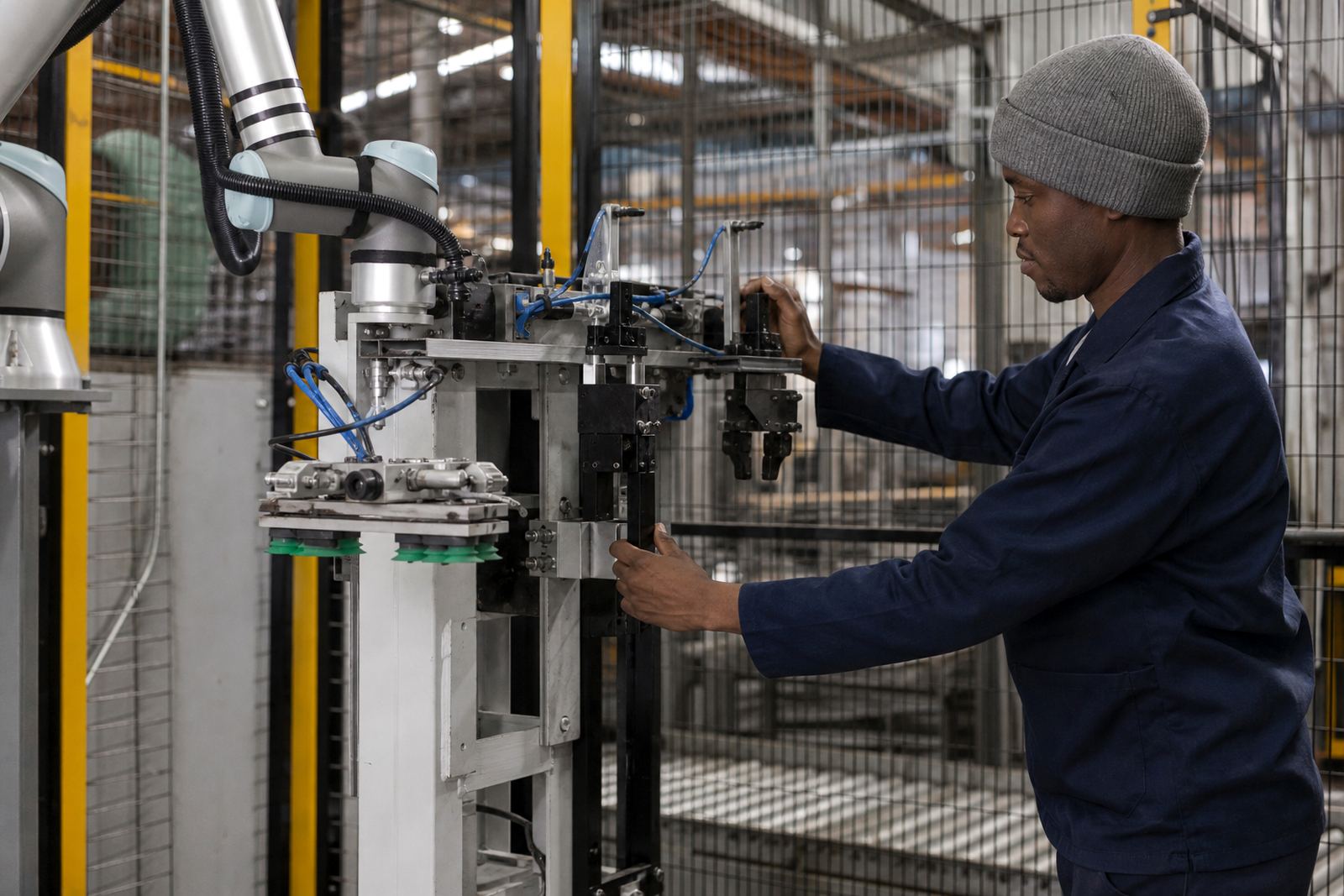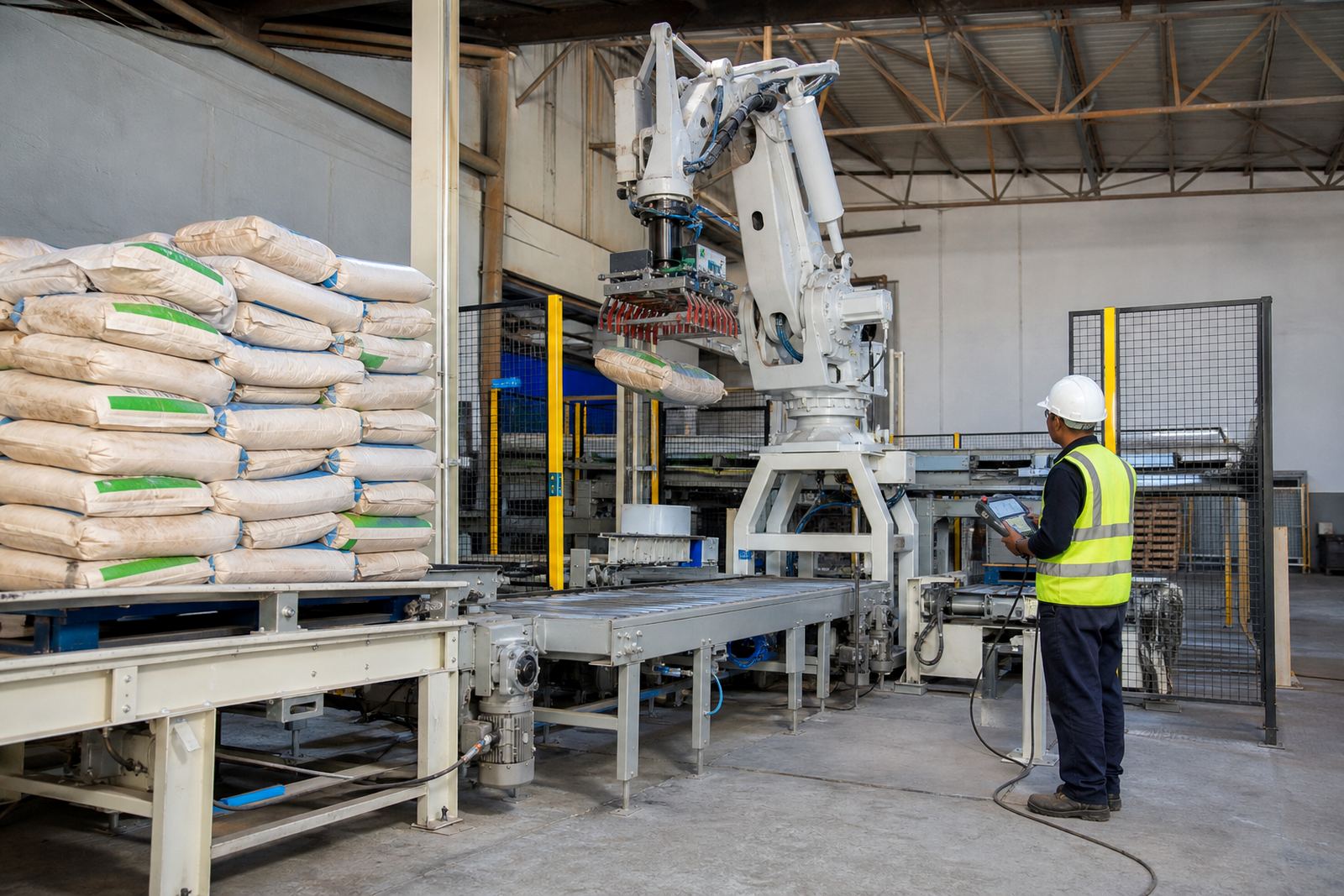
What a sack denesting cell does on a retrofit line
A sack denesting cell takes a stack or magazine of empty sacks, separates them, and places each one into position for the next operation. On a retrofit project, it is normally fitted ahead of a bag opening, filling, or loading station so the line can run with less hand feeding and more consistent cycle times.
For many manufacturers in Gauteng, KwaZulu-Natal and the Western Cape, this is the point where manual handling starts to slow the line down.The unit can be arranged for paper sacks, woven sacks, plastic liners or other empty pack formats depending on the application.
Every site needs its own layout check because bag sizes, stack height, conveyor height and floor space all change from plant to plant. Some lines need a compact side feed arrangement, while others need a higher magazine or an overhead transfer. The cell is designed around the existing process, not the other way around.
Typical sizes, options and line configurations
Sack denesting cells are usually built as a practical plant item rather than a one-size-fits-all machine. The exact footprint depends on sack length, width, stack depth, the infeed method and how much access is needed around the conveyor. A smaller cell may suit a tight room in Spartan or an older plant in Midvaal, while a larger line in Durban or Cape Town may have room for a wider magazine, extra guarding and easier service access.
Options can include adjustable guides, vacuum pick systems, mechanical separation fingers, servo or pneumatic transfer, and a simple operator load point. Where the line already has a conveyor, the denester can be matched to the existing belt height and flow direction. Where a palletising cell follows later in the line, the presentation point can be set up so the upstream and downstream equipment keep a steady rhythm.
Common configuration points are listed below:
- Sack length and width range to be handled
- Stack height or magazine capacity
- Transfer method for separation and release
- Left hand or right hand feed arrangement
- Floor mounted or frame integrated installation
- Manual load, semi automatic feed, or fully automated presentation
For many South African factories, the best result comes from keeping the cell simple enough for the operators to use daily, but flexible enough to fit future line changes. That is especially important where product formats change through the year or where one line handles several pack types.
Where the cell suits packing and palletising plants
This type of retrofit suits dry product packing lines, ingredient handling, agricultural packing, animal feed, chemicals, minerals, building products and general manufacturing where empty sacks or liners need to be presented cleanly and repeatably. It is a good fit when a plant wants to improve throughput without replacing the full line.
It also suits sites where manual presentation creates inconsistencies. A sack that is not opened, aligned or released properly can cause a stoppage downstream, and that cost adds up quickly on a multi-shift operation. In plants around Johannesburg, Pretoria, Gqeberha and the East Rand, the denesting cell is often added during a larger packing line upgrade together with controls changes, guarding and conveyor integration.
It may also be used where labour is better allocated to supervision, quality checks or pallet preparation instead of repetitive feed work. That can be useful in plants dealing with seasonal peaks, staff turnover, or noisy and dusty areas where manual handling is not ideal.
- Bagging and packing lines
- Filling lines with liner presentation
- Lines that feed downstream sealing, weighing or palletising equipment
- Older plants needing a measured automation upgrade rather than a full rebuild
Installation, power and site conditions to plan for
Installation normally starts with a site line survey and a look at the full material flow. The team checks conveyor height, floor level, headroom, access for forklifts, cable routes and the space needed for guarding. If the cell is being fitted into an active plant, the shutdown plan must be agreed in advance so the changeover does not hold up the whole production schedule.
Most sack denesting cells use electric drive power, with some stations also using compressed air for gripping, separation or actuator movement. The actual power and air demand depends on the final design. Where the plant already runs compressors, the available pressure and air quality should be checked because wet or dirty air can affect consistency. On coastal sites such as Durban or Gqeberha, corrosion protection and enclosure choice matter more because humidity is higher.
The installation package usually includes conveyor tie-in, controls connection, safety guarding design and commissioning support.That is a practical matter, not just an electrical one.
Typical utilities and site checks include:
- 3 phase electrical supply confirmation
- Compressed air availability where needed
- Floor loading and anchor points
- Guarding space and access for maintenance
- Clean route for cables, hoses and control panels
Safety guarding, risk assessment and controls integration
A sack denesting cell must be matched to the site safety rules and the risks created by the line itself. General guarding principles apply, but each plant needs its own risk assessment based on traffic, operator access, pinch points, emergency stops and the surrounding equipment. A retrofit should never rely on assumptions from another factory.
Guarding may include fixed panels, access doors, light curtain zones or interlocked gates where operators need to reach the cell. Controls integration should bring the denester into the same start stop logic as the conveyor and any downstream pack handling equipment. That way the line behaves as one system, not as separate machines that fight each other.
It is also important to consider maintenance access. Operators and technicians need safe reach for clearing jams, loading sacks and checking wear parts. A cramped installation can create more risk than the equipment solves. Good retrofit practice keeps the moving parts protected and the service points practical.
- Interlocked access where operators enter the guarding area
- Emergency stop positions matched to the full line
- Clear labelling on start stop and fault reset functions
- Risk review for pinch points, dropping sacks and moving transfers
Care, servicing and what to confirm
A sack denesting cell is a production item, so routine care matters. Keep the magazine area clean, check vacuum cups or grippers where fitted, inspect wear pads and guides, and make sure sensors remain free of dust and off-cuts. On dusty Gauteng sites or in plants handling fine powder, this should be part of the normal weekly maintenance schedule.
Good servicing also includes checking fasteners, air quality, cable wear and the condition of guarding doors. If a fault keeps repeating, the cause is often in the presentation of the sack or liner rather than the transfer itself. A maintenance team should know where the common wear points are and have spares planning in place for the parts that fail most often.
Before ordering, it helps to confirm the following details:
- Sack type, dimensions and material
- Empty sack stack height or liner presentation method
- Required throughput per hour or per shift
- Existing conveyor height and line direction
- Available electrical supply and compressed air
- Space limits, access points and cleaning requirements
- Whether the cell must link to a future palletising upgrade
Clear information upfront makes the retrofit easier to fit and commission, and it usually avoids late changes once steel is already on site.
Key facts
| Function | Denests empty sacks or liners and presents them to the next operation |
|---|---|
| Integration | Retrofit fitment to existing conveyors, filling stations and packing lines |
| Typical utilities | 3 phase electricity, with compressed air where required by the design |
| Layout options | Frame mounted, magazine fed, left hand or right hand presentation |
| Safety | Site specific risk assessment, guarding and interlocked access as required |
| Applications | Packing, filling, liner presentation and upstream palletising support |