What A Low Level Palletiser Retrofit Does
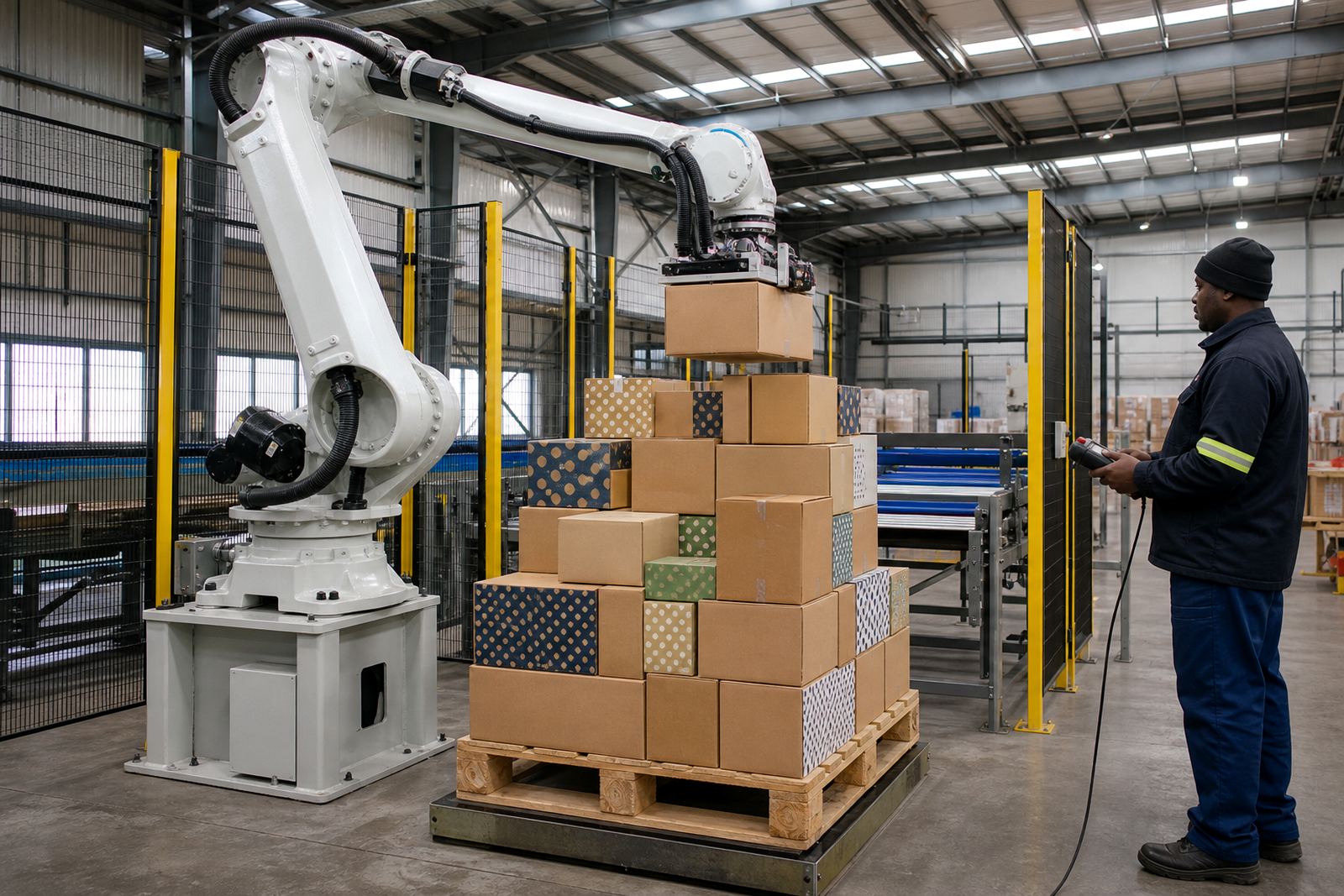
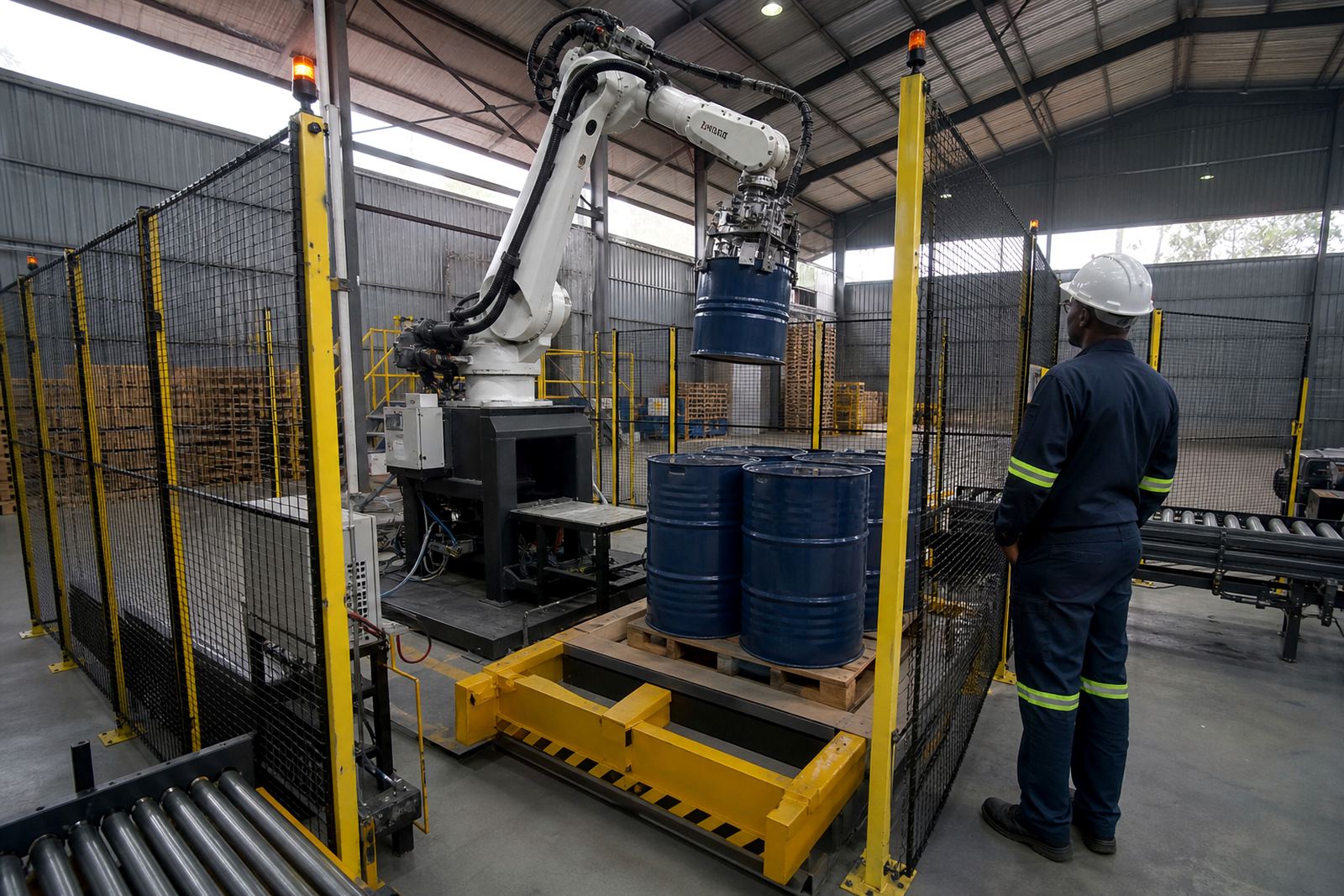
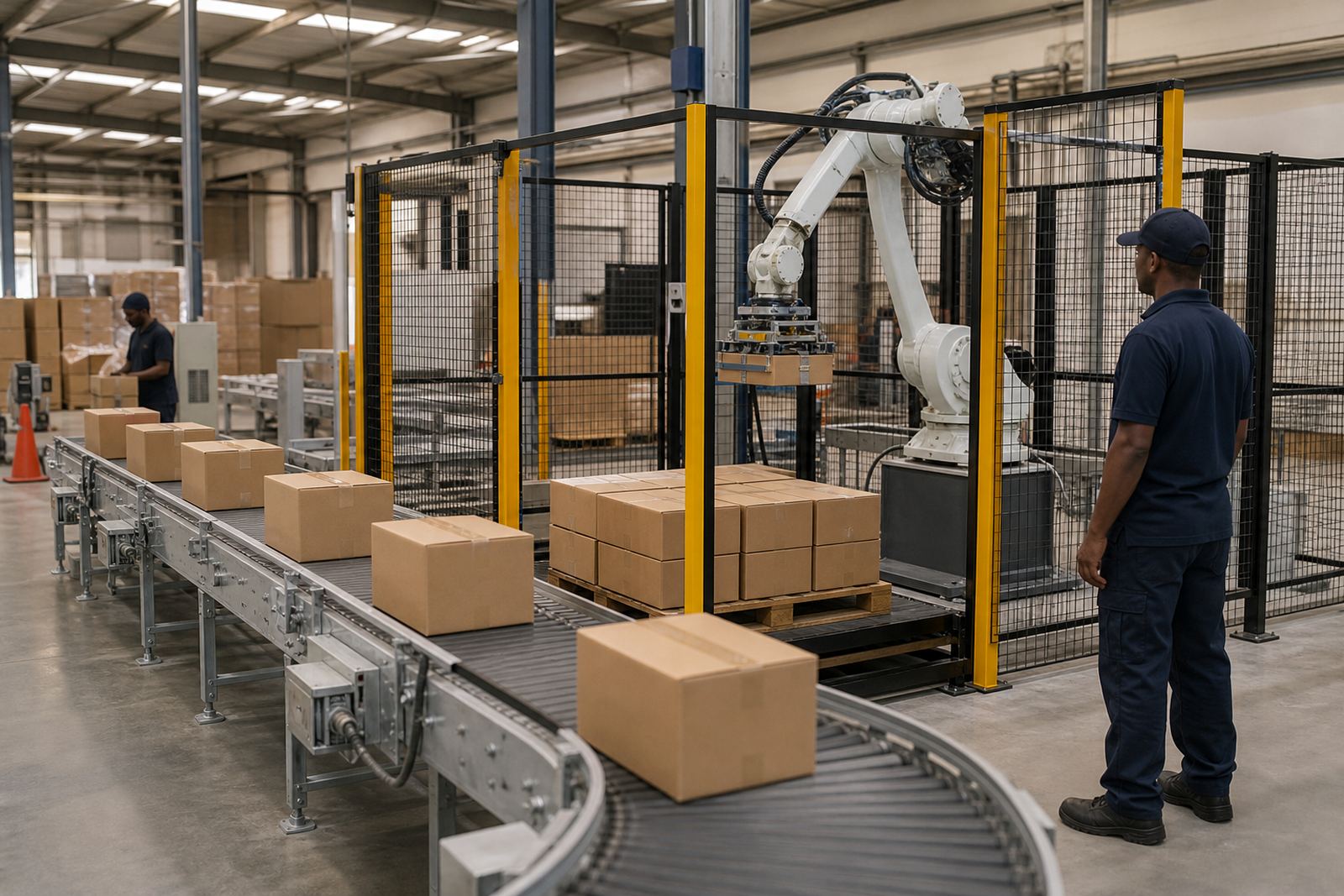
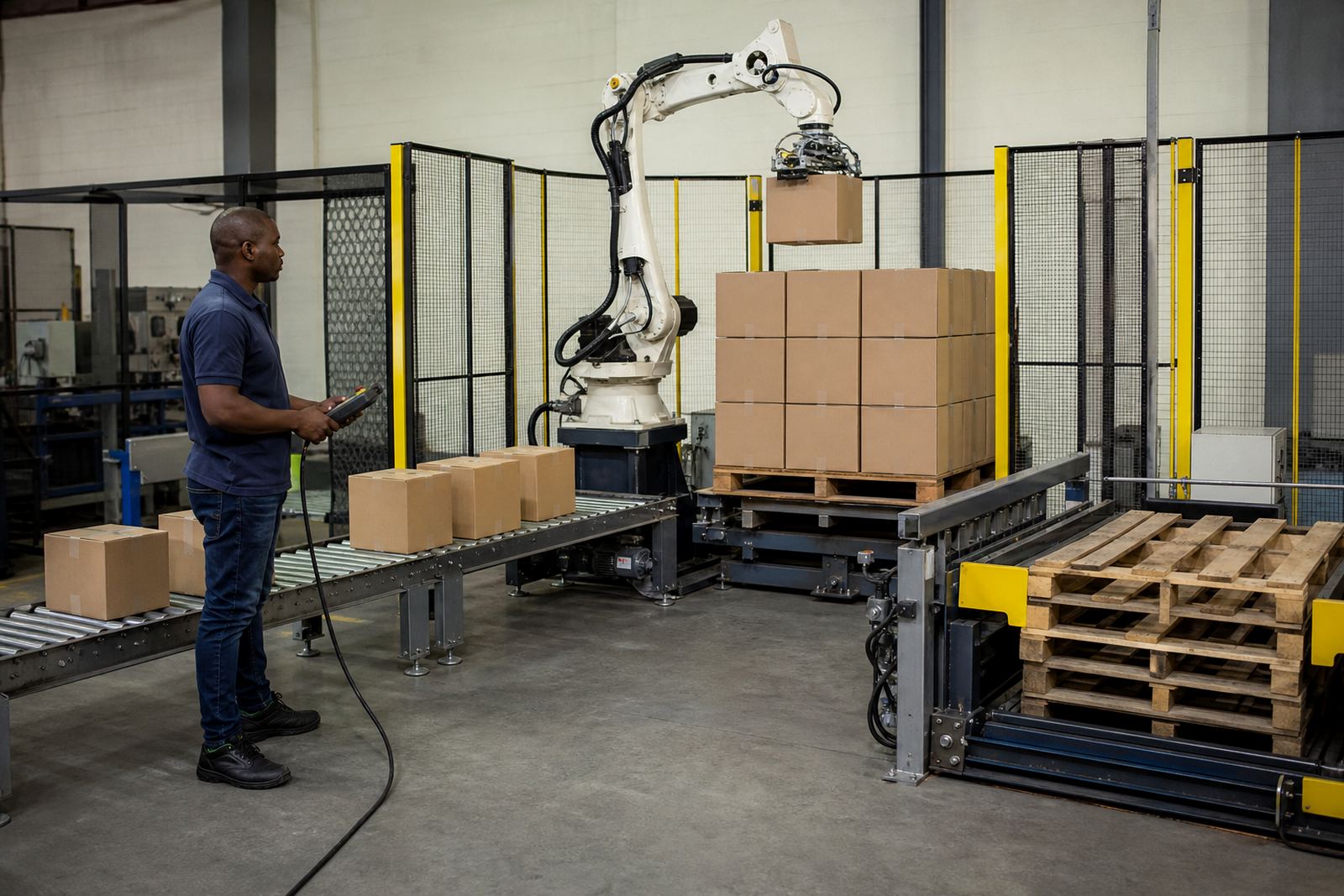
A low level palletiser takes product from a conveyor exit that sits near floor height and places it onto a pallet in a controlled stacking pattern. It is often chosen where there is not much headroom, where operators need easy access, or where the existing line already feeds product at ground level. The retrofit can be designed for cartons, sacks, trays, bundles or shrink wrapped packs, depending on the product shape and stability.
In many South African plants the best answer is not a full line rebuild. A retrofit can tie into the current conveyor, pallet feed position and control system so the palletising cell works with what is already there. That keeps changeover simpler and makes day to day maintenance less of a headache.
Where It Suits And Why Plants Use It
This type of palletiser suits manufacturers that want automation without raising product transfer height or adding a high level infeed. It is well matched to food, beverage, building products, consumer goods and general packing lines, especially where floor space is limited or the plant has existing conveyor runs that cannot be shifted easily.
- Ground level conveyor exits with easy operator access
- Sites that need clear service routes around the pallet area
- Plants with lower ceiling heights or tight mezzanine clearance
- Operations with mixed shifts and concerns
- Lines where manual palletising is causing strain or inconsistencies
For facilities in Kempton Park, Johannesburg, Pretoria, Durban, Cape Town and Gqeberha, the layout usually needs to suit the building first. Dock positions, aisle width, forklift movement and fire exits all matter when the palletiser is fitted into an active production area.
Typical Sizes, Layouts And Options
Low level palletisers can be arranged in different footprints to suit the product rate and available floor space. A single infeed and single pallet station is common, but some sites need twin pallet positions, automatic pallet dispense or a buffer zone for pallet replacement. The stack pattern and layer handling method are selected around the pack size and the weight per layer.
- Single or dual conveyor infeed options
- One or two pallet build stations
- Layer forming and layer squaring arrangements
- Slip sheet, top sheet or interlayer handling if required
- Floor mounted guarding with controlled access gates
As a guide, the overall cell footprint is often planned from about 4 m by 5 m upward, depending on pallet size, pallet magazine capacity and whether there is a layer transfer area beside the machine. Working height is usually kept low for operator safety and easier supervision, though the exact dimensions depend on the package and reach needed.
Installation, Power And Utilities
Installation starts with a site line survey, then a layout that shows conveyor tie in points, guarding, pallet entry and maintenance access. The retrofit may need minor conveyor changes, new supports, cable routing and control panel work. We also check floor loading, anchor positions and how the palletiser will fit around existing traffic routes and emergency exits.
Load demand is set by the final cell layout, but most ReAutomated projects call for a 3 phase supply, control power and compressed air for functions such as grippers or transfer points. Some plants also need network or signal links to upstream packing equipment. Gas feed is not normally part of a standard low level palletiser, although any special product handling step must be checked against the line design.
The machine should not trap product or leave a pallet in an unsafe position if supply is interrupted.
Safety Guarding, Risk Checks And Operator Training
Every site needs its own risk assessment because line speed, product type, pedestrian routes and maintenance access all affect the final guarding design. The palletiser cell normally needs perimeter guarding, interlocked access points and clear stop positions so operators can reach the line only when it is safe to do so. Safety design also needs to consider pallet truck movement, forklifts and the route used to remove finished pallets.
- Risk assessment support for the proposed layout
- Guarding around moving parts and pallet build zones
- Emergency stop placement at accessible points
- Safe access for clearing jams and cleaning
- Operator training for start up, normal running and shutdown
Training is important for shift teams, not just the maintenance crew. Operators should know where the isolation points are, how to clear a minor fault and what to do after a power interruption. Clear instructions help prevent damage to product and reduce unnecessary call outs.
Care, Servicing And Breakdown Support
A low level palletiser works best when the infeed conveyors, sensors and gripping or layer handling parts are kept clean and checked on a schedule. Dust, bag spillage and pallet splinters can affect performance, especially in dry inland plants or coastal conditions where humidity can change how cardboard behaves. Regular checks also help prevent wear on chains, bearings and rollers.
Simple servicing tasks usually include cleaning sensors, checking air pressure, confirming safety devices, testing pallet feed movement and inspecting wear items. Spare parts planning is worth doing early because a small delay on a packing line can affect the whole shift. If a site has older conveyors, breakdown support should also include the interfaces between the palletiser and the existing line, not only the robot or pallet handling unit.
What To Check Before You Order
Before ordering a retrofit, it helps to confirm the pack type, product weight, pallet size, target throughput and available floor space. The line speed, conveyor height and pallet build pattern all need to be clear, otherwise the final design can end up needing costly changes. It is also useful to know whether the site wants manual pallet removal, automatic pallet replacement or a mixed approach.
- Product dimensions, weight and pack orientation
- Pallet size, stack height and layer pattern
- Existing conveyor height and discharge direction
- Available clearance for guarding and maintenance
- Electrical supply, compressed air and control signals
For sites across Gauteng, KwaZulu-Natal, the Western Cape and the Eastern Cape, local conditions can change the final specification. A plant in Spartan may have a very different access arrangement from a factory in Midvaal or Gqeberha, so the retrofit should be matched to the building, not the other way around.
Key facts
| Product type | Low level palletiser retrofit for ground-level packing and palletising lines |
|---|---|
| Typical infeed | Existing conveyor discharge at floor or near-floor height |
| Common payloads | Cartons, sacks, trays, bundles and similar stable packs |
| Site footprint | Usually planned from about 4 m x 5 m upward, depending on layout |
| Utilities | 3 phase power, controls power and compressed air where needed |
| Integration | Conveyor tie in, controls integration, safety guarding and commissioning support |