What a carton squaring unit does on a retrofit line
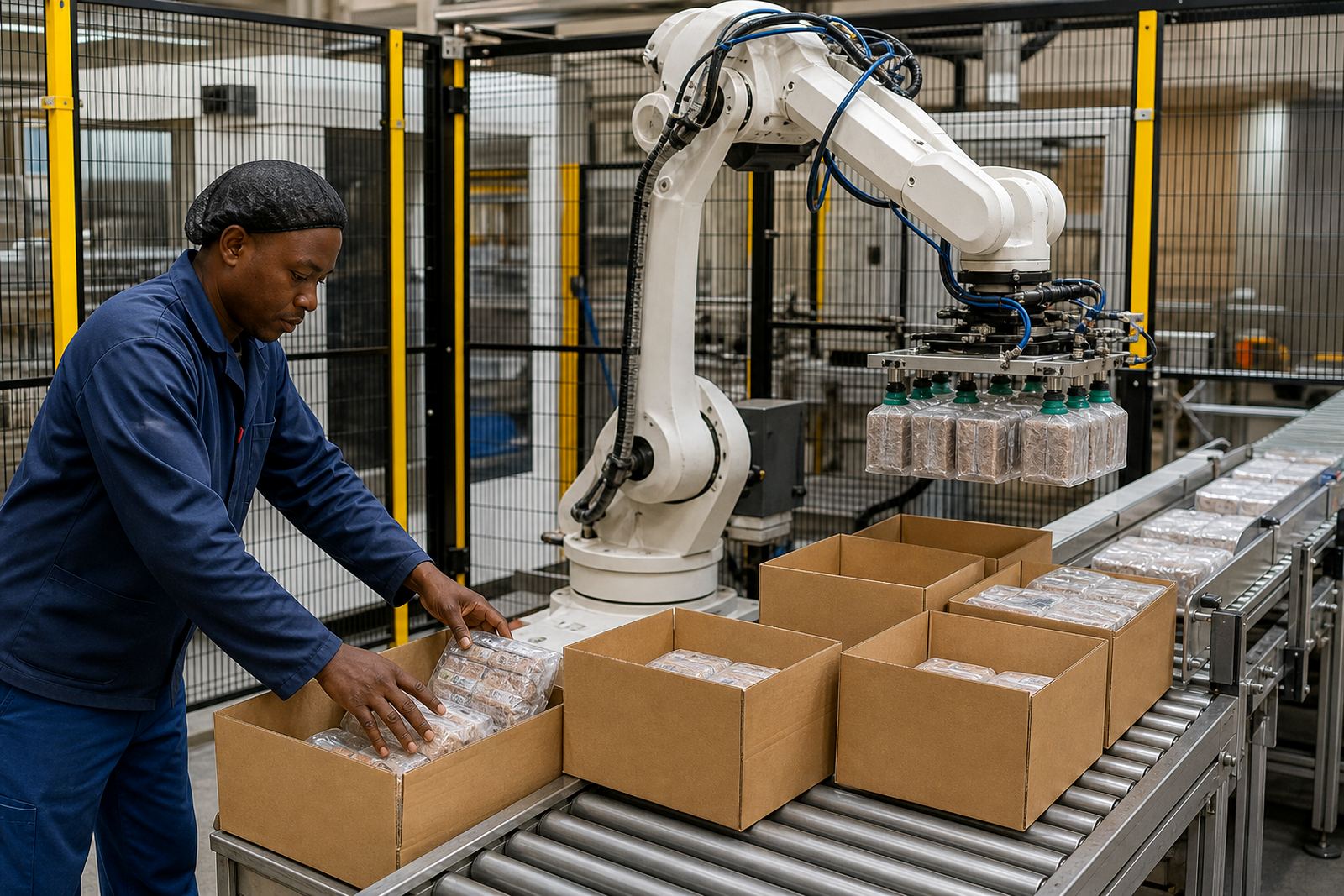
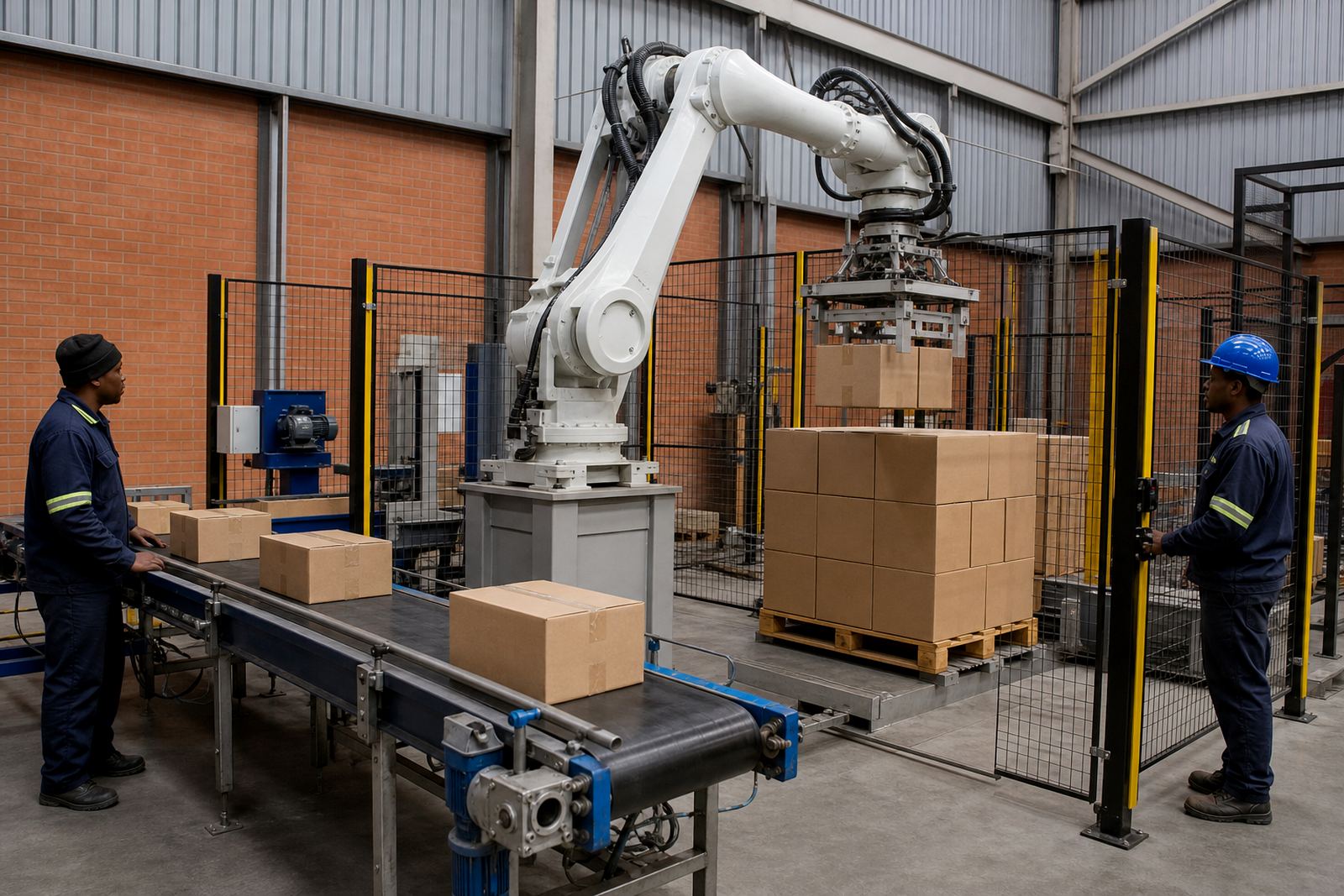
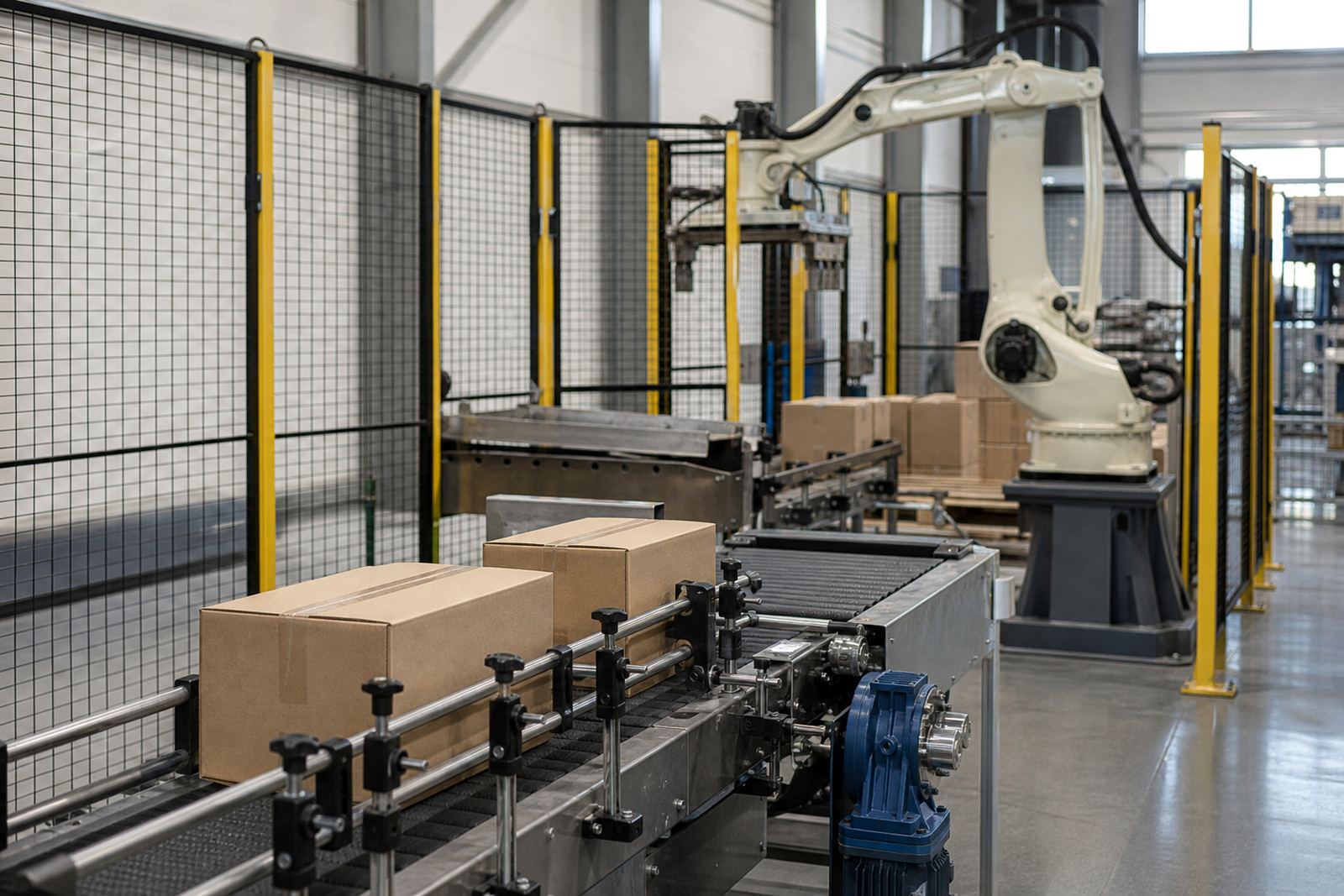
A carton squaring unit is fitted into the conveyor path to correct the shape and position of a carton before it reaches a robotic pick, palletising zone or downstream packing station. The unit guides the pack into a square, repeatable position so the robot sees a more predictable face, edge or corner. On older lines, this can be the difference between smooth handling and repeated stopping to nudge cartons by hand.
In South African factories, carton flow often changes through the day because of mixed pack sizes, worn belts, uneven product fill or a conveyor that has been patched into an existing line over time. A squaring unit helps settle these small variations. It is especially useful where cartons must arrive in a neat pattern for case erecting, top loading, robotic grouping or pallet layer formation.
- Helps align cartons before robotic pick-up
- Reduces skewed presentation on the conveyor
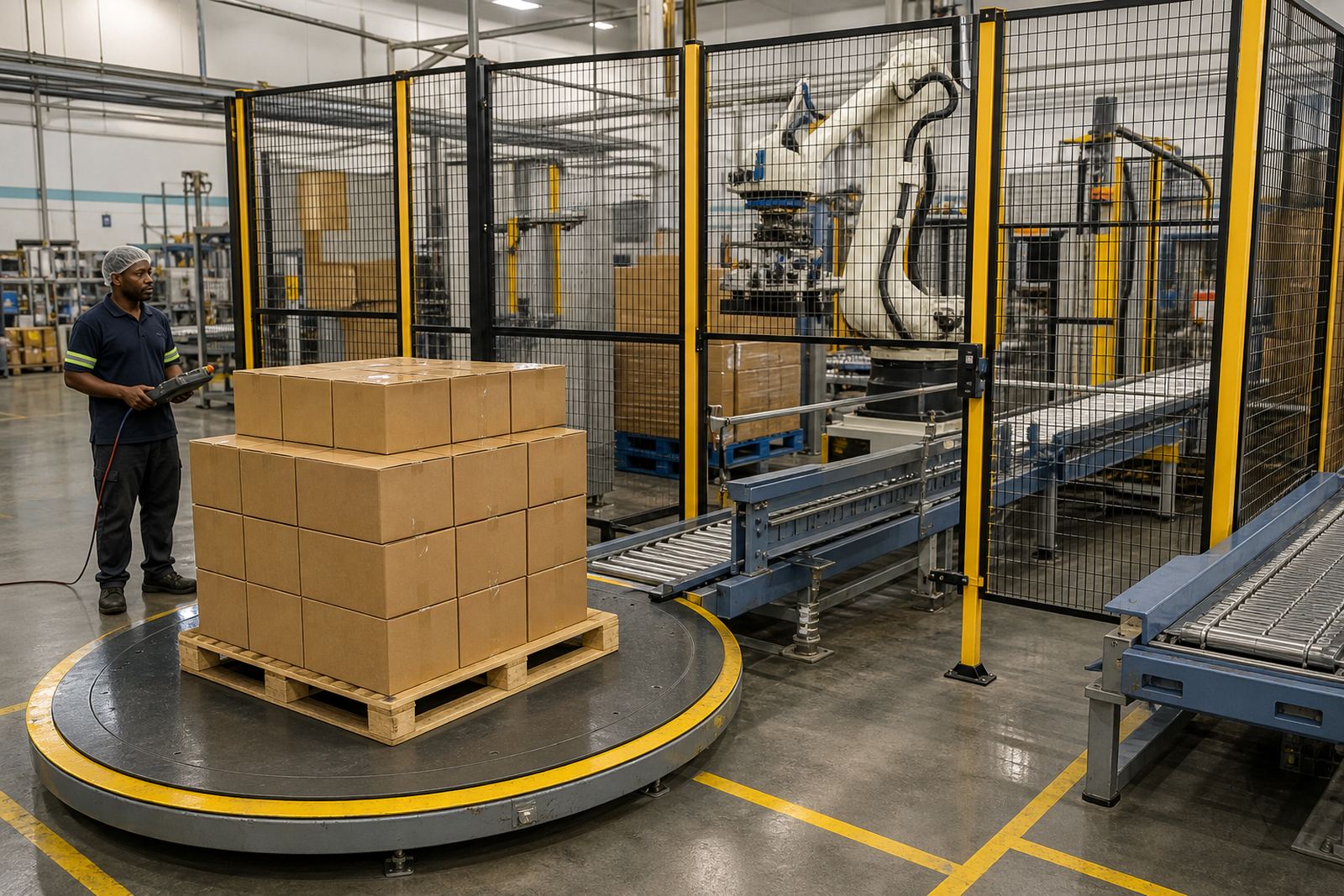
- Supports more even layer formation on pallets
- Can be fitted into existing packing and palletising lines
Sizes, formats and options for different carton types
Carton squaring units are normally selected around the carton footprint, line speed and the amount of correction needed. Small cartons for personal care, food or household goods need a lighter touch, while larger cases for beverages, dairy or general manufactured goods may need more side control and longer infeed. The unit can be built for single-carton transfer or for grouped packs depending on how the line is arranged.
Typical options include adjustable side guides, centring rollers, top hold-down control and transfer sections that match the conveyor height. Where the line handles a wide product mix, the squaring section can be set with manual adjustment or controlled changeover points. For some applications, the unit sits before a robot gripper. For others, it is used before a pusher, lane divider or palletising infeed.
- Adjustable for different carton widths and lengths
- Suitable for light, medium and heavier case formats
- Can suit single-file or grouped conveyance
- Can be matched to existing belt, roller or chain conveyors
Where it suits in South African packing and palletising plants
This equipment suits manufacturers that are pushing cartons from a manual end-of-line process into a semi-automated or fully automated packing cell. It is common on lines where operators are still correcting cartons by hand before the robot takes over, or where carton shape varies enough to upset the pallet pattern. The unit is also useful where the plant runs long shifts and consistency drops as the line speeds up or staff rotate.
Facilities in Johannesburg, Pretoria, Kempton Park, Durban, Cape Town, Gqeberha, the East Rand and Midvaal often have mixed line ages, so the squaring unit has to work with existing conveyors and controls rather than forcing a full replacement. That is usually where retrofits make the most sense. The unit can also help where cartons must stay neat for traceability labels, date codes or pallet wrapping after formation.
- Packing rooms with manual carton correction still in use
- Palletising lines where layer quality is inconsistent
- Factories running mixed SKUs through one conveyor path
- Sites aiming to reduce hand contact before robotic handling
Installation, power and site requirements
Most carton squaring units are installed inline and tied into the existing conveyor flow. The frame, guides and transfer section are positioned so that the carton enters square and exits on centre line or in the required orientation. If the unit is part of a robotic retrofit, it is usually integrated with the conveyor controls, stop points, sensors and the robot handshakes so the line only advances when the carton is correctly placed.
Power needs depend on the drive arrangement, sensors and control package, but most installations rely on standard industrial electrical supply and a control panel tied into the line PLC or local control circuit. In some plants, compressed air may be needed for pneumatic side guides, stops or hold-downs. The exact supply arrangement should be confirmed during a site line survey, because cable routes, earth points, panel space and isolators are not always the same on older sites. Outdoor exposure is not usually ideal, and on coastal sites additional protection against humidity and corrosion may be needed.
- Fits into existing conveyor runs with correct infeed and outfeed height
- May require electrical supply for drives, sensors and control equipment
- Some configurations use compressed air for guides or stops
- Site-specific access, guarding and maintenance space must be checked first
Safety guarding and risk assessment for each site
Any carton squaring unit used on a retrofitted line must be matched with proper guarding and a site risk assessment. The enclosure or guarding method depends on whether operators load cartons by hand, whether there is robot access nearby and whether the unit creates nip points, pinch points or trapped access at the transfer section. The layout should also consider emergency stops, walkways, cleaning access and how staff reach nearby equipment during changeover.
General safety practice includes fixed guarding where practical, interlocked access doors where operators need entry and clear stop control around the line. Where a cobot forms part of the broader cell, the risk picture changes again and the guarding approach must reflect the actual application. There is no one standard answer for every site. Each installation needs its own review based on carton weight, line speed, operator interaction and the surrounding machinery.
- Guarding must suit the specific line layout
- Risk assessment should cover pinch points and access during cleaning
- Emergency stop points must be easy to reach and clearly marked
- Any robotic or cobot interface needs separate review in the final cell design
Care, servicing and what to confirm
A carton squaring unit works best when belts, guides and sensors are kept clean and correctly aligned. Dust, carton dust, tape scraps and pallet wrap can build up around the transfer area and affect movement.Regular checks help prevent the line from drifting out of square.
Before ordering, confirm the carton size range, product weight, line speed and whether the unit must handle crush-prone packs, wet cartons or printed cartons that mark easily. Also check the available floor space, conveyor height, power supply, air supply if needed and whether the site wants manual adjustment or automatic changeover. If the line is in a food, beverage or coastal environment, the material finish and protection level should be selected with care. A proper spares plan is useful too, especially for belts, sensors and wear parts.
- Carton dimensions and weight range
- Infeed and outfeed conveyor height
- Required line speed and changeover method
- Power and air availability at the installation point
- Exposure to dust, humidity or washdown conditions
- Required guarding, access and maintenance space
Key facts
| Function | Straightens and squares cartons on a conveyor before robotic picking or palletising |
|---|---|
| Typical carton range | Small case packs to larger secondary packaging, subject to line design |
| Integration | Can be fitted into existing belt, roller or chain conveyor systems |
| Controls | Can be linked to line sensors, stops and existing automation controls |
| Air supply | Optional, depending on guide, stop or hold-down arrangement |
| Installation | Inline retrofit with site-specific guarding, access and commissioning support |