What Spares Planning Covers on Retrofit Lines
On a retrofitted packing or palletising line, the first spares issue is usually not the robot itself, but the parts around it. That includes conveyor components, sensors, cabling, air fittings, grippers, tooling, guards, limit switches and wear items that see daily cycles. We look at the equipment you already have, then map the parts most likely to slow you down if they are not on hand.
The point is clear. If a part wears out during a night shift or over a long weekend, the line should not sit idle while someone tries to source it from scratch. Good spares planning gives you a sensible holding list, a reorder point and a clear view of what is critical, what is useful and what can wait.
- Wear parts for conveyors, guides and transfer points
- Sensor brackets, cable sets and pneumatic fittings
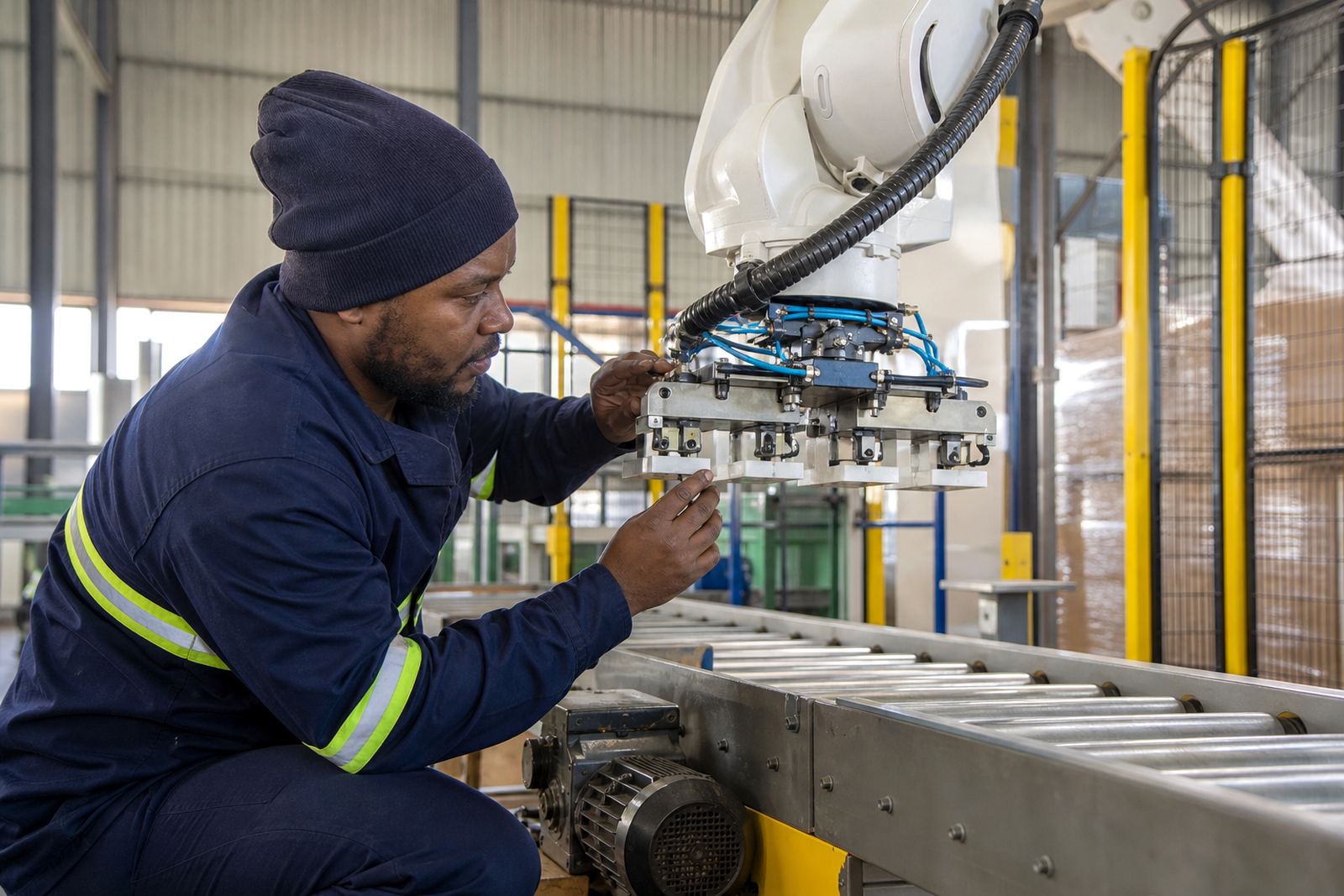
- Gripper pads, suction elements and tooling inserts
- Guarding hardware, hinges, interlocks and latches
- Motor, gearbox and drive related service items where applicable
How We Build the Spare Parts List
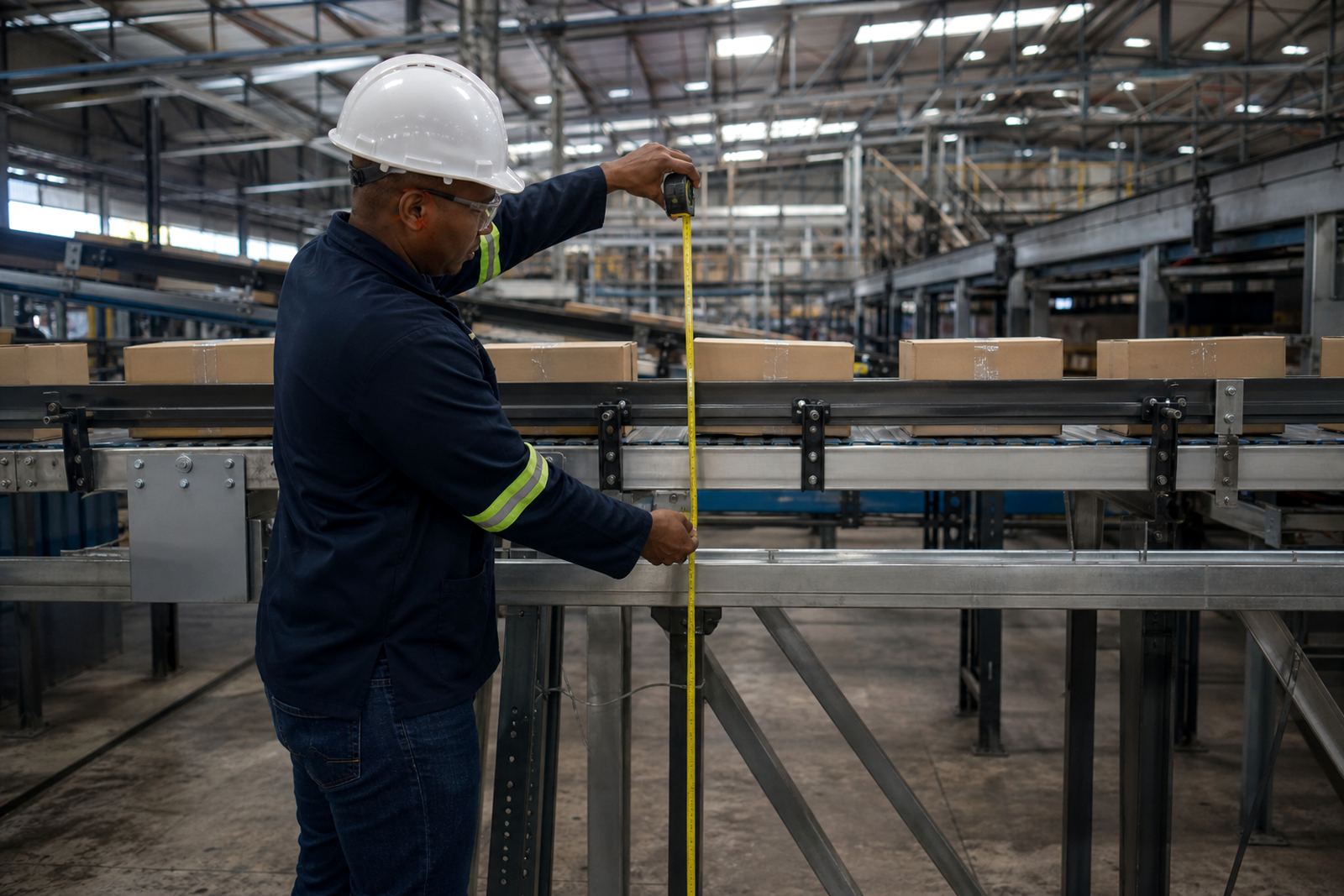
We start with a site line survey and a walk-through of the installed line. We check the line layout, the duty cycle, the product type, the changeover routine and the service access around each station. A line handling heavy cartons, shrink-wrapped packs or mixed case sizes will need a different parts strategy to one moving light trays or bags.
From there we separate parts into categories. Critical spares are those that can stop the line. Planned wear items are the parts that should be swapped at set intervals before failure. Convenience spares are the smaller parts that help a technician finish a repair in one visit instead of making a second trip. That includes fixings, sensors, terminal blocks and spare air line sections, which sounds minor until a small fault stops a full palletising cell.
- Review of existing conveyor and control components
- Identification of failure points by station and function
- Parts grouping by criticality and lead time
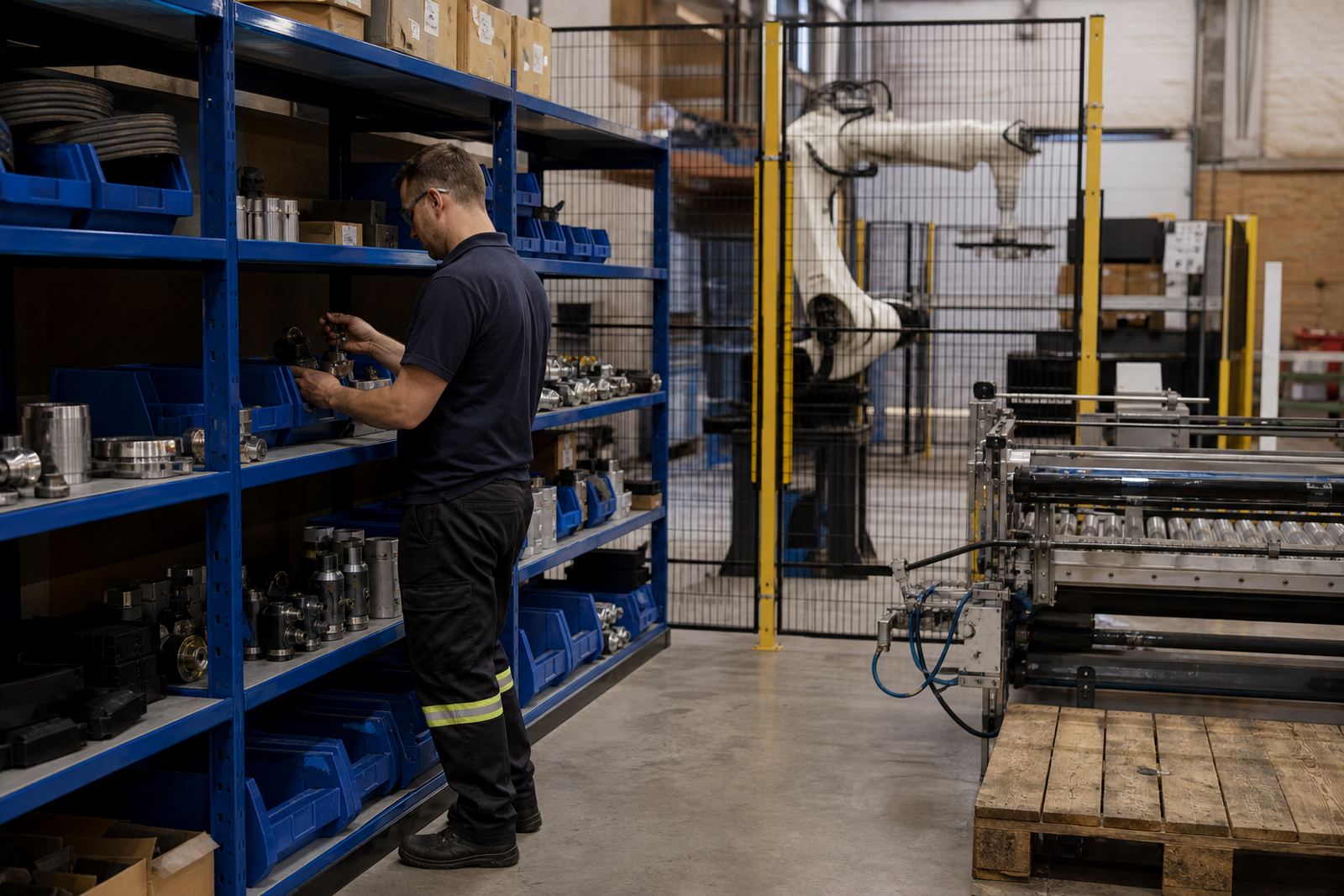
- Recommended minimum stock for local holding
- Site-specific notes for access, contamination and changeover habits
Parts Held for Packing and Palletising Retrofits
Most retrofit installations benefit from a practical spares list rather than a long wish list. We normally focus on parts that age through movement, contact or electrical switching. That can include photoelectric sensors, prox switches, encoder couplings, cable trays, terminal fittings, vacuum components, belts, rollers, transfer plates and gripper wear items. If the retrofit uses cobots or articulated robots, we also consider end-of-arm tooling parts, dress packs and service items linked to the integration hardware.
Safety guarding also needs spares planning. Guard panels, polycarbonate sheets, hinges, latches, safety relay components and interlock devices should be assessed as part of the line support plan. If a guard door or interlock fails, production stops until it is corrected. That is why spares are not only about motion parts, they are about keeping the whole cell compliant and usable.
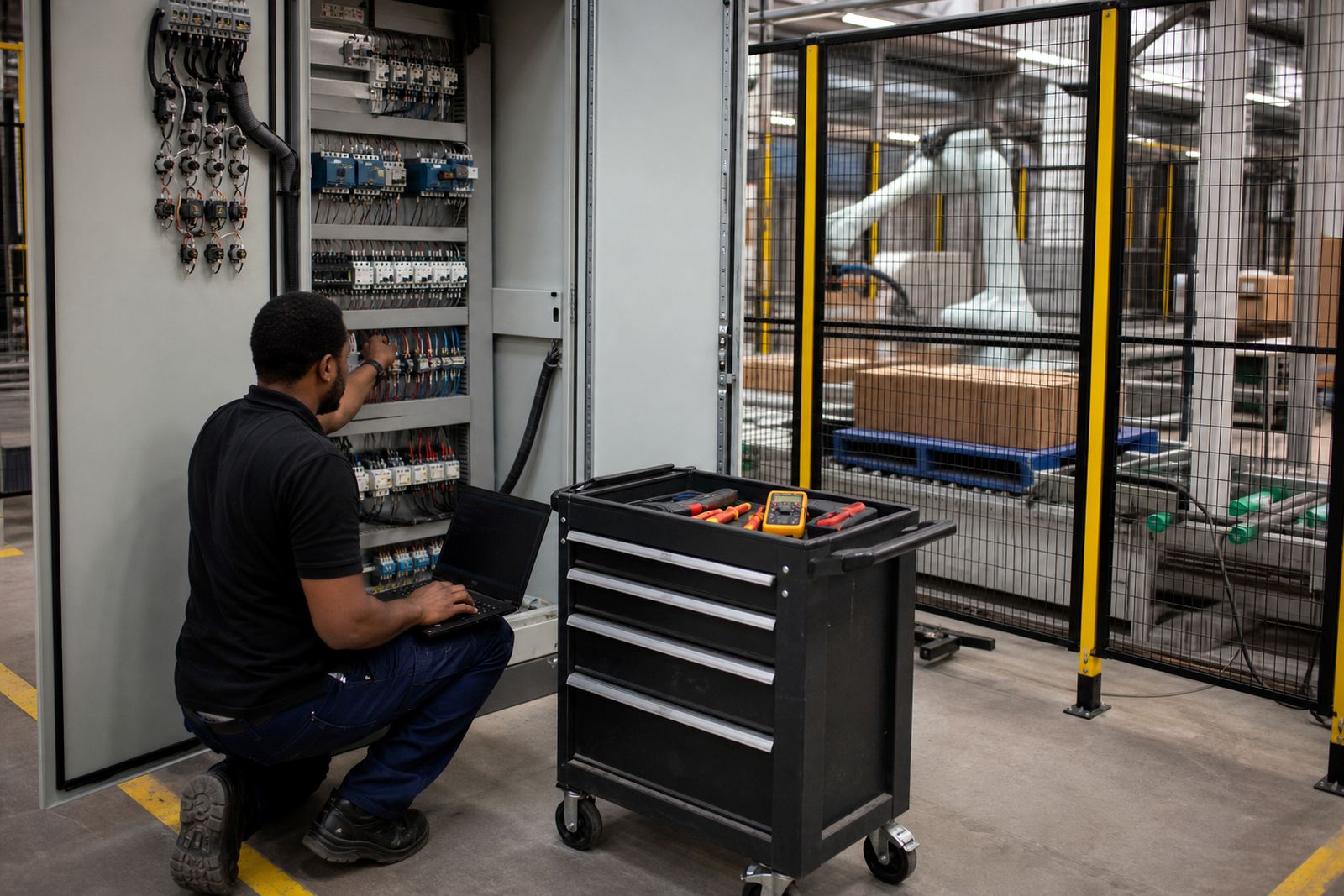
- Control panel accessories and labelled terminals
- Field sensors, actuators and interface parts
- Vacuum cups, air valves and tubing sections
- Conveyor wear strips, belts and drive couplings
- Safety hardware for gates, doors and access points
Turnaround, Lead Times and Local Support
Turnaround depends on the complexity of the line and how much of the existing equipment can be verified during the first visit. For many sites, the initial spares review can be completed shortly after the line survey and controls review, once we have the necessary photographs, dimensions and equipment details. Where a line is older or has been modified several times, we may need a bit more time to confirm fitment and compatibility.
We work with South African operating realities in mind. If a plant runs in shifts, has limited storage, or experiences power interruptions, the spares plan should support that. We can advise on what to keep on site in Spartan, Kempton Park, or at another plant in Pretoria, Midvaal, the East Rand, Cape Town, Gqeberha or Durban. Local holding reduces waiting time and helps maintenance teams act quickly when a fault appears.
Where practical, we also help identify parts that are worth standardising across multiple lines. That makes ordering easier and can simplify maintenance for multi-site operations. It is not about stocking too much, just the right items in the right quantities.
Pricing Approach Without Wasteful Stock
Pricing for spares planning is based on the scope of the review and the level of detail needed. A straightforward line may only need a focused assessment of the most critical wear items. A larger site with multiple conveyors, several palletising points or mixed packaging formats may need a broader review with more parts mapping and support notes. We do not treat spares planning as a one-size-fits-all exercise because that usually leads to unused stock or missing parts.
Our approach is to tie the spares recommendation to actual usage, access and lead time. If a component is slow to source, we flag it. If a part is inexpensive but fails often, we flag that too. The result is a practical holding plan that supports uptime without tying up unnecessary cash in the store room. You get a clear list of recommended items, quantity guidance and notes on what should be checked during routine maintenance.
For budget control, many sites prefer to phase in spares over time. That can work well, provided the critical items are handled first. We can help prioritise the list so the most important parts are covered before the less urgent ones.
Service Checks and Reorder Reviews
Spares planning only works if it is reviewed again. Wear patterns change when product sizes change, when a line is running harder, or when a factory adds more shifts. We normally align spares review points with preventive service checks so the store team and the maintenance team are working from the same list. That may be monthly, quarterly, or tied to a shutdown window depending on the site.
During review, we check what has been used, what has become slow to source, and what now needs a higher minimum stock. We also look for parts that are being changed too late. A conveyor bearing, for example, may show noise or heat before failure, and the spares plan should support scheduled replacement rather than emergency repair. If a site has staff changes, the parts list should still make sense to the next technician. Clear naming and stored quantities matter more than people think.
- Monthly checks for high-use wear parts
- Quarterly review of electrical and control items
- Shutdown review for safety hardware and major consumables
- Update stock levels after any line change or product changeover
Key facts
| Service focus | Wear parts, change parts and critical consumables for retrofit packing and palletising lines |
|---|---|
| Typical site inputs | Line survey, equipment list, product format, shift pattern and maintenance history |
| Coverage | Conveyors, robot cells, cobots, grippers, guarding, sensors and control hardware |
| Planning output | Prioritised spare parts list with recommended stock levels and reorder notes |
| Maintenance alignment | Monthly, quarterly or shutdown-based review depending on the plant |
| Area served | Kempton Park, Johannesburg, Pretoria, Durban, Cape Town, Gqeberha, East Rand and Midvaal |