What We Check On Site Before Any Retrofit
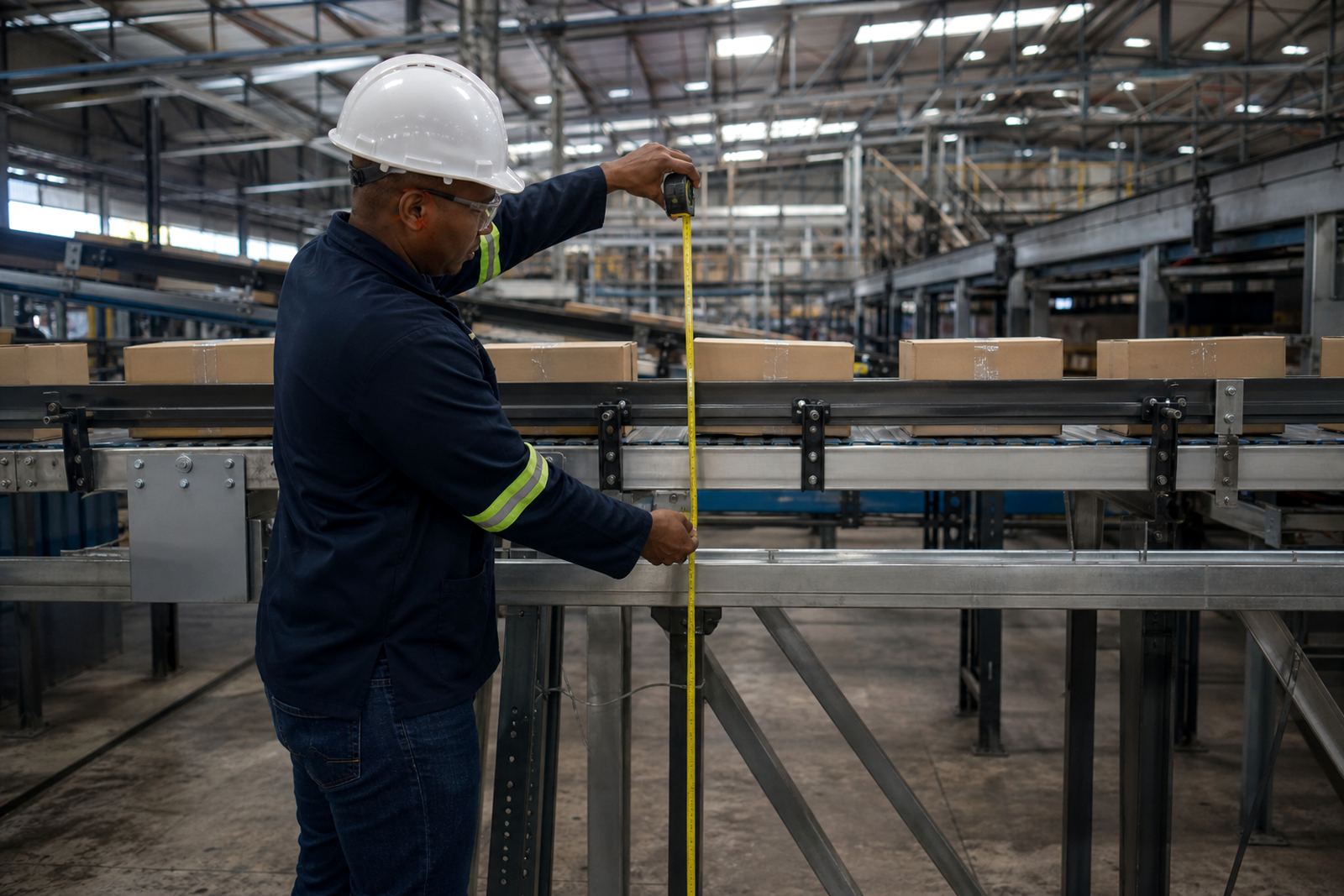
A proper line survey is the starting point for any packing or palletising retrofit. We visit the plant, walk the route from product infeed to end of line and measure the space where equipment must fit. That includes floor loading, column positions, guard opening points, access routes, power availability, air supply, network points and the height limits around existing conveyors and pallet stations.
We also look at the real operating conditions.If your line stops often for manual clears or forklift movement, that is noted as well because it affects cell design and safety guarding placement.
- Product size range, case pattern and pallet build pattern
- Infeed and outfeed conveyor heights, widths and speeds
- Available floor space for robot reach and safety zones
- Access for maintenance, cleaning and future spares replacement
- Power quality, earthing, isolation points and control panel location
How The Survey Supports Packing And Palletising Retrofits
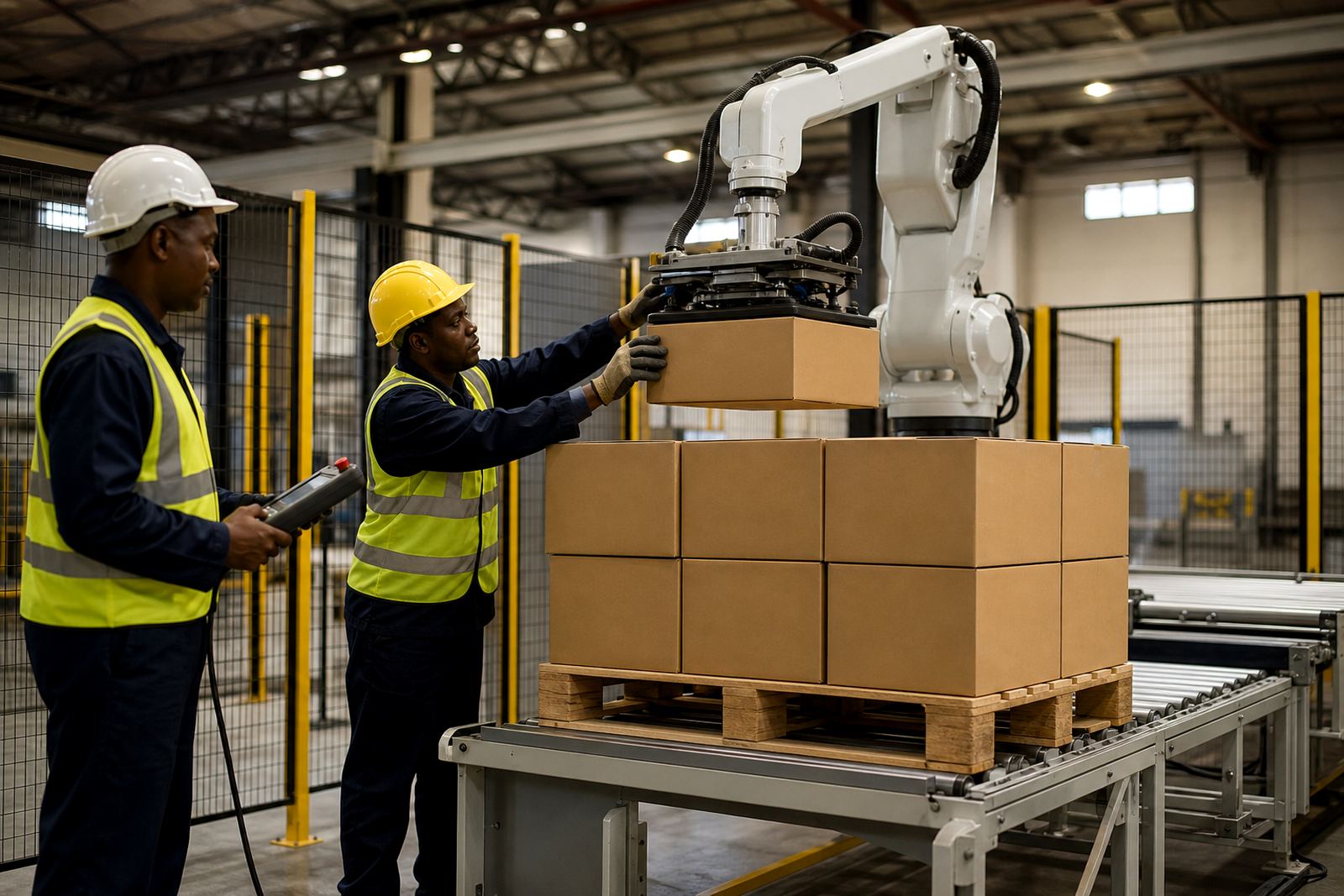
The survey report is used to decide whether a robot, cobot or mixed manual and automated arrangement is suitable for the site. Some lines only need a compact palletising cell at the end of the conveyor. Others need a full packing and palletising changeover with product accumulation, rejection points and additional controls integration. We do not force a one size solution onto a plant, because older lines in Midvaal or the East Rand often have very different constraints to a newer facility.
The aim is to reduce guesswork before design begins. A good survey helps avoid conveyor clashes, awkward pallet access, unsafe lifting points and panel positions that are impossible to maintain. It also helps with municipal and internal safety requirements when changes are made to traffic routes, emergency stops and access gates.
- Checks whether existing conveyors can stay in service or need modification
- Confirms the space for guarding, fencing and interlocked gates
- Identifies where manual intervention will still be needed
- Highlights utilities that may need rerouting or upgrades
Our Site Survey Process Step By Step
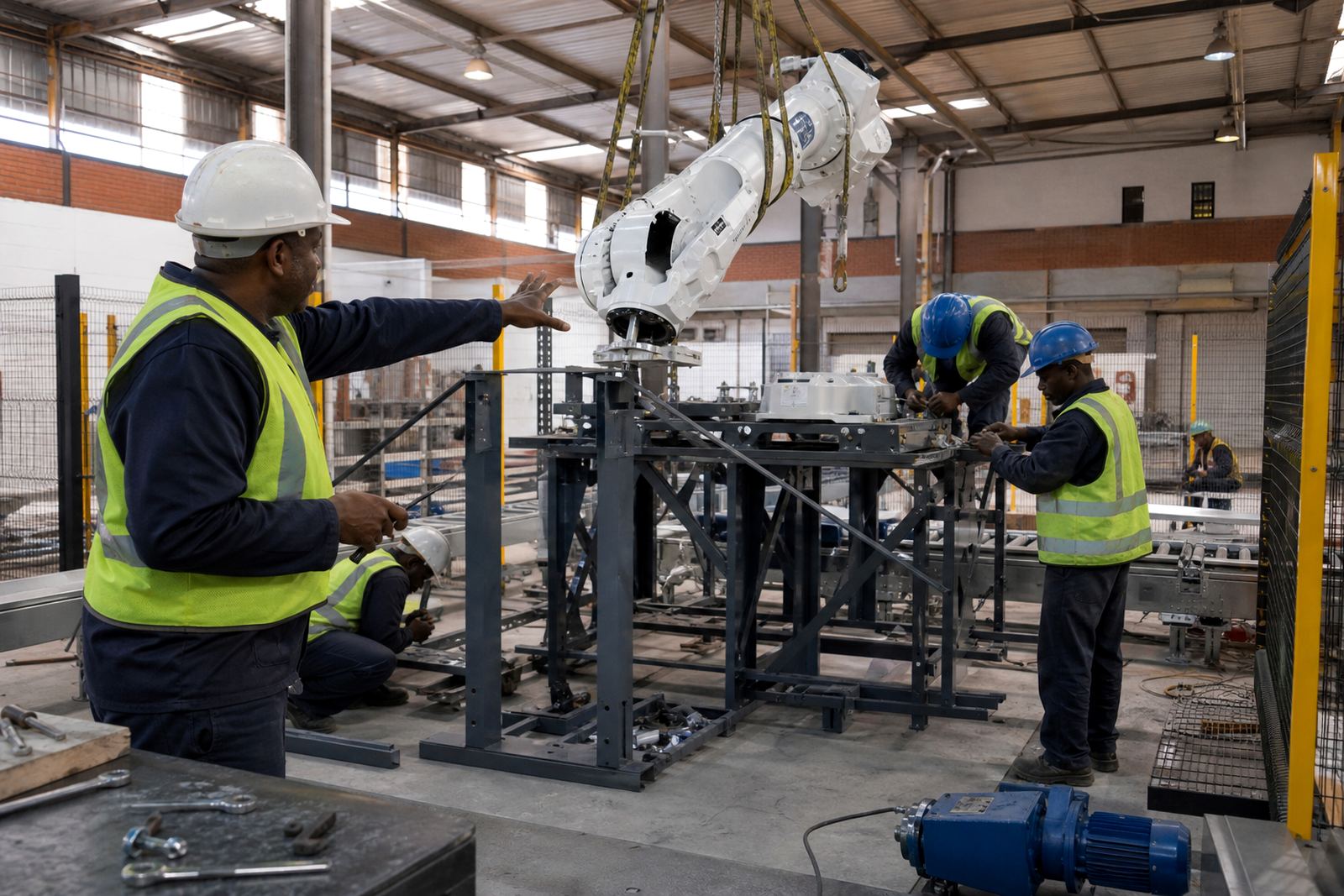
We keep the process practical and organised. First we arrange a site visit with the production and maintenance teams so the right people are available. We then review the current line while it is running if possible, and again during a stop if access to certain points is needed. Measurements are taken, photographs are logged and the operating sequence is mapped from product feed to final pallet movement.
After the visit, we prepare a summary that shows the retrofit options, the constraints, and the actions needed before installation can start. If there are clear risks, for example limited access around a live conveyor or a crossing point where forklift traffic passes too close, we flag that early. This helps your team plan shutdown windows and avoid last minute changes.
- Initial enquiry and line details review
- On-site measurement and workflow observation
- Utilities, guarding and access assessment
- Survey summary and retrofit planning notes
- Follow-up discussion with operations and maintenance
Typical Information We Capture During The Survey
Every line is different, but the same core information is needed to plan a retrofit properly. We check the type of product being packed, the case or bag dimensions, pallet sizes used on site and the speed required per hour or per shift. We also note whether the line runs one product or multiple SKUs, because product changeovers can affect gripper choice, conveyor controls and the amount of operator input needed.
In many plants, the biggest issue is not the robot itself but the interface to what is already there. Existing conveyors may be at mixed heights, side transfers can be tight and floor space may be limited by pillars or stored stock. We measure these points carefully so the later design reflects the actual plant, not a drawing that looks fine on paper but does not fit in reality.
- Product dimensions, weights and packaging type
- Pallet height limits and stack pattern requirements
- Line speed, buffers and accumulation points
- Current operator tasks and handover points
- Existing control panels, sensors and stop logic
Turnaround Times And Pricing Approach
Turnaround depends on site access, line complexity and how many areas must be measured. A small, single line survey can be completed quickly, while a larger plant with several conveyors, packing stations and palletising points takes longer. We plan the visit around your production schedule so the survey does not create unnecessary disruption.
Pricing is based on the scope of the survey and the time required on site and in report preparation. If a client wants only a narrow review of one end-of-line area, that is priced differently from a full plant walk through with several process interfaces. We keep the approach straightforward and itemised, so you know what is included before work starts. There are no generic package claims because each site needs its own scope.
For most plants, it is better to spend time on a proper survey than to rush into installation and discover a guarding conflict or power issue later. That extra planning usually saves time during shutdown and makes commissioning less stressful for the production team.
Follow Through: Maintenance Planning And Rechecks
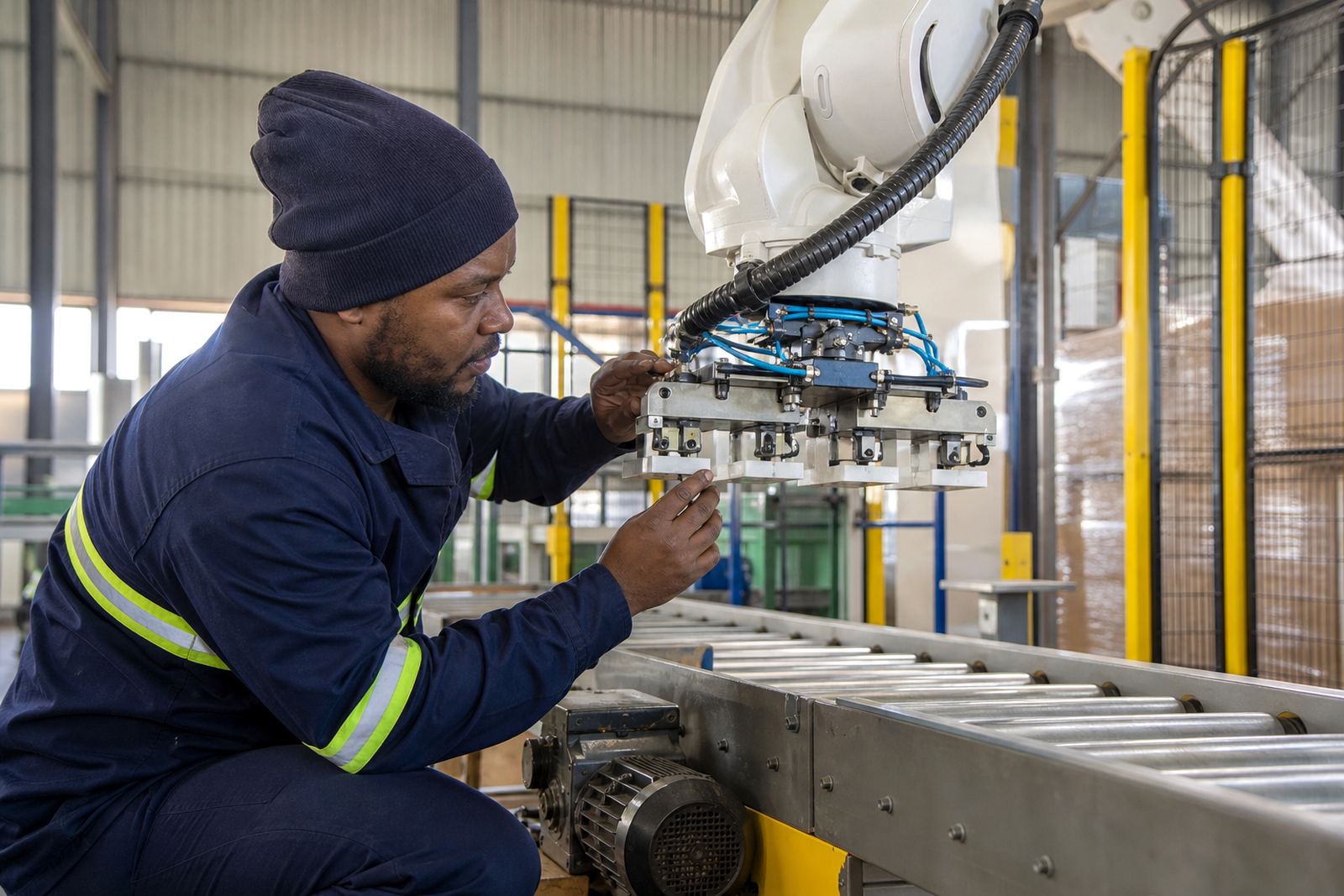
A site survey is not only about the first installation. It also helps with later upkeep planning, especially on lines that run long shifts or operate in dusty or humid conditions. Once a retrofit is complete, we can use the original survey notes to recommend service checks, access checks and spare parts planning for sensors, belts, actuators and guarding hardware. On some sites a quick recheck after the first few months is useful, particularly where product sizes change or operator habits shift.
We also support teams with breakdown assistance and retrofit changes when production grows. If a line is extended or a new packing format is added, the original survey gives a useful baseline. That means less re-measuring and faster decisions when you need to adjust the automation setup.
- Recommended review after installation and early running period
- Regular checks for conveyor wear, sensor alignment and guard condition
- Updates when product formats, pallet patterns or line speeds change
- Support for spares planning and maintenance scheduling
Key facts
| Survey focus | Product flow, conveyor interfaces, available space, utilities and operating constraints |
|---|---|
| Site types | Packing lines, palletising lines, mixed manual and automated end-of-line systems |
| Areas covered | Kempton Park, Johannesburg, Pretoria, Durban, Cape Town, Gqeberha, East Rand, Midvaal |
| Typical outputs | Measured layout notes, retrofit constraints, safety observations and planning recommendations |
| Related services | Retrofit Design, Conveyor Integration, Controls Integration, Safety Guarding Design |
| Use case | Pre retrofit planning for robot or cobot integration onto existing lines |