What installation management covers on a retrofit site
Installation management is the practical control of the fitment phase when a robot, cobot or palletising cell is added to an existing packing line. It is not just about placing equipment on the floor. It covers access planning, plant rules, isolations, contractor coordination, lift plans, line shutdown windows and the order in which each system is brought into service. For manufacturers running conveyors, bagging lines, case packing or palletising near Gauteng, the coast or inland sites, good planning keeps production losses down and reduces avoidable stoppages.
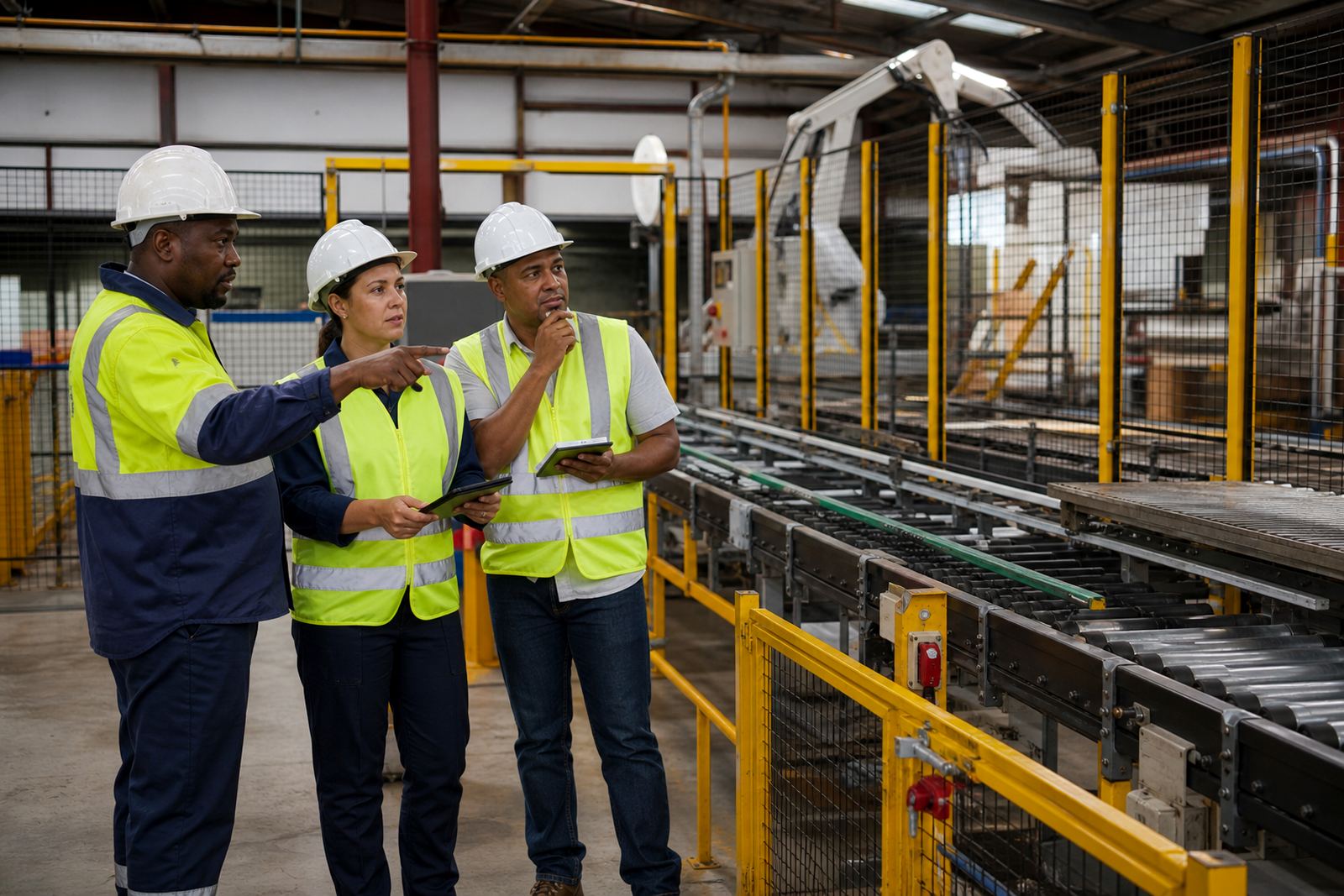
Our team works with your production, maintenance and health and safety staff to map the job before tools come onto site. That includes checking floor loading, route widths for equipment movement, anchor points, panel locations, cable routes and the space needed for guarding and operator access.
Typical scope during fitment and staged commissioning
Each site has its own sequence, but installation management usually includes the following:
- Pre-installation walkdown and readiness check
- Access planning for forklifts, cranes and delivery routes
- Downtime windows and shift-by-shift work planning
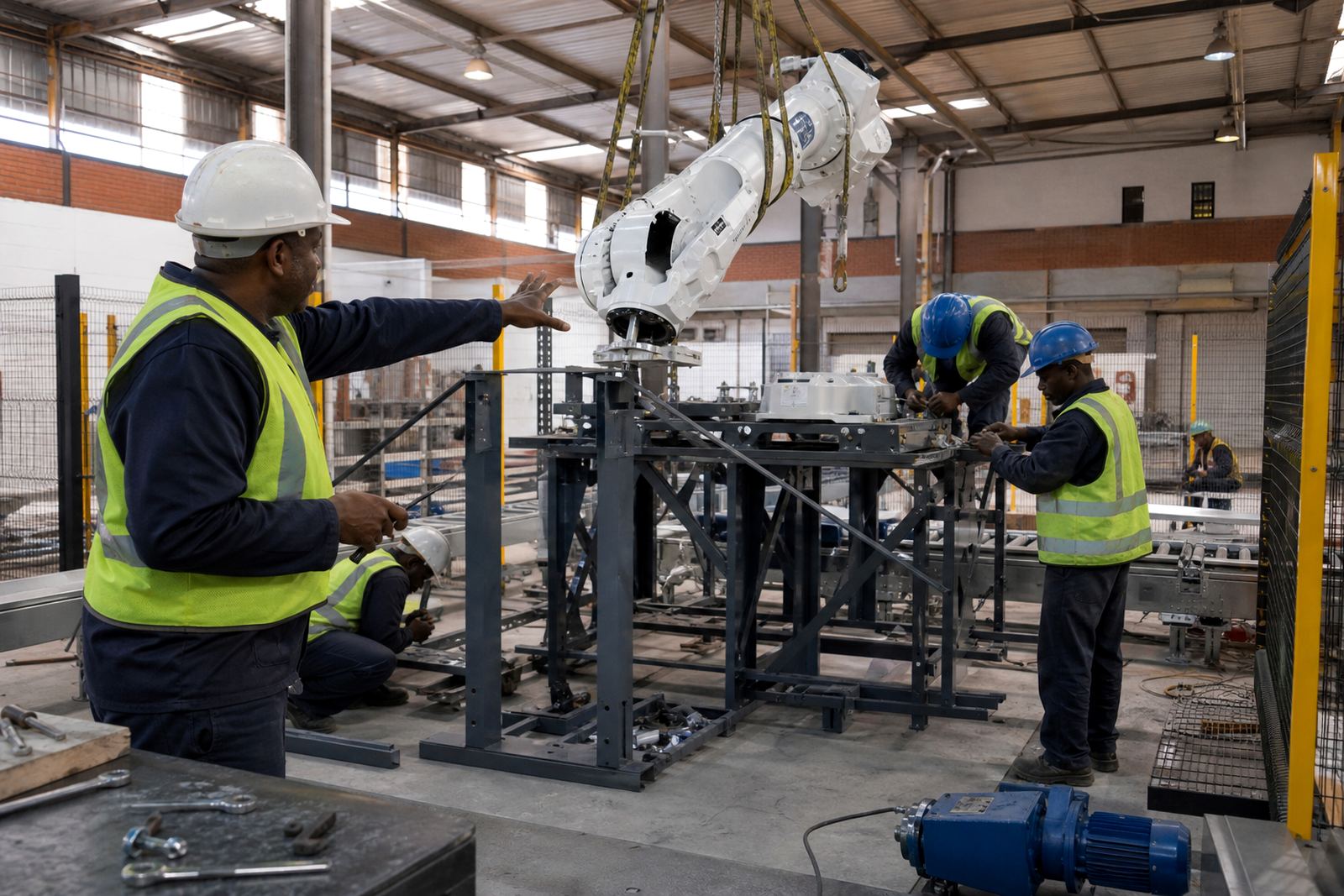
- Mechanical fitment coordination for frames, conveyors and tooling
- Controls tie-in for sensors, drives, panels and interlocks
- Guarding placement and entry-point control
- Dry run, single-cycle testing and controlled production ramp-up
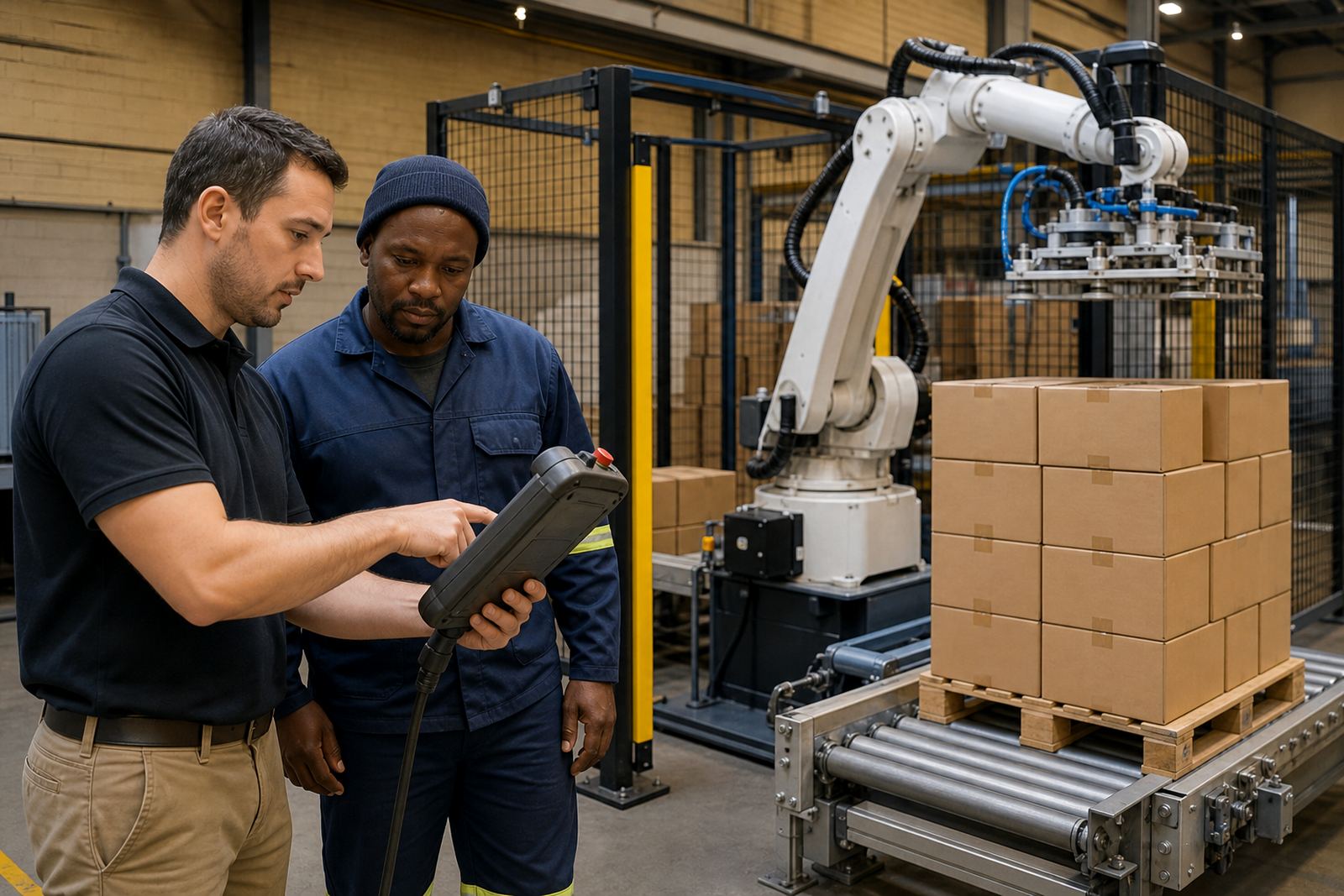
We manage the handover in stages so the line does not have to restart all at once. For example, a palletiser can be checked first in jog mode, then with empty pallets, then with light product runs before full-speed operation. On packing lines, this approach is useful where product flow, case orientation or pallet stability needs small adjustments. It gives your team time to verify the line logic and training before normal production resumes. In practice this reduces rework and helps the installation team catch small issues early, such as sensor alignment or cable routing that is too tight.
How we plan downtime and access on live production sites
Most retrofits happen while the factory is still operating, so installation management is built around the actual production calendar. We look at stock cover, customer dispatch deadlines, maintenance shifts and weekend availability before agreeing to a shutdown sequence. Where a site is in Spartan, Midvaal or the East Rand, we also consider deliveries, yard congestion and security controls so materials arrive when there is room to offload them safely.
Our process usually starts with a site readiness meeting, followed by a detailed work plan that shows what happens on each day and who is responsible. We then coordinate the mechanical crew, electrical crew and controls team so that work is done in the correct order. If a conveyor needs to be moved before a robot base is set, that sequence is locked in upfront. This avoids the common problem of one trade waiting on another and losing an entire shift. A clean plan also helps reduce dust contamination around sensors and panels, which matters on food, beverage and general packaging lines.
Safety guarding, risk assessment and site control
Robotic installations must be safe for operators, maintenance staff and contractors, and safety cannot be treated as a side task. We support site-specific risk assessment work and ensure guarding, access doors, light screening where needed, emergency stops and warning signage are included in the installation plan. Every site needs its own risk assessment because layout, product type, forklift movement and operator interaction all change the hazard profile.
General good practice includes proper isolation, lockout steps, controlled access during testing and clear handover of the safe operating method. Where cobots are used, the setup still needs careful review of speed, reach, tool shape and human interaction points. A cobot is not automatically safe just because it is collaborative. The final arrangement depends on the application and the site conditions. We support the controls and guarding design, but the actual safety solution is always confirmed against the real installation and the line layout. That is the only sensible approach for plants in humid coastal areas, dusty inland sites or high-traffic distribution centres.
Turnaround timing and what affects the schedule
Turnaround depends on line size, the amount of conveyor modification, panel work, guarding and the number of shifts available for installation. A straightforward retrofit on an existing packing line may take a short planned shutdown and a few follow-up adjustment visits. A larger palletising cell with conveyor rework, multiple infeed points and full safety fencing will need a longer sequence with staged testing. We do not give blanket time promises because the schedule should follow the site conditions, not the other way around.
As a guide, the main scheduling factors are equipment access, the quality of upstream preparation, whether the floor and power points are ready, and how much existing hardware must be kept in place. Our team has been handling retrofit work at ReAutomated for many years, so we know a strong installation run usually starts with the preparation completed before the first bolt is tightened. That is why we place weight on readiness checks and methodical handover, not only on the final commissioning day.
Pricing approach, service checks and handover support
Pricing for installation management is usually based on the scope of the retrofit, the number of site days, the complexity of access and the level of coordination required. Some projects need only light supervision and commissioning support, while others need full on-site management across several disciplines. We quote against the actual job scope so you know what is covered, including planning meetings, site coordination, installation oversight and handover support. No two packing lines are identical, so the budget should reflect the real work, not a generic rate card.
After commissioning, service checks should be matched to the line duty and the environment. In many plants that means a brief check after the first week of operation, then routine reviews at planned service points to inspect cables, fasteners, guarding, bearings, sensors and alignment. For coastal sites, corrosion checks may need to happen more often. For sites with heavy dust or washdown, inspection timing should be adjusted accordingly. We can support the maintenance team with spares planning, seasonal checks and breakdown response so the installation keeps running properly after handover. That follow-through is part of sound installation management, not an optional extra.
- First post-startup check after initial production run
- Routine inspection based on duty cycle and site conditions
- Extra checks after stoppages, collisions or line modifications
- Seasonal review where humidity, dust or corrosion are present
Key facts
| Service focus | Installation management for robotic packing and palletising retrofits |
|---|---|
| Typical line types | Packing lines, conveyor-fed palletising lines, case handling and end-of-line systems |
| Site coverage | Kempton Park, Johannesburg, Pretoria, Durban, Cape Town, Gqeberha, East Rand, Midvaal |
| Project coordination | Access planning, downtime control, staged commissioning and contractor coordination |
| Safety support | Site-specific risk assessment support, guarding design coordination and controlled handover |
| Maintenance follow-up | Post-startup checks, routine inspections and spares planning support |