What Our Risk Assessment Support Covers
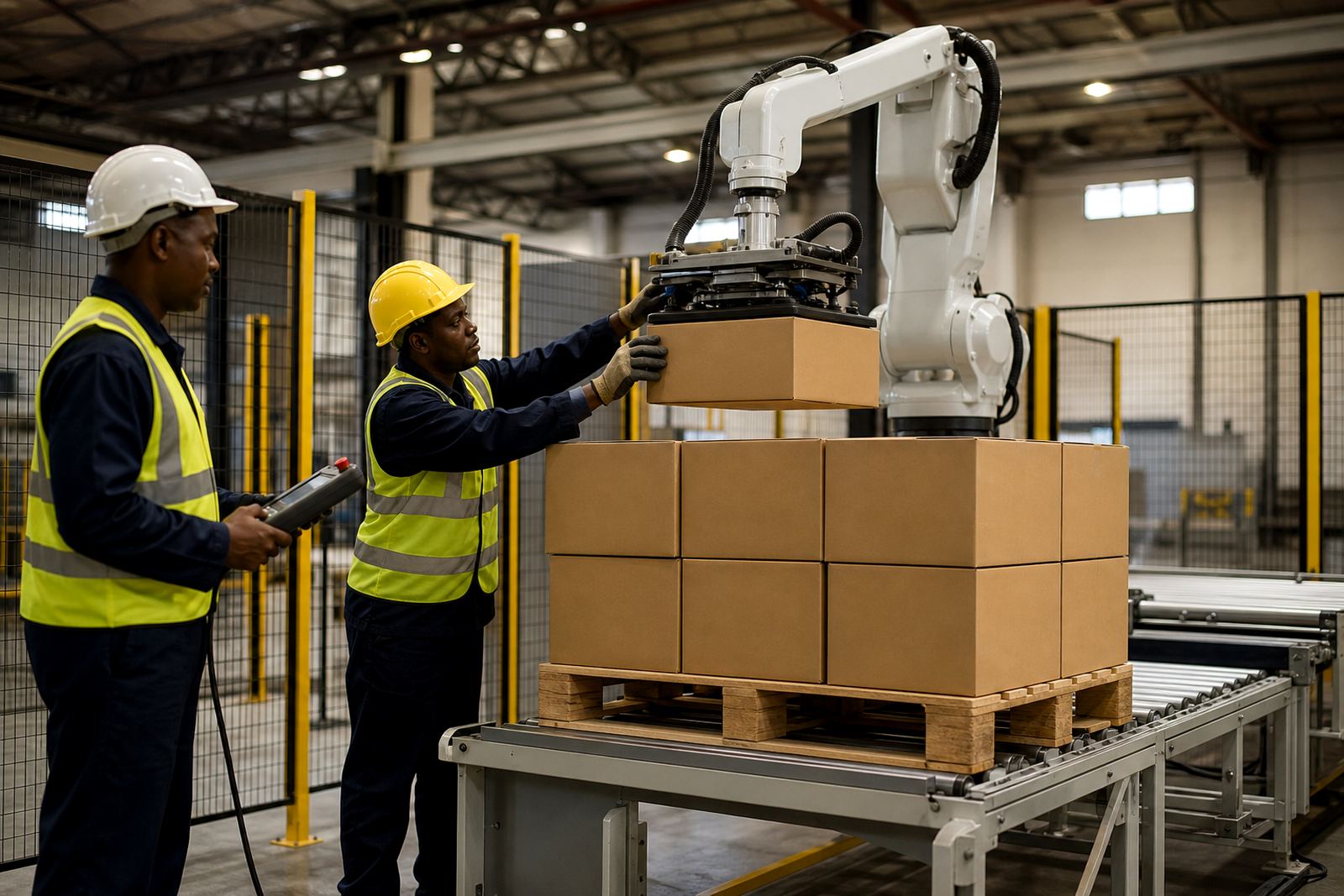
Our risk assessment support is built around retrofit projects where a robot, cobot or palletising cell is being added to an existing packing or conveyor line. We look at the full working area, from infeed conveyors and product transfer points through to pallet discharge, wrap stations and manual intervention zones. The aim is to identify foreseeable hazards before the line is modified, then translate those findings into practical controls that suit the way the plant actually runs.
Typical hazards include crushing points, trapping, unexpected start-up, reach into moving equipment, stored energy in pneumatics or hydraulics, pallet stability issues, access during cleaning, and line faults that lead to manual clearing. On many sites the real challenge is not the robot itself but the old conveyor layout, uneven floor levels, low headroom or shared access routes. We note these items clearly so the retrofit can be planned with safe working distances, guarding and stop logic in mind.
- Review of current line layout and operating sequence
- Identification of pinch points, access risks and pedestrian conflict areas
- Assessment of existing emergency stops, isolators and stop zones
- Guidance for guarding, interlocks and controlled access
- Support for safe maintenance and cleaning access
How We Approach Each Site Review
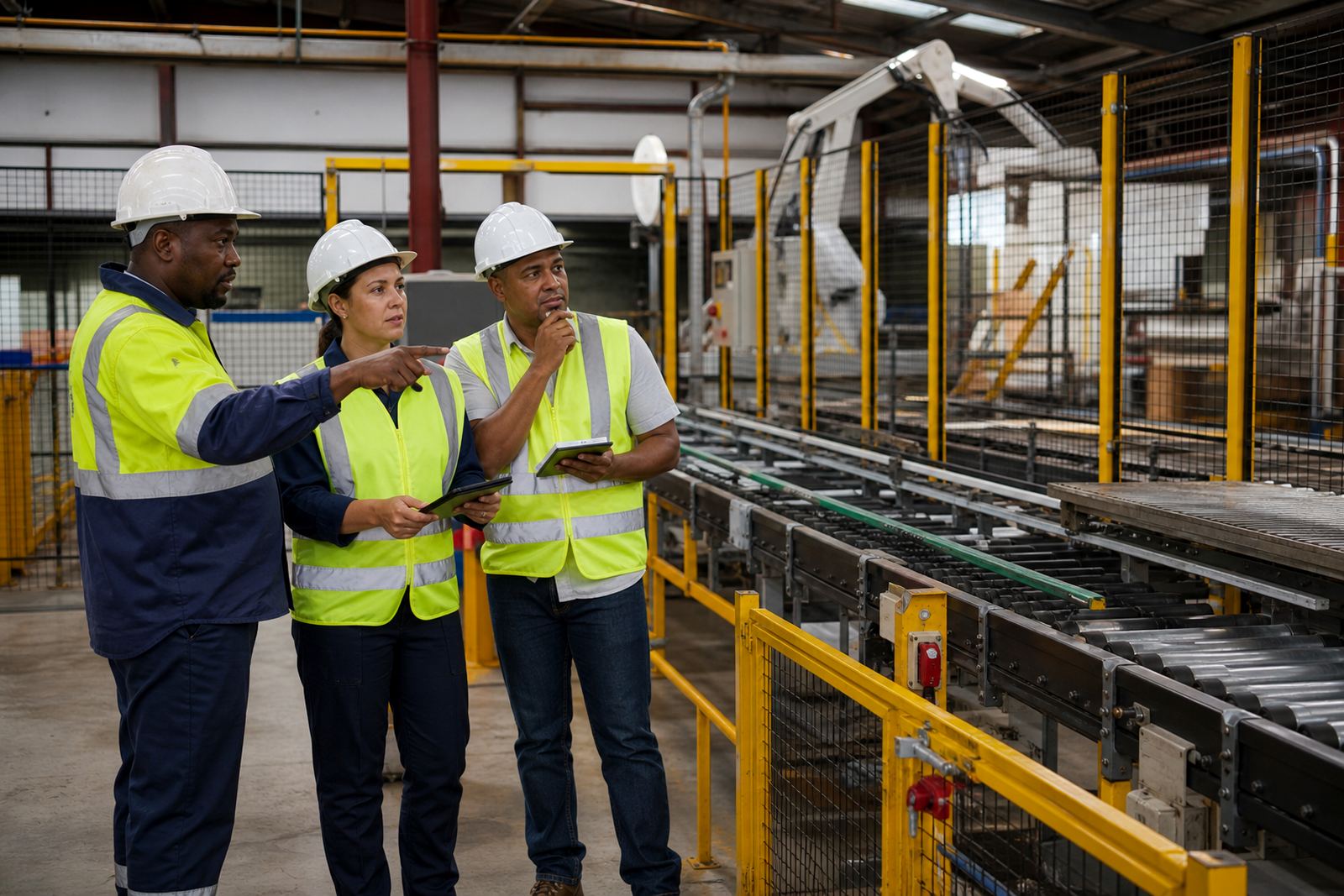
We start with a site walk-through in Kempton Park, Johannesburg, Pretoria, Durban, Cape Town, Gqeberha or elsewhere in South Africa as required. Before the visit we ask for the line layout, product details, cycle times, shift pattern and any known trouble spots. On site, we observe how operators load product, clear jams, change rolls, move pallets and work around the line during normal production. This is important because paper drawings rarely show the small habits that create risk.
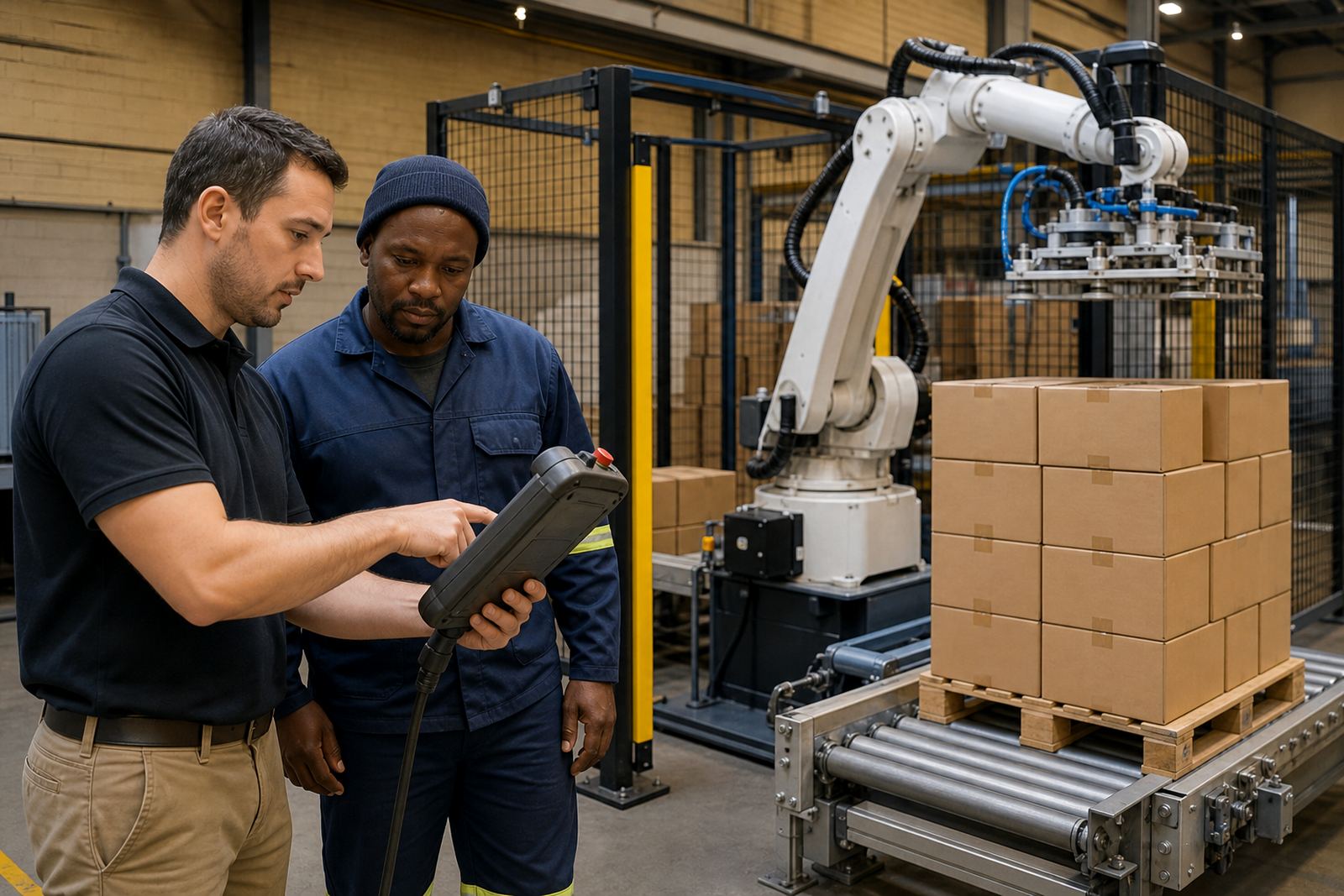
The review is then matched to the retrofit concept. If a cobot is being considered, we look at collaborative operating modes, the actual payload and the reach envelope. If the application needs a fully fenced cell, we assess guard positions, gate access and how the conveyors will be tied into the safety circuit. The result is a practical set of findings that supports design and installation decisions rather than a generic safety note.
- Pre-visit information request and project scoping
- On-site observation during normal line operation
- Review of conveyor interfaces, product flow and manual tasks
- Hazard register with recommended control measures
- Feedback session with operations and maintenance teams
Safety Guarding, Controls and Stop Logic
For robotic packing and palletising retrofits, guarding and controls must work together. We support the safety concept by reviewing fence lines, gate positions, light curtains where suitable, safe speed or safe stop functions where applicable, and the way the system returns to service after an interruption. A guard that is easy to bypass or a stop circuit that does not match the line sequence can create more risk than it removes.
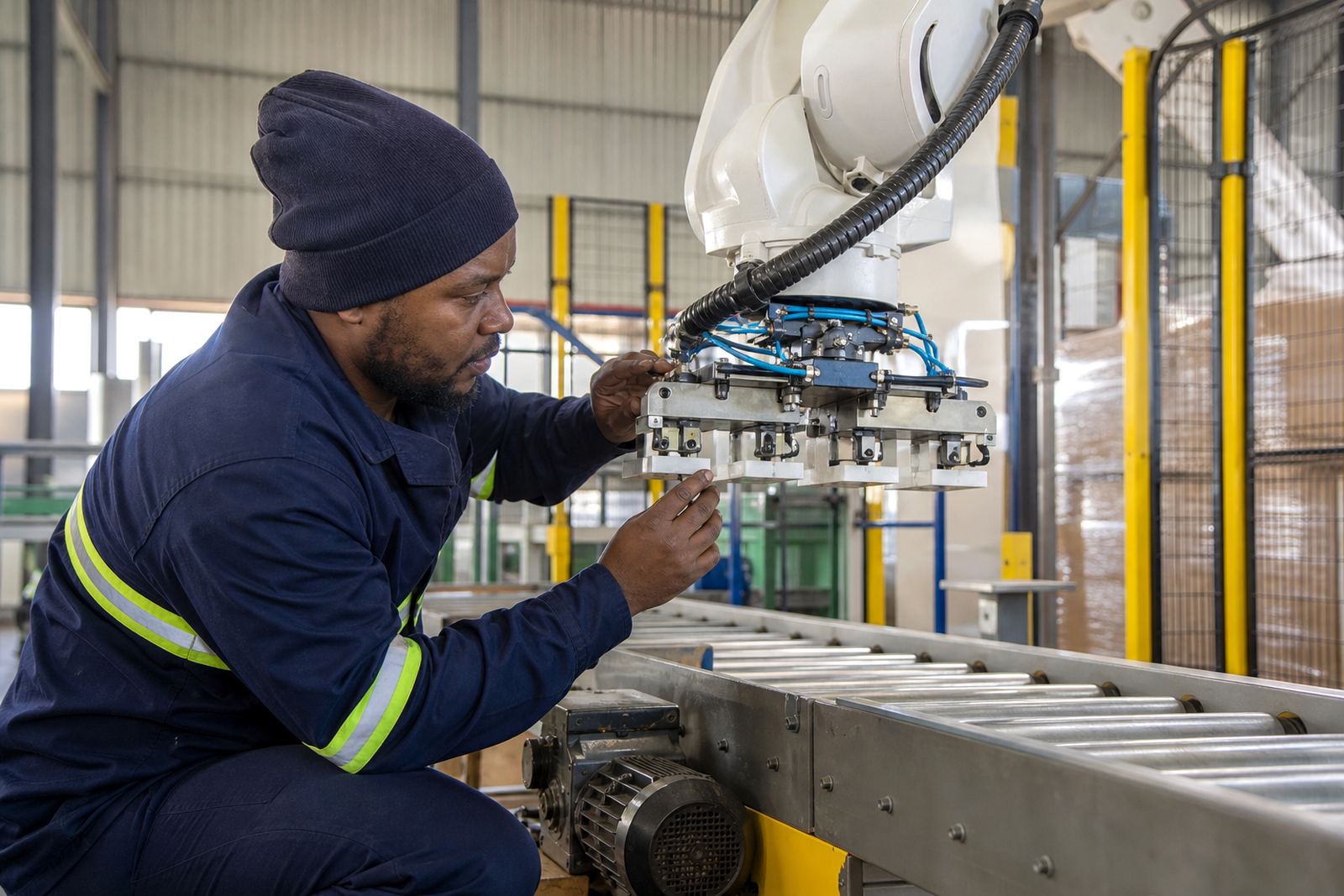
We also consider the practical side of maintenance.Those conditions affect enclosure placement, cable routing, lockout points and how long a line can remain safely isolated during servicing. Each recommendation is based on the specific site conditions, not a generic template.
- Guarding review for fixed and interlocked access points
- Support for emergency stop placement and reset logic
- Assessment of safe access for operators and technicians
- Review of power isolation and restart procedure after outages
Deliverables You Can Use On The Floor
Our support is not just a conversation. We provide clear documentation that can be used by production, maintenance and project teams when planning the retrofit. That usually includes a hazard list, control recommendations, notes on access requirements and a summary of any items that need to be resolved before commissioning. Where required, we can also assist with checklists for pre-start inspection and routine verification after the line goes live.
Because every factory has different internal procedures, we keep the wording practical and easy to follow. If the site runs multiple shifts or has shared pedestrian routes, the documentation will reflect that. If the line is part of a larger plant with upstream filling or downstream warehousing, we note the interface risks so nothing is missed during integration.
- Site-specific hazard register
- Retrofit safety recommendations
- Operator access and maintenance notes
- Commissioning readiness checklist
- Post-installation verification points
Turnaround, Pricing Approach And Project Timing
Turnaround depends on the size of the line and how many areas need review. A single palletising cell with one conveyor interface can often be assessed faster than a multi-line packing area with shared access and several manual touchpoints. We work to the project schedule so the risk assessment support does not hold up design, fabrication or shutdown planning.
Pricing is based on scope, site complexity and travel requirements. We do not use one flat figure because a small retrofit in Midvaal is not the same as a large multi-bay installation in Cape Town or Gqeberha. The pricing approach is quoted after scope confirmation, and it covers the level of review needed for the specific line, not a one-size-fits-all visit.
- Simple line review for one robot or cobot retrofit
- Expanded review for multiple conveyors or shared work areas
- Travel and site access considered in the quotation
- Project timing aligned to shutdown windows and commissioning dates
Service Checks And Ongoing Review
Risk does not stay still after installation. Product types change, operators rotate, guards get adjusted and conveyors wear over time. For that reason, we recommend periodic review of the retrofit, especially after any modification to the line, a change in shift pattern, an increase in throughput or a breakdown that required temporary workarounds. In many plants, a short verification during planned maintenance is enough to catch issues before they become incidents.
As a general guide, sites should re-check guarding, interlocks, stop functions and access arrangements at set intervals agreed internally, and again after any significant change. Where a line operates in a harsh environment or under heavy use, more frequent checks are sensible. The exact interval depends on the equipment, duty cycle and site rules, so we help set a review rhythm that fits the operation.
- Routine checks after installation and at planned maintenance stops
- Extra review after any line change or process change
- Verification after repeated stoppages or repeated manual clearing
- Update notes for operators, maintenance staff and supervisors
Key facts
| Service type | Risk assessment support for robotic packing and palletising retrofits |
|---|---|
| Typical equipment | Robots, cobots, conveyors, pallet handling equipment, guarding and control panels |
| Site coverage | Kempton Park, Johannesburg, Pretoria, Durban, Cape Town, Gqeberha, East Rand and Midvaal |
| Assessment focus | Foreseeable hazards, access control, stop logic, guarding, restart procedure and maintenance access |
| Turnaround | Depends on line size and complexity, with scope set before site visit |
| Pricing | Quoted to scope after line review, site complexity and travel requirements are confirmed |