What Our Operator Training Covers
Our operator training is designed for line teams working on packing and palletising retrofits in factories, warehouses and distribution sites. We cover normal operation, start-up and shut-down routines, basic changeovers, alarm response, and the daily checks that keep conveyors, guarding and robot cells running as intended.
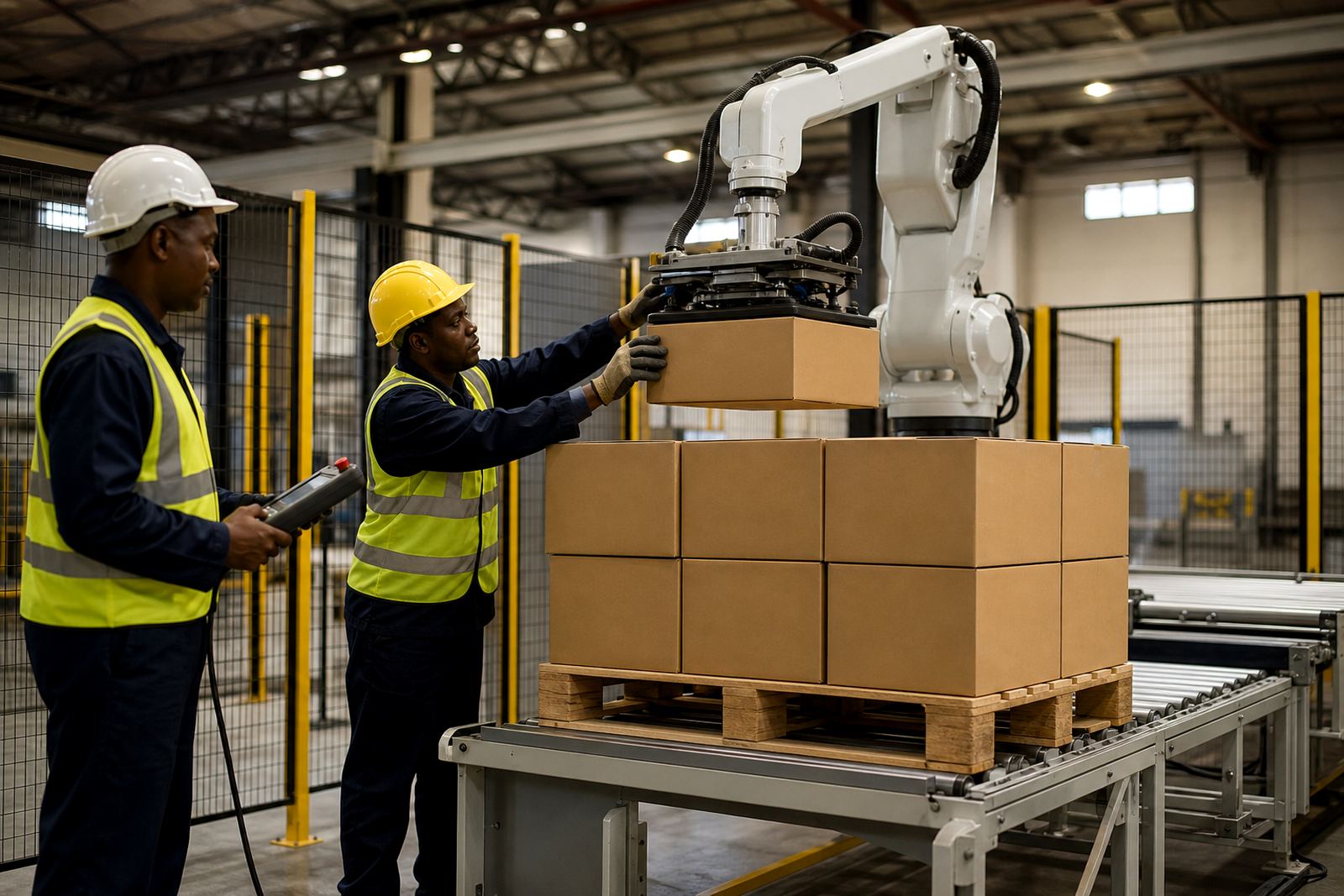
Training is built around the actual line layout on site, so operators learn on the equipment they will use every day. That includes the infeed conveyor, outfeed conveyor, pallet build area, safety devices, HMI screens and any cobot or robot cell fitted into the line. We keep the language clear and practical, with step by step instruction that suits shift teams and mixed-experience crews.
- Normal operating sequence from line start to line stop
- Basic product and format changeovers
- Alarm acknowledgement and safe reset routine
- Daily visual checks on guarding, sensors and conveyors
- Safe working around moving equipment and pallet build zones
Training For Operators, Supervisors And Relief Staff
We train the people who actually run the line, including operators, shift leaders, relief staff and maintenance teams that hand over to production. This matters because packing and palletising lines often work across day and night shifts, and the person taking over may not have been on the previous shift. Clear handover reduces stoppages and avoids unsafe shortcuts.
Sessions can be grouped by role, with separate focus for operators and supervisors where needed. Operators learn how to run the line and spot trouble early. Supervisors learn how to manage handovers, record faults and call for support when a fault goes beyond routine correction. Maintenance staff can attend the same session to understand the interface between mechanical checks, controls and production discipline.
- New line handover training for fresh installations
- Refresher training after changes to layout or product sizes
- Shift team training before peak season or overtime periods
- Supervisor guidance on escalation and fault logging
How We Run The Training Session
We usually begin with a short review of the line layout, safety devices and normal operating sequence. After that we move into demonstration, supervised practice and simple checks that show whether each operator understands the sequence. Where the line includes conveyors, transfer points or palletising equipment, we show the correct order for starting, pausing and resuming production so product does not bunch up or fall over.
The session is kept practical and site specific. If your plant has limited space, loading bay movement, dust, humidity or frequent power interruptions, we address those conditions in the training.We make those points part of the operating method, not just a note in a file.
- Pre-training review of the line and current operating method
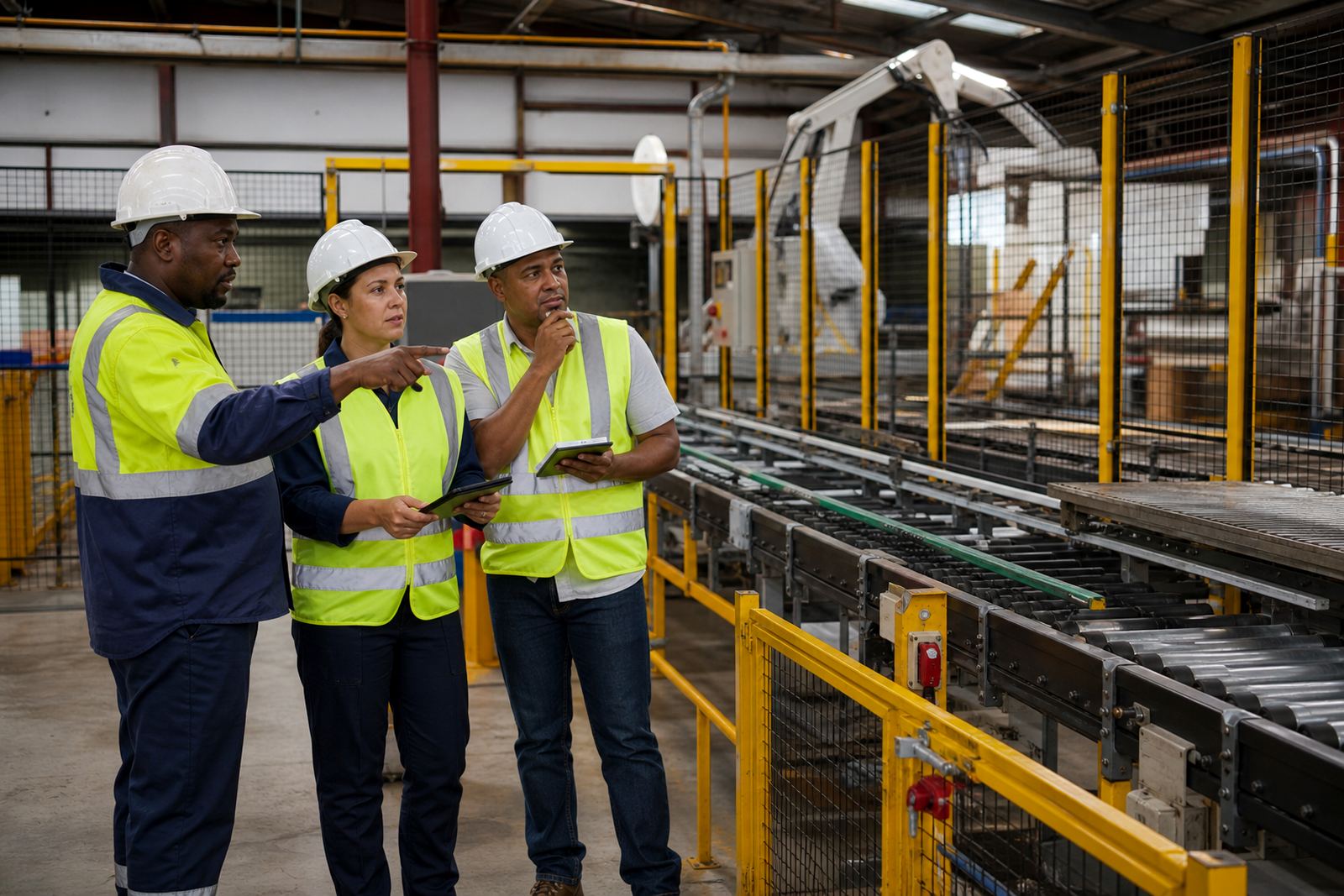
- Walkthrough on site with the actual controls and guarding
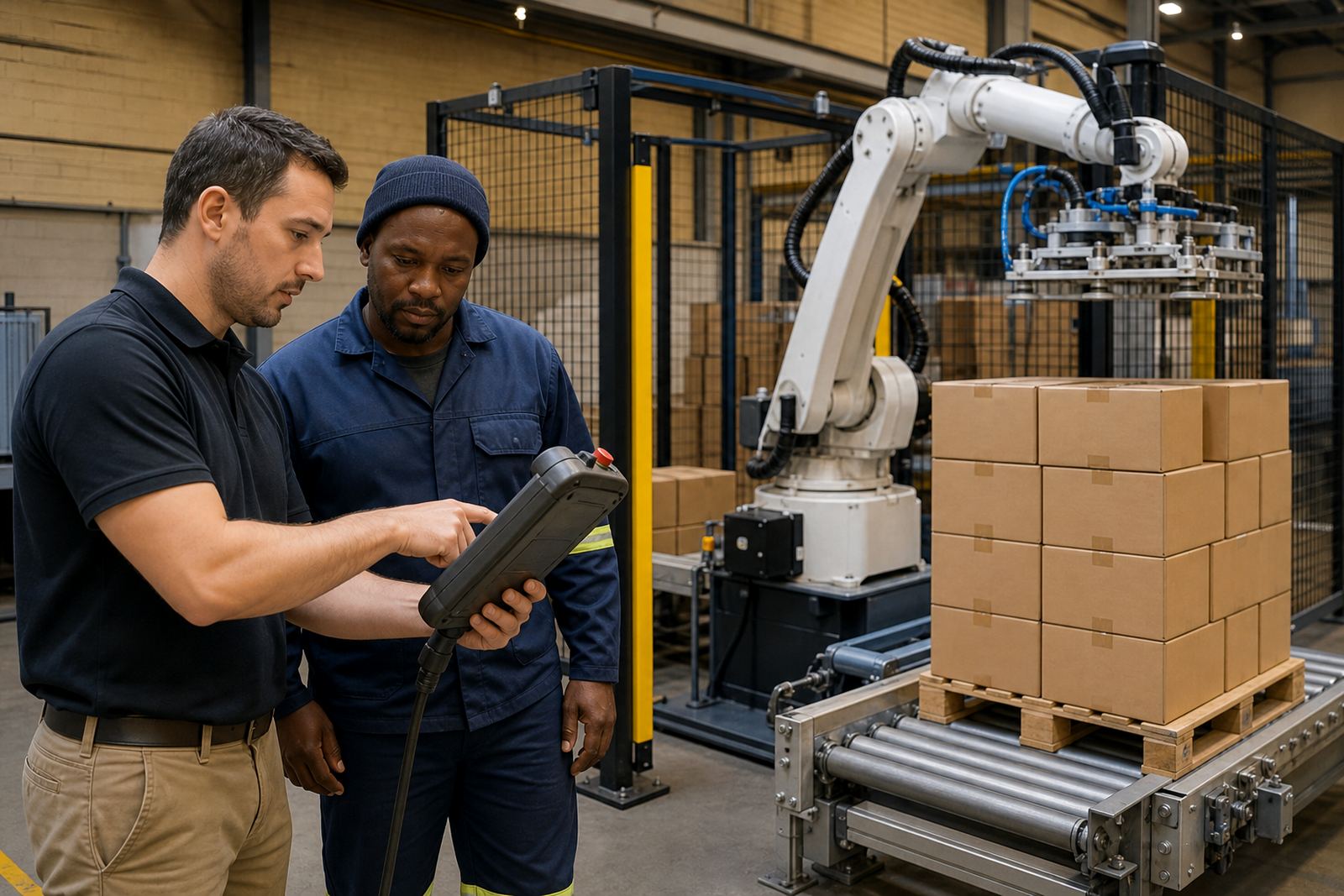
- Hands-on practice under supervision
- Knowledge check and final handover notes
Safety Awareness And Routine Checks On The Line
Every retrofit needs site-specific safety controls, and training must match the risk assessment for that exact line. We explain general safety principles such as keeping clear of moving conveyors, never bypassing interlocks, using lockout procedures where required and reporting damaged guarding straight away. Each site still needs its own risk assessment and operating rules, because layout, product type and staff movement all change the risk picture.
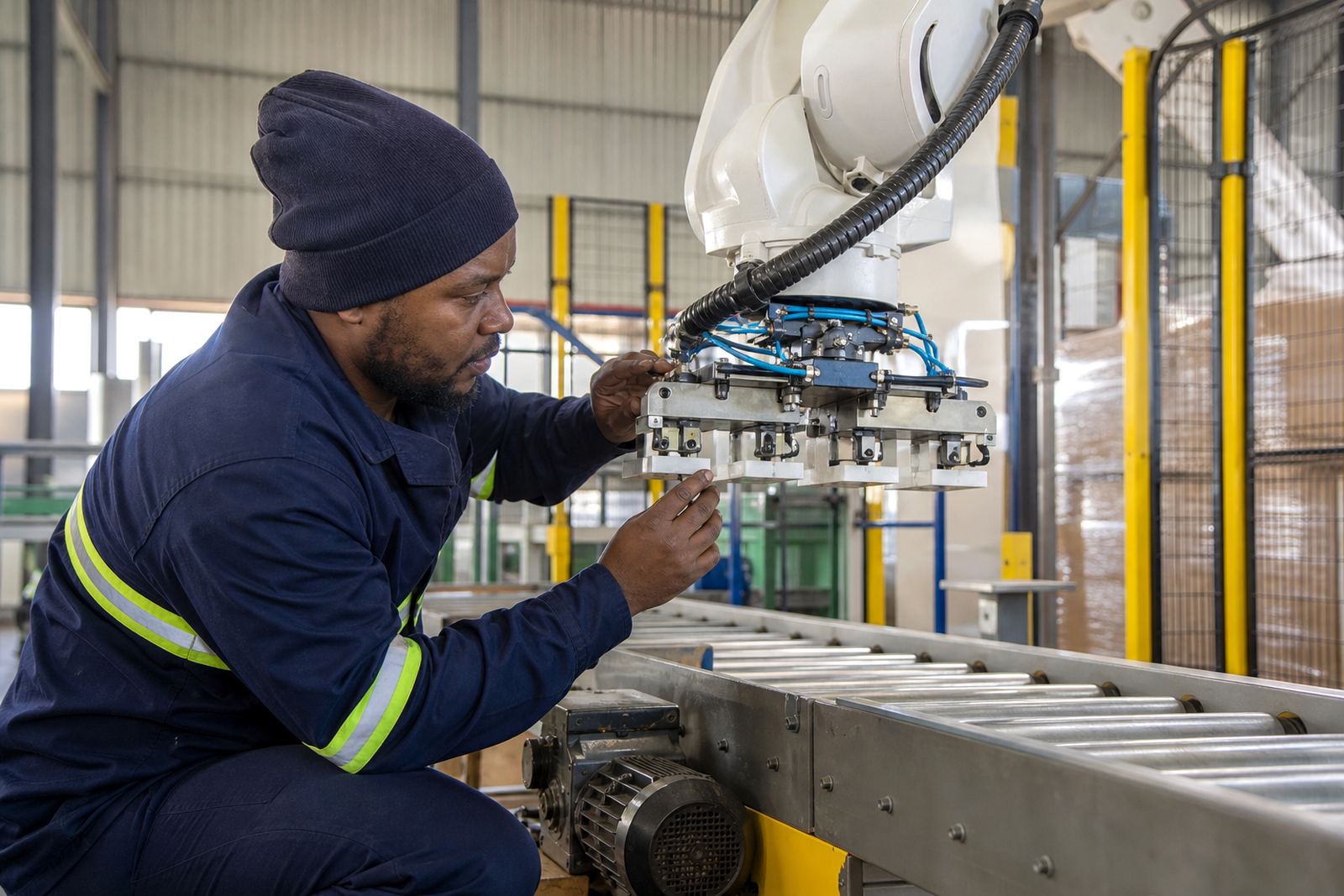
Routine checks are part of the training because small issues can become breakdowns. Operators are shown what to look for on chain tension, belt tracking, photoelectric sensors, gate latches, emergency stops and pallet quality. They are also taught when to stop the line and call support instead of trying to force a restart. That helps protect staff and reduces damage to the equipment.
For sites with cobots or automated palletising arms, we also cover correct entry into the cell, warning devices and restart awareness after a stop. The goal is to keep people safe, keep the line moving and avoid avoidable downtime.
- Emergency stop locations and restart discipline
- Guarding, interlock and light device awareness where fitted
- Cleaning and housekeeping around the line
- When to stop production and escalate a fault
Turnaround, Scheduling And Support After Training
Training can usually be arranged once the retrofit is mechanically and electrically ready for handover, or as a refresher after a line modification. The actual turnaround depends on the size of the line, the number of operators to be trained and whether the session needs to cover multiple shifts. A single line may be covered in half a day, while a larger packing or palletising line with more changeover points may need a full day or split sessions.
We can schedule training during commissioning support, at first production, or after the team has had time to run the line and note the questions that only arise in real production. If the site later changes carton sizes, pallet patterns or line speeds, we can visit again for a refresher. Service checks are also discussed so operators know what is daily, weekly and monthly, and what must be left to the maintenance team.
- Half day or full day sessions depending on line complexity
- Refresher visits after format changes or new staff intake
- Shift friendly scheduling for production teams
- Follow-up support for early stage operating questions
Pricing Approach And What A Typical Specification Includes
Pricing is quoted according to the scope of the training, the number of people involved, the number of shifts and the amount of site-specific preparation required. We do not use a one-size-fits-all rate because a compact conveyor retrofit in Midvaal is not the same as a multi-line palletising system in Johannesburg or Durban. The quotation normally follows the site survey, the control layout and the final training scope agreed with production and maintenance.
A typical training specification will define the line areas covered, the number of attendees, the language and level of detail required, and whether printed operating notes or quick reference sheets are needed. Where the site has strict access control, special PPE or municipal rules affecting loading areas and fire routes, those conditions are included in the training plan so the team understands how to work within them. The result is training that fits the plant, not a generic classroom talk.
- Quoted to the line scope and number of trainees
- Can be tied to installation, commissioning or refresher work
- Includes site rules, access controls and operating limits
- Can be extended to cover maintenance planning and spares awareness
Key facts
| Primary focus | Normal operation, changeovers, safety awareness and routine checks |
|---|---|
| Typical session length | Half day to full day, depending on line size and team numbers |
| Audience | Operators, shift leaders, relief staff and support maintenance teams |
| Coverage | Conveyors, palletising cells, guarding, controls and handover routines |
| Format | On-site practical training with supervised line walkthroughs |
| Service area | Kempton Park, Johannesburg, Pretoria, Durban, Cape Town, Gqeberha and nearby industrial areas |