What Our Maintenance Support Covers
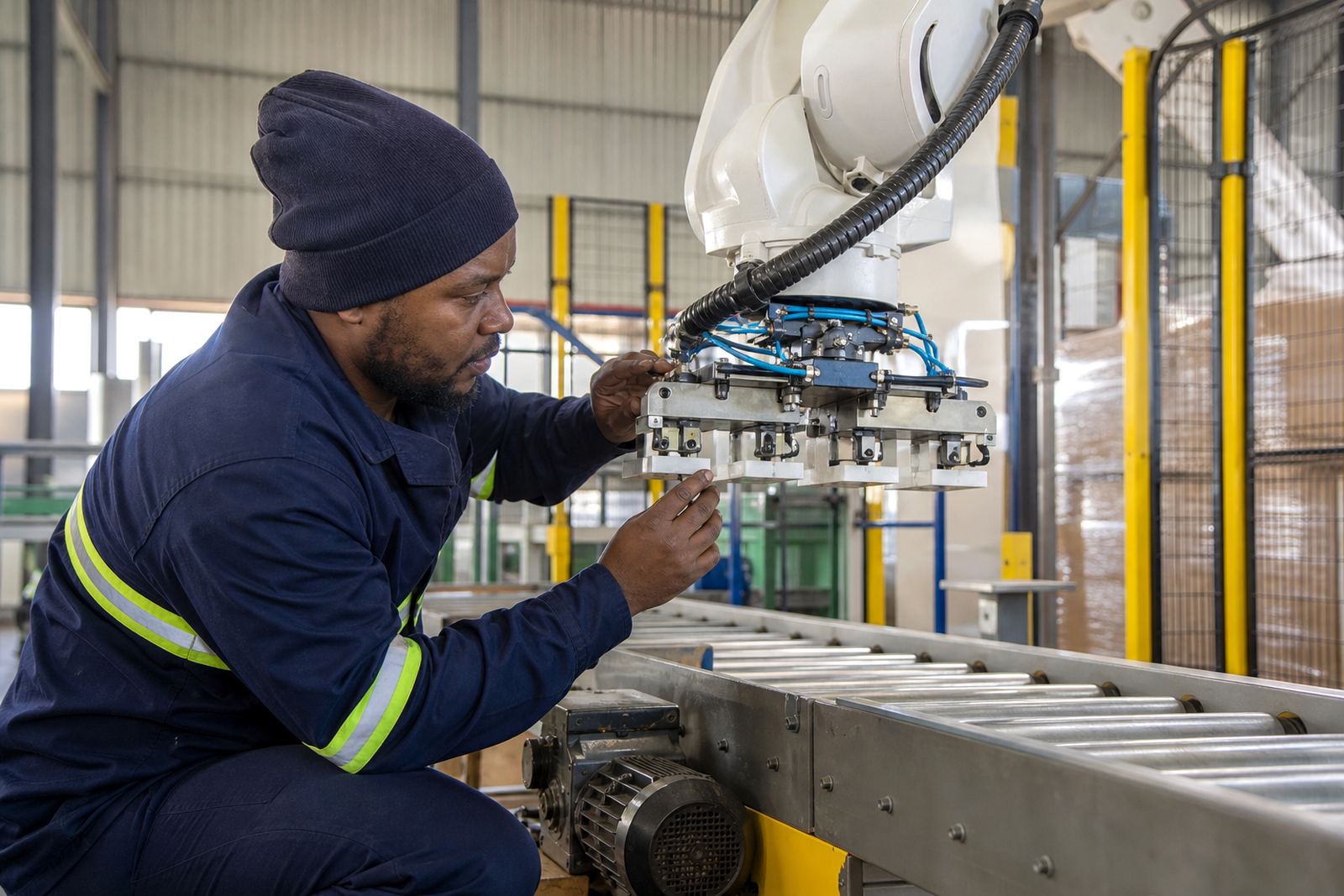
Maintenance support is built for retrofitted packing and palletising lines that must keep moving through long shifts, weekend catch-up runs and the realities of South African production. We support robotic cells, cobots, grippers, end effectors, sensors, conveyor interfaces, safety devices and control panels so the full line stays in working order not just the robot arm itself.
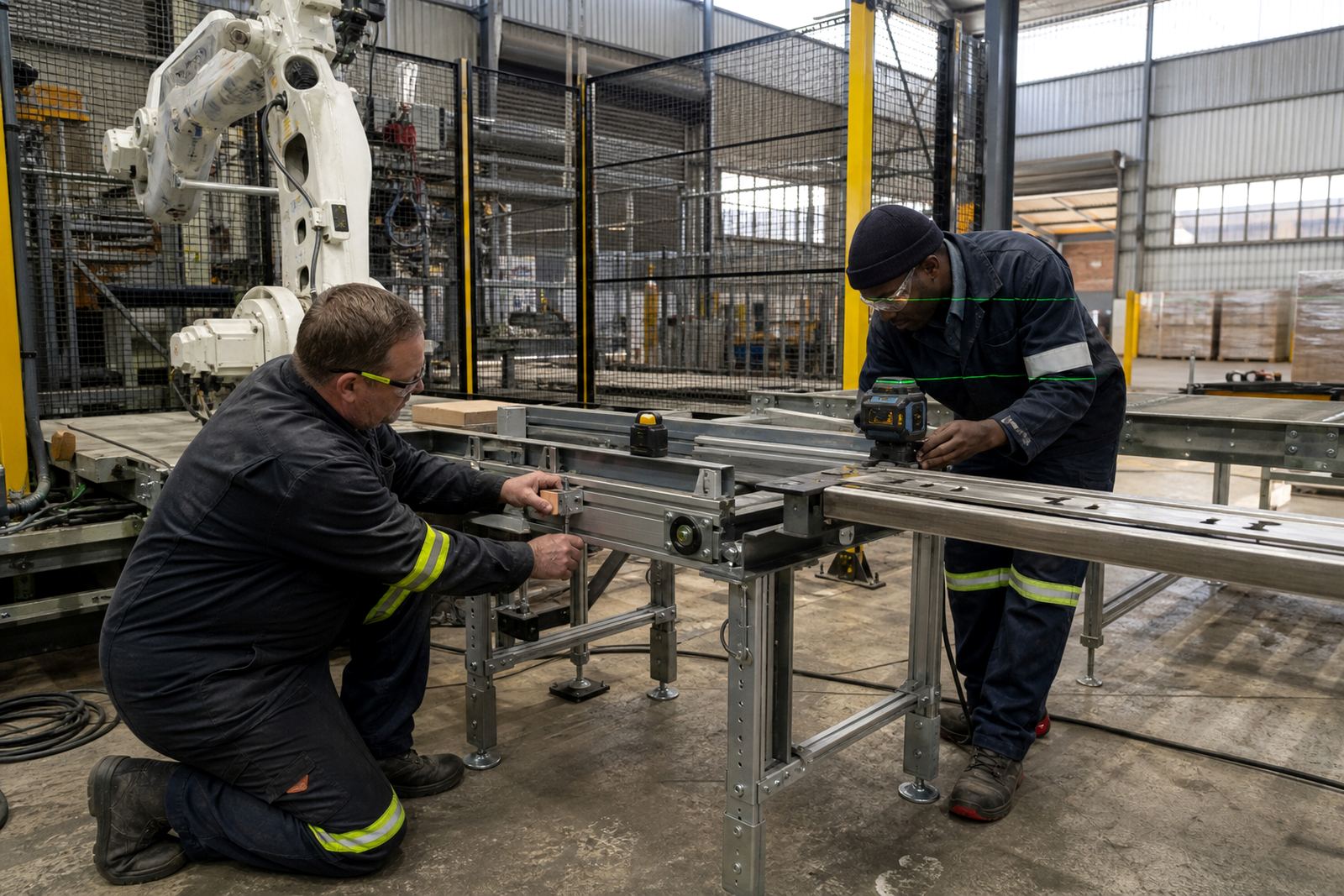
Our team looks at the complete installation, including infeed conveyors, transfer points, pallet build areas, fencing, interlocks, E-stops, cable management and the parts that often take the most wear in dusty inland plants or humid coastal sites. We also review lubrication points, fasteners, hose runs, sensor alignment and the condition of wear parts such as belts, rollers, guides and gripping surfaces.
- Planned inspections for mechanical, electrical and control items
- Checks on cycle quality, sensor response and repeatability
- Guarding, interlock and emergency stop checks
- Wear part identification and spares planning
- Support for fault finding after stoppages or unstable running
How We Structure A Maintenance Visit
Every site is different, so we start with the way the line is used day to day. A plant running two shifts in Gauteng will need a different service rhythm to a coastal facility handling moisture-sensitive product or a site where power interruptions have created repeated stop-start conditions. We agree the scope before the visit, then work through a methodical checklist on site.
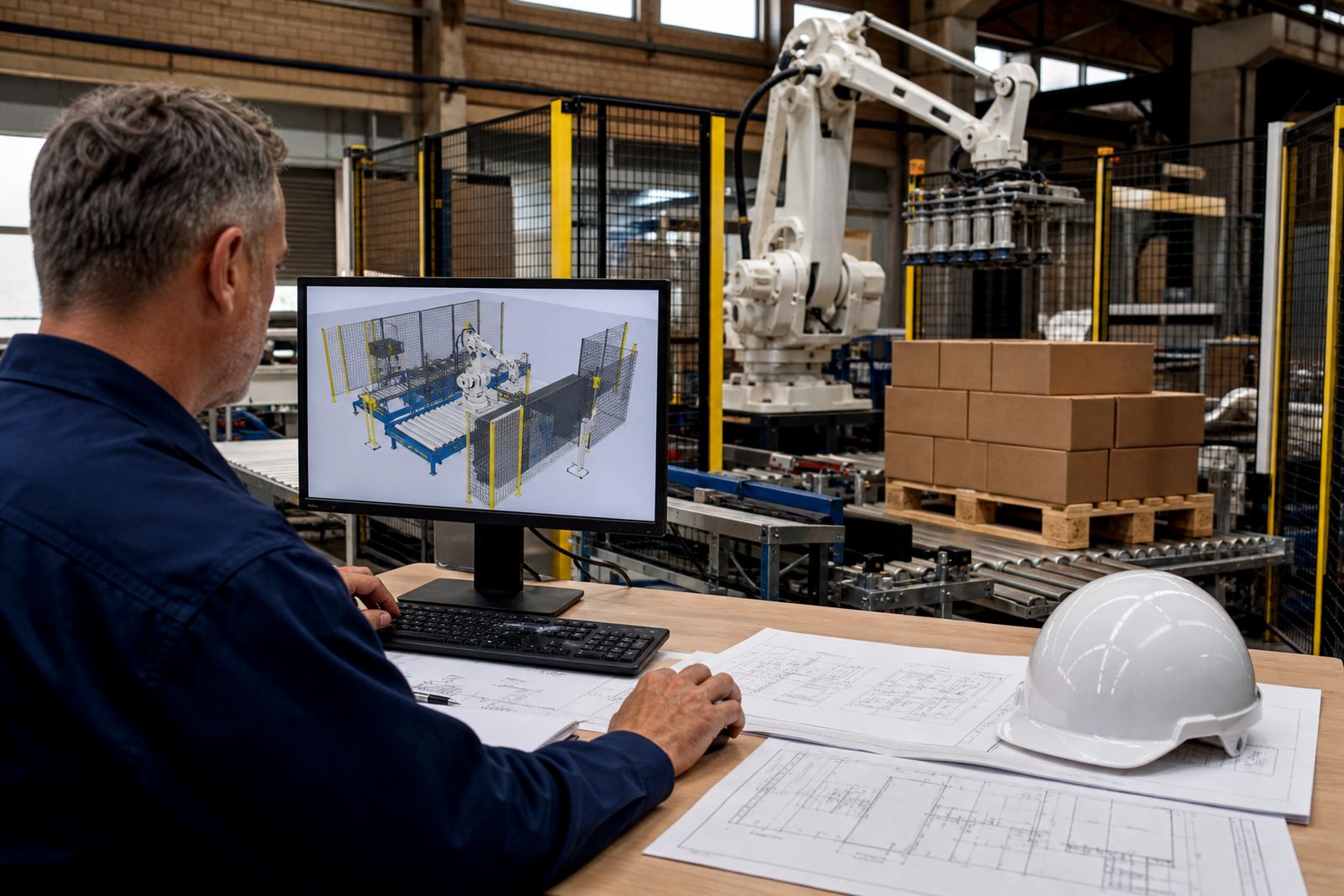
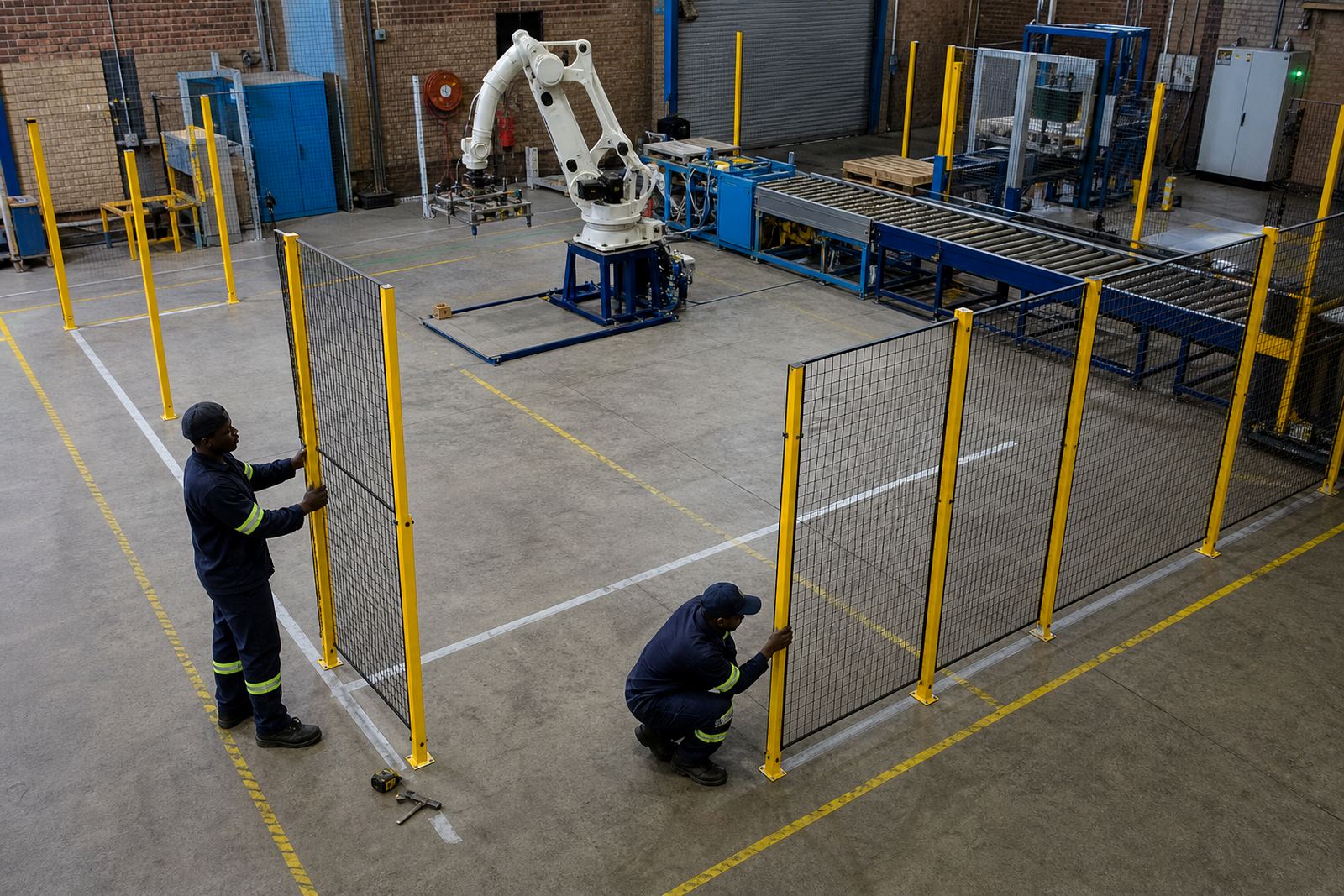
A typical maintenance visit begins with a safety check, visual inspection and operator feedback. From there we test the controls, confirm the machine home positions, inspect the conveyor handover points and check the robot or cobot program behaviour if it has drifted from expected performance. If the site has been altered since installation, we also verify that the changed layout still matches the guarding and access plan.
- Pre-visit review of the line layout and recent fault history
- On-site inspection and function testing
- Minor adjustments where safe and appropriate
- Written findings with recommended next steps
- Priority list for repairs, parts and follow-up work
Service Checks For Retrofit Lines
We set service checks around operating hours, product type and the amount of handling the line carries out. A line running high-volume cartons, bags or crates will need more frequent checks than a lighter-duty cell. In many cases, monthly visual checks, quarterly service routines and an annual deeper inspection give a practical baseline, but the final plan should match the site risk assessment and the actual duty cycle.
On lines with cobots or collaborative functions, we pay attention to stopping distances, speed settings, protective measures and any changes to the working envelope. For fully fenced robotic palletising systems, attention shifts to gate function, floor anchors, pallet condition, pallet magazine behaviour and the condition of any pick-and-place tooling. Where a site handles a mix of pack sizes, frequent changeovers may justify shorter service checks because adjustment points can loosen faster.
We do not treat maintenance as a fixed tick-box exercise. If the line is affected by dust, vibration, poor compressed air quality or repeated operator override, we adapt the interval plan so the maintenance schedule reflects actual wear rather than a generic calendar date. That approach usually helps production teams avoid repeat breakdowns and rushed call-outs.
What A Service Report Includes
After each visit, we provide a clear service report that production and maintenance teams can use. The report is written for practical action, not paperwork alone. It records the condition of the equipment, any adjustments made, any safety items noted and the follow-up work that should be scheduled before the next service window.
Where relevant, the report will note sensor positions, guarding gaps, cable wear, loose fixings, lubrication needs, control faults and recurring stoppage causes. If the problem points to a larger issue such as poor line feeding, inconsistent pallet quality or conveyor misalignment, we flag that early so the team can plan the repair before it becomes a breakdown.
- Equipment condition summary
- Faults found and corrective actions taken
- Parts recommended for replacement
- Safety observations for the site team
- Priority list for planned follow-up work
Pricing Approach And Turnaround
Our pricing approach is based on the scope of support required, the number of assets on the line, site location and whether the work is planned or urgent. A routine inspection on one retrofit cell is priced differently from a multi-line maintenance visit with several conveyors, a palletising station and associated guarding. If a site needs after-hours support or breakdown assistance, that is quoted separately so the client knows exactly what is included.
For planned support, turnaround is usually faster because the visit can be scheduled around production. Breakdown calls depend on road access, site entry procedures and the nature of the fault, especially where a plant in Johannesburg, Durban, Cape Town, Pretoria or Gqeberha is running under pressure and the line needs immediate stabilising. We assess each support request against the site conditions and the work involved.
We can also assist with spares planning so common wear items are identified in advance. That helps reduce waiting time for parts that are hard to source at short notice, especially on older retrofitted lines where the original layout has been modified several times.
Why Maintenance Support Matters On Retrofitted Automation
Retrofitted automation brings strong gains, but it also means new equipment must work with older conveyors, existing building layouts and production methods that were already in place. If maintenance is not handled properly, small issues can spread through the line very quickly. A loose sensor bracket can affect timing, a worn belt can disturb pallet position, and a dirty air line can cause inconsistent gripper performance.
Good maintenance support keeps the line predictable for operators and supervisors. It also helps maintenance teams by giving them a clear record of what was checked, what changed and what needs attention next.
For factories in Kempton Park and the East Rand, as well as sites further afield in Midvaal, Pretoria or along the coast, the aim is the same: keep the retrofit safe, serviceable and ready for production without unnecessary downtime.
Key facts
| Support scope | Robotic packing lines, palletising cells, cobots, conveyors, guarding and controls |
|---|---|
| Service checks | Monthly, quarterly and annual plans, set to site duty cycle and risk |
| Response type | Planned service, urgent breakdown assistance and follow-up repairs |
| Report format | Written service findings with actions, faults and parts recommendations |
| Site coverage | Kempton Park, Johannesburg, Pretoria, Durban, Cape Town, Gqeberha and nearby areas |
| Pricing method | Quoted by scope, line count, travel, access and urgency |