Guarding Built Around Your Existing Line
Every retrofit starts with the line that is already in place. In Spartan, Kempton Park and on sites across Johannesburg, Pretoria, Durban, Cape Town and Gqeberha, that usually means an existing conveyor run, a packing station, a palletising area and not much extra floor space. Guarding design has to fit those conditions without blocking product flow or making maintenance awkward.
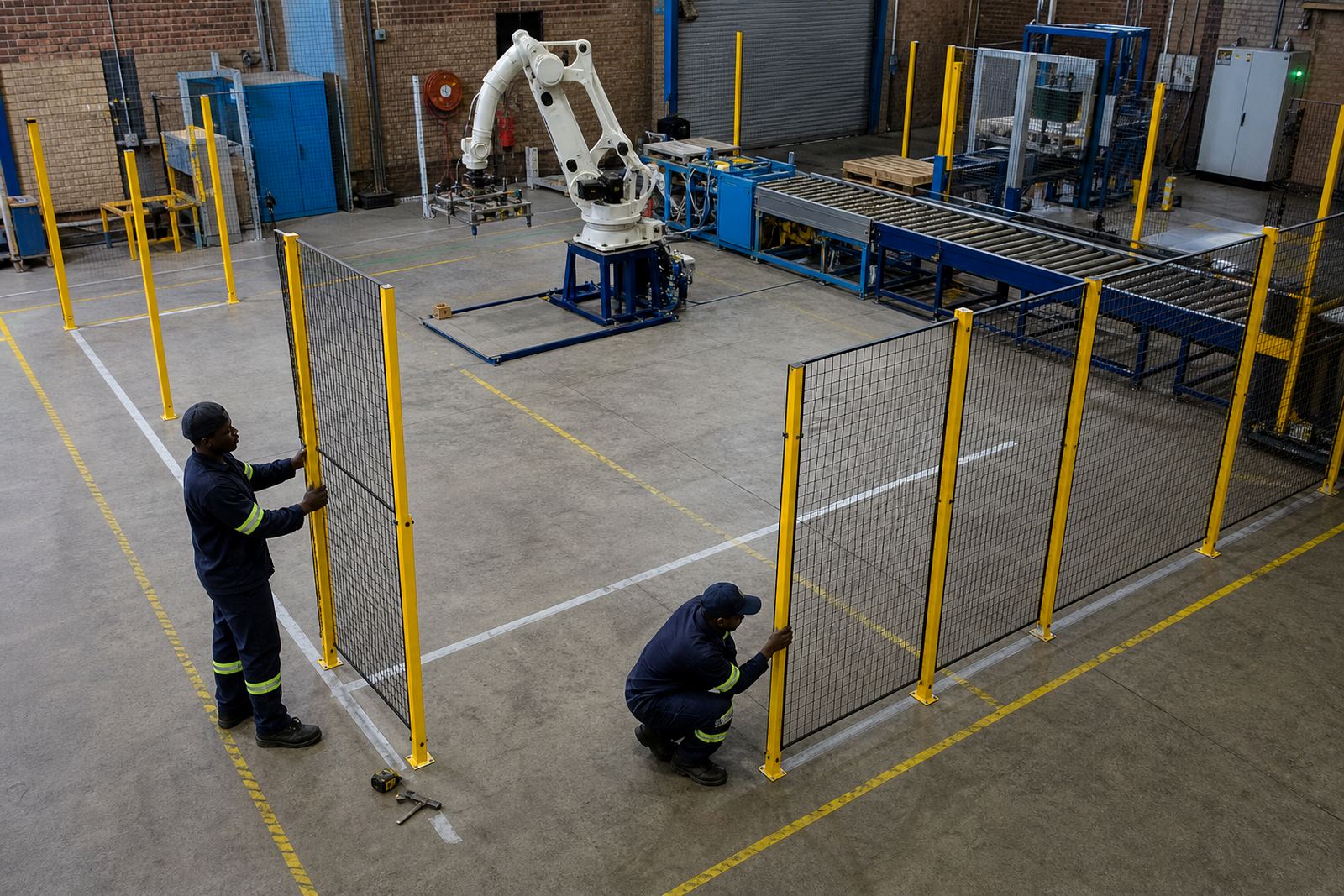
We design the guarding layout around the robot footprint, infeed and outfeed paths, operator touch points and any place where a person may need access for cleaning, changeovers or fault finding.On coastal sites, we also allow for corrosion prone conditions and fixings that hold up better in humid air.
Our approach is practical. If a gate is in the wrong spot or a fence line creates a bottleneck, the whole cell becomes harder to manage. Good guarding design saves time at the gate, not only when the robot is running but also during start-up, shutdown and planned maintenance.
What We Include In The Guarding Design
The service covers the physical layout and the control points needed for safe interaction with the robotic area. We do not treat guarding as a simple fence job. It must work with the controls, the conveyor logic and the day to day movement of staff and materials.
- Perimeter fencing and panel layout for the robotic cell
- Access gates for maintenance, jam clearing and supervised entry
- Interlock positions for gates, doors and service access points
- Safe interaction zones around infeed, outfeed and pallet discharge points
- Operator stations positioned outside the hazardous area where possible
- Signage and marking recommendations for the cell boundary and access routes
- Practical provision for cable routing, sensor mounting and inspection access
Where a cobot is used, the guarding approach may be different from a fully fenced robot cell, but it still needs a proper site review. Shared workspaces, pallet movement and manual packing tasks can change the way the zone is controlled. Each site needs its own risk assessment, because the same machine can present a different risk in Durban than it does in Midvaal.
Safety Rules, Risk Checks And Site Sign-Off
Safety guarding design is linked to the risk profile of the line. We support the risk assessment process by identifying where exposure can occur, such as pinch points, trapped-product areas, conveyor transfers, pallet build zones and access routes used by operators or cleaners. The final assessment must be done for the specific site and the way that site operates.
Typical checks include stop functions, restart logic, access control and the relationship between the robot and the conveyors feeding it. We also review how the guarding affects emergency access, visibility into the cell and safe isolation during servicing. If a maintenance team needs to enter the area, the process must be clear and repeatable, not based on memory or guesswork.
For factories running multiple shifts, the guarding must remain practical after hours too. That means lockable access, clearly marked isolation points and a layout that supports safe response when a fault happens at 2am and the line is under pressure to restart. Guarding that is difficult to use often gets bypassed, so we design for real operating conditions, not just the drawing.
Our Design And Integration Process
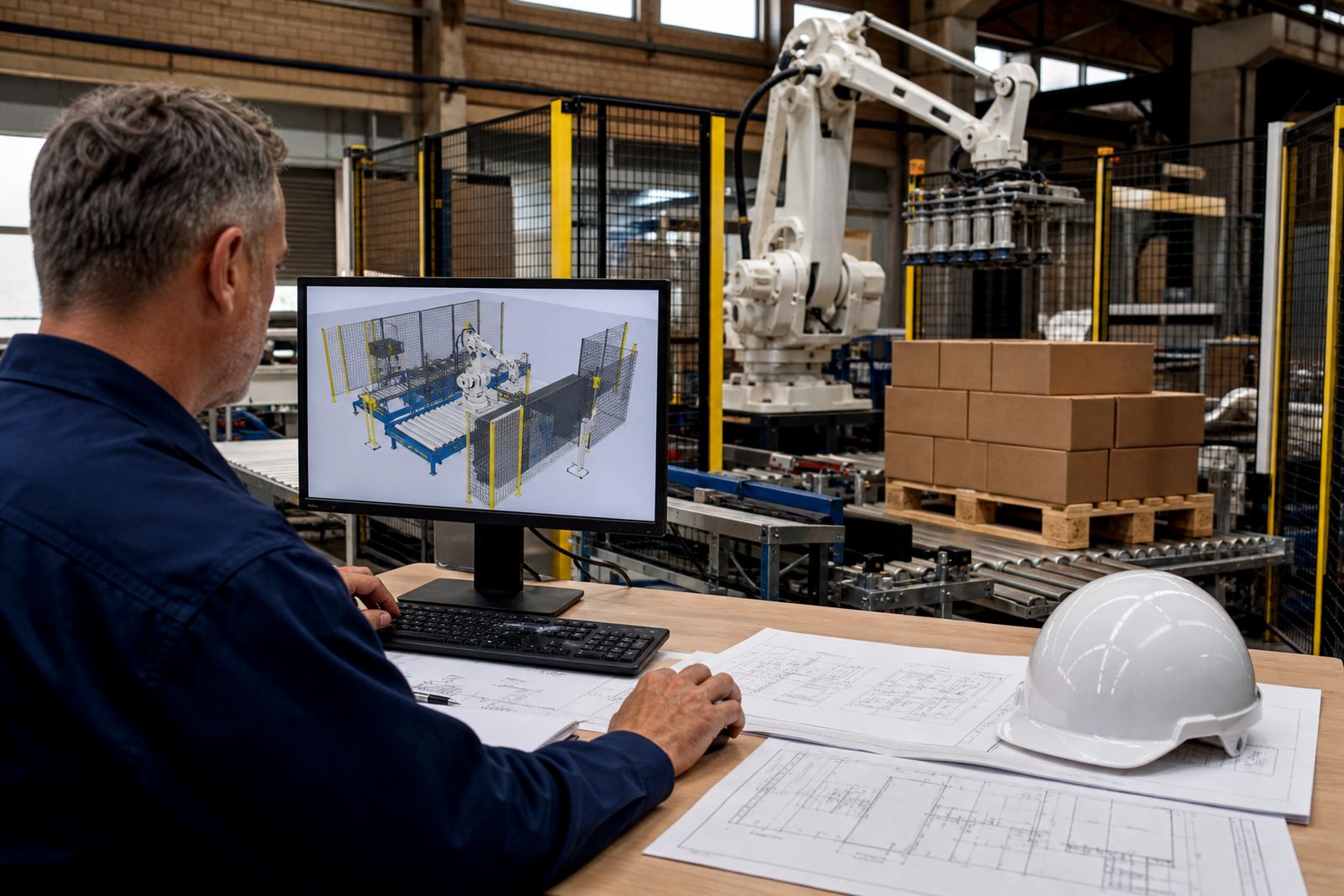
We keep the process simple and structured so the guarding can be planned alongside the retrofit work. Our team includes operations, automation, controls and site supervision support, which helps when the physical fence line has to align with sensors, PLC logic and conveyor movement.
- Site line survey and measure-up of the packing or palletising area
- Review of existing conveyors, access routes and operator tasks
- Guarding concept with fence lines, gates and safe zones
- Controls review for interlocks, stop circuits and access logic
- Final layout sign-off before fabrication or installation
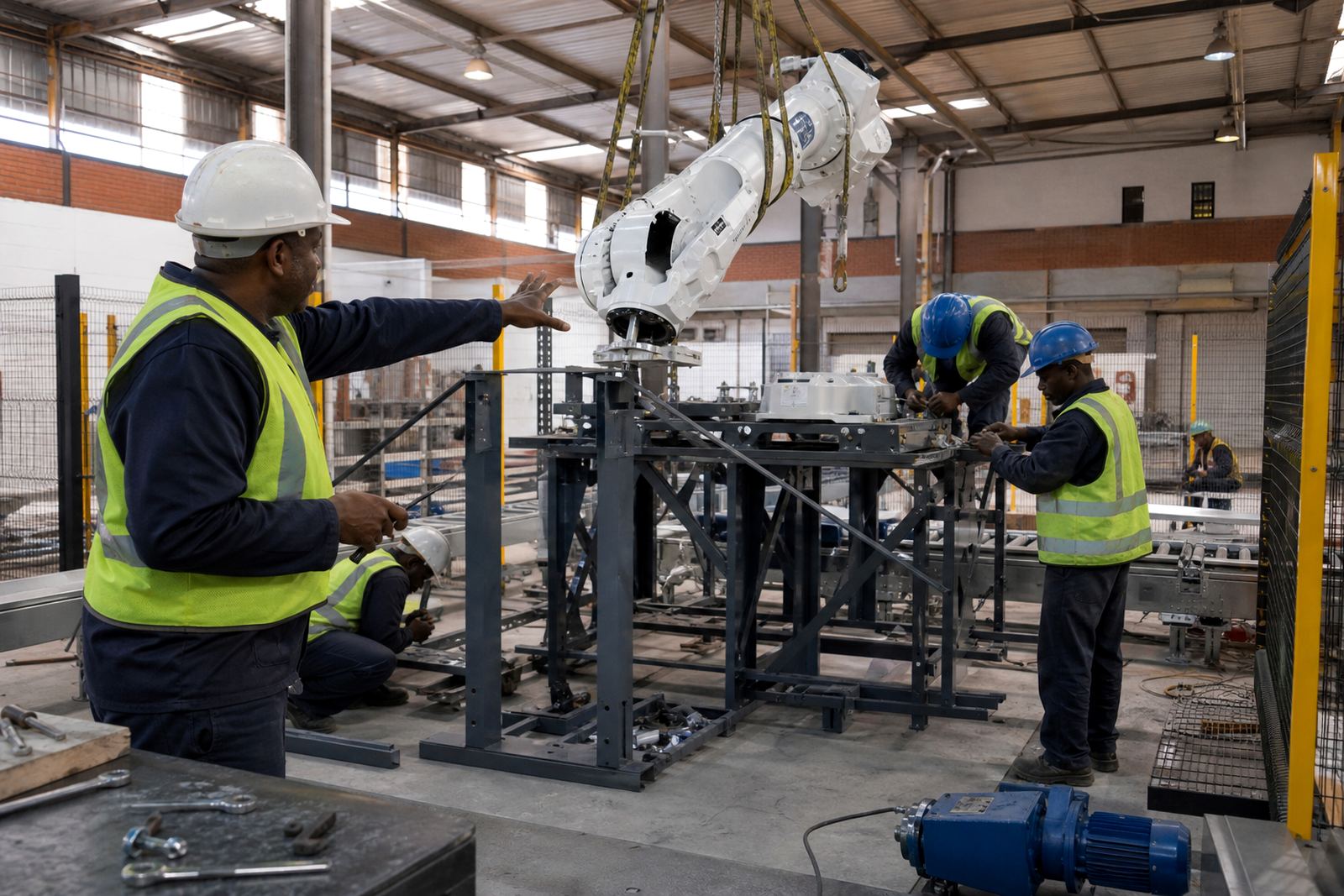
- Installation management and commissioning support during changeover
During implementation we check that the guarding does not block service panels, emergency routes or material handling equipment. If the layout needs to work around low ceilings, floor anchors, dock doors or municipal compliance needs in an industrial area, we factor that in early. That avoids last minute rework and keeps the installation cleaner.
Turnaround, Pricing And What Changes The Cost
Turnaround depends on the size of the cell, how much of the line must remain operational, and whether the guarding is part of a new retrofit or a revision to an existing installation. A straightforward packing cell may move quickly, while a multi-conveyor palletising area with several access points takes longer because there are more interfaces to check.
Pricing is quoted after a site review or line survey. We price the work according to the guarding extent, gate count, interlock complexity, mounting requirements and integration effort, not by a flat figure. If the line has unusual floor conditions, tight clearances or heavy product transfer, that can affect material and labour requirements. We keep the quote aligned to the actual scope so there are no surprises later.
For larger manufacturing sites in Gauteng or at coastal plants, we often phase the work to suit production windows. That can reduce disruption and allow the guarding to be installed in sections while the line remains partly available.
Service Checks And Ongoing Support
Guarding is not a once-off fit and forget item. Hinges, locks, interlocks, fixings and panels should be checked at regular intervals, especially where there is vibration, frequent access or forklift movement nearby. In dusty inland plants, gate mechanisms can wear differently from sites exposed to salt air or constant washdown.
We recommend routine checks during planned maintenance, with a more detailed inspection after any line change, conveyor modification or unplanned impact. If the robot cell is adjusted, the guarding and access logic should be reviewed at the same time. It is also good practice to include the guarding in spare parts planning so damaged hardware can be replaced quickly.
Our support can include breakdown assistance, spares planning and maintenance guidance for the cell. The goal is to keep the guarding effective over time, not only on handover day.
Key facts
| Service area | Kempton Park, Johannesburg, Pretoria, Durban, Cape Town, Gqeberha, East Rand and Midvaal |
|---|---|
| Typical systems | Robotic packing cells, palletising cells and cobot-assisted stations |
| Design elements | Fencing, gates, interlocks, safe zones, signage and access control |
| Integration focus | Existing conveyors, controls logic, stop circuits and operator access |
| Risk note | Each site requires its own risk assessment and sign-off |
| Support stages | Survey, concept, review, installation management and commissioning support |