What Retrofit Design Covers on a Working Line
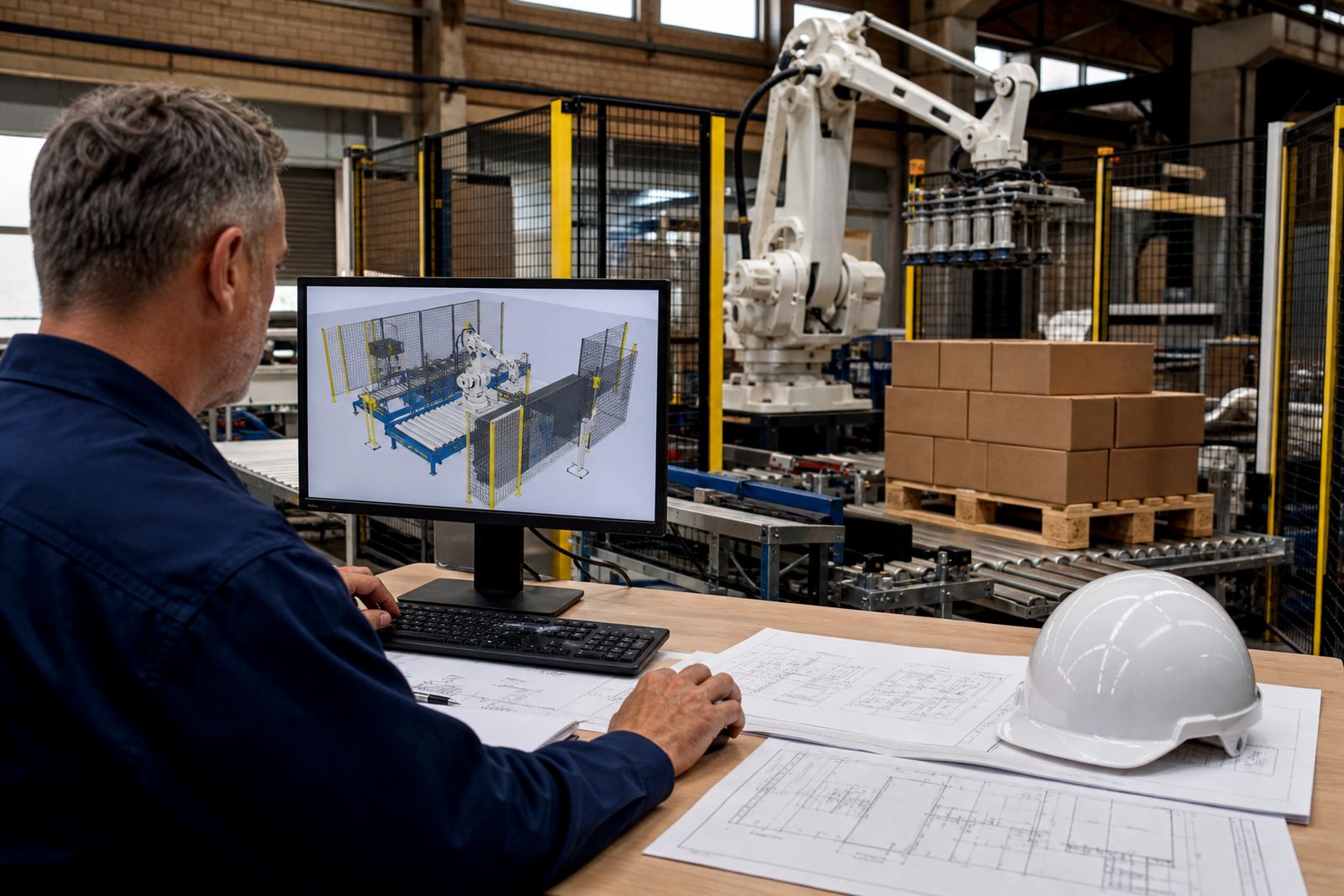
Retrofit design is the starting point for putting a robot into an existing packing or palletising line without stripping out useful equipment. We look at the current conveyor layout, pack pattern, infeed heights, pallet positions, product presentation and the amount of floor space available. The aim is to create a workable concept that fits the line you already have and keeps changeover practical for your team.
For manufacturers in Johannesburg, Durban, Cape Town, Pretoria and Gqeberha, that often means planning around mixed product sizes, different case weights and busy production schedules. We also check how the proposed cell will fit around access routes, loading points and maintenance access, because a line that is difficult to reach becomes hard to keep running.
- Concept layout for robotic packing or palletising
- Interface with existing conveyors, case packers and pallet stations
- Space planning for guarding, access doors and operator movement
- Product flow review for cartons, crates, bags or trays
How We Assess the Line Before We Draw Anything
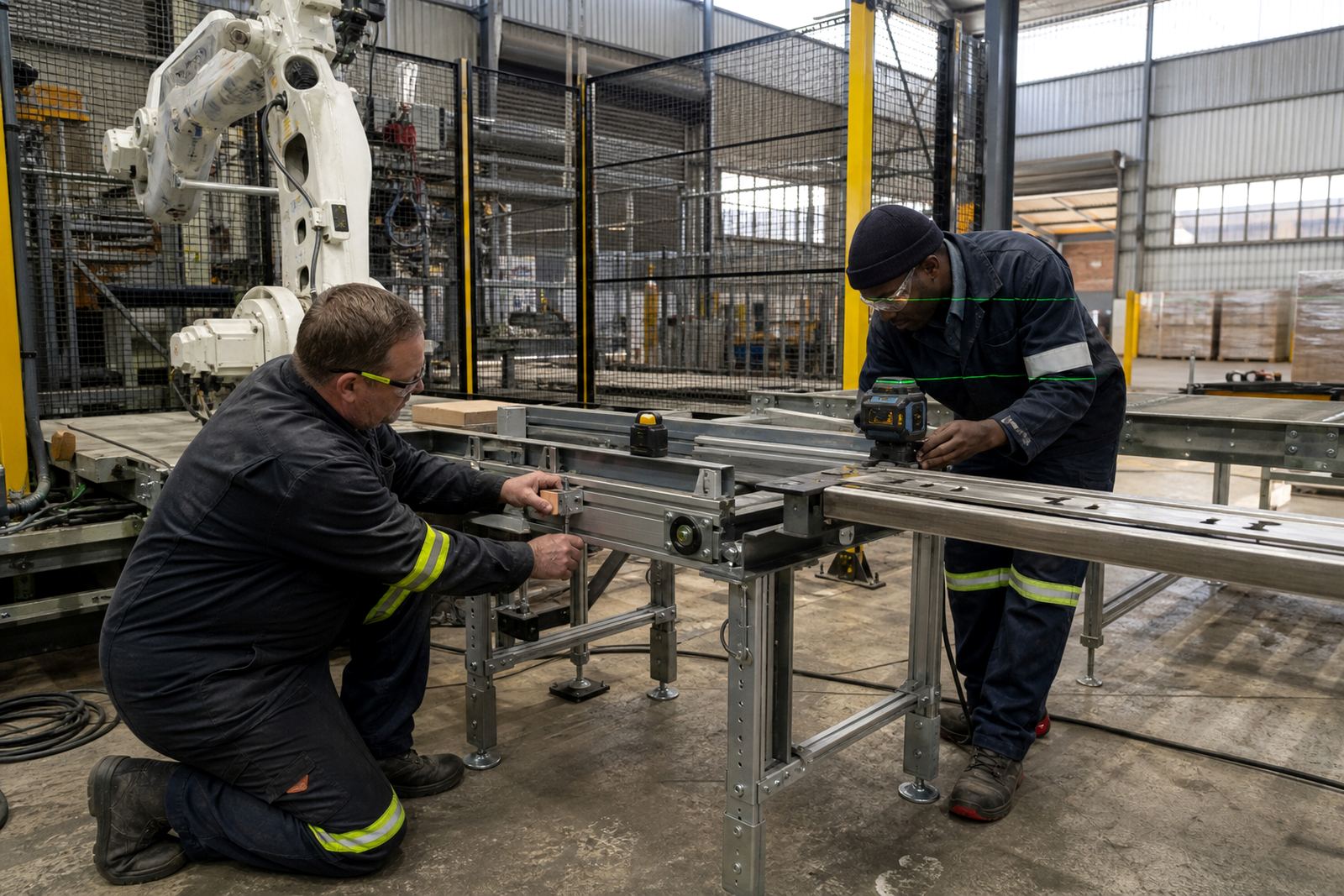
Every retrofit starts with a site line survey. We measure the conveyor levels, speeds, transfer points and available clearances, then review the production flow from infeed to pallet dispatch.
From there we build a concept that matches the site realities rather than forcing a standard arrangement onto the floor. If the line must keep running during the retrofit, we plan the work in stages so installation can happen with limited downtime. That is often important in Gauteng factories with tight dispatch windows or in coastal plants where corrosion control matters.
- Line measurements and product handling checks
- Power, air and control interface review
- Access study for maintenance and operator use
- Phased implementation planning where production must continue
Design Inputs for Robots, Cobots and Safety Guarding
We design around the right type of automation for the task. In some cases a conventional industrial robot is the best fit for high-speed palletising, while in other cases a collaborative robot may suit a lighter-duty packing application with closer operator interaction. The choice depends on payload, reach, cycle time, product stability and the way people work around the line.
Safety guarding is planned as part of the retrofit, not added at the end. That can include fencing, interlocked access doors, light curtains, safety scanners, warning beacons and clearly marked walkways. Each site needs its own risk assessment, because the hazards at a case packing line in Kempton Park are not the same as a palletising cell in Durban or a mixed SKU operation in Cape Town.
- Robot or cobot concept selection
- Safety guarding layout and access control
- Risk assessment support for the specific site
- Operator interaction and stoppage recovery planning
Integration With Existing Conveyors and Controls
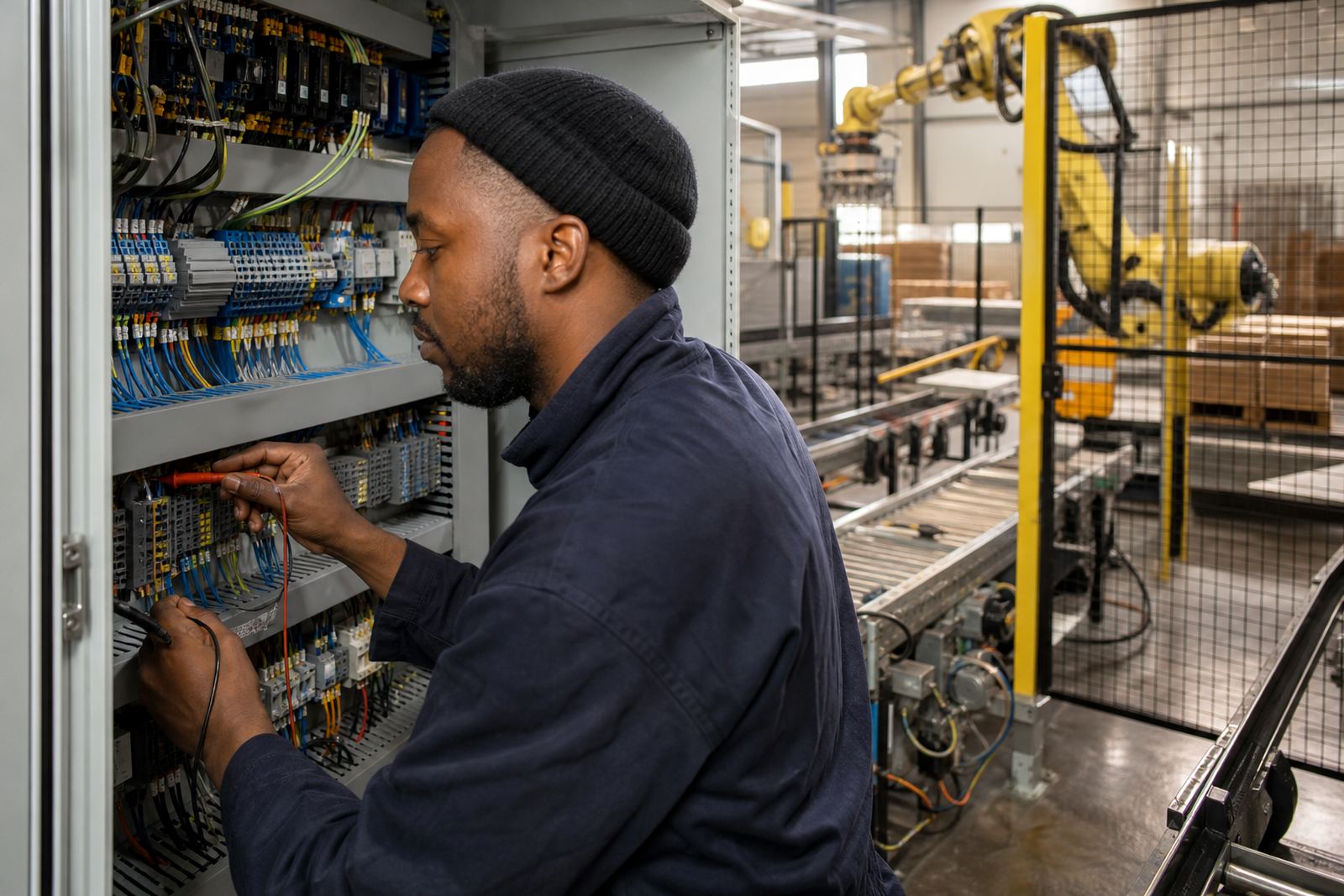
A good retrofit must talk to the equipment already on site. We plan the conveyor interface, sensors, stop logic and handshakes needed for the robot to receive product and release finished loads correctly. That includes carton presence detection, accumulation logic, pallet infeed control and basic fault recovery so the line does not trip repeatedly on small product variations.
Controls integration is also considered early, because the panel space, cable routes and field device locations affect both cost and installation time. We look at how the existing conveyor system can be tied into the new cell with minimal disruption, and we allow for future maintenance access so technicians can test devices and replace parts without pulling the whole line apart.
- Conveyor timing and product handover logic
- Sensor and control signal mapping
- Panel space and cable routing planning
- Fault handling and restart sequence design
Turnaround, Deliverables and Pricing Approach
Turnaround depends on the size of the line and how much information is already available. A straightforward packing or palletising concept can move quickly once the site survey is complete, while more complex lines with multiple product streams need additional checks and drawings. We aim to keep the process practical and give you a clear route from first survey to installation plan.
Typical deliverables include a concept layout, equipment interface notes, safety outline, control assumptions and an implementation sequence. Pricing is based on the scope of the survey, the number of line sections involved and the level of integration required. We quote the design work separately from installation so you can budget properly and phase the project if needed.
- Concept drawing and layout notes
- Scope summary for mechanical, electrical and controls work
- Indicative implementation sequence
- Separate pricing for design, installation support and commissioning support
Service Checks and Long Term Support Planning
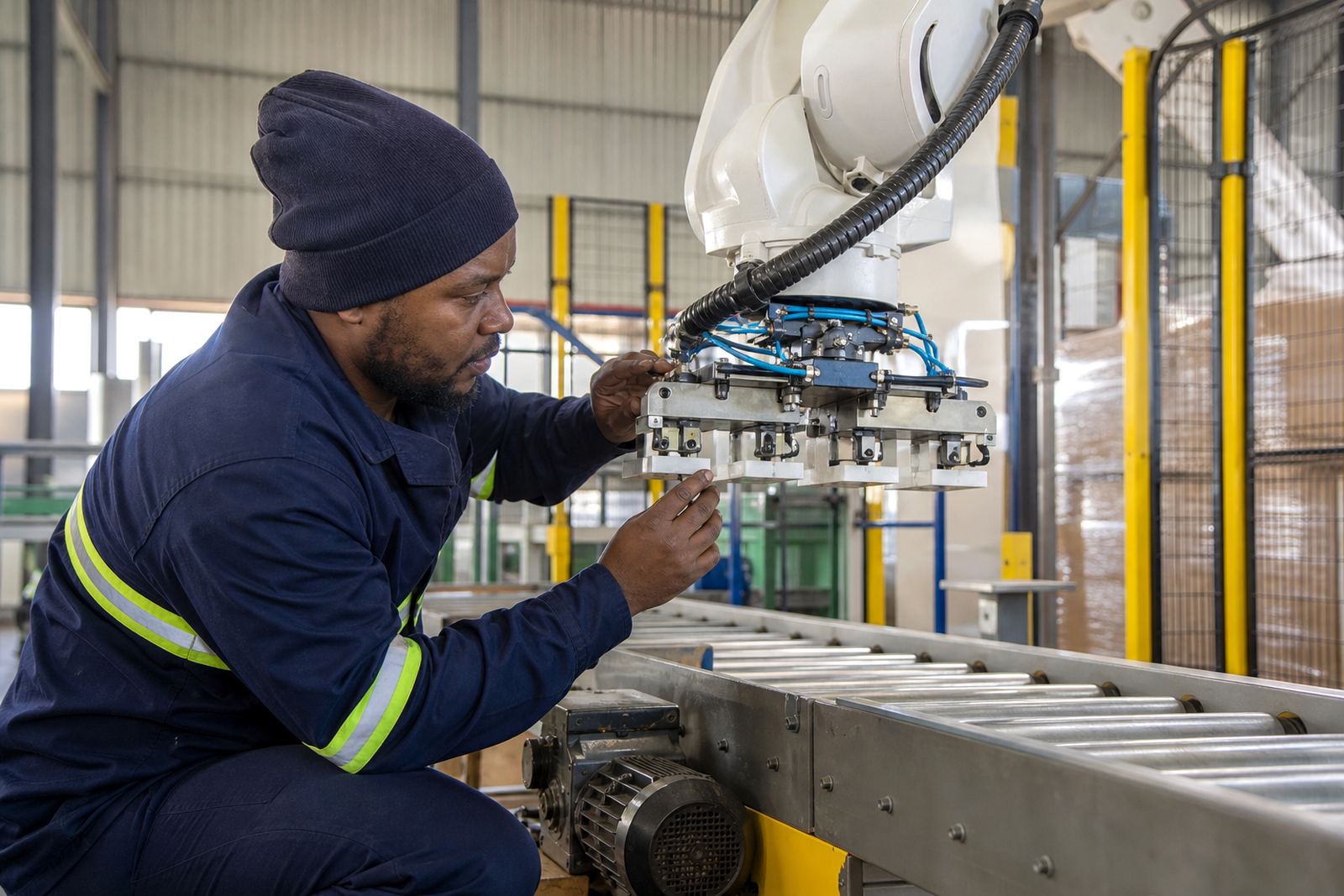
Retrofit design should also make maintenance easier. We factor in routine checks for grippers, vacuum systems, bearings, sensors, guards and cable carriers so the line can be serviced at sensible intervals. On a busy packing line, that may mean weekly visual checks, monthly functional checks and planned service stops at longer intervals, depending on shift pattern and product dust levels.
We also help plan spares for the items most likely to interrupt production, such as sensors, hoses, seals and wear parts. Where a line runs in humid or dusty conditions, we allow for extra attention to corrosion, contamination and cleaning access. The aim is to keep the retrofit serviceable, not just working on day one.
- Routine inspection intervals for key components
- Cleaning and lubrication access planning
- Spares list support for critical wear parts
- Maintenance access built into the layout
Key facts
| Service type | Retrofit design for robotic packing and palletising lines |
|---|---|
| Base | Spartan, Kempton Park, Gauteng |
| Coverage | Kempton Park, Johannesburg, Pretoria, Durban, Cape Town, Gqeberha, East Rand, Midvaal |
| Typical equipment | Industrial robots, cobots, conveyors, sensors, guarding and control panels |
| Design inputs | Site surveys, product data, line measurements, safety needs and production flow |
| Maintenance planning | Weekly, monthly and planned service intervals based on site conditions |