What Controls Integration Covers on a Retrofit Line
Controls integration is the part that makes a robotic retrofit behave like one coordinated production line rather than a set of separate machines. For packing and palletising projects, we link the robot controller, conveyor signals, sensors, pallet dispense devices, stop-start logic, fault handling and operator interface so the line can feed, pick, place and discharge in a controlled sequence. On existing South African plants, that usually means working around current conveyors, wrappers, strappers, carton erectors, bag fillers and pallet conveyors instead of replacing everything.
Our team in Spartan, Kempton Park focuses on practical integration for factories in Johannesburg, Pretoria, Durban, Cape Town, Gqeberha, the East Rand and Midvaal. That includes signal mapping, machine-to-machine handshakes, cycle permissives, interlocks, alarm text, reset logic and simple controls that operators can understand on shift one. If the line needs to stop on low air pressure, jam detection, guard open condition or upstream product starvation, we build that into the logic from the start.
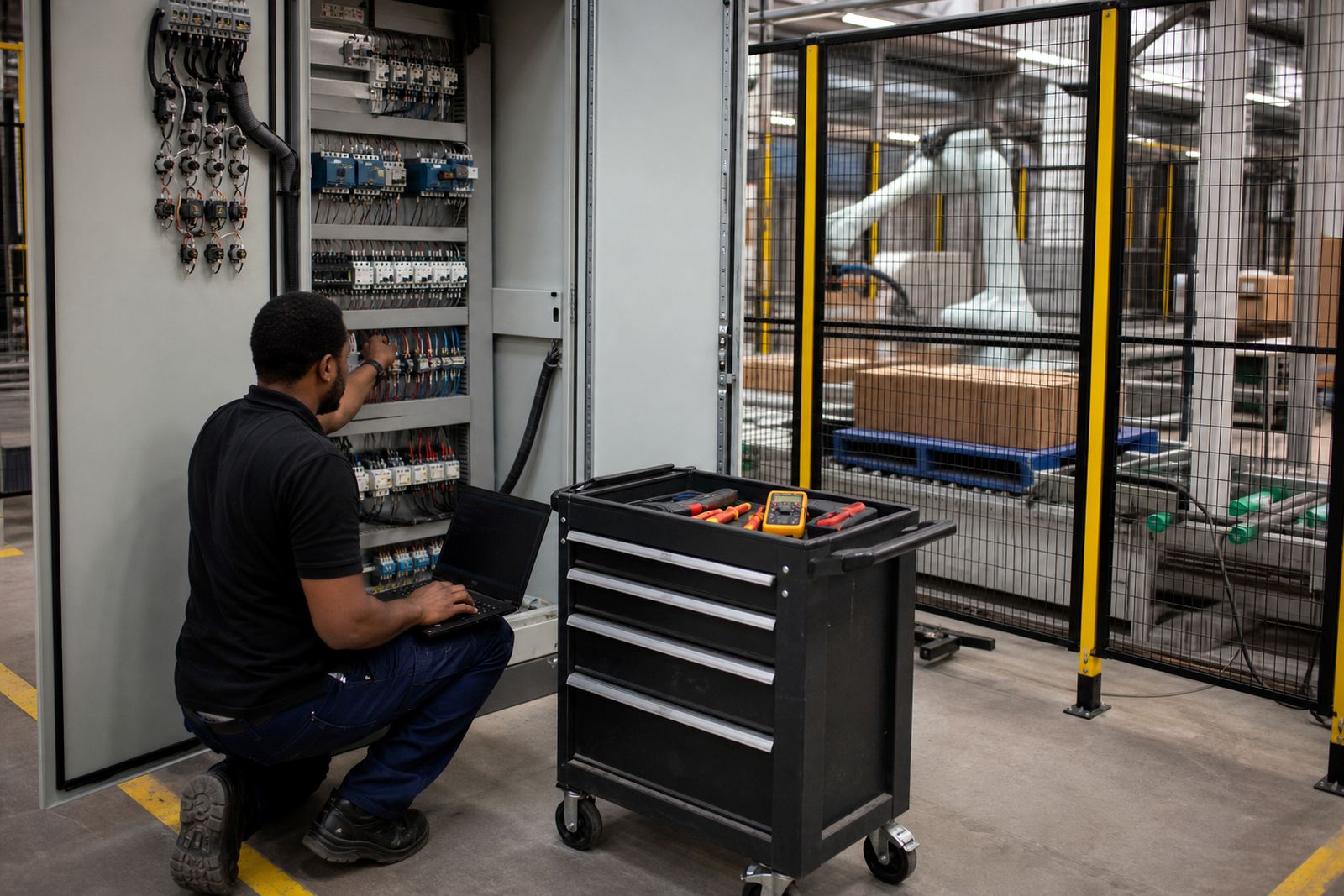
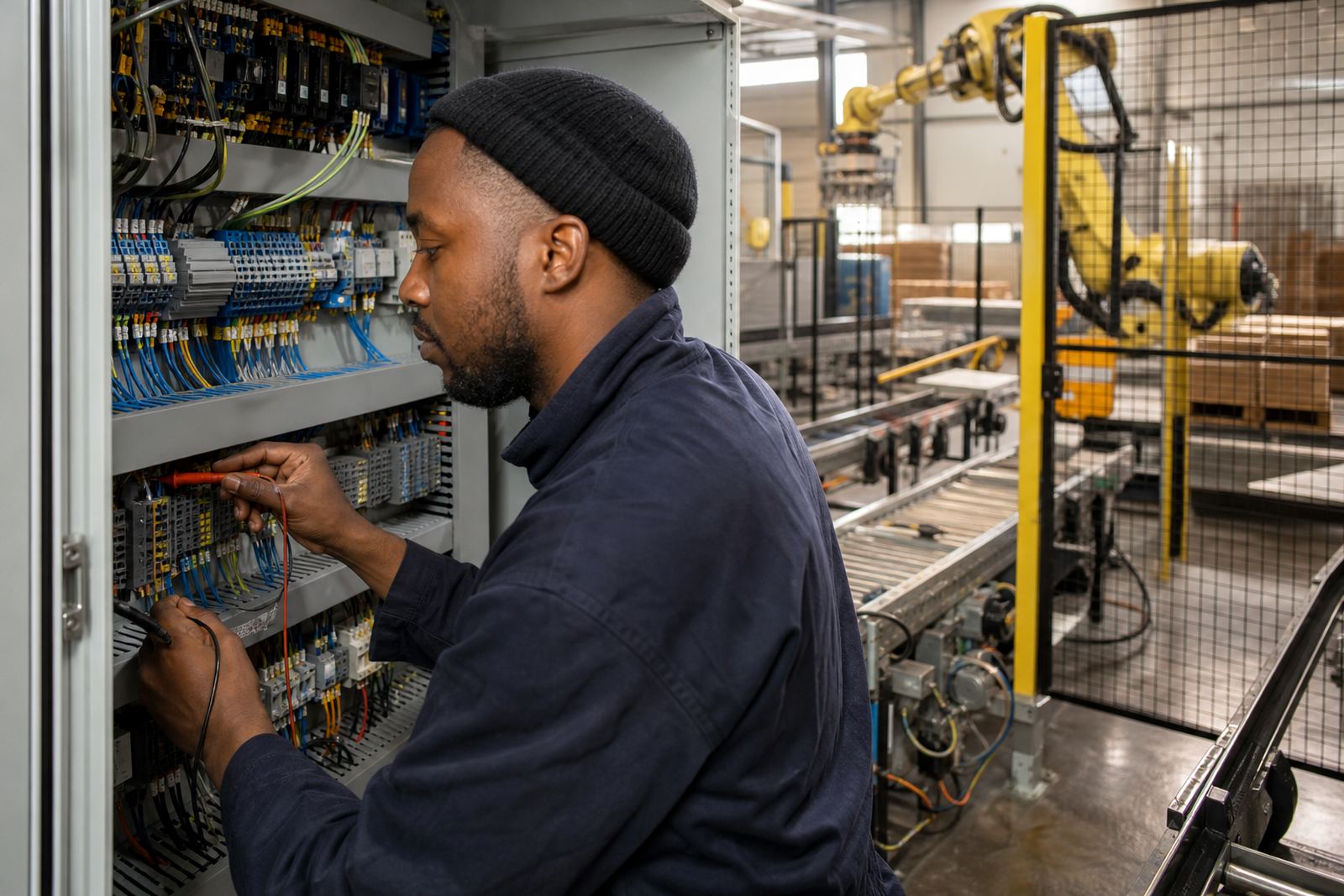
Typical integration work covers 24 VDC control circuits, discrete I/O, analogue signals where required, industrial networking between panels and remote devices, and operator screens for start, stop, mode select, fault reset and production counts. Each site is different so the final control philosophy depends on the existing equipment, space available and the site risk assessment.
What Is Included in a Controls Integration Scope
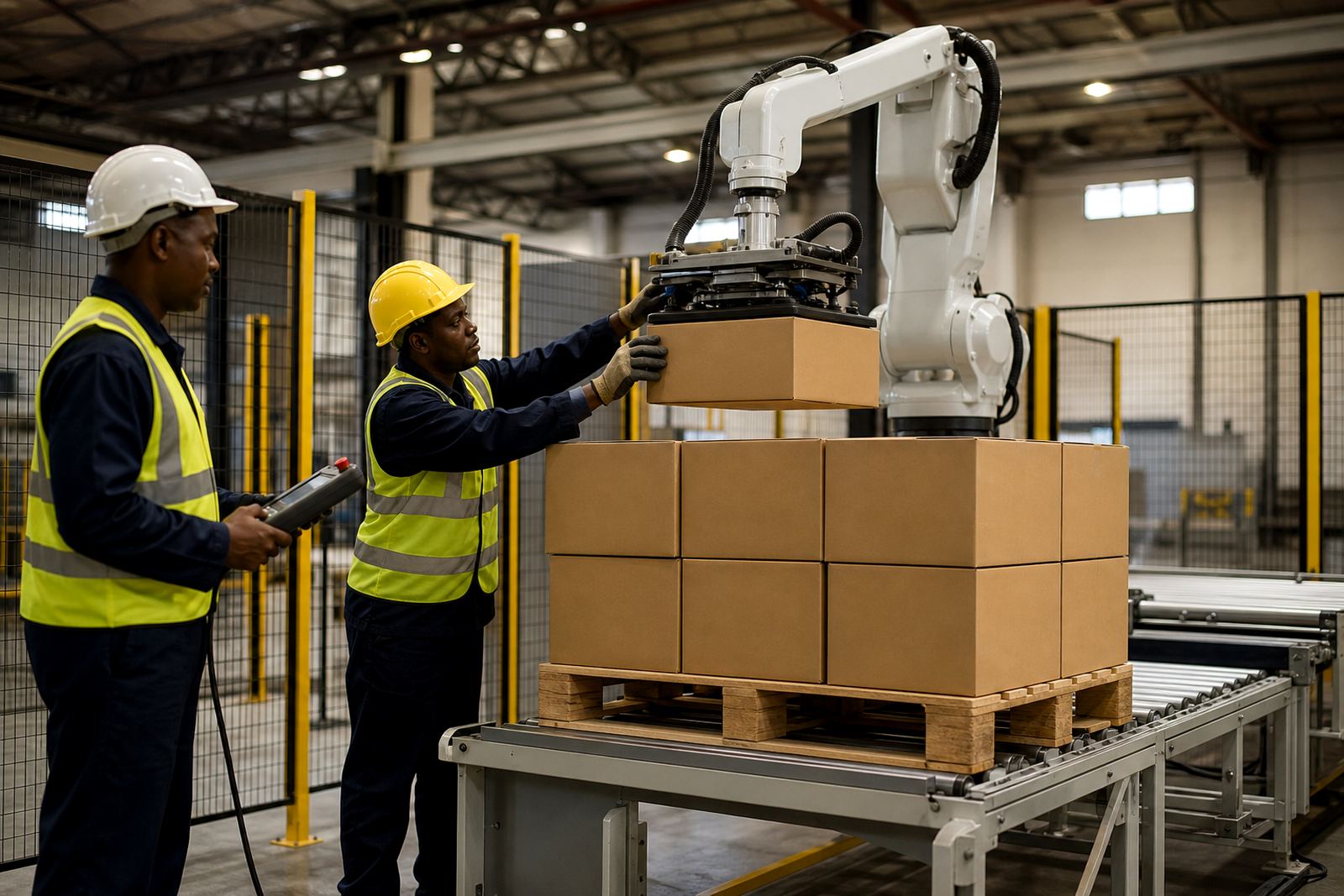
A good retrofit scope starts with the machines already on site and ends with a line that can run repeatably on day shift and night shift. We prepare the controls scope around the product, cycle time, pallet pattern, carton or bag handling method, and any upstream or downstream equipment that must communicate with the robot. That can include infeed and outfeed conveyors, photoelectric sensors, pallet present sensors, bay occupancy checks, safety gates, emergency stops and fault lamps.
Our controls integration service can include:
- Signal and I/O mapping for all connected equipment
- Sequence logic for carton, bag or tray handling
- Robot handshakes with conveyors and pallet stations
- Operator panel screens and alarm messages
- Integration of safety circuits into the control sequence
- Manual, semi-auto and auto mode selection
- Production counters, fault logs and reset routines
- Basic remote diagnostics where site conditions allow it
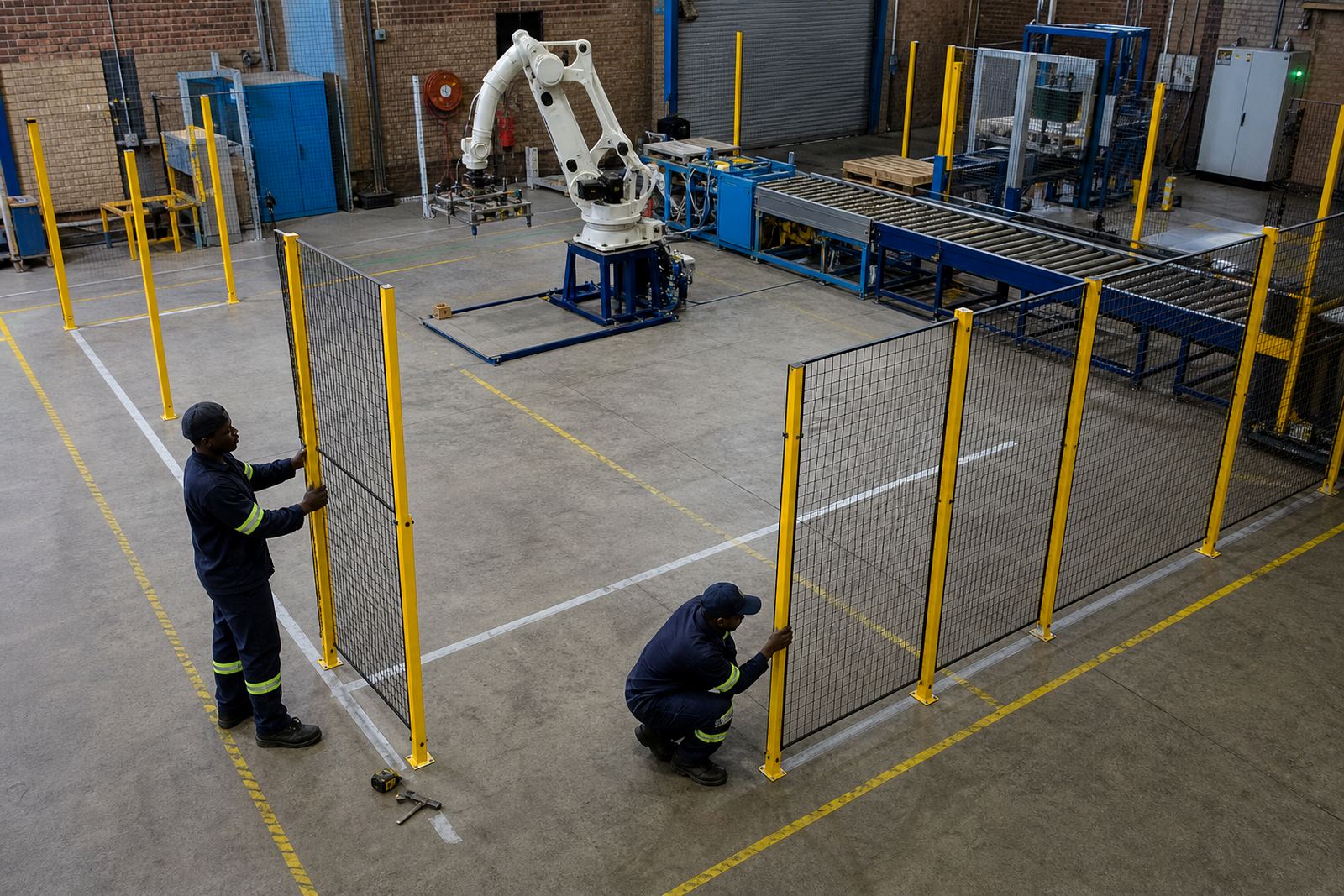
We also align the controls work with safety guarding design and risk reduction measures. That may involve interlocked gates, light curtains, safety relays or safety-rated controller functions, depending on the line layout. The aim is not just to make the robot move, but to make it move only when conditions are correct and safe for people working near the line.
How We Handle the Integration Process
We normally begin with a site line survey in Kempton Park or on your plant floor anywhere in South Africa. During that visit we check the existing control panels, cable routes, sensor positions, conveyor speeds, guard access and machine states that must be passed into the new logic.
From there the process is usually:
- Review the line layout and existing equipment
- Confirm operating sequence and safety functions
- Prepare a controls design and I/O schedule
- Build or modify panels and field wiring plans
- Install and test the control logic in stages
- Commission the line with dry runs and live product
- Train operators and maintenance staff
During commissioning we test each interlock and signal, one by one, before running full automatic cycles. If there is a mismatch between conveyor timing and robot cycle time, we adjust it before production starts. Small things matter here, like debounce timing on sensors, pallet confirmation delays and reset behaviour after a fault. Those details are what keep the line from tripping over itself during a long shift.
Turnaround Times and Pricing Approach
Turnaround depends on the condition of the existing equipment and how much of the line must be tied into the retrofit. A straightforward controls integration on a short packing or palletising line can move quickly once the site survey is complete and equipment data is available. More complex lines with multiple conveyors, accumulation zones, wrappers or shared utility systems take longer because every machine interaction must be checked and tested.
We price controls integration according to scope, not by guesswork. The main cost drivers are engineering hours, panel work, cable runs, number of signals, safety functions, site access, shutdown windows and commissioning time. If the plant needs work after hours or over a weekend to avoid production loss, that is planned into the schedule. We do not push fixed claims about payback, because every factory runs differently and each line has its own operating pressure.
For budget planning, we usually separate the work into survey, design, panel and wiring changes, software logic, commissioning support and operator training. That makes it easier to control costs when the project is staged over more than one shutdown. It also helps maintenance teams understand what they are paying for and what can be done later if the line grows.
Service Checks That Keep the Line Stable
Once handover is complete, controls systems benefit from planned service checks. We suggest upkeep planning based on operating hours, dust loading, washdown routines and the kind of product the robotic cell handles. In dry inland plants, panels and sensors can remain stable for longer, while coastal sites usually need closer attention because humidity and salt-laden air can affect contacts, terminals and enclosures.
A practical maintenance routine usually includes:
- Weekly visual checks on sensors, cables and interlocks
- Monthly inspection of control panel cleanliness and fan filters
- Quarterly review of fault history and alarm trends
- Routine backup checks for control logic and screen files
- Planned testing of emergency stop and guard circuits
- Review of spare sensors, relays and critical components
If a line starts producing nuisance trips, slow starts or unexplained faults, we can assist with breakdown support and controls troubleshooting. Most issues are easier to resolve when the line history is logged and the operators know what changed before the fault appeared. That is why we keep maintenance support practical and site-specific, rather than treating every plant the same.
Who Handles the Work at ReAutomated
ReAutomated is based in Spartan, Kempton Park and works with manufacturers across South Africa that need robotic packing and palletising retrofits tied into existing production lines. The controls side of that work is led by a small team that understands factory conditions, shutdown windows and the need to keep production moving where possible.
The team includes Sibusiso Hlongwane as Managing Director, Annelise Abrahams in Operations, Thabo Malherbe in Automation Engineering, Farah Khoza as Controls Specialist, Johan Booysen as Site Supervisor and Lerato Khanye in Service Coordination. That mix helps us keep the project practical from survey through to commissioning, with one team responsible for the line from first visit to final handover.
Clients reach us through the enquiry form on our contact page, and we respond based on the plant location, line layout and the scope of controls work needed. Whether the site is in Johannesburg, Pretoria, Durban, Cape Town, Gqeberha, Kempton Park, the East Rand or Midvaal, the same rule applies: each line gets its own controls design, its own risk checks and its own commissioning plan.
Key facts
| Typical line types | Packing, palletising, case handling and mixed conveyor cells |
|---|---|
| Control interfaces | Push buttons, selector switches, operator touch panel and status lamps |
| Electrical supply | Site dependent, commonly 380 V to 525 V three-phase for industrial equipment |
| Control signals | 24 VDC discrete I/O, safety inputs and selected analogue signals |
| Integration scope | Robot handshakes, conveyor logic, alarms, interlocks and reset routines |
| Service areas | Kempton Park, Johannesburg, Pretoria, Durban, Cape Town, Gqeberha, East Rand, Midvaal |