What Commissioning Support Covers On Your Line
Commissioning support is the stage where the retrofitted robot, conveyor interfaces, sensors and safety devices are put through practical checks on the actual packing or palletising line. The aim is to confirm that the machine handles the product, cycle timing and handshakes with the existing equipment before normal production begins. On sites in Kempton Park, Johannesburg, Pretoria, Durban, Cape Town and Gqeberha this often includes working around shift patterns, limited stoppage windows and plant rules for live factories.
Our support is focused on the real line conditions you have, including carton size variation, pallet height build up, product spacing, tray presentation and upstream or downstream conveyor flow. We do not treat commissioning as a quick power on. It includes repeat testing, fault finding, fine tuning and a clean handover to the team that will run the line.
- Point to point checks on robot movements and interlocks
- Dry cycles before product is introduced
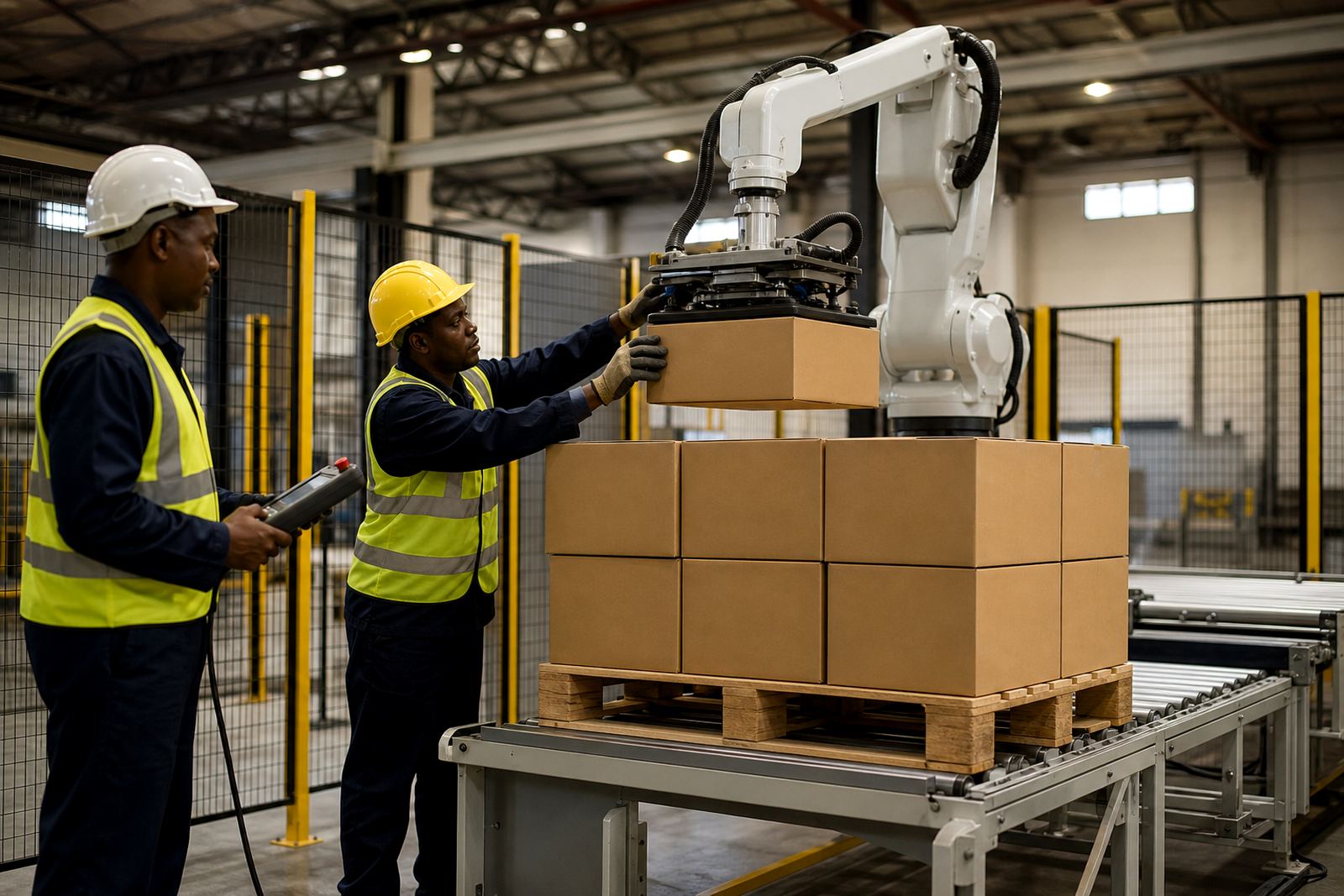
- Live product trials with agreed pack patterns or pallet patterns
- Verification of sensor signals, stops, resets and alarms
- Operator walk-throughs for normal start up and stop procedures
Practical Checks We Carry Out Before Handover
Each site needs its own risk assessment and a commissioning plan that suits the plant layout, electrical supply and operating hours. The checks are general in nature, but they must be done against the actual machine, conveyor layout and guarding at that site. For some lines the priority is smooth product handling, for others it is keeping the robot clear of the conveyor edge, pallet infeed or manual loading point.
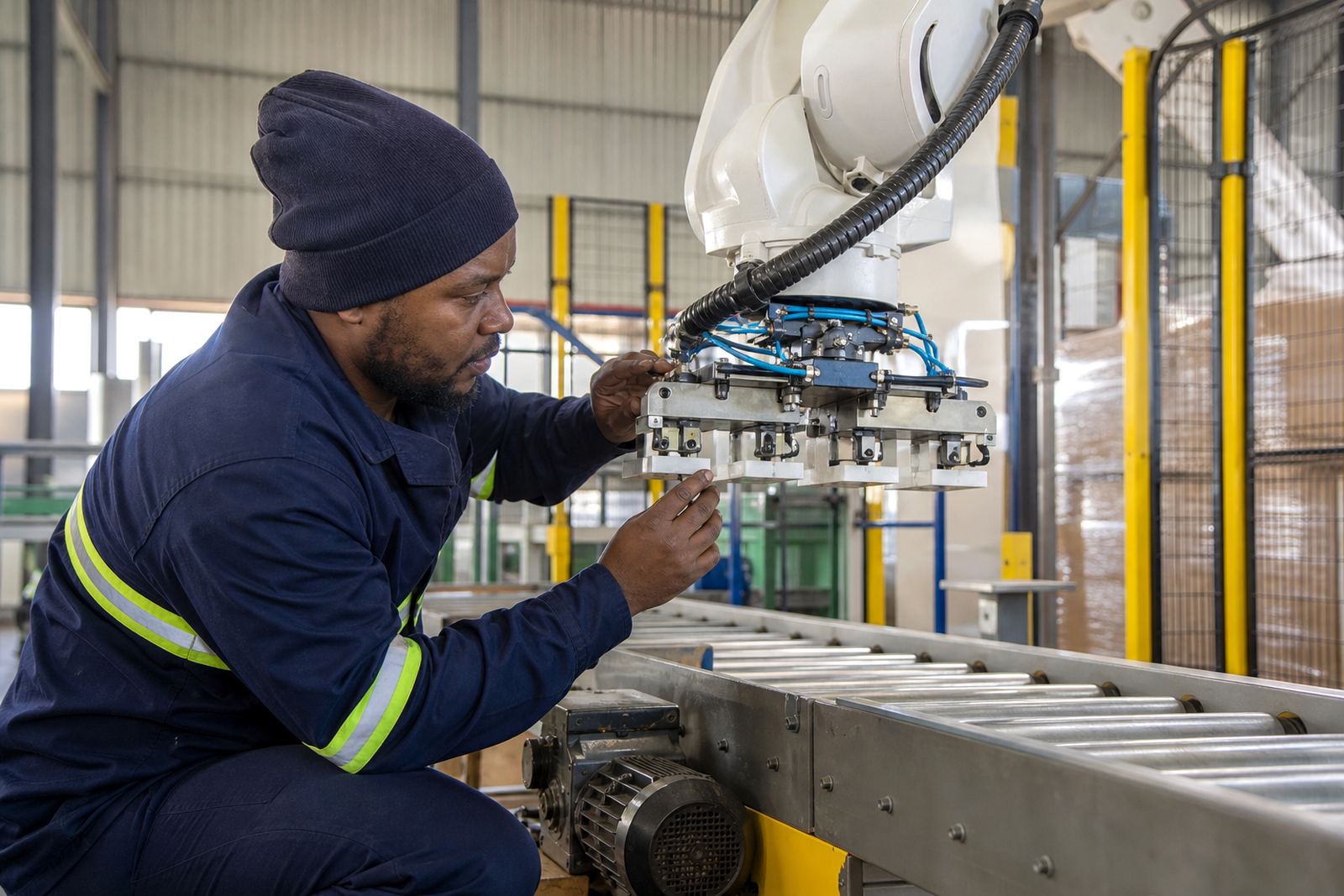
Typical checks include motion limits, home positions, speed settings, gripper or vacuum performance where used, emergency stop response, safety gate reset logic and communication between the robot controller and the existing line controls.
- Safe mode testing and stop category checks
- Verification of conveyors, indexers and accumulation zones
- Product trial runs for package stability and pallet quality
- Checks on fault messages and recovery steps
- Final sign off list for outstanding items
How We Commission A Retrofit From First Start To Stable Running
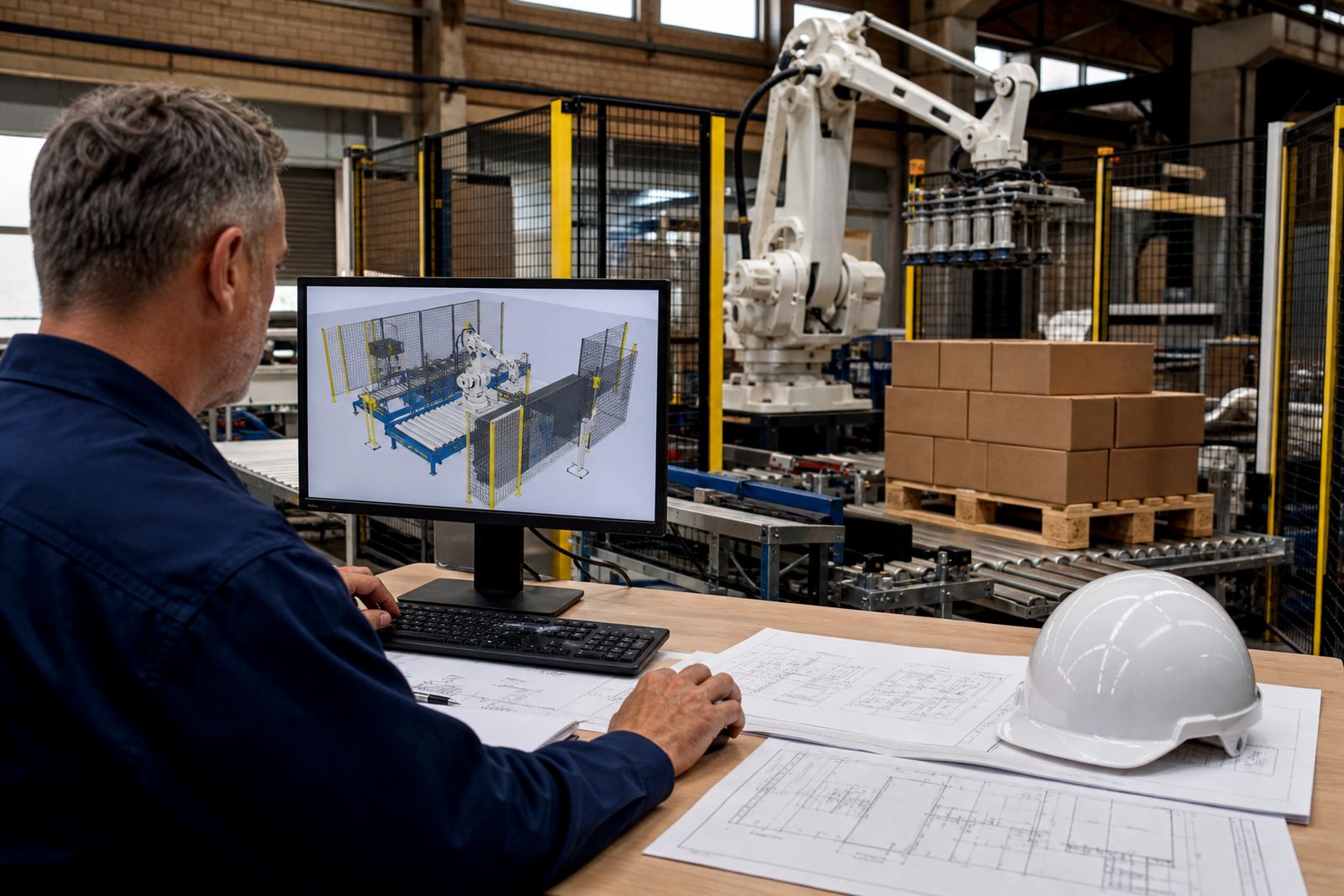
Our process starts with a site visit and a review of the installed equipment, control panels and guard positions. After that we agree the sequence for start up, the number of trial cycles and which product formats will be used first. The commissioning window is planned around production so the line can be brought into service with as little interruption as possible.
During startup we work through the machine in stages: power checks, control verification, dry motion, empty conveyor handshakes, then product trials. Small changes are often needed at this point, such as timing adjustments, sensor repositioning or program changes to suit carton stiffness, bag movement or pallet layer stability. This is normal on retrofit work and usually leads to better repeatability once complete.
- Review of existing line controls and conveyor logic
- First power up and safety confirmation
- Dry cycle testing without product
- Product trial and timing adjustment
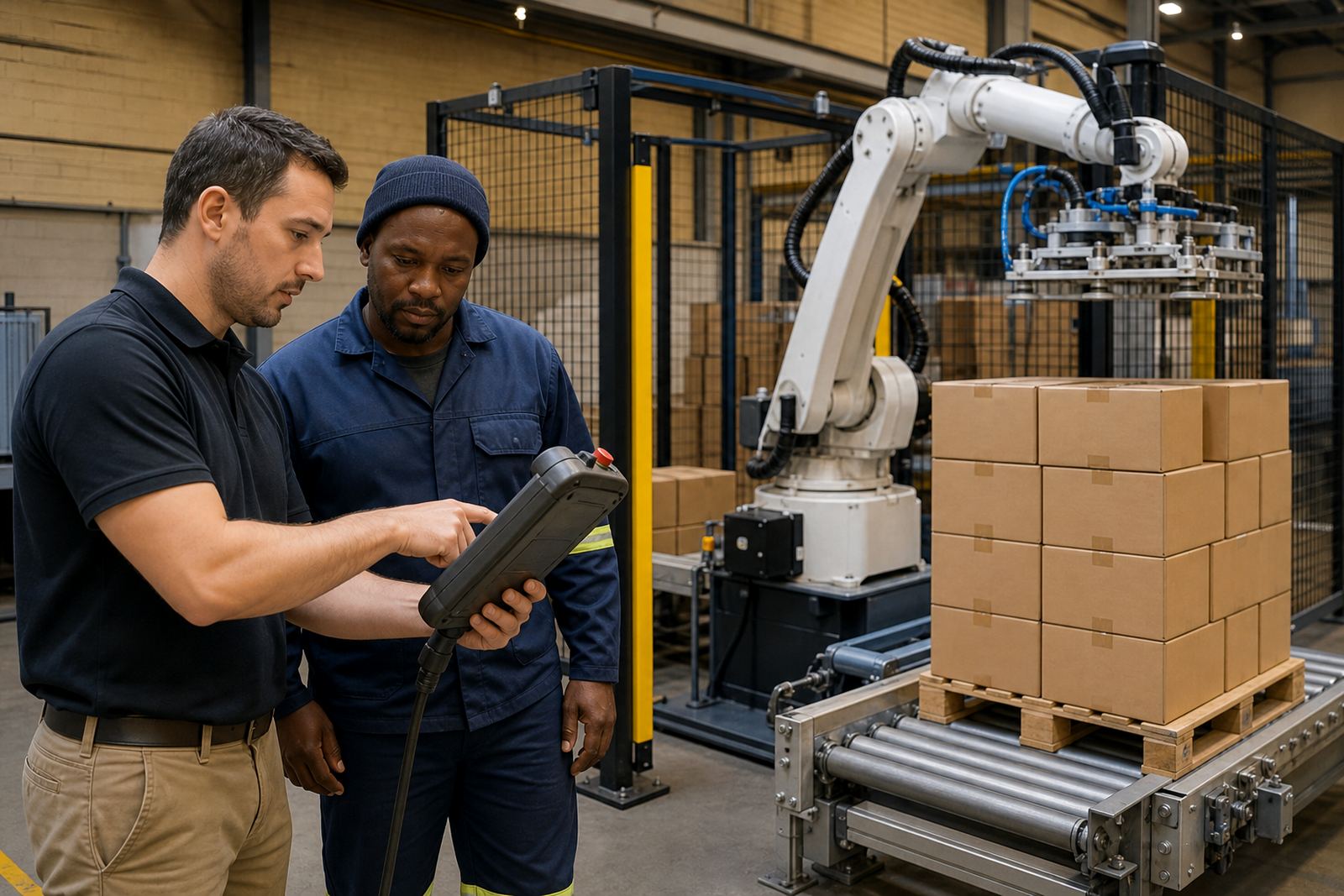
- Operator handover and basic fault response training
Turnaround, Site Access And Production Planning
Turnaround depends on line complexity, the number of products being trialled and how much integration is required with the existing conveyor system. A simple packing cell may need a shorter commissioning window, while a palletising retrofit with multiple infeed points, transfer conveyors and safety gates will need more time. We plan the work so your team knows when the line must be clear, when test material is needed and when production can resume.
On live factories, especially where warehouse and dispatch areas are shared, access control matters. We work within site induction rules, permit systems and any municipal or tenant requirements that affect work hours, forklift movement or emergency access. In coastal areas like Durban and Gqeberha we also account for humidity and corrosion risk when checking cable routing, enclosures and sensor mounting points, as these can affect reliability over time.
Pricing Approach For Commissioning Support
Commissioning support is priced according to the actual scope of work, not a fixed standard rate. The main factors are the number of days on site, travel between branches or plants, the level of controls integration, the amount of production testing required, and whether the line needs out of hours work. If the retrofit includes several product formats or repeated trials, that also affects the scope.
We keep pricing transparent by separating commissioning from design, installation and long term support. That makes it easier for a manufacturer to see what is included, what is optional and what is still to be resolved after handover. Any additional site visits, extra debugging or revised operator training are agreed before the work continues, so there are no surprises at the end.
Service Checks After Commissioning
Once the line is running, service checks should be based on machine use, dust levels, product type and shift pattern. A packaging line running two or three shifts in Gauteng will need more frequent checks than a lighter duty line, while coastal sites may need closer attention to corrosion and humid conditions. We normally recommend a structured inspection schedule after commissioning so small issues are picked up before they cause downtime.
Typical follow up support includes checking fasteners, cable wear, sensor alignment, safety gate operation, conveyor tracking and robot repeatability. Operators should also be refreshed on cleaning, shutdown and restart steps, especially after maintenance or format changes. If a site has frequent power interruptions or voltage dips, it is wise to inspect backup restart logic and control panel condition more often.
- Weekly visual checks on guards, sensors and cable runs
- Monthly checks on conveyor alignment and stop functions
- Quarterly review of cycle performance and fault history
- After any breakdown, confirm safety devices before restart
Key facts
| Scope | Robot packing and palletising retrofit commissioning support |
|---|---|
| Site coverage | Kempton Park, Johannesburg, Pretoria, Durban, Cape Town, Gqeberha and wider South Africa |
| Included checks | Motion checks, product trials, safety verification, controls handover |
| Integration focus | Existing conveyors, sensors, line controls and safety guarding |
| Typical output | Stable production start up with operator handover and sign off list |
| Support format | On site commissioning with follow up maintenance guidance and breakdown support |