What Conveyor Integration Covers on a Retrofit Line
Conveyor integration is the part of the retrofit that makes the whole line behave as one system. On a packing or palletising line, product has to arrive at the right point, in the right orientation, at the right speed, every time. That means the infeed, accumulation, transfer points, discharge conveyors and pallet take-away all need to be matched to the robot cycle, the product size, and the site layout.
At ReAutomated, we work with existing conveyors where possible and add the missing pieces where needed. That can include merge sections, diverters, stops, indexing conveyors, accumulation tables, carton guides, pallet transfer conveyors, turntables, and detection points for cartons, cases, trays or bags. The aim is steady product flow, not just moving product faster. If the conveyor is too quick or too slow, the robot waits, jams or drops pattern quality. That is where the line starts costing more instead of less.
We also look at the real site conditions. In Gauteng, dust and vibration are common on factory floors. On the coast, humidity and salt air can affect motors, sensors and steelwork. In many plants, conveyors also have to share space with older machines and narrow walkways, so the route has to respect access, maintenance space and safety rules from the start.
How We Match the Robot Cell to the Existing Conveyors
Every conveyor integration project starts with a site line survey and a practical check of the current transport system. We measure centre heights, transfer gaps, belt speeds, product orientation, pallet dimensions, line buffers and the available floor space. We also check where products back up during changeover or stop-start operation, because that is often where the hidden problems are found.
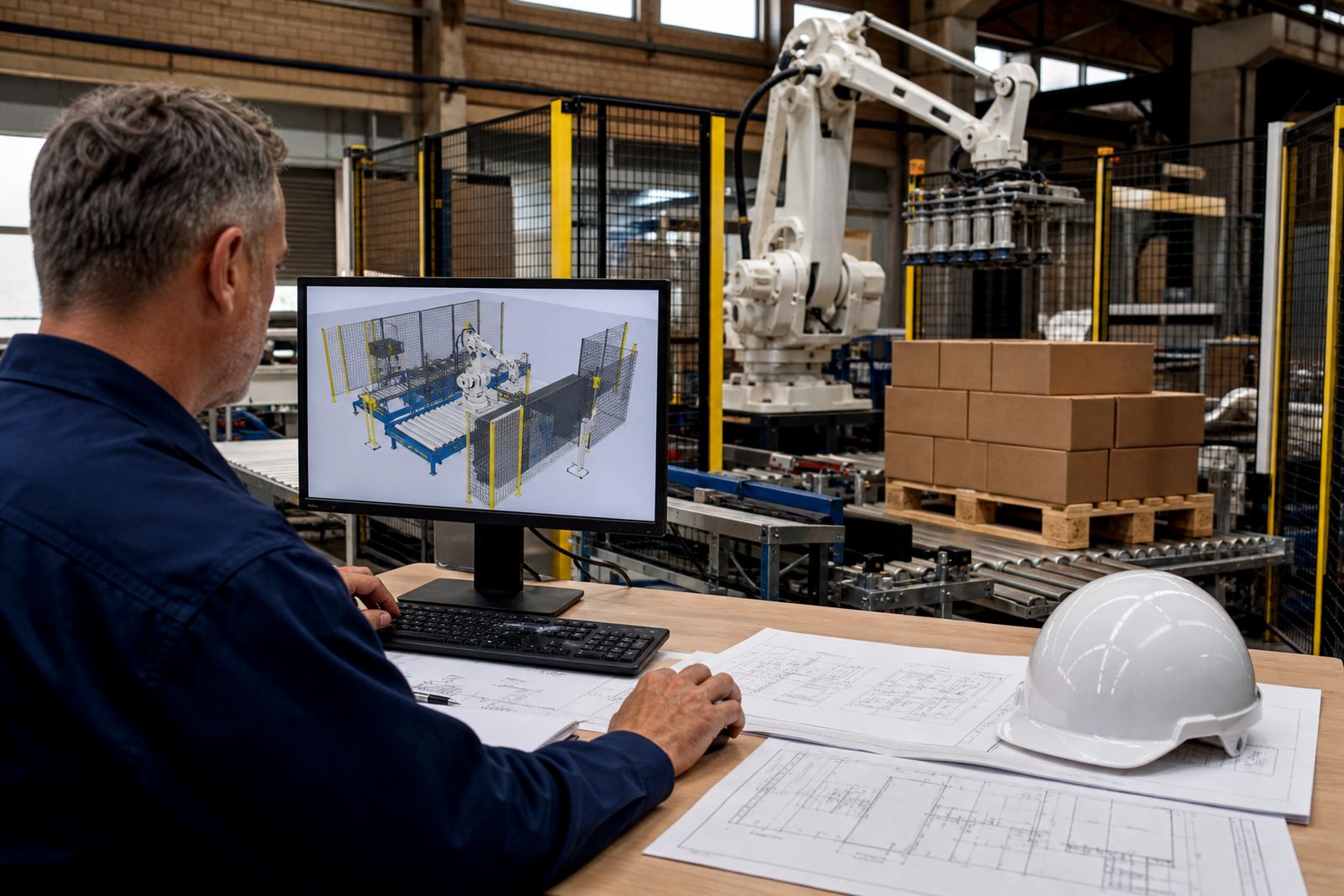
Our team then prepares an integration approach that suits the line, the product and the operating rhythm. For some sites, that means slowing the infeed slightly to improve spacing. For others, it means adding a short accumulation zone or a controlled release point so the robot sees a consistent stream. We also make sure upstream and downstream equipment can talk to the robot cell through proper controls integration, so the line does not fight itself.
- Infeed and outfeed conveyor mapping
- Transfer height and gap checks
- Product spacing and accumulation review
- Sensor and stop-point placement
- Control signals for start, stop and fault conditions
- Interface checks with existing PLC or control panels
Where required, we include guarding and access control around pinch points, transfer areas and robot reach zones. Safety is not a one-size-fits-all item. Each site needs its own risk assessment and the guarding must suit the actual movement of people, forklifts and product on that floor.
Integration Work Included in the Scope
Our conveyor integration service is usually delivered as part of a broader robotic retrofit, but it can also be done as a standalone line upgrade. The scope is agreed after the site survey so the customer knows exactly what is being modified and why. We do not force a full rebuild if the existing conveyor system can be adapted sensibly.
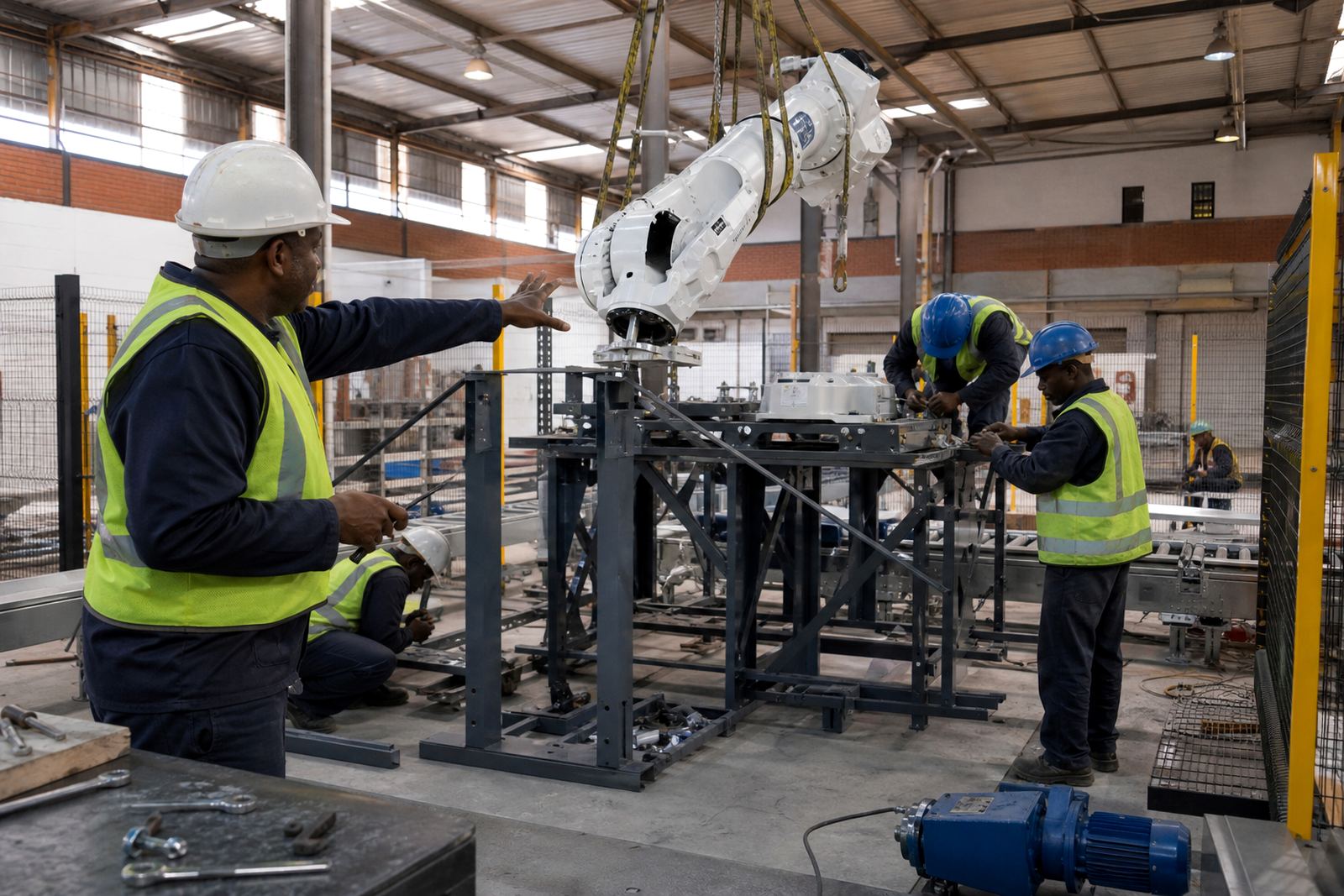
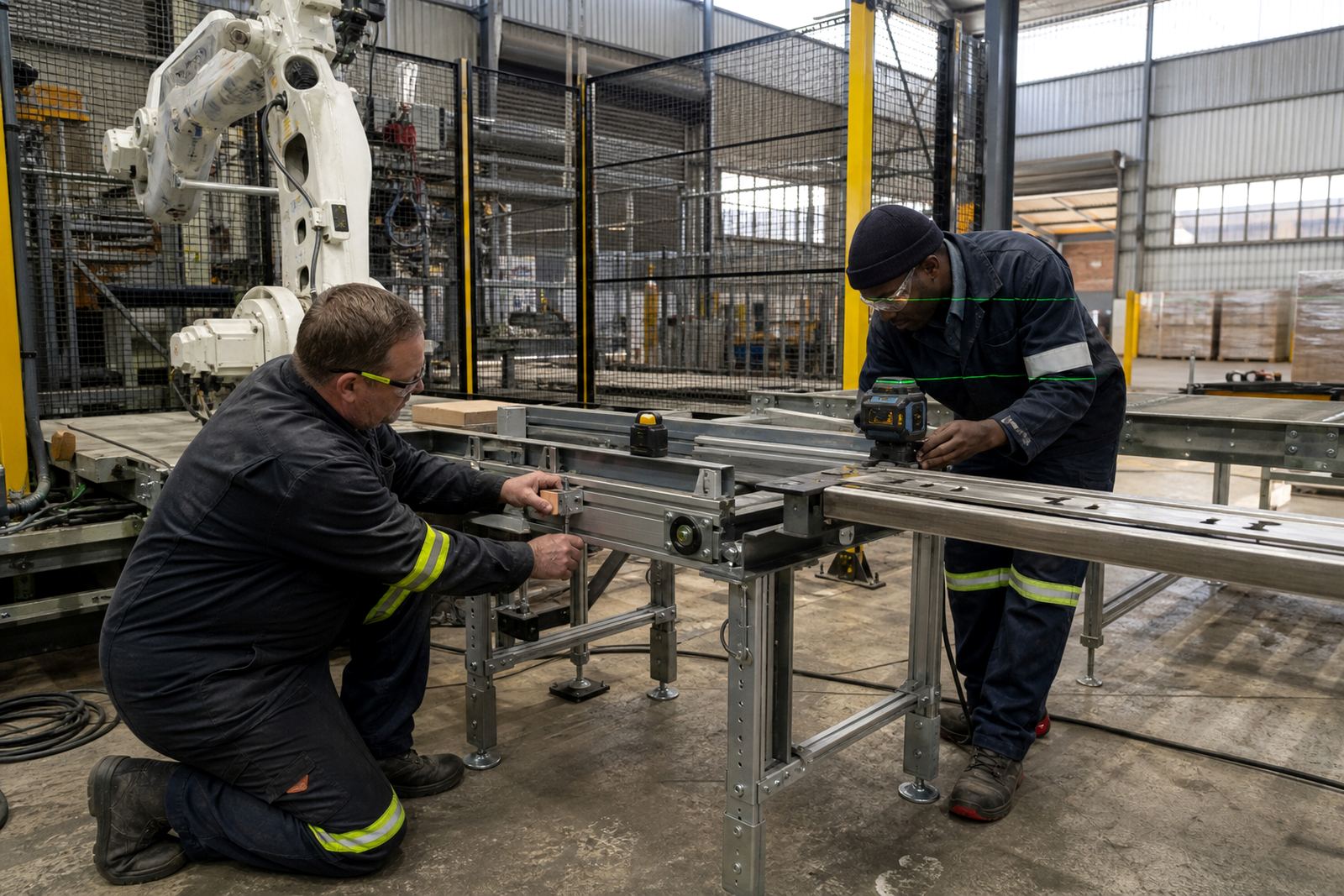
Typical work includes mechanical alignment, mounting of sensors and brackets, field wiring support, conveyor speed matching, buffer layout changes, transfer point adjustments and commissioning support. If the line needs a new carton accumulation section or a pallet feed lane, we plan that into the integration. If the product is unstable, we may recommend guides, side rails, stops or orientation controls before the robot picks or places it. That saves trouble later.
- Mechanical fitment and alignment of conveyor sections
- Controls integration for interlocks and line permissives
- Safety guarding design around transfer and pinch points
- Risk assessment support before commissioning
- Installation management during shutdowns or staged changeovers
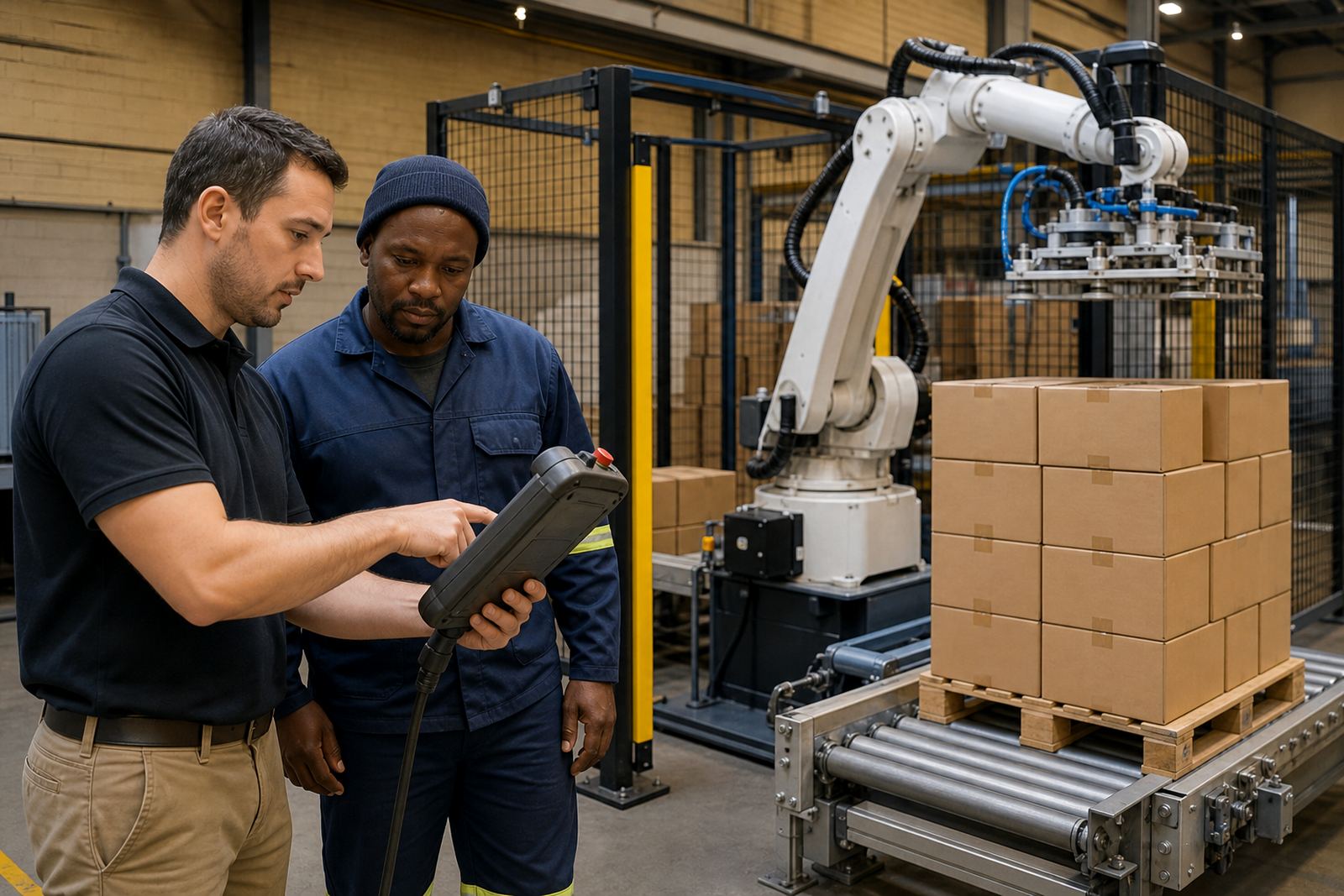
- Operator training for normal running and fault recovery
We can also support spares planning so that belts, sensors, gearmotors and wear items are identified early. That is useful for plants running in Johannesburg, Pretoria, Durban or Cape Town where a stopped line can cost a full production shift very quickly.
Typical Process From Survey to Commissioning
The process is straightforward and practical. First we carry out a site line survey and confirm what the conveyor system is doing now. Then we propose the changes needed to support the robot cell, including any guard rails, transfer decks, accumulation zones or control logic updates. After approval, we coordinate installation around the site shutdown window or phased changeover plan.
On site, our team works with the customer’s production and maintenance staff to keep the line safe and organised. We check alignment, belt tracking, sensor response, stop distances and product handover points. Once the system is installed, we test the line with live product, review fault conditions and tune the settings until the flow is stable. Commissioning is not complete until the robot, conveyors and operators can run the process with confidence.
If the line is being retrofitted in a busy plant, we can stage the work so one part of the conveyor system stays live while another section is upgraded. That is often the best approach for manufacturers with limited space or tight delivery schedules. It does take a bit more planning, but it reduces disruption and helps the plant keep moving.
Turnaround, Scheduling and Site Coordination
Turnaround depends on the size of the line, the amount of existing equipment being reused and the level of controls work required. A compact packing line with limited modifications can move quickly once the design is approved. A longer palletising line with multiple conveyors, buffers and safety zones needs more coordination, especially if we are working around production, stock movement and incoming dispatch.
Most conveyor integration work is planned in phases. We start with the survey and design input, then move to fabrication or modification of the required sections, followed by installation and commissioning. If a plant is running in a high volume environment, we help schedule the work around maintenance weekends, planned shutdowns or low-output periods. In some cases, night work or split shifts are the better option.
Because we are based in Spartan, Kempton Park, we can support plants across the East Rand, Midvaal and the wider Gauteng area quickly, while also travelling to Durban, Cape Town and Gqeberha for retrofit projects. For out-of-town sites, lead time is influenced by travel, access windows and whether there are municipal or site-specific rules on after-hours work or forklift movement. We plan for that from the start.
Pricing Approach and Service Checks
We price conveyor integration according to the actual scope, not as a blanket package. The main cost drivers are conveyor length, structural changes, controls complexity, guarding requirements, access constraints and whether the existing equipment can be reused. We do not give guessed numbers before a proper survey because the difference between a simple transfer change and a full line rework can be substantial.
For maintenance, the interval depends on duty cycle, dust levels, load patterns and the type of product being handled. In general, conveyors on robotic packing and palletising lines should be checked on a planned basis for belt condition, tension, roller wear, alignment, fasteners, sensors, cable routing and guard integrity. Sites running long shifts may need weekly visual checks and monthly planned maintenance, while lighter-duty lines may manage on a longer interval. Coastal sites often need closer attention to corrosion and electrical enclosures.
- Weekly visual checks for alignment, noise, tracking and obvious wear
- Monthly inspection of sensors, fasteners, guards and transfer points
- Quarterly review of motors, belts, rollers and control signals
- Planned spares review for critical wear items and downtime risk
- Post-breakdown inspection after stoppages, overloads or power events
That helps protect the robot cell and prevents product pile-up on the conveyor system. A small fault left untreated can quickly become a bigger one, so maintenance discipline matters just as much as the original install.
Key facts
| Service focus | Robotic packing and palletising conveyor retrofit integration |
|---|---|
| Typical line elements | Infeed, accumulation, transfer, outfeed and pallet take-away conveyors |
| Site coverage | Kempton Park, Johannesburg, Pretoria, Durban, Cape Town, Gqeberha, East Rand, Midvaal |
| Project inputs | Site survey, controls review, safety guarding layout, risk assessment support |
| Commissioning support | Line testing, product flow tuning, operator handover, fault recovery |
| Maintenance planning | Weekly visual checks, monthly inspections, quarterly service reviews |