Planned Support for Busy Packing Lines
Once a robot retrofit is running, the next priority is keeping it reliable through planned support rather than waiting for something to fail.
The goal is to keep the robot, conveyors, guarding, sensors and controls operating as one system, and to pick up small faults before they cause stoppages. That includes routine checks on fasteners, cabling, air supplies, signal faults, mechanical wear and the condition of safety devices. A practical plan also supports spare parts planning so the right items are available when needed.
- Scheduled inspection intervals matched to site production.
- Wear part checks for grippers, belts, rollers, chains and guides.
- Practical cleaning and lubrication routines for dusty or humid sites.
- Basic fault history reviews to spot repeat issues early.
What a Maintenance Visit Covers
Each visit starts with a walk-through of the line and a review of any recent stoppages, operator comments or alarms. We then check the retrofit in the order it works on the floor, from infeed conveyor right through to the robot cell, pallet output and safety circuits. This helps us see whether the problem is mechanical, electrical or control related, instead of guessing at it.
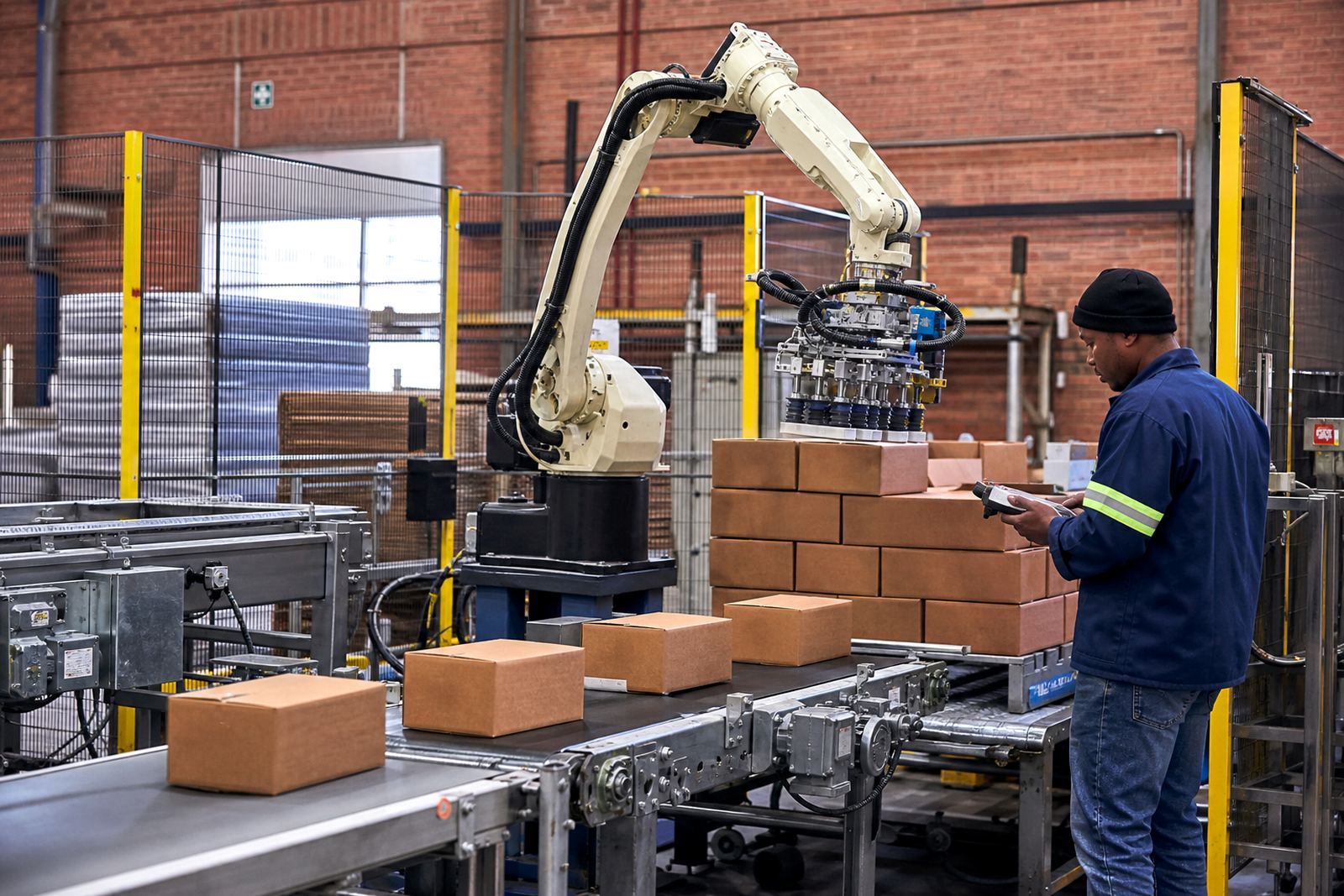
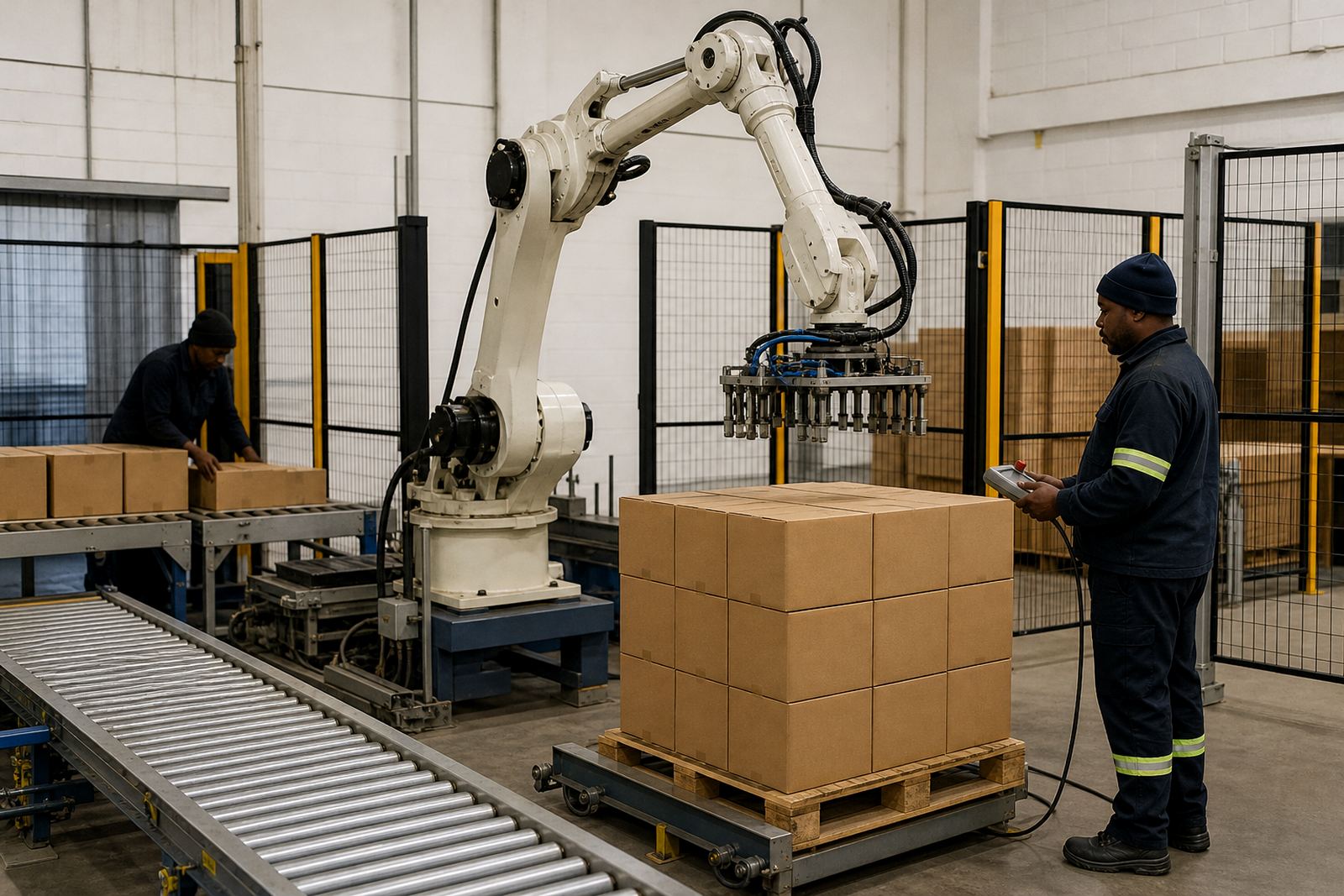
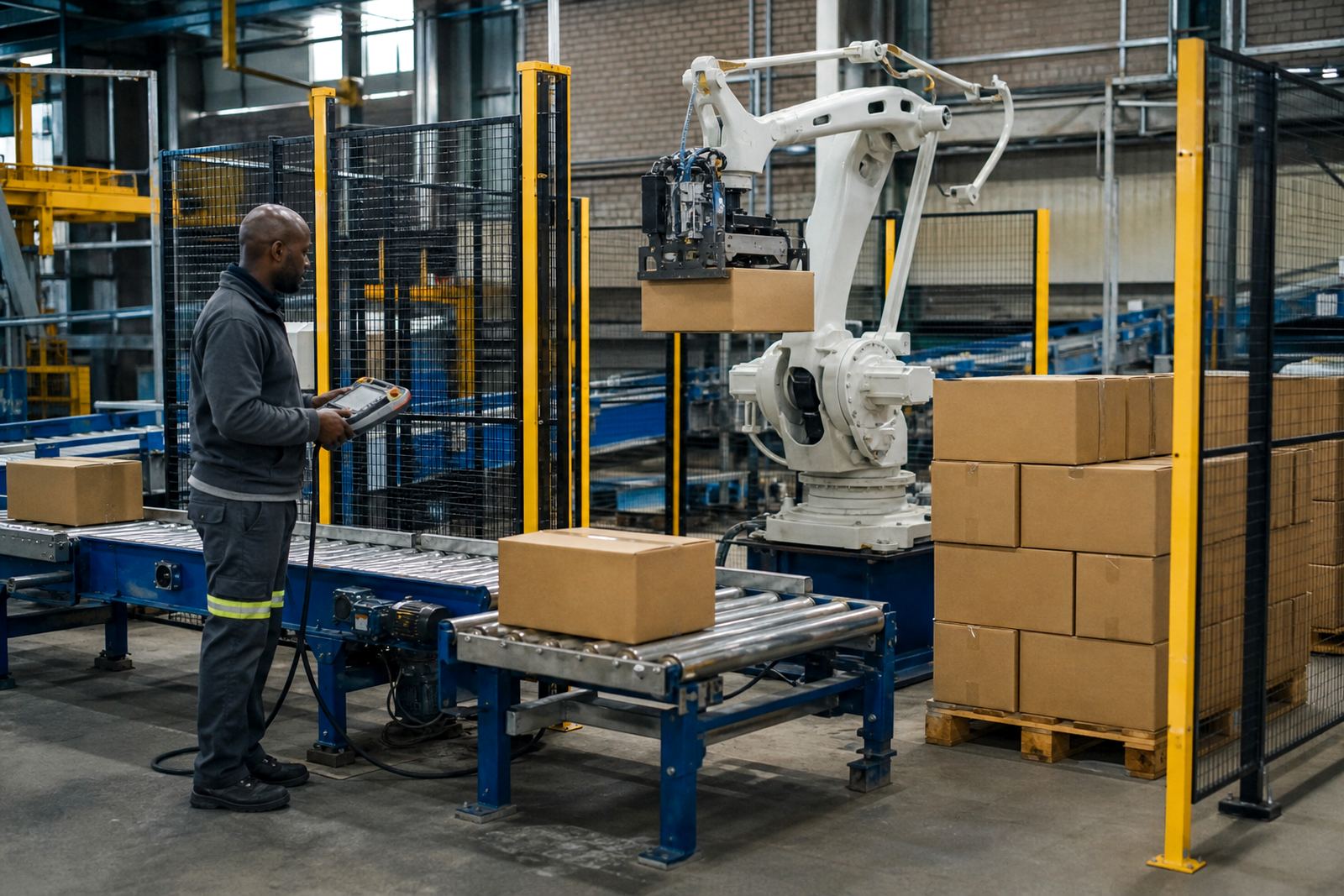
Typical tasks can include tightening connections, checking sensor alignment, looking at cable condition, confirming guarding interlocks, inspecting pneumatics and verifying that the robot path remains clear. Where there is a cobot application, we also check speed limits, stop functions and the surrounding work area to make sure the setup is still suited to the task. Every site is different, so the plan must be based on the actual machine layout and operating conditions.
- Visual inspection of guarding, gates and access points.
- Check of stops, alarms and recovery steps after a trip.
- Inspection of end tools and product handling points.
- Confirmation that conveyors feed and discharge correctly.
Wear Parts and Spares Planning
Many breakdowns start with small wear items that are left too long. On packing and palletising lines, that can mean rollers, belts, bearings, guide rails, pneumatic fittings, vacuum cups, gripper pads, limit switches or cable damage from repeated movement. A planned maintenance approach helps identify which parts are wearing at a normal rate and which parts are failing too soon.
We can help set up a spares list that matches the retrofit and the pace of the line. That does not mean holding large stock for no reason. It means keeping sensible quantities of the items most likely to stop production, especially for plants that run long shifts or have lead times on imported components. For sites in coastal areas, the plan may also include extra attention to corrosion and moisture related wear.
- Critical spares identified by function and failure risk.
- Replacement intervals based on condition, not guesswork.
- Checks for corrosion, slack, contamination and vibration.
- Support for stores teams to keep spares labelled and traceable.
How We Support Safety and Compliance
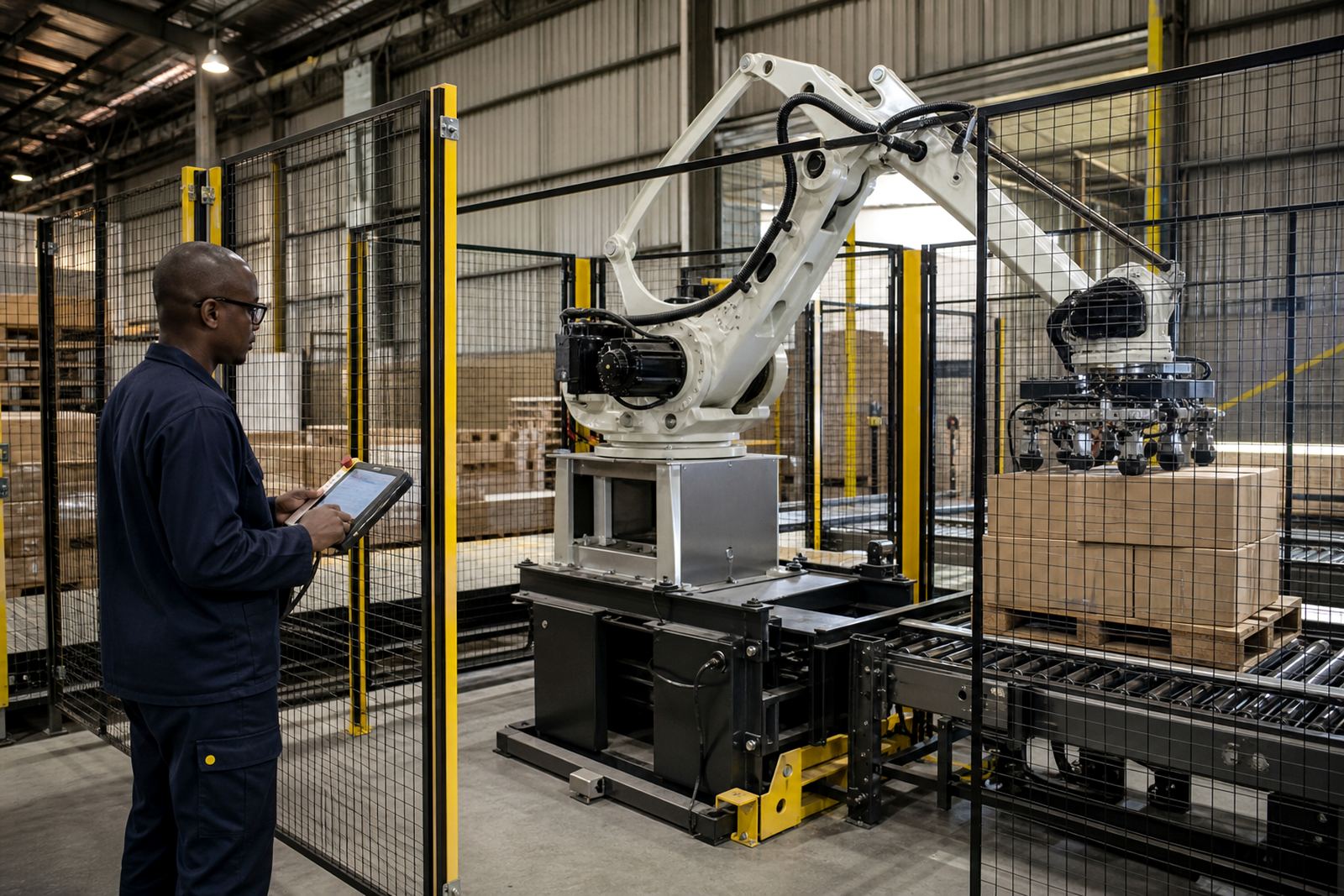
Any robot retrofit needs proper guarding and a site specific risk assessment. Maintenance work must respect those controls, not bypass them. During planned support we look at the condition of barriers, light curtains, interlocks, warning devices and emergency stops, and we check whether the original risk controls are still suitable after any change to product size, conveyor speed or layout.
General safety rules are not enough on their own. A palletising cell with a new carton format or a packing line with higher throughput can change the risk profile quite quickly. That is why maintenance plans should include a review of any modifications, operator access points and lockout procedures. If the plant changes, the safety setup may need to be rechecked before production continues.
- Review of access control and emergency stop condition.
- Inspection of guarding after repairs or relocation work.
- Support for updating the risk assessment when the line changes.
- Verification that operators still have clear safe working steps.
Planned Downtime Without Unplanned Surprises
Maintenance works best when it is tied to production windows that suit the site. Some factories prefer short weekly checks, others need a monthly visit with a longer stop. We help plan those windows so support work does not interfere with dispatch, shift changeovers or peak production times. The goal is to keep the line moving, not to create another disruption.
During a service window, we look at the whole retrofit as a working system. That means checking the conveyor transfer points, robot cycle behaviour, pallet stability, product detection and recovery after a fault. If a line is repeatedly stopping for the same reason, we document it and address the cause rather than clearing alarms and moving on. That practical approach saves time and keeps operators confident in the system.
Recovery checks, safe restart steps and control back up notes can make a big difference when a line is brought back online quickly, especially on busy sites where a small error can lead to cartons falling or pallets becoming unstable.
Getting the Right Support Plan in Place
We start with the line as it stands today. That may include a site survey, a review of the retrofit drawings, a check of operating hours and a discussion with the production team about common issues. From there, we can propose a maintenance schedule that fits the equipment, the risk level and the way the site runs. It is usually better to build a simple plan that gets followed than a complicated one that is ignored.
Our support can include inspections, wear part checks, maintenance reporting, breakdown assistance, spares planning and follow-up after adjustments are made. For plants in Gauteng, the East Rand or further afield in Durban, Cape Town and Gqeberha, we can arrange practical support around the realities of travel, shift patterns and site access rules.
If your packing or palletising line needs a maintenance plan that makes sense on the floor, use the enquiry form on our contact page and we will work through the options with you.