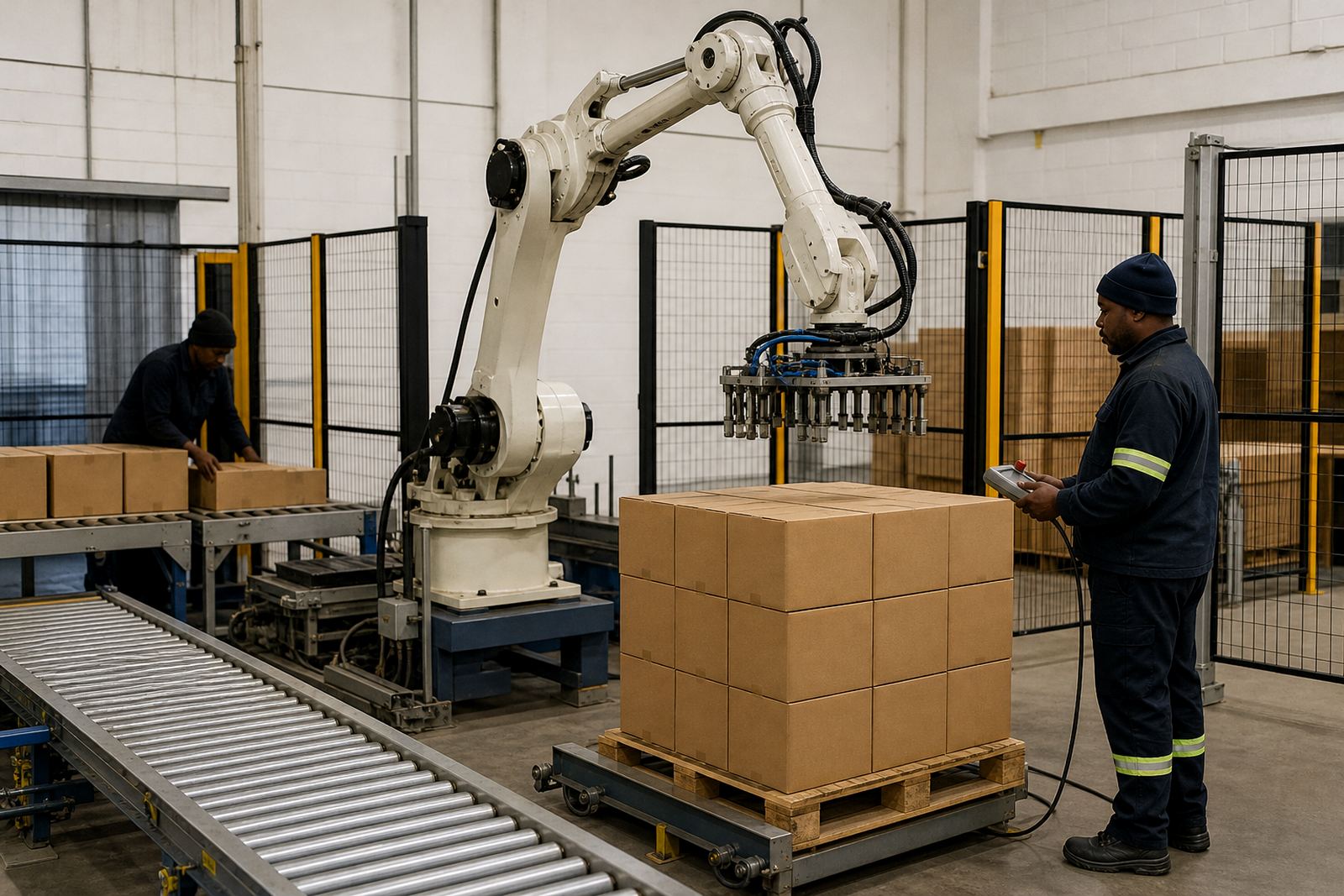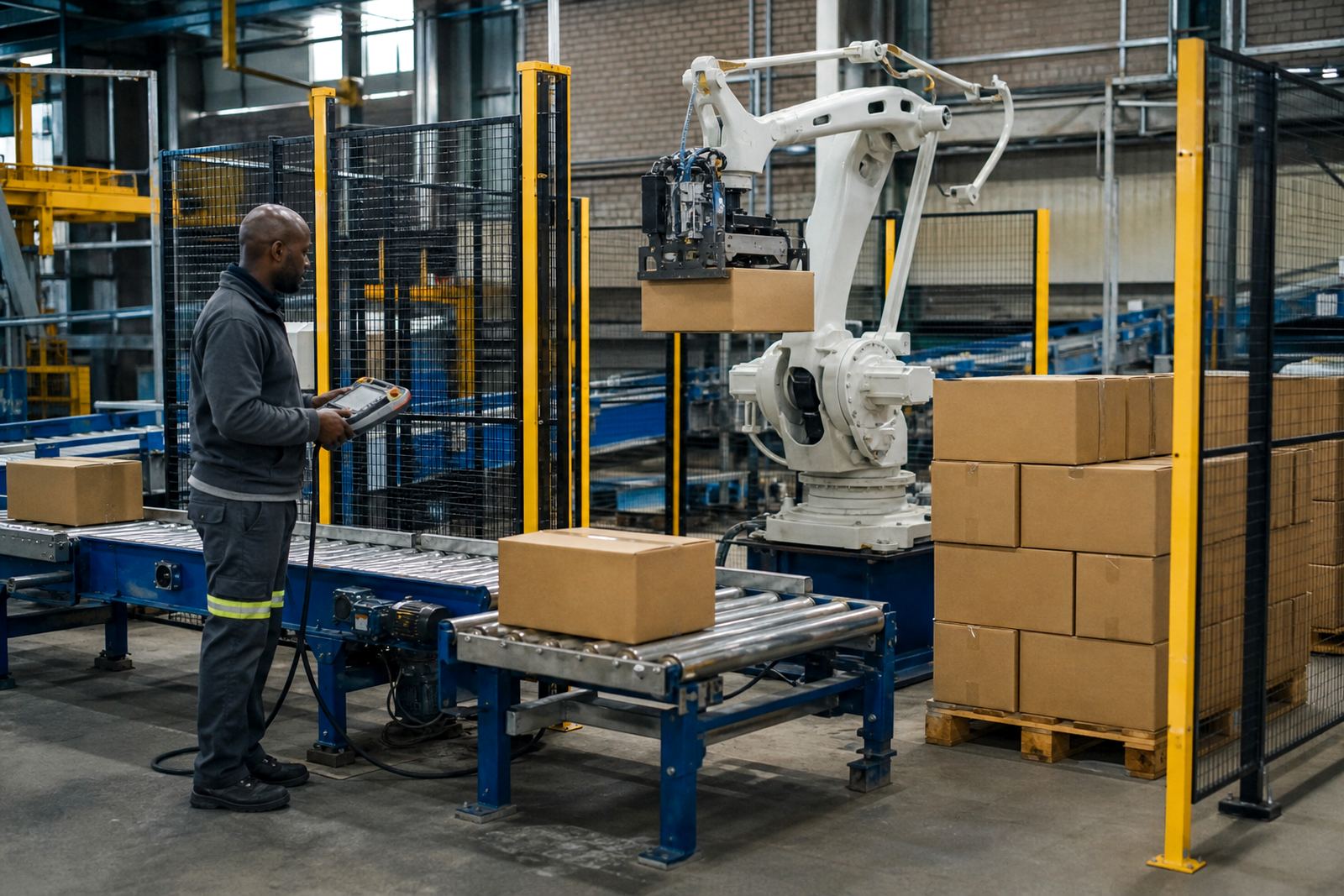
How do we know if our line is suitable for a retrofit?
Most packing and palletising lines can be assessed for a retrofit, but suitability depends on the actual layout, product type, conveyor condition and how much spare floor space is available. At our site line survey we look at infeed heights, carton or bag orientation, layer patterns, discharge points and where operators currently stand. We also check whether the line needs a cobot for lighter, slower tasks or a full robotic palletising cell for higher throughput.
A good retrofit starts with facts from the floor, not assumptions. If conveyors are worn, product flow is inconsistent or the building has tight access doors, those details shape the design. In Kempton Park, Johannesburg and Pretoria we often work around existing steelwork and limited downtime windows, while coastal sites in Durban, Cape Town and Gqeberha may also need attention to corrosion, dust and humidity.
What happens during a retrofit project from first visit to handover?
The process is planned in stages so the line can keep running as far as possible. First we carry out a line survey and collect measurements, photos and operating details. Then we prepare a retrofit concept that shows how the robot, conveyors, guarding and controls will fit together. After that comes design finalisation, risk assessment support and installation planning.
- Site Line Survey and layout review
- Retrofit design and equipment positioning
- Conveyor integration and control panel changes
- Safety guarding design and access planning
- Installation management and commissioning support
- Operator training and early-life maintenance support
During installation we coordinate the practical work on site, including cable routes, air requirements, stopping points and test runs. Once the cell is commissioned, we support handover, operator familiarisation and the first production runs so the team can settle into the new process with confidence.
Do we need safety guarding if we are using a cobot?
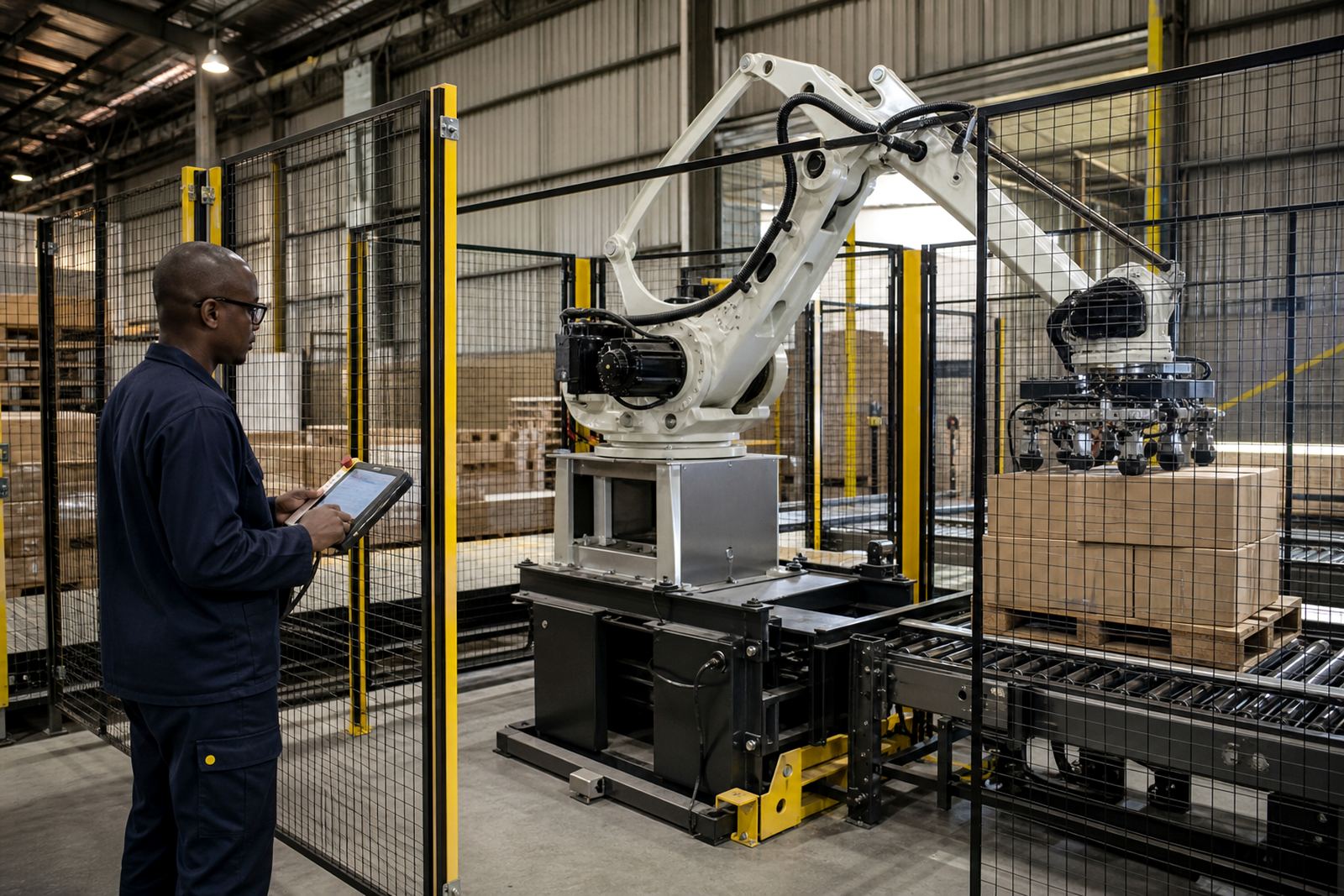
Yes, every site needs its own risk assessment and the guarding approach must match the actual application. A cobot can reduce the space needed for some tasks, but that does not remove the need for safe access control, correct speed settings, clear stopping logic and suitable separation from moving parts. In many packing and palletising retrofits, the final answer is a mix of physical guarding, light curtains, interlocks or defined work zones.
Safety guarding design is not just about compliance. It also helps operators move around the area without confusion and reduces unexpected stoppages.
Can robots work with our existing conveyors and controls?
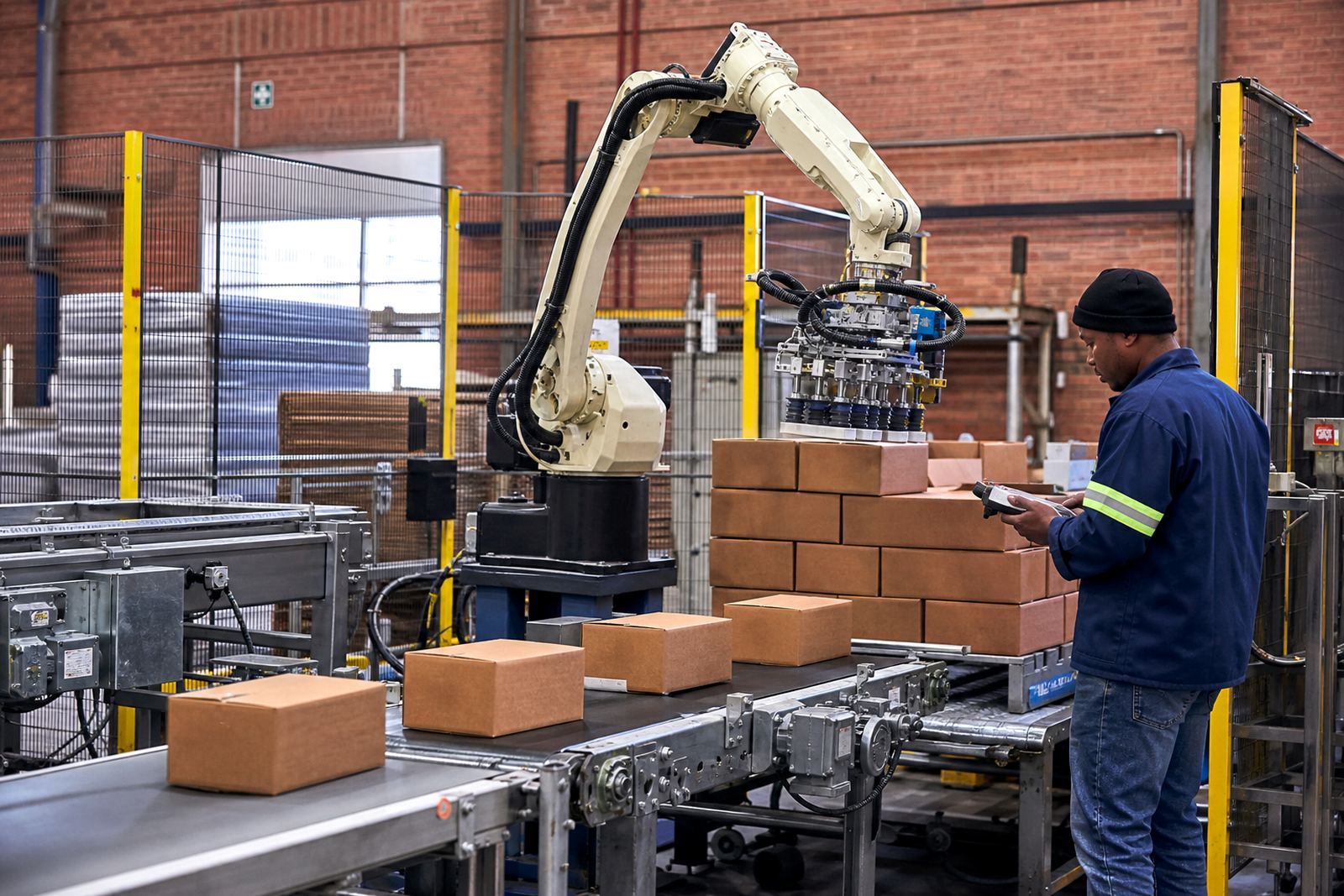
In many cases yes, provided the conveyors are in decent condition and the controls can be adapted properly. We often integrate robotic palletising systems with existing infeed conveyors, accumulation tables, reject points and case handling equipment. The goal is to keep as much of the current line as practical while adding the automation needed for the packing or palletising step.
Controls integration is just as important as the mechanical work. Signals must be mapped correctly so the robot knows when product is ready, when a pallet is full, and when the line should pause or continue. If the existing control system is old or has limited spare capacity, we may recommend upgrades to make fault finding easier and reduce downtime.
- Check conveyor speeds and product spacing
- Confirm sensor positions and stop/start logic
- Review power quality and backup needs for outages
- Plan the simplest safe handshakes between machines
What should our team prepare before installation begins?
The more practical detail we get early, the smoother the project will run. We usually ask for product samples, pack patterns, pallet sizes, line speed targets and details of any seasonal changeovers. If there are municipal rules, noise limits or building access restrictions at the site, those should be flagged during planning so they can be built into the schedule.
It also helps to identify who will be on the installation team from your side. A single contact person, clear shutdown windows and access to drawings or previous modification records can save a lot of time. For sites across South Africa, especially where production is spread between Johannesburg, Durban, Cape Town, Pretoria and Gqeberha, good planning prevents avoidable delays and wasted travel.
What support is available after commissioning?
After the retrofit is handed over, the real work is keeping it productive. We offer operator training, maintenance support, breakdown assistance and spares planning so the line stays dependable during normal production and peak demand. If there are early adjustments needed on layer patterns, gripper settings or conveyor timing, those are easier to fine tune soon after start-up while the team is still working with the system daily.
We also help clients plan for wear items and future changes. That may include checking which spares are worth holding on site, how often to inspect guarding and what to look for during daily checks. A well planned retrofit should fit into the plant's routine without adding unnecessary strain on operators or maintenance staff.