Durban lines that need more output without a full rebuild
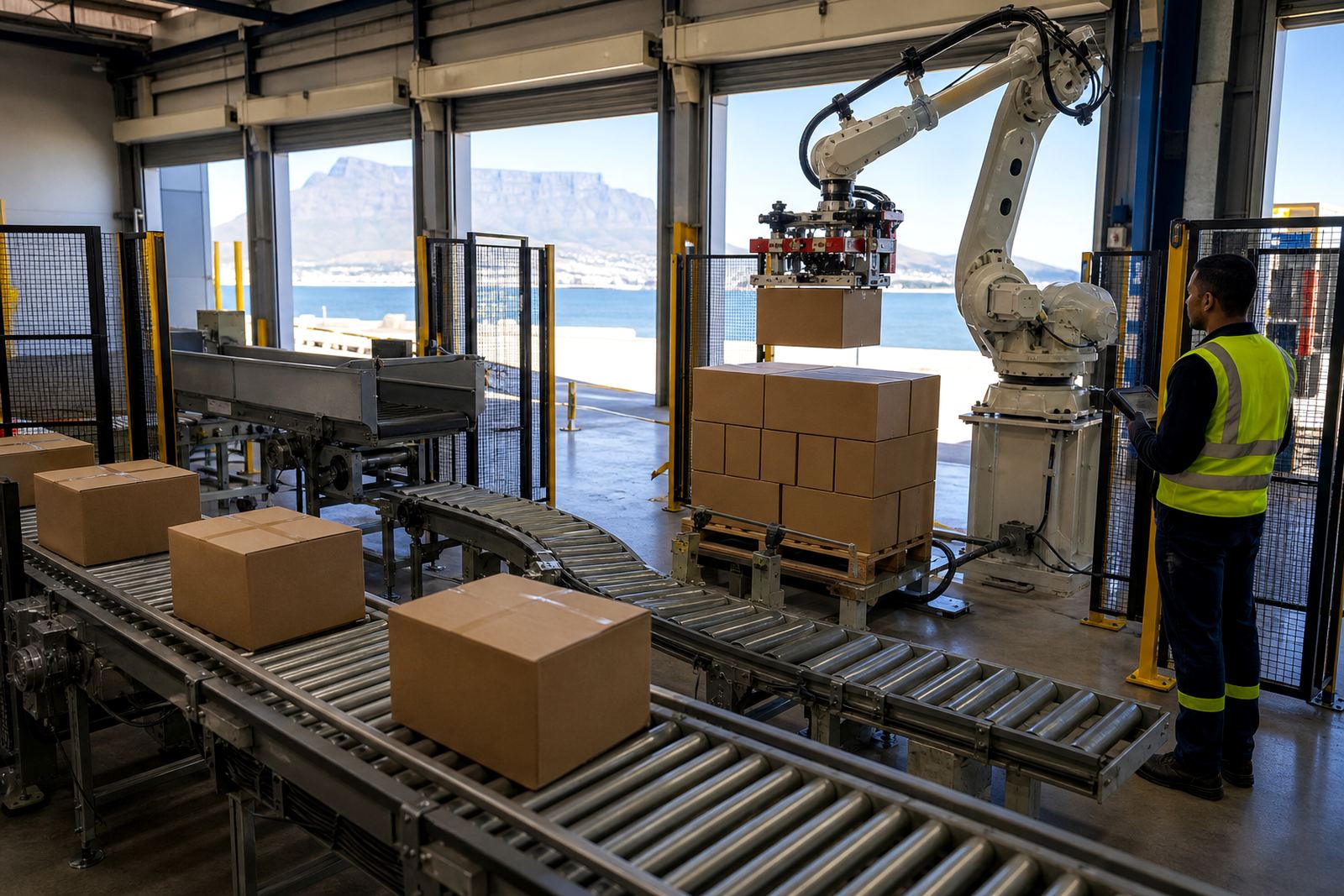
Durban sites often need more throughput from the line they already have, especially where floor space is tight and the plant has to keep running between shifts. We help manufacturers retrofit robotic palletising and packing solutions onto existing end of line layouts, with attention to conveyor heights, product flow, pallet positions and the way operators actually move around the area.
That suits food, beverage, FMCG, paper, plastics, building materials and general manufacturing sites where bagged, boxed or mixed packs need to be handled consistently. On many Durban plants the challenge is not just speed, it is keeping the line stable in warm, humid coastal conditions while reducing manual lifting and repetitive strain.
Our Durban work is based on practical site fitment. We assess the line as it stands, then design around the current conveyors, wrapping station, pallet feed and available utility points. If the plant has uneven floors, limited aisle width or a busy export pack area, those details matter from the start.
- Bag palletising for powder, grain, feed and building product bags
- Carton and tray handling for packed goods and secondary packs
- Mixed pack palletising where more than one pack type runs on the same line
- Pick and place support for packing points before final palletising
How we approach Durban retrofit projects
ReAutomated starts with a site line survey and a review of product sizes, weights, pallet patterns and line speeds. From there we look at whether the best fit is a full robot cell, a cobot assisted station, or a simpler transfer and palletising retrofit that uses the equipment already in place. Every site needs its own risk assessment, because guarding, access points and traffic flow differ from one plant to the next.
For Durban clients, we often take into account the impact of heat, dust, washdown areas and the local supply environment. Coastal humidity can affect sensors, enclosures and cable routing if the installation is not planned properly.
Our integration work covers the practical link between the robot, the conveyor and the line controls. That can include product infeed signals, case or bag detection, pallet present checks, interlocks, stop logic and handshakes with existing equipment. The aim is to make the retrofit fit the plant, not the other way round.
- Retrofit design around existing conveyors and line layouts
- Controls integration for start, stop and fault handling
- Safety guarding design and access control for operators and maintenance staff
- Installation management and commissioning support on site
Where Durban sites usually ask us to help
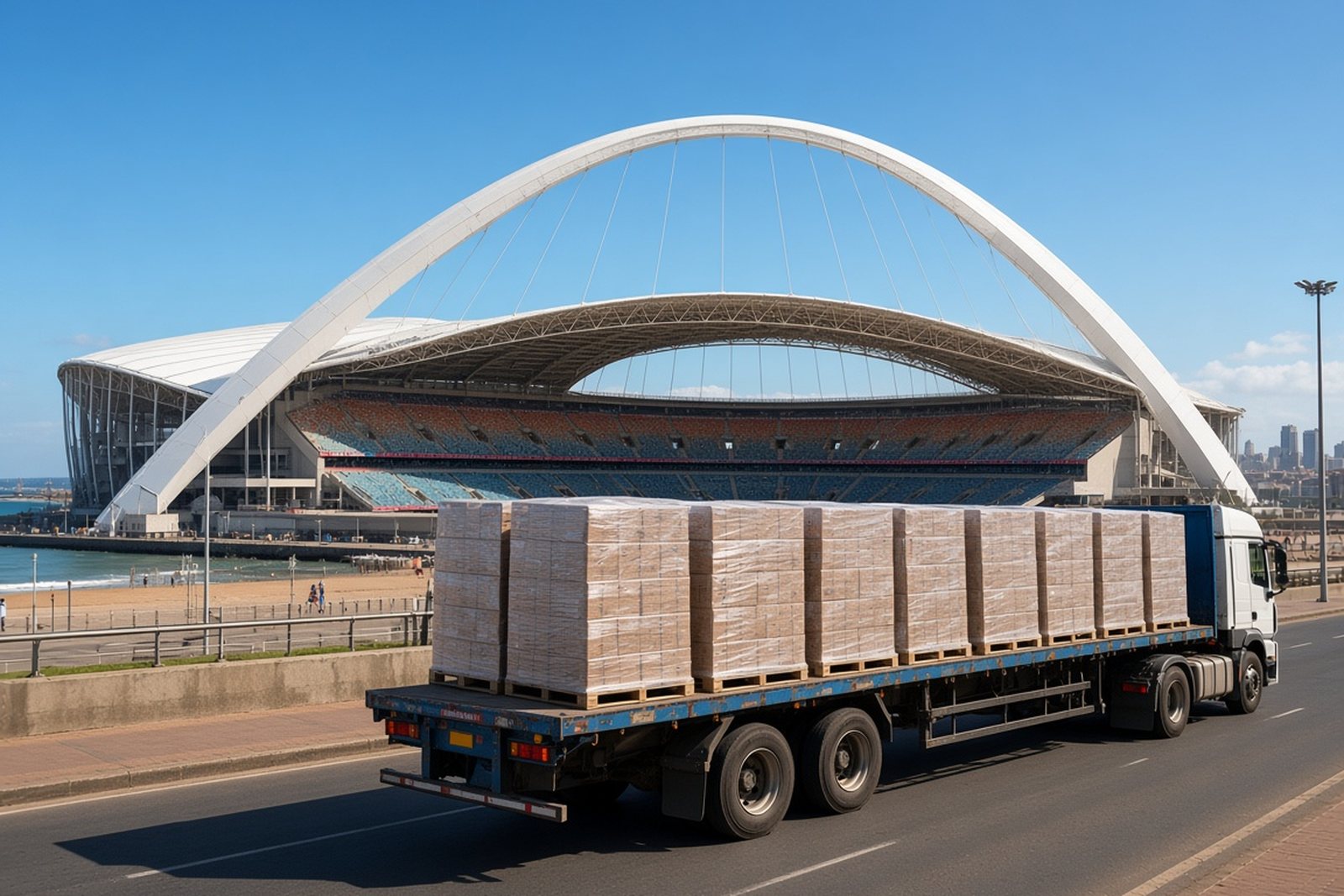
We support manufacturers across Durban, Pinetown, Prospecton, Riverhorse Valley, Jacobs, Bayhead, Cato Ridge and surrounding industrial areas, as well as sites further inland that route product through the port side supply chain. Typical clients are packing rooms, end of line operations, distribution plants and production sites that want a better palletising rhythm without adding too much manual labour.
Some plants need a retrofit because of staff shortages on shift. Others want to remove heavy lifting from the line, improve consistency at pallet build level, or make better use of limited floor space. In older facilities, the existing conveyors may still be serviceable but the end of line handling needs an upgrade to keep pace with current demand.
We also see Durban operations where mixed product packs change through the day, or where different bag sizes have to be palletised on the same area. Those jobs need careful pattern planning, stable product presentation and enough flexibility in the cell to handle the real mix of products, not just a single sample case.
- Bag, carton and mixed pack palletising retrofits
- Packing line end of line automation support
- Line changeover planning for multiple product sizes
- Maintenance support and breakdown assistance after start-up
What we cover from Spartan for KwaZulu-Natal calls
Our base in Spartan, Kempton Park supports Durban work with engineering, controls and site planning from the Gauteng side, while our field support covers the plant itself once the project is scheduled. For Durban, turnaround depends on the scope, the site readiness and the time needed for line checks and guarding fabrication, but we keep the process practical and organised so the plant knows what to expect.
We keep attention on the items that usually affect project success: spare parts planning, utility availability, conveyor tie-ins, guarding sizes and the sequence for commissioning. If a site needs a phased approach, we can plan for that too, allowing production to continue while sections of the line are upgraded in order.
Because Durban plants can face salt air, higher moisture and busy operating windows, we treat corrosion protection, cable protection and maintenance access as standard design concerns. The goal is a retrofit that remains serviceable for the people who have to run it every day, not just for the day it is installed.
- Spares planning for common wear items and controls components
- Operator training so the team can run the line with confidence
- Maintenance support for handover and ongoing operation
- Breakdown assistance when a line fault needs quick attention
Safety guarding and risk support for each Durban site
Safety guarding is part of every serious retrofit, especially where robots, conveyors and pallet movement share the same area. We do not treat guarding as a box to tick. It has to suit the site layout, the product path, the access needed for cleaning and maintenance, and the way the line is staffed during a normal shift.
Risk assessment support is also part of the work. The exact controls needed will vary by plant, so the site has to be assessed properly before final decisions are made. That can include safeguarding around robot reach, pallet zones, conveyor pinch points, maintenance access and operator entry points. Where cobots are used, the setup still needs a proper site-specific review, because the line context matters just as much as the robot itself.
For Durban manufacturers, especially those running long shifts and fast changeovers, good guarding and clear controls help reduce stoppages and improve discipline around the line. It also makes it easier for the maintenance team to work on the equipment without unnecessary risk or confusion.
- Guarding design matched to robot reach and pallet footprint
- Interlocks and access points planned for operators and maintenance staff
- Risk assessment support before installation and commissioning
- Site training focused on practical operation and safe restart after stoppages
Send Durban retrofit enquiries through our contact form
If your Durban line needs a bag palletiser retrofit, a carton handling upgrade, or a mixed pack solution that works with your current conveyors, send the enquiry through the contact page form. That is the best way to start, because it lets us review the basics of the product, the available floor area and the kind of support your site needs before any visit is arranged.
We then look at the line survey, retrofit design, controls integration, safety guarding and commissioning steps together so the project is planned as one job rather than a set of separate tasks. For Durban and surrounding KZN sites, that approach helps keep the installation practical and keeps disruption to a manageable level.
ReAutomated works with manufacturers across South Africa, but Durban remains a key area for us because the local plants often need automation that can handle humidity, space limits and demanding shift patterns without complicating day to day operations. If you need a retrofit that fits the plant you already have, we can help plan it properly.
- Enquiries through the contact page form only
- Support for Durban, Pinetown, Cato Ridge, Riverhorse Valley and nearby areas
- Retrofit work for packing and palletising lines across multiple sectors
- Practical project planning from survey through to handover